Key factors affecting gold rates in Eluru
Gold prices in Eluru can rise or fall as different market factors change. Understanding these influences can make daily price movements easier to interpret.
- International bullion prices: Movements in global gold markets generally affect domestic gold rates.
- USD-INR exchange rate: A weaker rupee can make imported gold more expensive.
- Inflation: Higher inflation may increase demand for gold as a store of value.
- Interest rates: Changes in interest rates can influence whether investors prefer gold or interest-bearing assets.
- Local demand: Jewellery demand may increase during weddings, festivals and auspicious buying periods.
- Supply conditions: Availability, transport and distribution can influence local prices.
- Economic and geopolitical developments: Periods of uncertainty can increase investor interest in gold.
- Market sentiment: Investor expectations and trading activity can contribute to short-term movements.
Changes in the applicable gold value may also affect borrowing potential. Check your gold loan eligibility to understand how eligible weight, purity, valuation and applicable LTV limits may influence the amount you can borrow. Purity is another important factor because it directly affects both the value and suitability of gold.
What is the difference between 18K, 22K and 24K gold?
Karat indicates how much pure gold an item contains. Comparing 18K, 22K and 24K gold can help you understand differences in price, durability and common use.
- 18K gold: Contains 75% pure gold and 25% alloyed metals. Its higher durability makes it suitable for daily-wear, contemporary and stone-studded jewellery.
- 22K gold: Contains approximately 91.6% pure gold and is widely used for traditional jewellery because it offers a balance between purity and strength. It is also commonly associated with 916 gold.
- 24K gold: Contains approximately 99.9% pure gold. Since it is softer, it is more commonly used for coins and bars than detailed jewellery.
| Parameter | 18K Gold | 22K Gold | 24K Gold |
|---|
| Purity | 75% | 91.6% | 99.9% |
| Strength | Highest | High | Lower |
| Common Use | Diamond jewellery and daily wear jewellery | Traditional jewellery | Investment bars and coins |
| Price | Lowest | Higher | Highest |
How to check gold purity in Eluru
Checking purity is important before purchasing or pledging gold in Eluru. The following methods can help verify whether jewellery matches its stated karat value:
- BIS hallmark: Look for the applicable BIS hallmark and purity details on the jewellery.
- Fineness marking: A mark such as 916 generally indicates approximately 91.6% pure gold.
- XRF testing: X-ray fluorescence can analyse metal composition without significantly damaging the jewellery.
- Electronic testing: Professional devices can help assess gold composition.
- Acid testing: A trained professional may use controlled chemical testing to estimate purity.
- Professional assessment: A certified jeweller or assayer can provide a more reliable purity check.
Home-based checks may offer only a basic indication. For greater accuracy, consult a qualified professional and read more about the purity of gold.
If you plan to pledge eligible jewellery, check your gold loan eligibility to understand the applicable requirements.
How can you calculate the value of your gold?
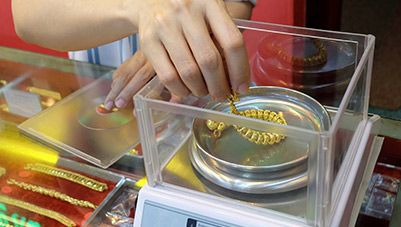
You can estimate the current value of your gold using three simple details:
- Gold weight
- Gold purity
- Today's gold rate per gram
Formula
Gold Value = Gold Weight × Gold Rate per Gram
For example, if you own 50 grams of 22K gold and today's rate is Rs. 12,826 per gram:
50 × Rs. 12,826 = Rs. 6,41,300
This gives the approximate market value of your gold. The final amount offered for a gold loan depends on the applicable LTV ratio, gold purity, and the lender's valuation process.
Now that you know what your gold is worth, find out how much you can borrow. Check your gold loan eligibility online.
How do gold rates influence gold investments?
Gold prices directly affect the value of gold investments. When gold prices rise, the value of physical gold, Gold ETFs, and Sovereign Gold Bonds generally increases. When prices fall, their value may also decline. Although each investment option works differently, all are linked to movements in the underlying gold price.