What affects the gold rate in Dewas today?
The gold rate in Dewas can change from one day to the next. Several factors can influence the price:
- Global gold prices: Changes in international gold prices can affect rates in India, including Dewas.
- Rupee and US dollar exchange rate: India imports much of its gold. A weaker rupee against the US dollar can make gold more expensive in India.
- RBI policies and economic conditions: Interest rates, inflation and changes in the economy can affect gold demand and prices.
- Taxes and import charges: Import duties, GST and other applicable charges can affect the price paid by buyers.
- IBJA benchmark rates: IBJA publishes benchmark gold rates that provide a reference for the gold market.
- MCX market trends: Gold trading on MCX can reflect market expectations and influence domestic prices.
- Local demand in Dewas: Demand may increase during weddings, festivals and other occasions, which can affect local prices.
As these factors change, the gold rate in Dewas today may be different from yesterday's rate.
If you own gold and need funds, you can check your gold loan eligibility to understand how much you may be eligible to borrow.
What is the difference between 18K, 22K, and 24K gold?
Gold purity is measured in karats. A higher karat indicates a higher percentage of pure gold.
- 18K gold contains 75% pure gold and 25% other metals. It is commonly used for designer and stone-studded jewellery.
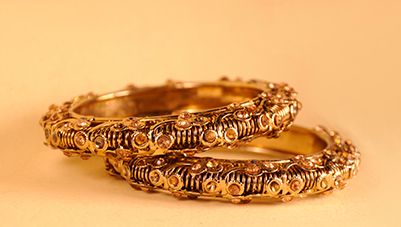
- 22K gold contains 91.6% pure gold and is commonly preferred for traditional Indian jewellery.
- 24K gold contains 99.9% pure gold and is primarily used for investment products such as gold coins and bars.
| Parameter | 18K Gold | 22K Gold | 24K Gold |
| Purity | 75% | 91.6% | 99.9% |
| Durability | Highest | High | Lower |
| Common use | Designer jewellery | Traditional jewellery | Gold coins and bars |
| Price | Lower | Higher | Highest |
How can you check the purity of gold in Dewas?
Checking the purity of gold before buying jewellery or applying for a gold loan can help you understand its quality and estimated value. Some commonly used methods include:
- BIS hallmark: Check for the BIS hallmark on the gold item to verify that it meets applicable purity standards.
- Magnifying glass: Look for purity markings such as 24K, 999 or 9999 on the jewellery.
- Six-digit alphanumeric HUID: You can verify the HUID using the BIS Care App.
- Colour and shine: Genuine gold usually has a consistent yellow colour and shine. However, appearance alone cannot confirm its purity.
- Magnetic test: Gold is not magnetic. However, this test cannot confirm whether the gold is genuine or determine its exact purity.
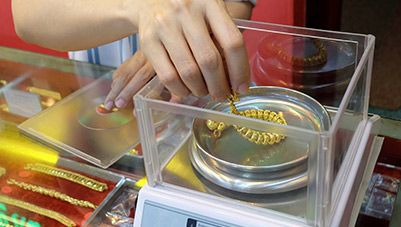
- Professional assessment: A certified jeweller or gold assayer can use suitable testing equipment to check gold purity more accurately.
For a reliable result, consider getting your jewellery tested by a qualified professional. If you are planning to pledge your gold, you can also check your gold loan eligibility to understand how much you may be eligible to borrow.
How can you calculate the value of your gold?
The value of your gold mainly depends on its weight, purity and applicable gold rate.
- Gold weight: The net weight of eligible gold.
- Gold purity: The karat level of the gold.
- Gold rate: The applicable rate for that purity.
Formula: Gold Value = Net eligible gold weight × Applicable rate
For example, if you have 50 grams of 22K gold and the applicable rate is Rs. 13,810 per gram:
50 × Rs. 13,810 = Rs. 6,90,500
This gives an estimated value of the gold. The value used for a gold loan may differ because the lender also considers its valuation method, applicable benchmark price, purity, weight and LTV limits.
How do gold rates affect gold investments?
Gold prices can affect the value of different gold investments, such as physical gold, Gold ETFs and Sovereign Gold Bonds. When gold prices rise, the value of these investments may also increase. Similarly, when gold prices fall, their value may decline. Keeping track of gold price movements can help investors make informed decisions.