


















































































































































































































































































Rs. 40,000 - Rs. 55 lakh
You may be eligible for a pre-approved offer
Enter mobile and OTP | Check offer | No branch visit needed
736 CIBIL Score - Is it good or bad?
A CIBIL Score of 736 places your credit profile relatively close to the excellent range, opening the door to personal loans, home loans, and more. Your past repayment behaviour appears broadly positive, but a few factors, such as high card balances or recent enquiries, may still affect the terms offered by lenders.
To strengthen your 736 CIBIL Score:
- Preserve your record of timely EMI and credit card payments
- Lower balances on cards with high credit utilisation
- Pause unnecessary applications for fresh credit
- Verify that settled or closed accounts are reported correctly
At this level, you may not need major changes to your credit habits. Addressing small weaknesses and maintaining consistent account activity may help you progress towards the excellent range.
How favourable is a 736 CIBIL Score?
A 736 CIBIL Score sits 14 points below the excellent category. It can present you as a reasonably dependable borrower, especially when your recent payments are clean and your existing debt remains manageable.
At this score, you may have:
- Access to mainstream credit: You may be considered for personal loans, credit cards and other commonly available products.
- A positive repayment signal: Regular payments may give lenders confidence in your credit discipline.
- Potential for suitable loan terms: Stable income and limited debt may support a competitive offer.
- More opportunity to compare: You may be able to consider offers from different lenders before making a decision.
- A realistic path to 750: Correcting minor issues may help your profile move into the excellent range over time.
A 736 CIBIL Score can strengthen your starting position, but approval and specific loan terms are not guaranteed. Check your personal loan eligibility using your mobile number and OTP to understand the offer available for your profile.
What else do lenders check beyond your CIBIL Score?
Your score tells lenders how you have managed credit in the past. It does not show whether your current monthly budget has enough room for another EMI. Lenders therefore review several present-day financial factors.
These may include:
- Disposable monthly income: The amount left after routine deductions helps determine affordable repayment.
- Number of active EMIs: Several ongoing loans can restrict eligibility for additional credit.
- Continuity of earnings: Stable employment or established business income may support the application.
- Recent payment pattern: A new delay may receive more attention than an older issue that has been resolved.
- Use of revolving credit: Regularly carrying high card balances can affect the lender’s assessment.
- Frequency of applications: Several enquiries in a short period may indicate rising credit dependence.
- Size of the loan request: The amount should remain appropriate for your earnings and other commitments.
A strong recent repayment pattern and sufficient disposable income may improve your personal loan prospects while your score remains within the good range.
How a 736 CIBIL Score affects your personal loan
A 736 CIBIL Score may help you access standard personal loan options. Since it is relatively close to 750, lenders may focus on whether your current finances support the requested loan rather than looking at the score alone.
Your profile may influence:
- Loan pricing: Your CIBIL Score, income, repayment record and active EMIs can influence the personal loan interest rate offered.
- Sanctioned amount: A higher disposable income may support greater loan eligibility.
- Level of scrutiny: Recent delays or large outstanding balances could lead to additional assessment.
- Tenure availability: The repayment period offered may depend on the EMI your budget can manage.
- Profile-based offers: Selected or pre-approved options may be available, subject to lender criteria.
Avoid borrowing more simply because a higher amount is available. Compare the EMI and total repayment obligation, then check your personal loan eligibility using your mobile number and OTP before proceeding.
How a 736 CIBIL Score may influence interest rates
A 736 CIBIL Score may support reasonably competitive personal loan pricing because it is positioned towards the upper end of the good range. However, applicants with excellent scores and stronger financial profiles may receive different terms.
Your personal loan interest rate will also depend on factors such as income stability, existing liabilities, requested amount and tenure. A borrower with fewer active EMIs may receive a different offer from another applicant with the same score but a higher monthly debt burden.
Review the rate together with processing charges and the total repayment amount. This provides a more complete view of the loan cost than the monthly EMI alone.
CIBIL Score ranges: What each category means
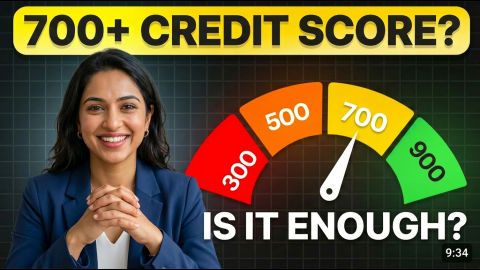
The 300–900 CIBIL Score scale is divided into categories that show the general strength of a credit profile. Lenders use these bands as a starting reference and then examine the details reported across individual accounts.
| CIBIL Score range | Rating | What it means |
| 300-549 | Poor | Major repayment problems may significantly reduce access to unsecured borrowing. |
| 550-649 | Fair | Limited credit options may be available, often after stricter assessment. |
| 650-749 | Good | A generally positive credit record may support standard products, subject to other eligibility checks. |
| 750-900 | Excellent | Sustained credit discipline may support wider choices and competitive borrowing terms. |
At 736, you are established within the good category and approaching its upper boundary. The remaining gap to 750 may reflect specific account signals rather than a broadly weak credit profile.
How to move your 736 CIBIL Score towards 750
Since your score is already close to the excellent range, begin by looking for smaller issues that may be slowing further progress. A recently reported card balance, hard enquiry or account-status error can sometimes matter more than opening a new credit facility.
You can refine your profile by:
- Paying upcoming dues before the final payment date
- Bringing heavily used cards back to a comfortable balance
- Clearing the full card bill where your budget permits
- Allowing recent hard enquiries to age before applying again
- Confirming that completed loans show no outstanding amount
- Correcting accounts marked inaccurately as active, overdue or settled
- Preserving older accounts that remain useful and affordable
- Checking payment activity on co-borrowed or guaranteed accounts
- Avoiding a new EMI that could place pressure on your monthly budget
Moving from 736 to a higher score may require patience because lenders report account updates at different times. Focus on clean, consistent activity instead of taking unnecessary credit solely to cross 750.
Key offerings: 3 loan types
Personal loan interest rate and applicable charges
Type of fee | Applicable charges |
Rate of interest per annum | 10% to 30.5% p.a. |
Processing fees | Up to 4.13% of the loan amount (inclusive of applicable taxes). |
Flexi Facility Charge | Term Loan – Not applicable Flexi Loans –Up To Rs 1,999 To Up To Rs 18,999/- (Inclusive Of Applicable Taxes) |
Bounce charges | Rs. 700 to Rs. 1,200/- per bounce “Bounce charges” shall mean charges for (i) dishonor of any payment instrument; or (ii) non-payment of instalment (s) on their respective due dates due to dishonor of payment mandate or non-registration of the payment mandate or any other reason. |
Part-prepayment charges | Full Pre-payment:
Part Pre-payment
|
Penal charge | Delay in payment of instalment(s) shall attract Penal Charge at the rate of up to 36% per annum per instalment from the respective due date until the date of receipt of the full instalment(s) amount. |
Stamp duty (as per respective state) | Payable as per state laws and deducted upfront from loan amount. |
Annual maintenance charges | Term Loan: Not applicable Flexi Term (Dropline) Loan: Up to 0.295% (Inclusive of applicable taxes) of the Dropline limit (as per the repayment schedule) on the date of levy of such charges.
Up to 0.472% (Inclusive Of Applicable Taxes) Of The Dropline Limit During Initial Tenure. Up to 0.295% (Inclusive Of Applicable Taxes) Of Dropline Limit During Subsequent Tenure |
| Credit guarantee scheme fee | Up to 1.18% p.a. (pro-rated daily till 31st March) (inclusive of all applicable taxes) of the loan amount |
| Credit guarantee scheme renewal fee | Up to 1.18% p.a. (inclusive of all applicable taxes) on the outstanding loan amount as on April 01 of the subsequent Financial Year. *Renewal Fee to be collected only for 3 subsequent financial years. **If the Remaining Tenure is less than 12 months, the CG Fee in subsequent years shall be charged prorated. |
Related articles
Disclaimer
Bajaj Finance Limited has the sole and absolute discretion, without assigning any reason to accept or reject any application. Terms and conditions apply*.
For customer support, call Personal Loan IVR: 7757 000 000