























































































































































































































Published May 5, 2026 · 4 Min Read

Which is safer for daily use, headphones or earbuds

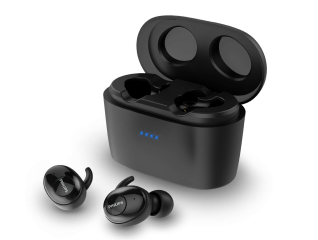
The question of whether headphones are safer than earbuds is often debated. Both send sound directly to your ears, but they work differently. Earbuds sit inside the ear canal, very close to the eardrum, while headphones rest over or on the ears. Because earbuds are closer, they can create stronger sound pressure even at lower volumes. This makes careful volume control especially important for people who use earbuds regularly.


Once you make the decision, head to any of Bajaj Finserv’s 1.5 lakh partner stores in 4,000 cities in India. Choose your ideal model, pay with Easy EMIs, and enjoy zero down payment on select deals. Simply check your loan eligibility now and bring home your desired product without worrying about overspending.

How do headphones and earbuds compare on sound exposure and hearing impact

Understanding how each device delivers sound to your ear and what that means for long-term hearing health is the most important dimension of this comparison for daily users.


ParameterOver-ear headphonesIn-ear earbuds
Distance from eardrum2 to 4 cm from ear canalDirectly inside ear canal
Sound pressure at same volumeLower due to greater distanceHigher due to proximity
Risk of hearing damage at high volumePresent but lower than earbudsHigher, particularly at maximum volume
Recommended maximum volume60 percent of device maximum60 percent of device maximum
Safe daily listening durationUp to 60 minutes at 80 dBUp to 60 minutes at 80 dB
WHO safe exposure limit85 dB for 8 hours85 dB for 8 hours
Leakage of sound to environmentMore sound leakageLess sound leakage
Risk of ear canal irritationNonePresent with extended wear
Moisture and wax build-upNot a concernCan accumulate with daily use

How do headphones and earbuds compare on comfort and long-term usage

Comfort during extended listening sessions directly influences how safely each device can be used over many hours without causing physical discomfort or encouraging users to raise volume to compensate for fatigue.


ParameterOver-ear headphonesIn-ear earbuds
Physical comfort over 1 hourHigh with quality ear cupsGood with correct ear tip size
Physical comfort over 4 hoursModerate, clamping pressure buildsReduces, ear canal fatigue develops
Weight on ears and headHeavier, felt on headNegligible weight
Heat and sweat build-upPresent around ear cupsMinimal
Ear canal pressureNoneBuilds over extended sessions
Portability for daily carryBulkier, less convenientVery compact and easy to carry
Risk of ear infectionNone with clean ear cupsPresent if earbuds are shared or not cleaned
Best for extended sessionsYes, over-ear preferredSuitable for shorter sessions
Suitability for exerciseLimited, may fall offHigh, sports models available

How do headphones and earbuds compare on noise isolation and volume control

Noise isolation is a critical safety factor because better isolation allows users to listen at lower volumes without raising the level to overcome background noise, which is one of the leading causes of noise-induced hearing damage.


ParameterOver-ear headphonesIn-ear earbuds
Passive noise isolationGood, ear cups block ambient soundModerate to good with proper ear tip fit
Active noise cancellationAvailable on premium modelsAvailable on premium models
Volume needed in noisy environmentsLower due to better passive isolationMay need higher volume in noisy settings
Risk of volume creep in publicLower with good ANCHigher without ANC in noisy commutes
Hearing safe mode availabilityAvailable on select modelsAvailable on select models
Volume limiting for childrenAvailable on select modelsAvailable on select models
Sound bleed to othersMore noticeableMinimal
Audio codec quality at safe volumeVery goodGood to very good

Which option is better for you, headphones or earbuds

The right choice between headphones and earbuds for safe daily use depends on your lifestyle, listening habits and how long you use audio devices each day. Neither is categorically safer, but each suits different users and situations better.


  • Choose over-ear headphones for extended listening sessions: If you listen for three or more hours continuously, over-ear headphones distribute sound further from the eardrum and cause less ear canal fatigue than earbuds during the same duration. They are the better choice for work-from-home, study and extended entertainment sessions.
  • Choose earbuds for active and on-the-go use: Earbuds are more practical for exercise, commuting and casual short-duration listening. For sessions of one to two hours at a controlled volume, earbuds with a good fit and ANC are a safe and convenient choice for most everyday users.
  • Prioritise ANC over volume in both categories: The single most important safety decision for either device is using active noise cancellation or good passive isolation to avoid raising the volume in noisy environments. A quality pair of headphones or earbuds with ANC allows you to listen safely at 50 to 60 percent volume in virtually any setting.
  • Follow the 60 to 60 rule regardless of device type: The World Health Organisation recommends listening at no more than 60 percent of maximum device volume for no more than 60 minutes without a break. This guideline applies equally to both headphones and earbuds and is the most reliable safeguard against noise-induced hearing damage for daily users.
  • Choose over-ear headphones for children: Children's ears are more sensitive to sound pressure than adult ears. Over-ear headphones with a built-in volume limiter capped at 85 dB are the safer choice for children, as the greater distance from the eardrum and the physical volume limit reduce the risk of hearing damage during extended use significantly.
  • Keep both devices clean for hygiene and health: Earbuds require more frequent cleaning than headphones because they sit directly inside the ear canal and accumulate earwax, moisture and bacteria. Clean earbud tips weekly with a dry cloth and replace silicone ear tips every three to six months to prevent ear canal irritation and infection.

Get electronics and appliances on Easy EMIs with Bajaj Finserv

Upgrading your home with the latest electronics and appliances is now easier and more affordable with Bajaj Finserv’s flexible financing options. Follow these steps to get started:


  • Explore products on Bajaj Mall: Browse a wide range of electronics and appliances from trusted brands on Bajaj Mall. Compare features like energy ratings, storage capacity, performance settings, and design to choose the right product for your home.
  • Visit a partner store: Once you shortlist a model, step into any of Bajaj Finserv’s 1.5 lakh partner stores across 4,000 cities in India. See the product in person, talk to experts, and make a confident decision.
  • Choose the Easy EMI Loan option: At checkout, select the Bajaj Finserv Easy EMI Loan. Avail financing of up to Rs. 5 lakh and split the cost into convenient monthly instalments. Some products also come with a zero down payment option.
  • Check your loan eligibility online: Plan better by checking your loan eligibility in minutes. Simply enter your mobile number and OTP to know your pre-approved limit.
  • Use the Insta EMI Card for purchases up to Rs. 3 lakh: Already own the Bajaj Finserv Insta EMI Card? Use it for instant, paperless checkout and convert your purchases of up to Rs. 3 lakh into Easy EMIs.


Headphones by brands:
Sony HeadphonesSennheiser HeadphonesboAt HeadphonesJBL Headphones
Bose HeadphonesSamsung HeadphonesHarman Kardon 
Headphones by types:
Wireless HeadphonesBluetooth HeadphonesWired HeadphonesStereo Headphones
Neckband HeadphonesOver-Ear Headphones  
Headphones by features:
Noise Cancelling HeadphonesGaming HeadphonesBass HeadphonesComputer Headphones

Frequently asked questions

Can I buy new headphones on EMI?

Yes, you can easily purchase new headphones with Bajaj Finserv's Easy EMI options. Whether you already have the Insta EMI Card or are new to it, here is how you can get started:
 
If you have the Bajaj Finserv Insta EMI Card:

  • Explore headphones on Bajaj Mall: Choose from top brands offering models with ANC, transparency modes, and long-lasting comfort.
  • Visit a partner store: Check out the latest headphones in person at any of 1.5 lakh partner stores across 4,000 cities.
  • Use your Insta EMI Card at checkout: Convert the total cost into Easy EMIs that fit your monthly budget.
  • Zero down payment on select models: Bring home your headphones without paying anything upfront.
     

If you do not have an Insta EMI Card:

Check your Insta EMI Card eligibility online using your mobile number and OTP. If eligible, you can apply instantly and start shopping for your favourite headphones easily and affordably.
 

Please note: Easy EMIs are applicable on purchases above Rs. 5,000.

Are headphones safer than earbuds for your ears?

Headphones are generally considered slightly safer than earbuds because they sit further from the eardrum, delivering lower sound pressure at the same volume setting. However, the difference is minimal if you use both at safe volume levels. The most important safety factor for either device is keeping volume below 60 percent of maximum and taking regular breaks. Neither headphones nor earbuds cause hearing damage when used responsibly within WHO-recommended volume and duration guidelines.

Can earbuds damage hearing faster than headphones?

Yes, earbuds can cause hearing damage more quickly than headphones if both are used at the same high volume setting. Because earbuds sit directly inside the ear canal, they deliver higher sound pressure to the eardrum at equivalent volume levels compared to over-ear headphones. This means the same volume setting on an earbud produces a louder effective sound level at the ear than on an over-ear headphone, accelerating the risk of noise-induced hearing damage during prolonged high-volume listening sessions.

Which is better for long listening sessions, headphones or earbuds?

Over-ear headphones are better for long listening sessions. They distribute weight across the head rather than inside the ear canal, cause less ear canal fatigue during extended wear and deliver lower sound pressure at equivalent volume levels. Quality over-ear headphones with memory foam ear cups can be worn comfortably for three to four hours without significant discomfort. Earbuds become uncomfortable for many users after one to two hours due to ear canal pressure build-up and tip friction during extended continuous wear.

What is the safe volume level for audio devices?

The World Health Organisation recommends listening at no more than 85 decibels for a maximum of eight hours per day to avoid noise-induced hearing damage. For personal audio devices, this typically corresponds to approximately 60 percent of the device's maximum volume output. As a practical guideline, if someone standing next to you can hear your audio clearly through your headphones or earbuds, your volume is too high. Most modern smartphones and audio devices include a volume warning feature that alerts users when they exceed recommended safe listening levels.

Show more Show less

Bajaj Finserv app for all your financial needs and goals

Trusted by 50 million+ customers in India, Bajaj Finserv App is a one-stop solution for all your financial needs and goals.

You can use the Bajaj Finserv App to:

  • Apply for loans online, such as Instant Personal Loan, Home Loan, Business Loan, Gold Loan, and more.
  • Invest in fixed deposits and mutual funds on the app.
  • Choose from multiple insurance for your health, motor and even pocket insurance, from various insurance providers.
  • Pay and manage your bills and recharges using the BBPS platform. Use Bajaj Pay and Bajaj Wallet for quick and simple money transfers and transactions.
  • Apply for Insta EMI Card and get a pre-qualified limit on the app. Explore over 1 million products on the app that can be purchased from a partner store on Easy EMIs.
  • Shop from over 100+ brand partners that offer a diverse range of products and services.
  • Use specialised tools like EMI calculators, SIP Calculators
  • Check your credit score, download loan statements and even get quick customer support—all on the app.

Download the Bajaj Finserv App today and experience the convenience of managing your finances on one app.

Disclaimer

1. Bajaj Finance Limited (“BFL”) is a Non-Banking Finance Company (BAJAJ FINANCE) and Prepaid Payment Instrument Issuer offering financial services viz., loans, deposits, Bajaj Pay Wallet, Bajaj Pay UPI, bill payments and third-party wealth management products. The details mentioned in the respective product/ service document shall prevail in case of any inconsistency with respect to the information referring to BFL products and services on this page.

2. All other information, such as, the images, facts, statistics etc. (“information”) that are in addition to the details mentioned in the BFL’s product/ service document and which are being displayed on this page only depicts the summary of the information sourced from the public domain. The said information is neither owned by BFL nor it is to the exclusive knowledge of BFL. There may be inadvertent inaccuracies or typographical errors or delays in updating the said information. Hence, users are advised to independently exercise diligence by verifying complete information, including by consulting experts, if any. Users shall be the sole owner of the decision taken, if any, about suitability of the same.