









₹ 2 lakh – ₹ 80 lakh
Check your pre-approved offer and other benefits
Enter mobile and OTP | Check offer | Know your exact loan terms
-
Checking the status of your Tax Deducted at Source (TDS) using your PAN card is an essential step to ensure that the correct amount of tax has been deducted and deposited against your income. This process helps taxpayers keep track of their tax liabilities and ensures compliance with tax regulations. Understanding how to check your TDS status can save you from potential issues with the Income Tax Department and ensure that your financial records are accurate. Check your business loan eligibility to understand how a clear tax and credit history can improve your chances of securing business financing.
What is TDS return?
-
Tax Deducted at Source (TDS) return is a quarterly statement submitted by the deductor to the Income Tax Department of India. It contains details of the tax deducted at source and paid to the government on behalf of the deductee. The concept of TDS aims to collect tax from the very source of income. The person (deductor) responsible for making specified payments, such as salary, interest, commission, rent, etc., is liable to deduct tax at the source before making the payment to the deductee (recipient).
TDS return is a crucial document for both the deductor and the deductee. It ensures that taxes are collected and paid to the government timely, helping in maintaining the regular inflow of revenue. It also assists the Income Tax Department in tracking the taxable incomes and verifying that the correct tax amount has been deducted and deposited. To explore financing options tailored to your business’s financial standing, check your pre-approved business loan offer and leverage your tax compliance.
The TDS return filing involves submitting various details such as the PAN of the deductor and deductee, details of the tax deducted and deposited, and other relevant information. The deductor must file these returns quarterly, failing which can attract penalties and interest on the delayed payment of taxes. TDS returns need to be filed in specific forms depending on the nature of the income and deduction. For example, Form 24Q is used for TDS on salaries, while Form 26Q is for TDS on all payments other than salaries.
How to check TDS status by PAN card?
-
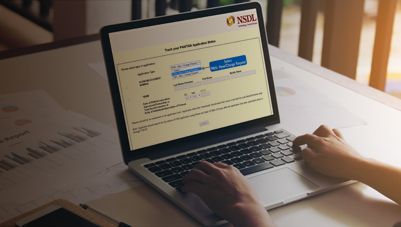
Checking the TDS status using a PAN card is a straightforward process. Here’s how you can do it:
- Visit the official income tax website: Go to the official Income Tax Department website or the TRACES (TDS Reconciliation Analysis and Correction Enabling System) portal.
- Login or register: If you are a registered user, log in using your credentials. If not, you will need to register by providing your PAN details, date of birth, and other required information.
- Navigate to TDS section: Once logged in, navigate to the 'TDS' or 'Tax Credit' section. Here, you will find the option to view Form 26AS.
- View Form 26AS: Form 26AS is a consolidated tax statement that provides details of all the taxes deducted and deposited against your PAN. You can view and download this form to check your TDS status.
- Check details: Form 26AS will display various details such as TDS deducted by different deductors, the amount deducted, and the amount deposited to the government. Cross-check these details with your records to ensure accuracy.
- Contact deductor: If you notice any discrepancies in the TDS details, contact the deductor to rectify the issue. They may need to file a correction statement to update the records.
Details contained in TDS returns
TDS returns contain several critical details that help both the deductor and the Income Tax Department track the tax deducted and deposited accurately. Some of the key details included in TDS returns are:
- PAN details: The Permanent Account Number (PAN) of both the deductor and the deductee is a mandatory detail. This helps in uniquely identifying the parties involved and ensuring the correct mapping of TDS deductions.
- TDS deduction information: The return includes information about the amount of tax deducted at the source for various payments. This may include details such as the nature of the payment, the rate of TDS applied, and the amount deducted.
- Challan details: Information about the challans used to deposit the TDS amount to the government is included. This includes details like the Challan Identification Number (CIN), date of deposit, and the bank through which the payment was made.
- Deduction period: The period during which the tax was deducted is specified. This helps in tracking the deductions for each quarter and ensures that the returns are filed for the correct periods.
- Payment details: Specifics of the payments made to the deductee, such as the gross amount paid, the date of payment, and the amount on which TDS was deducted, are included.
- Correction details: If any corrections are made to previous TDS returns, the details of such corrections are also included. This ensures transparency and accuracy in the TDS records.
Understanding these details can help taxpayers verify their TDS records and ensure that the correct amount of tax has been deducted and deposited on their behalf. It also aids in resolving any discrepancies that may arise during the filing of income tax returns.
Check your pre-approved business loan offer
Get business loan for your needs

Women Business Loan
Get Women Business Loan upto 80 Lakh

Medical Store Business Loan
Get Medical Store Business Loan upto 80 Lakh

Manufacturer Business Loan
Get Manufacturer Business Loan upto 80 Lakh
Our loan variants





Loans for business needs















Select loan by amount
Business loan in different cities

Business loan in bangalore

Business loan in mumbai

Business loan in pune

Business loan in Jaipur

Business loan in Kerala

Business Loan in Telangana

Business Loan in Surat

Business Loan in Ranchi

Business Loan in Odisha

Business Loan in Noida

Business Loan in Kolkata

Business Loan in Karnataka

Business Loan in Hyderabad

Business Loan in Gujarat

Business Loan in Coimbatore

Business Loan in Assam

Business Loan in Ahmedabad
Business loan for different budgets

2 lakh business loan
3 lakh business loan
5 lakh business loan
10 lakh business loan

15 lakh business loan
20 lakh business loan
25 lakh business loan
30 lakh business loan
50 lakh business loan
Types of business loan
Unsecured Business Loan
Secured Business Loan
Term Loan
Cash Credit
Working Capital Loan
Machinery Loan
Line of Credit
Micro Loan
Merchant cash Loan
Frequently Asked Questions
Overview
Which TDS certificates are applicable to salaried individuals?
Salaried individuals receive Form 16 as their TDS certificate. This form provides details of the salary paid and the TDS deducted by the employer.
Which form should be utilised for filing TDS on rent?
For filing TDS on rent, Form 26QC should be used. This form is specifically for TDS on rent payments under Section 194-IB.
Who is in charge of making TDS deductions?
The responsibility for making TDS deductions lies with the person making the payment, known as the deductor. This can be an employer, a financial institution, or any individual or entity making specified payments.
What is a TDS return?
A TDS return is a quarterly statement submitted by the deductor to the Income Tax Department. It includes details of the tax deducted at source and paid to the government on behalf of the deductee.
More articles



Disclaimer
Bajaj Finance Limited has the sole and absolute discretion, without assigning any reason to accept or reject any application. Terms and conditions apply*.