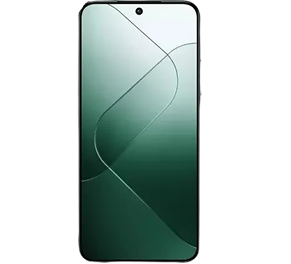
Both are capable mid-range 5G phones with AMOLED displays and 120Hz refresh rates, but they differ meaningfully in processor generation, display resolution, camera capability, charging speed, connectivity, and software longevity. Here is a section-by-section breakdown.
General
The Nord CE 4 5G supports expandable storage through a hybrid SIM slot, while the Redmi Note 13 Pro 5G has a dedicated dual-SIM configuration with no microSD support. Both carry a one-year warranty and IP54 water resistance.
| Specification | OnePlus Nord CE 4 5G | Redmi Note 13 Pro 5G | What it means |
|---|
| SIM | Dual SIM, Nano, hybrid slot | Dual Nano SIM | Nord CE 4 uses one slot for either a second SIM or a microSD card; Redmi keeps both SIM slots separate |
| Network support | 5G, 4G | 5G, 4G | Both are ready for Indian 5G networks |
| Dimensions | 162.5 × 75.3 × 8.4 mm | 161.15 × 74.24 × 7.98 mm | Redmi Note 13 Pro is slimmer and slightly more compact |
| Weight | 186 g | 187 g | Negligible difference in daily carry |
| Warranty | 1 year | 1 year | Standard India manufacturer warranty |
Display and design
Both phones use AMOLED panels with 120Hz refresh rates, but the Redmi Note 13 Pro 5G offers a sharper 1.5K resolution, higher peak brightness, and Gorilla Glass Victus protection. The Nord CE 4 5G has a higher screen-to-body ratio and faster PWM dimming.
| Specification | OnePlus Nord CE 4 5G | Redmi Note 13 Pro 5G | What it means |
|---|
| Display type | AMOLED | AMOLED | Both offer deep blacks, vivid colour, and lower power draw than LCD |
| Screen size | 6.7 inches | 6.67 inches | Virtually identical; both are large enough for comfortable media consumption |
| Resolution | 1080 × 2412 px (FHD+) | 1220 × 2712 px (1.5K) | Redmi's sharper display is noticeably crisper for text and fine image detail |
| Pixel density | 394 ppi | 446 ppi | Redmi's higher density makes individual pixels indistinguishable at normal use |
| Refresh rate | 120 Hz | 120 Hz | Smooth scrolling and animation on both phones |
| Touch sampling rate | 240 Hz | 240 Hz | Identical touch responsiveness during gaming |
| Peak brightness | 1,100 nits | 1,800 nits | Redmi Note 13 Pro is significantly more readable outdoors in direct sunlight |
| HBM brightness | 900 nits | 1,200 nits | Redmi's display handles HDR content more vividly |
| Screen protection | Not specified | Corning Gorilla Glass Victus | Redmi's display offers flagship-grade drop and scratch resistance |
| HDR support | HDR10+ | HDR10+, Dolby Vision | Redmi Note 13 Pro supports Dolby Vision for compatible streaming content |
| PWM dimming | 2,160 Hz | 1,920 Hz | Nord CE 4's higher-frequency dimming may cause less eye strain during prolonged screen use |
| Screen-to-body ratio | 93.4% | 89.8% | Nord CE 4 has thinner bezels and a more immersive feel |
| IP rating | IP54 | IP54 | Both resist splashes and light rain; neither is submersible |
-> Pro tip: The Redmi Note 13 Pro 5G's 1,800-nit peak brightness makes it the more practical screen for outdoor use in Indian summer conditions, while the Nord CE 4's PWM dimming is a consideration for users sensitive to screen flicker during extended night use.
Performance and software
The Nord CE 4 5G's Snapdragon 7 Gen 3 is a newer, higher-performing chip than the Redmi Note 13 Pro 5G's Snapdragon 7s Gen 2 — scoring approximately 41% higher on AnTuTu. The Redmi Note 13 Pro 5G, however, offers longer OS and security update support, a 12GB RAM option, a 3.5mm headphone jack, and Dolby Atmos audio.
| Specification | OnePlus Nord CE 4 5G | Redmi Note 13 Pro 5G | What it means |
|---|
| Processor | Snapdragon 7 Gen 3 | Snapdragon 7s Gen 2 | Nord CE 4's chip is a generation ahead with meaningfully better performance |
| CPU configuration | 1× A715 @ 2.63GHz + 3× A715 @ 2.4GHz + 4× A510 @ 1.8GHz | 4× A78 @ 2.4GHz + 4× A55 @ 1.95GHz | Nord CE 4 has a prime core for burst tasks; Redmi's design favours consistent multi-core loads |
| Clock speed | Up to 2.63 GHz | Up to 2.4 GHz | Nord CE 4 is faster in single-threaded tasks |
| Fabrication | 4 nm | 4 nm | Both are power-efficient for their class |
| GPU | Adreno 720 | Adreno 710 | Nord CE 4's GPU handles demanding graphics better |
| RAM | 8 GB LPDDR4X | 8 GB / 12 GB LPDDR4X | Redmi offers a 12GB option for heavier multitasking |
| AnTuTu score | 8,19,347 | 5,80,250 | Nord CE 4 is approximately 41% faster overall |
| OS at launch | Android 14, OxygenOS 14 | Android 13, HyperOS | Nord CE 4 launched a generation ahead in software; Redmi ships HyperOS |
| OS updates | 2 years | 3 years | Redmi Note 13 Pro will receive one more major Android update |
| Security updates | 3 years | 4 years | Redmi stays supported a year longer against vulnerabilities |
| Fingerprint sensor | In-display optical | In-display optical | Convenient and consistent on both phones |
| Audio | Stereo speakers, USB-C audio | Stereo speakers, 3.5mm jack, Dolby Atmos | Redmi Note 13 Pro supports wired headphones and Dolby Atmos spatial audio |
-> Pro tip: If you plan to use wired earphones regularly — common on Indian commutes — the Redmi Note 13 Pro's 3.5mm jack is a practical advantage the Nord CE 4 lacks entirely.
Camera
The Redmi Note 13 Pro 5G's 200MP primary sensor is the headline difference here. The Nord CE 4 5G's 50MP Sony LYT-600 sensor compensates with a wider aperture and continuous autofocus, making it more capable in varied lighting. The Redmi adds a macro lens; the Nord CE 4 does not.
| Specification | OnePlus Nord CE 4 5G | Redmi Note 13 Pro 5G | What it means |
|---|
| Rear camera setup | 50MP + 8MP | 200MP + 8MP + 2MP | Redmi has more cameras; Nord CE 4 focuses on sensor quality over count |
| Primary camera | 50MP, f/1.8, Sony LYT-600 | 200MP, f/1.65, Samsung ISOCELL S5KHP3 | Redmi's sensor captures more detail; Nord CE 4's wider aperture performs better in low light |
| Sensor size | 1/1.95" | 1/1.4" | Redmi's larger sensor captures more light, improving dynamic range |
| Ultra-wide camera | 8MP, f/2.2 | 8MP, f/2.2 | Identical ultra-wide performance on both |
| Macro camera | Not available | 2MP, f/2.4 | Redmi offers close-up photography; Nord CE 4 does not |
| OIS | Yes | Yes | Both stabilise handheld shots and reduce video blur |
| Autofocus | PDAF + continuous AF | PDAF | Nord CE 4's continuous autofocus is more reliable for moving subjects |
| Flash | Dual LED | Dual-colour LED | Redmi's dual-colour flash produces more natural skin tones |
| Front camera | 16MP, f/2.4 | 16MP, f/2.45 | Comparable selfie performance; Nord CE 4 has a marginally wider aperture |
| Rear video | 4K@30fps, FHD@60fps, HD@240fps | 4K@30fps, FHD@60fps | Nord CE 4 supports 240fps slow-motion at HD resolution |
| Front video | FHD@30fps, HD@30fps | FHD@30fps, HD@30fps | Identical front video capability |
-> Pro tip: The 200MP sensor on the Redmi Note 13 Pro lets you crop heavily into a shot and still retain usable detail — useful for photographing documents, signage, or subjects at a distance.
Storage and connectivity
The Nord CE 4 5G has significantly faster UFS 3.1 storage, Wi-Fi 6E, Bluetooth 5.4, and NFC. The Redmi Note 13 Pro 5G uses UFS 2.2 storage and Wi-Fi 5, and does not support NFC. Both offer similar GPS coverage, but only the Nord CE 4 5G supports NFC for tap-to-pay.
| Specification | OnePlus Nord CE 4 5G | Redmi Note 13 Pro 5G | What it means |
|---|
| Internal storage | 128 GB / 256 GB | 128 GB / 256 GB | Same storage options; differs in how fast data is read and written |
| Storage type | UFS 3.1 | UFS 2.2 | Nord CE 4 loads apps and transfers files noticeably faster |
| Expandable storage | Up to 1 TB (microSD via hybrid slot) | Not supported | Nord CE 4 can expand storage at the cost of a second SIM card |
| Wi-Fi | Wi-Fi 6E (5GHz/6GHz), MIMO | Wi-Fi 5 (2.4GHz/5GHz) | Nord CE 4 supports the 6GHz band for lower latency on compatible routers |
| Bluetooth | 5.4 | 5.2 | Nord CE 4's newer Bluetooth offers improved range and efficiency |
| NFC | Yes | No | Only the Nord CE 4 supports tap-to-pay and quick device pairing |
| GPS | A-GPS, GLONASS | GPS, A-GPS, BeiDou, GLONASS | Redmi supports BeiDou for marginally better positioning accuracy |
| USB | Type-C | Type-C | Standard port on both; neither supports USB 3.x speeds |
| Audio port | USB-C only | 3.5mm headphone jack | Redmi Note 13 Pro works with standard wired earphones without an adapter |
Battery and charging
The Nord CE 4 5G carries a larger 5,500 mAh battery and charges significantly faster at 100W, reaching full charge in approximately 29 minutes. The Redmi Note 13 Pro 5G has a 5,100 mAh battery with 67W charging. PCMark battery tests show the Nord CE 4 lasting over 16 hours versus the Redmi's 12h 46m.
| Specification | OnePlus Nord CE 4 5G | Redmi Note 13 Pro 5G | What it means |
|---|
| Battery capacity | 5,500 mAh | 5,100 mAh | Nord CE 4 lasts longer on a charge in real-world and benchmark tests |
| Charging speed | 100W SUPERVOOC | 67W Turbo Charging | Nord CE 4 charges fully in approximately 29 minutes; Redmi takes around 44 minutes |
| Wireless charging | Not supported | Not supported | Neither phone supports wireless charging |
| Reverse charging | USB OTG (wired) | USB OTG (wired) | Both can charge accessories like earbuds via a USB OTG adapter |
| PCMark battery life | 16h 02m | 12h 46m | Nord CE 4 lasts over 3 hours longer in standardised productivity tests |
| Charging time to full | ~29 minutes | ~44 minutes | Nord CE 4's 100W charging is a meaningful advantage for busy daily routines |
-> Pro tip: The Nord CE 4's 100W SUPERVOOC charging means a 15-minute top-up before leaving home can add a substantial portion of battery — practical if you often charge in short windows.