








Clear your overdue EMI
Clear your overdue EMI today – stop penalties & fix your credit
*Overdue charges include penalty interest and bounce fees as applicable. T&C apply.
In Summary
Overdue Payment: What Happens Next?
A delayed professional loan EMI can attract penal charges and, where applicable, bounce charges, and the exact amount depends on your loan terms. An EMI that is not received by its due date may be treated as overdue from that date, because a universal grace period may not apply. Check your loan agreement for the terms that apply to your loan.
- Penal charges and bounce charges may apply, depending on your loan product and its terms.
- Check your loan agreement or schedule of charges for the exact amount, as charges differ by product.
- An EMI not received by its due date may be treated as overdue, and a universal grace period may not apply.
- A delayed EMI is reported to credit bureaus as overdue, which can lower your CIBIL score.
- Pay overdue EMIs through My Account or the app by selecting Missed Instalments or Other Overdues.
- A penal charge waiver is not automatic and depends on a case-by-case review.
In Summary
Overdue Payment: What Happens Next?
A delayed professional loan EMI can attract penal charges and, where applicable, bounce charges, with the exact amount depending on your loan terms. Bajaj Finance does not apply a universal grace period, so any delay may be treated as overdue from the due date itself.
- Penal charges and bounce charges may apply depending on your specific loan product.
- No universal grace period exists; check your loan agreement for applicable terms.
- Pay overdue EMIs directly through the Bajaj Finance App or My Account.
- A repayment delay can affect your CIBIL score depending on its duration and severity.
- Loan restructuring may be considered, subject to Bajaj Finance's assessment and approval.
- Penal charge waivers are not automatic and depend on case-by-case review.
What charges apply when your professional loan EMI is delayed?
A delayed professional loan EMI may attract penal charges and, where applicable, bounce charges, depending on the loan product and its terms. Check the exact amount in your loan documents or official loan account, as charges can differ by product. Commonly relevant charges include:
| Charge | When it may apply | What to check |
| Penal charge | When an instalment is delayed | Applicable rate and calculation method in the loan terms |
| Bounce charge | When an EMI payment or mandate fails | Applicable charge for the failed transaction |
| Other applicable dues | Where specified in the loan agreement | Loan-specific terms and account statement |
The official fees and charges information states that penal charges for delayed instalments vary by product, while bounce charges may apply when a payment instrument or payment mandate is dishonoured. Do not apply a charge from another loan product to a professional loan. Confirm the applicable amount for your account through the relevant loan documents or official service channels.
How is penal charge calculated on a professional loan?
Penal charge commonly refers to an additional amount for delayed repayment, but under RBI guidelines, such penalties are treated as penal charges rather than an additional interest rate. The calculation depends on the terms of the professional loan agreement and the lender's applicable policy. Where a percentage-based penal charge is specified, the applicable basis, rate and period of default are used according to the agreed terms. Penal charges should not be capitalised, so further interest should not be calculated on the penal charge itself. However, interest on unpaid loan amounts may continue at the contracted rate until the overdue amount is cleared, subject to the loan terms. Borrowers should therefore check the loan agreement and applicable schedule of charges to understand the exact amount payable rather than applying a standard penal interest formula. Clearing overdue dues promptly can help prevent delays from continuing and may limit additional charges.
How to clear a professional loan overdue and avoid further charges?
Clearing an overdue professional loan promptly can help prevent the delay from continuing and may limit additional charges. Review the current dues, use an authorised payment channel and confirm the loan account status after payment.
- Check the total overdue amount: Review the unpaid EMI, applicable interest, penal charges and other dues shown against the loan account.
- Pay the overdue promptly: Clear the amount due through an authorised repayment channel to address the outstanding instalment.
- Use Bajaj Finance digital platforms: Sign in to the Bajaj Finance App or My Account using your registered mobile number and OTP, select the relevant loan under Your Relations, and use the available loan payment option.
- Verify the payment: After completing the transaction, check the loan account to confirm that the payment has been recorded and whether any amount remains outstanding.
- Keep the payment receipt: Save the transaction reference or payment confirmation for your records.
- Raise a service request if required: If a payment is not reflected or a charge appears unclear, use the available Bajaj Finance service channel to request clarification.
Once your overdue payment is cleared, check your loan account periodically to confirm no further instalments are pending, and keep your registered mobile number and payment mandate up to date to avoid a repeat delay.
Steps to clear professional loan overdue payments through Bajaj Finance platforms
You can review your loan account and pay eligible overdue amounts through the Bajaj Finance App or My Account using the available online repayment options.
Through My Account or the Bajaj Finance App
- Sign in: Log in using your registered mobile number and OTP.
- Select your loan: Go to Services and choose the relevant loan under Your Relations.
- Open loan payments: Select Make Loan Payments or the available payment option.
- Choose the overdue payment: Select Missed Instalments or Other Overdues, where available.
- Review the amount: Check the overdue amount and applicable charges displayed for your loan account.
- Make the payment: Select an available payment method and complete the transaction.
- Save the confirmation: Keep the payment receipt or transaction reference for future reference.
After a successful payment, you may receive a payment reference number, and we may send a confirmation to your registered contact details. The options shown can vary based on the loan account and services available at the time. If the amount displayed differs from your records or a previous payment is not reflected, check the payment details before making another payment, and raise a service request if you need clarification.
How can you prevent professional loan EMI overdue payments?
Keeping sufficient funds available and monitoring the repayment schedule can reduce the risk of a professional loan EMI becoming overdue.
Follow these steps:
- Track your EMI due dates in advance.
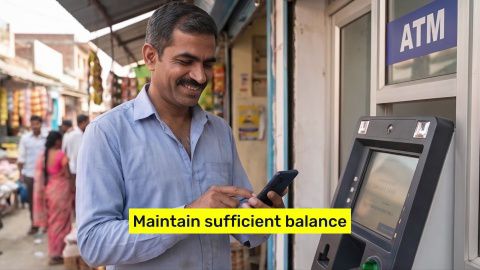
- Maintain sufficient balance in the account linked to your payment mandate.
- Check that your NACH or other payment mandate remains active and correctly registered.
- Review your loan account periodically for outstanding dues.
- Use official digital payment channels when making manual payments.
- Keep payment confirmations until the transaction is reflected in your loan account.
If an automatic EMI payment fails, check the reason promptly. A failed NACH or ECS transaction can leave the EMI unpaid and may result in applicable bounce or other charges. Taking action when the first payment issue occurs is usually more useful than letting several instalments accumulate.
Is there a grace period for professional loan EMI payment?
A professional loan may not have a universal grace period after the EMI due date. The applicable loan agreement and repayment terms determine how a delayed EMI is treated, including whether any additional time or charges apply. Borrowers should check their specific loan terms rather than assume a grace period. If an EMI is not received by the scheduled due date, it may become overdue under the applicable terms. Any interest, penal charges, or other applicable charges depend on the loan agreement and the lender's policy. If a payment has been delayed, reviewing the current dues and clearing the outstanding amount promptly can help prevent the delay from continuing. Borrowers should also avoid relying on an assumed grace period to postpone repayment. Checking the loan account through an authorised Bajaj Finance service channel can help confirm the current payment status and amount payable.
Not your nearest branch?

Frequently Asked Questions
Delay Charges Basics
Clearing Overdue
How long before a delayed professional loan becomes overdue?
A professional loan becomes overdue when you don't pay the scheduled EMI by the applicable due date. The overdue status continues until you clear the pending amount, along with any applicable penal charges or bounce charges under your specific loan terms and repayment agreement.
How do I pay overdue on my Bajaj Finance professional loan?
You can check and pay eligible overdue amounts through the Bajaj Finance App or My Account. Sign in with your registered mobile number and OTP, select the relevant loan, review the amount due and complete payment using an available option.
Can penal charges be waived on my professional loan?
Any request to waive applicable penal charges is subject to Bajaj Finance's internal policies and case-by-case assessment. A waiver is never automatic, so do not assume one will be approved before your EMI is cleared. Review your loan account for the exact charge applied, then contact Bajaj Finance through official service channels to enquire about your specific repayment situation.
Will an overdue professional loan affect my CIBIL score?
An overdue professional loan can affect your CIBIL score when the lender reports the repayment delay to the credit bureau. The impact depends on factors such as the delay's duration and severity and your overall credit history.
Can I restructure my professional loan if EMIs are overdue?
Loan restructuring may be considered based on your circumstances, loan terms, and the lender's assessment. Loan restructuring is subject to your lender's assessment and approval. Eligibility criteria vary by loan type, repayment history, and current financial situation. Contact your lender directly to understand whether restructuring is available for your loan.
Is penal charge relief available for a professional loan?
How can I check whether my professional loan is affecting my CIBIL score?
You can review your credit report to check the repayment history and reported status of your professional loan. If you identify information that appears inaccurate, verify your loan account records and follow the applicable credit bureau dispute process.
How do I check total delay charges on my professional loan?
You can check the outstanding amount and applicable charges through the Bajaj Finance App or My Account. Review the loan account details before making payment. If any charge appears unclear, raise a service request for clarification.
Can professional loan restructuring reduce my overdue EMI burden?
A restructuring arrangement may change repayment terms if the lender approves it, but approval and revised terms are not guaranteed. For accurate, up-to-date information on restructuring options for your loan, contact your lender through official channels only.
More Articles


Disclaimer
While care is taken to update the information, products, and services included in or available on our website and related platforms/websites, there may be inadvertent inaccuracies or typographical errors or delays in updating the information. The material contained in this site, and on associated web pages, is for reference and general information purpose and the details mentioned in the respective product/service document shall prevail in case of any inconsistency. Subscribers and users should seek professional advice before acting on the basis of the information contained herein. Please take an informed decision with respect to any product or service after going through the relevant product/service document and applicable terms and conditions. In case any inconsistencies observed, please click on reach us.
*Terms and conditions apply.