








Avoid EMI Bounce Charges
Avoid bounce charges – pay EMI before due date
Pay EMI Before It Bounces
In Summary

EMI Bounce: Causes & Solutions
An EMI bounce happens when a scheduled EMI payment fails, most often because of insufficient balance, a failed auto-debit, an incorrect or expired mandate, a delayed salary credit or an account change. A bounce charge may apply to each failed payment according to your loan agreement, the EMI stays unpaid, penal charges may apply to the overdue amount, and the overdue status is reported to credit bureaus. Keep enough balance before the due date, keep your mandate and bank details updated, align your due date with your income date, and check your payment status before paying again.
- A bounce charge may apply each time a scheduled EMI payment fails, and the amount depends on your loan agreement.
- Common causes are insufficient balance, an expired or incorrect mandate, a delayed salary credit, an account closure or change, and minimum balance rules.
- A bounced EMI stays unpaid, so penal charges may apply to the overdue amount and the overdue status is reported to credit bureaus.
- There is no fixed number of bounces that triggers legal action, but repeated bounces increase the risk of recovery action and legal notices.
- To avoid a bounce, keep a separate repayment account, keep enough balance before the due date, keep your mandate updated and align your due date with your income date.
- If you pay an EMI in advance, check that the advance payment has been processed and that no auto-debit follows.
What are EMI bounce charges with Bajaj Finance
EMI bounce charges are penalties imposed by Bajaj Finance when an Equated Monthly Instalment (EMI) payment fails due to insufficient funds in the borrower’s bank account or technical issues such as incorrect banking details. These charges are levied to compensate for the inconvenience and administrative costs incurred by the lender due to the missed payment.
Reasons for EMI bounce
- Insufficient funds: When the account balance is lower than the required EMI amount.
- Banking errors: Issues like incorrect account details or ECS (Electronic Clearing Service) mandates.
- Delayed deposits: Failure to deposit funds into the account before the EMI deduction date.
How are bounce charges calculated
The bounce charges vary depending on the terms of the loan agreement. Bajaj Finance typically specifies the exact amount for each instance of a bounced EMI in the loan agreement. These charges are separate from the interest or penalties accrued on the unpaid amount.
Implications of EMI bounce
- Additional costs: Apart from bounce charges, late payment fees may apply if the EMI is not cleared promptly.
- Credit score impact: Repeated EMI bounces can negatively affect your credit score, reducing eligibility for future loans.
- Loan default risk: Persistent non-payment could lead to default and legal action.
Avoiding EMI bounce charges
- Maintain sufficient balance in your account before the EMI due date.
- Set up automatic reminders for EMI payments.
- Update your banking details promptly if required.
By understanding these charges and managing finances effectively, borrowers can ensure a seamless repayment experience with Bajaj Finance.
Common causes of EMI bounce with Bajaj Finance
An EMI bounce occurs when a scheduled Equated Monthly Instalment (EMI) payment fails to be processed. Bajaj Finance imposes penalties in such situations to offset administrative costs. Understanding the common causes of EMI bounces can help borrowers avoid unnecessary charges and maintain financial discipline.
1. Insufficient funds
The most common reason for an EMI bounce is an inadequate balance in the borrower's bank account on the due date. If the available funds are less than the EMI amount, the payment request is rejected by the bank.
2. Technical banking errors
Issues such as incorrect ECS (Electronic Clearing Service) mandates, errors in banking details, or system downtimes can lead to an EMI bounce. These errors are often unintentional but can disrupt timely payments.
3. Delayed salary credit
If the borrower relies on their salary to fund EMI payments but the salary is credited late, this misalignment can cause an EMI bounce.
4. Expired bank mandates
When bank mandates for automatic EMI deductions expire or are not renewed on time, payment requests may fail.
5. Account closures or changes
Closing or switching bank accounts without updating the EMI mandate can result in payment failures.
6. Non-maintenance of minimum balance
Some bank accounts require a minimum balance. Failure to maintain it can lead to transaction rejections, including EMI debits.
Tips to avoid EMI bounces
- Regularly monitor your account balance to ensure sufficient funds.
- Align EMI due dates with income credit dates.
- Update ECS or auto-debit mandates promptly after changing accounts.
Being proactive with account management helps borrowers avoid the financial and credit score repercussions of EMI bounces with Bajaj Finance.
Tips to prevent EMI bounce charges with Bajaj Finance
Here are four tips to ensure that your EMIs are repaid on time and avoid bounce charges applicable on overdue instalments.
Equated monthly instalments (EMIs) are fixed payments made towards repaying loans. These small monthly instalments provide a structured approach to settling debts over time, including both the principal amount and interest.
EMIs usually get auto-debited from your bank account on a pre-set date. However, if you fail to pay your EMIs on time due to insufficient funds or any other reason, additional penal charges are levied on it.
You must pay this penal charge when you’re clearing your overdue EMI. Therefore, it’s recommended to ensure that you don’t miss your EMI payment date. Bounce charges are also applicable whenever auto-debit of EMI fails. Failing to pay your monthly instalments on time might also have a negative impact on your credit score.
Here are three effective ways to repay your EMIs on time and avoid incurring bounce charges applicable on overdue instalments
- Have separate accounts for loan repayment and daily spends
Having separate accounts ensures that your loan repayment account has sufficient funds on the EMI due date. It also encourages you to stick to your budget. You can get into the habit of transferring your EMI amount to your loan repayment account when your salary comes. This will help in avoiding overdue EMIs and preventing additional charges like bounce charges.
- Make advance EMI payments
In case you have a fear of missing out on your EMI due date, you can make advance EMI payments before the due date. This will help you avoid bounce charges. If you’ve borrowed a loan from Bajaj Finance, you can use our online payment services and pay your EMIs in advance. Your advance instalment gets adjusted towards your loan account on the EMI due date and no deduction will be made from your bank account.
- Keep your mandate updated
Make sure your bank account details are updated in our records so that EMIs get deducted without any issues. This ensures smooth transactions and prevents failure of payment. You can use our digital customer services and update your bank details easily without any branch visits.
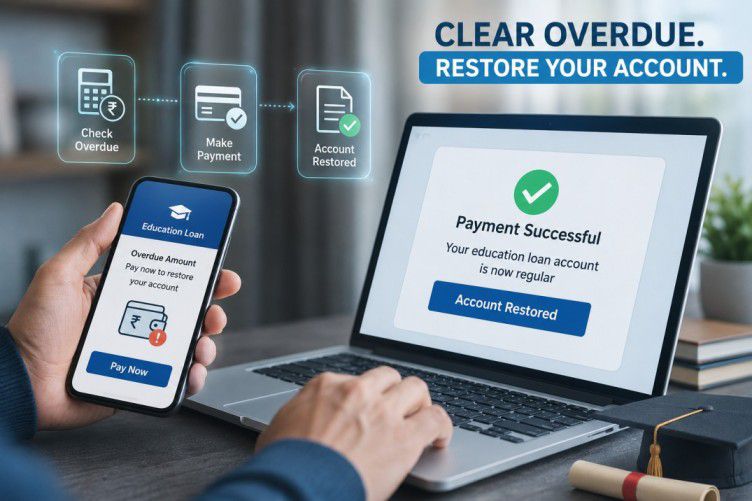
If you have an overdue EMI with us, you can easily clear it by visiting our customer portal – My Account. All you have to do is sign-in with your registered mobile number and the OTP. Once you submit the OTP, you’ll be asked to share your date of birth for verification. You can then select your loan account and proceed to pay your overdue EMI using our secured payment gateway. Please note that when you are clearing your overdue monthly instalments, you have to pay additional penal charges.
Manage Your Bajaj Loan: Essential Guides & Resolution Steps
Not your nearest branch?

Frequently Asked Questions
Bounce Charge Basics
Prevention
What is an EMI bounce charge in Bajaj Finance?
An EMI bounce charge is a penalty applied when your EMI payment fails, usually due to insufficient funds or a failed auto-debit. It compensates Bajaj Finance for the failed transaction and gets added to your loan account. The amount varies by loan type.
How much is the EMI bounce charge on a Bajaj personal loan?
The bounce charge amount depends on your specific loan agreement and product terms, and may vary between customers. For accurate, up-to-date figures applicable to your loan, please check your loan documents, the official fees and charges page, or your My Account statement.
How many times can an EMI bounce before legal action is taken?
There is no fixed number of bounces that automatically triggers legal action, as this depends on your loan agreement and repayment history. Repeated bounces increase the risk of recovery action and legal notices. Always refer to your loan terms or contact Bajaj Finance directly.
How do I avoid EMI bounce charges in Bajaj Finance?
Ensure sufficient balance in your linked bank account before the EMI due date. Set reminders, update your bank details promptly if they change, and consider paying your EMI in advance if you expect a cash flow issue around the due date.
Can I pay EMI in advance to avoid a bounce?
Yes. Paying your EMI in advance clears that instalment before its due date, so there is no auto-debit attempt to fail. This helps you avoid bounce charges, provided the advance payment is made and processed before the scheduled due date.
What is the grace period for EMI payment in Bajaj Finance?
Bajaj Finance does not offer a standard grace period for EMI payments. Penal charges typically apply from the due date itself if payment is delayed. It is best to pay on or before the due date to avoid any additional charges.
More Articles


Disclaimer
While care is taken to update the information, products, and services included in or available on our website and related platforms/websites, there may be inadvertent inaccuracies or typographical errors or delays in updating the information. The material contained in this site, and on associated web pages, is for reference and general information purpose and the details mentioned in the respective product/service document shall prevail in case of any inconsistency. Subscribers and users should seek professional advice before acting on the basis of the information contained herein. Please take an informed decision with respect to any product or service after going through the relevant product/service document and applicable terms and conditions. In case any inconsistencies observed, please click on reach us.
*Terms and conditions apply.