








Loans from ₹20,000 to ₹40 Lakh
Failed EMI deduction? Clear dues now to stop escalation
T&C apply. ECS return charges are non-refundable except in bank error cases.
In Summary

EMI Bounce: Causes & Solutions
An ECS (Electronic Clearing Service) or NACH (National Automated Clearing House) return happens when a scheduled EMI payment fails on its due date, most commonly because of insufficient balance in the linked bank account. Your bank may charge a return fee, the lender may apply a separate bounce charge, and the unpaid EMI can make your loan account overdue and attract penal charges. An overdue EMI that stays unpaid can be reported to credit bureaus and lower your credit score, so pay it through My Account or the app as soon as you notice the return.
- An ECS or NACH return happens when a scheduled EMI payment fails on its due date, most often due to insufficient balance.
- Other causes include incorrect account details, a closed or inactive account, a technical issue and a signature mismatch on a physical mandate.
- Your bank may charge a return fee, and the lender may apply a separate bounce charge for the missed EMI.
- The EMI stays unpaid after a return, so the loan account can become overdue and attract penal charges.
- An overdue EMI that remains unpaid can be reported to credit bureaus and lower your credit score.
- To clear it, pay the overdue EMI through My Account or the app using UPI, net banking or a debit card, then check that the loan status has updated.
Understanding ECS and NACH return charges on your loan
An ECS or NACH return happens when your scheduled EMI payment fails to go through on the due date, most commonly due to insufficient balance in your linked bank account. Other reasons include incorrect account details, a closed or inactive account, or a technical issue at the bank's end. When this happens, your bank may charge a return fee, and Bajaj Finance may also apply a bounce charge, since the EMI itself remains unpaid. This can lead to your loan account being marked overdue, along with penal interest, so it is worth resolving any return promptly to limit the impact on your account and credit score.
What triggers an ECS return charge
An ECS or NACH return happens when your scheduled EMI payment fails to go through on the due date. The most common reason is insufficient balance in your linked bank account at the time of deduction. Other reasons include incorrect account details, a closed or inactive account, or a technical issue at the bank's end. When this happens, your bank may charge a return fee, and Bajaj Finance may also apply a bounce charge, since the EMI itself remains unpaid.
Impact on your overdue amount and credit score
When an ECS or NACH transaction is returned, your EMI is treated as unpaid, and your loan account may be marked overdue. This can lead to penal interest in addition to the bounce charge. If the overdue amount is not cleared and the issue continues, it may also be reported to credit bureaus, which can lower your credit score. Addressing a return promptly helps limit these consequences and keeps your repayment record intact.
How to avoid ECS and NACH return charges
Maintain sufficient balance before your EMI date
The simplest way to avoid a return charge is to ensure your linked bank account has enough balance a day or two before your EMI due date, since even a small shortfall can cause a failure. Setting a reminder for your due date, or keeping a small buffer in your account, can help you stay ahead. If you manage multiple accounts, keeping your EMI account topped up specifically around your due date is worth prioritising.
Consider paying manually in advance
If you are ever unsure whether your account will have sufficient balance on your due date, you can make your EMI payment manually in advance through My Account or the Bajaj Finance app. This clears your upcoming instalment ahead of time and removes the risk of an auto-debit failure altogether.
Common reasons ECS and NACH transactions fail
| Reason | What it means |
|---|---|
| Insufficient balance | Not enough funds in your account on the due date |
| Incorrect account details | Mismatch in account number, IFSC code, or account holder name |
| Closed or inactive account | The linked bank account is no longer active |
| Technical issue | A delay or error at the bank's or NPCI's end |
| Signature mismatch | Physical mandate signature does not match bank records |
Identifying the reason behind a return helps you resolve it correctly and avoid repeat failures.
What happens after an ECS or NACH return
If your EMI payment is returned, a few things typically follow:
- Your bank may charge a return fee, as per its own policy
- Bajaj Finance may apply a bounce charge and penal interest on your loan account
- Your loan account may be marked overdue until the payment is cleared
- Continued non-payment can affect your credit score and may lead to further recovery action
Since these consequences apply regardless of the reason for the failed deduction, it is best to address a return as soon as you notice it.
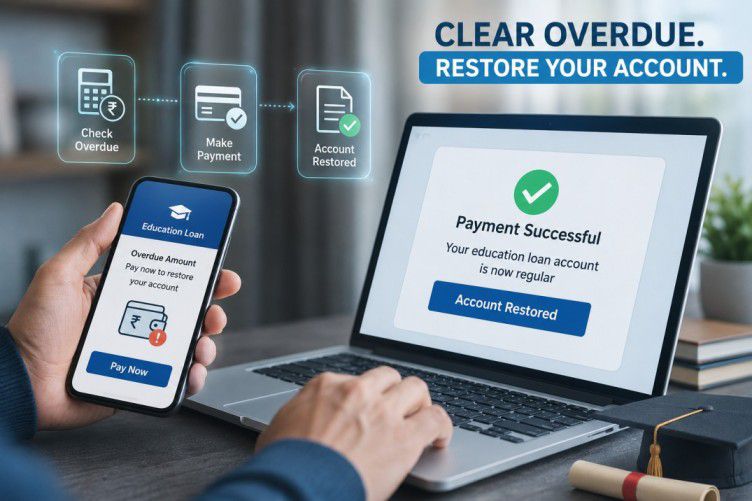
How to clear your overdue EMI after a return
If your EMI has not been deducted due to an ECS or NACH return, you can resolve it quickly:
- Log in to My Account or the Bajaj Finance app using your registered mobile number and OTP
- Go to your loan account and select the overdue payment option
- Complete the payment using your preferred method, such as UPI, net banking, or a debit card
- Check your updated loan status to confirm the payment has been reflected
Clearing the overdue amount promptly helps you avoid further penal charges and protects your credit score.
More Guides on Managing Your Bajaj Finance Loan Account
Frequently Asked Questions
ECS/ACH Return Basics
Overdue & Escalation
Prevention
What are ECS return charges?
ECS return charges are fees applied when a scheduled EMI payment through Electronic Clearing Service fails to go through, usually due to insufficient balance or incorrect account details. Both your bank and Bajaj Finance may apply charges when this happens.
What is ACH debit return charge?
An ACH debit return charge is similar to an ECS return charge, applied when an automated debit request fails to process successfully. This is common terminology used interchangeably with ECS or NACH returns across different banking systems.
Why am I charged ECS return charges on my Bajaj Finance loan?
You are charged when your scheduled EMI payment fails to process, most often due to insufficient balance in your linked account on the due date. Incorrect account details or a technical issue can also lead to a failed transaction and charges.
How much are ECS return charges on a Bajaj loan?
The exact amount varies depending on your bank's policy and your specific loan agreement. Check your loan documents or My Account for the precise charges applicable to your loan, as these can differ across banks and loan types.
Are ECS return charges different from bounce charges?
They are closely related. An ECS return charge is usually applied by your bank for the failed transaction, while a bounce charge may be applied by Bajaj Finance separately for the missed EMI. Both can apply together for a single failed payment.
How does an ECS return create overdue EMI?
When your ECS transaction fails, the EMI amount does not reach your loan account, even though it may have been temporarily processed. Since the payment was not successfully completed, your loan account reflects the EMI as unpaid, marking it overdue.
What happens if I don't pay after an ECS return?
If the overdue EMI remains unpaid, penal interest and further charges may apply. Continued non-payment can affect your credit score and may lead to reminder calls, recovery notices, or further action, depending on how long the amount remains outstanding.
Will ECS return affect my CIBIL score?
Yes, if the resulting overdue EMI is not cleared promptly, it can be reported to credit bureaus and may lower your CIBIL score. Paying the overdue amount quickly helps limit the impact on your credit record.
How do I pay my overdue EMI after an ECS return?
Log in to My Account or the Bajaj Finance app, go to your loan account, and select the overdue payment option. Complete the payment using your preferred method to clear the dues and avoid further penal charges.
How do I avoid ECS return charges?
Maintain sufficient balance in your linked bank account a day or two before your EMI due date. Setting reminders or paying your EMI manually in advance through My Account or the app can also help you avoid a failed deduction.
How do I set up manual EMI payment instead of auto-debit?
Log in to My Account or the Bajaj Finance app, go to your loan account, and select the manual payment option before your due date. This lets you pay directly without relying on the automatic ECS or NACH deduction.
How do I change my bank account for ECS/NACH debit?
Contact Bajaj Finance to request a change and complete a fresh mandate registration for your new bank account. The earlier mandate is usually cancelled once the new one is verified and activated. Confirm the exact process with Bajaj Finance.
More Articles

Disclaimer
While care is taken to update the information, products, and services included in or available on our website and related platforms/websites, there may be inadvertent inaccuracies or typographical errors or delays in updating the information. The material contained in this site, and on associated web pages, is for reference and general information purpose and the details mentioned in the respective product/service document shall prevail in case of any inconsistency. Subscribers and users should seek professional advice before acting on the basis of the information contained herein. Please take an informed decision with respect to any product or service after going through the relevant product/service document and applicable terms and conditions. In case any inconsistencies observed, please click on reach us.
*Terms and conditions apply.