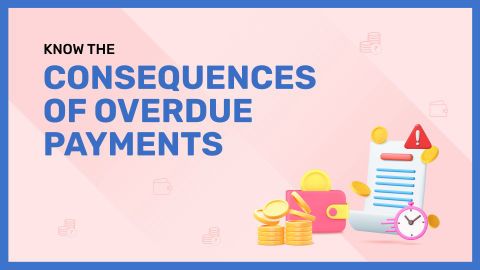
A “written off” status reflects a lender’s internal accounting classification of an outstanding loan amount. This classification is based on defined criteria and does not change the borrower’s repayment responsibility.
How to avoid a loan write-off
To avoid a loan being marked as ‘written off’, customers should adopt proactive repayment and monitoring practices such as:
- Pay EMIs on time - Ensure all instalments are paid on or before the due date. Setting up auto-debit instructions or payment reminders can reduce the risk of missed payments and prolonged defaults.
- Maintain sufficient account balance - Keep adequate funds in your registered bank account to avoid EMI bounce charges and repeated payment failures, which may negatively impact your repayment record.
- Regularly monitor your loan account and credit report - Track your loan statements and periodically review your credit report with credit bureaus such as TransUnion CIBIL to identify and address discrepancies or overdue amounts promptly.
- Avoid prolonged defaults - A loan is typically marked as ‘written off’ after extended non-payment. Clearing dues before the account reaches a critical delinquency stage helps protect your credit profile.
Consistent repayment behaviour and early engagement with the lender are key to ensuring your loan is not classified as written off.
Understanding and reviewing Days Past Due (DPD) information
DPD indicates the number of days between a scheduled payment date and the actual payment date recorded for a loan account. This information is reported periodically based on lender records.
Bajaj Finance reports Days Past Due (DPD) to credit bureaus strictly in line with the agreed repayment schedule and the actual payment behaviour on the loan account. The DPD status reflects whether instalments were paid on time, delayed, or missed, based on system-recorded due dates.
How customers can ensure their DPD remains standard
- Pay EMIs on or before the due date - Timely repayment as per the loan agreement ensures the account reflects ‘000’ or standard DPD status.
- Avoid partial or delayed payments - Paying after the due date or making incomplete payments may result in DPD being reported for that billing cycle.
- Maintain sufficient bank balance - Ensure adequate funds are available if EMIs are auto-debited to prevent bounce charges and overdue reporting.
- Track repayment schedule regularly - Monitor your loan account statements and due dates to avoid accidental delays.
Consequences of DPD reporting
DPD information is shared with credit bureaus such as TransUnion CIBIL and forms part of your credit history. Repeated or prolonged delays may lower your credit score, affect future loan approvals, increase borrowing costs, or reduce eligibility for higher credit limits. Maintaining disciplined repayment behaviour is essential to preserve a healthy credit profile.
Loan enquiries reflected in CIBIL report
When a loan or credit application is submitted, a corresponding enquiry is recorded in the CIBIL report. These entries reflect credit checks conducted during the application process and remain visible for a defined period as per CIBIL guidelines.
What does loan status mean in a CIBIL report
Loan status reflects the current position of your loan account as reported by the lender. Common statuses include Active (ongoing loan with regular repayment), Closed (loan fully repaid), Settled (loan closed after partial payment agreement), and Written Off (loan marked as loss after prolonged non-payment).
Conclusion
Maintaining awareness of your credit report helps you stay informed about your overall credit profile and financial standing. Bajaj Finance reports loan details, including repayment history and Days Past Due (DPD), to credit bureaus strictly in accordance with the agreed loan terms and the customer’s actual repayment behaviour.
Your credit record reflects how consistently you meet your financial obligations. Timely EMI payments, adherence to due dates, and responsible credit usage are essential to maintaining a standard DPD status and a healthy credit score. Any delays, missed instalments, or repeated defaults are reported as part of the regular credit reporting framework and may affect future borrowing eligibility, interest rates, or approval decisions.
Bajaj Finance customers can use official customer service channels for general information about their loan accounts. However, maintaining a clean and positive credit profile ultimately depends on sustained financial discipline and consistent repayment performance.
Explore More Loan Repayment and Credit Profile Management Guides