What is the difference between Crystal UHD and QLED TVs

Crystal UHD TVs and QLED TVs displays compared for clarity, color depth, and energy use, guiding you to the right choice for your viewing preferences. Discover exclusive offers on top-rated TVs and bring cinematic entertainment to your living room.
Get your new TV on Easy EMIs
3 min
24 Nov. 25

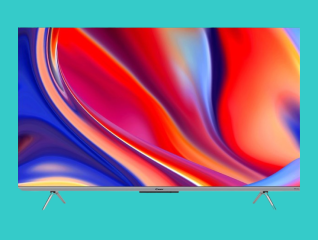
When deciding between Crystal UHD and QLED TVs, the key difference lies in display quality and cost. Crystal UHD offers good picture clarity and vibrant colours, making it a budget-friendly choice for most users. QLED TVs, on the other hand, use quantum dot technology for better brightness, contrast, and colour depth, which leads to a superior viewing experience.

If you are thinking of buying a TV, check your loan eligibility first. It helps you understand your budget and narrow down your options. Once you have a budget in mind, explore the latest models on Bajaj Mall. Simply visit any of Bajaj Finserv’s 1.5 lakh partner stores in over 4,000 cities, choose the model you want, and convert your purchase into Easy EMIs of up to Rs. 5 lakh. With Easy EMIs and zero down payment on select models, bringing home the right television is simple and stress-free.

Overview of Crystal UHD vs QLED TVs

When choosing a new TV, understanding the differences between Crystal UHD and QLED is crucial. Crystal UHD offers a sharp 4K resolution at an affordable price, while QLED enhances brightness, colour vibrancy, and contrast with Quantum Dot technology. Whether you prioritise picture clarity, colour depth, or energy efficiency, both options bring distinct benefits. Dive into our comparison to decide which TV technology best suits your home entertainment needs.

Why spend more when you can save more? Use the Maha Bachat savings calculator to combine dealer offers, brand offers, and Bajaj offers to bring down your purchase cost. Calculate your extra savings today!

What is UHD

Ultra High Definition (UHD) refers to television resolutions that go beyond standard HD, typically including 4K (3840×2160 pixels) and 8K (7680×4320 pixels) formats. UHD delivers sharper images, more detail, and improved clarity compared to Full HD. With a 16:9 aspect ratio, UHD enhances viewing experiences by offering lifelike visuals, making it ideal for large screens and immersive entertainment.

It has become the industry standard for modern TVs, ensuring compatibility with streaming services, gaming consoles, and high-quality broadcast content.

Key features of UHD

  • Higher resolution: Four times sharper than Full HD, offering 4K and 8K clarity.

  • HDR support: Enhanced contrast and colour accuracy for lifelike visuals.

  • Wide Colour gamut: Richer tones with Rec. 2020 standard for realistic imagery.

  • Upscaling technology: Improves lower-resolution content to near-UHD quality.

  • Smart integration: Built-in apps and connectivity for streaming, gaming, and browsing.

What is QLED.

QLED stands for Quantum Dot Light Emitting Diode, a display technology that enhances traditional LED panels with a layer of quantum dots. These nanocrystals emit precise colors when illuminated by a backlight, resulting in brighter displays and improved colour accuracy.

Unlike OLED, which uses self-emissive pixels, QLED relies on LED backlighting but achieves superior brightness levels, making it ideal for well-lit rooms. Introduced by Sony and popularised by Samsung, QLED TVs are widely available across brands like TCL, Hisense, and Vizio.

Key features of QLED

  • Exceptional brightness: Quantum dots deliver vivid visuals even in brightly lit rooms.

  • Superior colour accuracy: Wide palette enhances HDR performance and realism.

  • Durability: Reduced risk of burn-in compared to OLED panels.

  • High resolution: Supports 4K and 8K formats for detailed viewing.

  • Advanced features: High refresh rates and smart capabilities ideal for gaming and cinematic experiences.

Which technology is better for you, Crystal UHD vs QLED TVs?

Crystal UHD and QLED TV are two popular TV technologies, each offering unique advantages. Crystal UHD TVs focus on delivering high-quality 4K resolution and are typically more affordable, ideal for viewers looking for a solid TV with vibrant visuals. On the other hand, QLED TVs, featuring Quantum Dot technology, provide enhanced brightness, wider colour ranges, and superior contrast. They are ideal for those who seek a more immersive and dynamic viewing experience, especially in brightly lit rooms. Choosing between Crystal UHD and QLED ultimately depends on your viewing preferences and budget.

Comparison table of features of Crystal UHD vs QLED TVs

Feature

Crystal UHD

QLED

Resolution

4K UHD (3840 x 2160 pixels)

4K UHD (3840 x 2160 pixels)

Colour technology

Standard LED colour range

Quantum Dot technology for enhanced colours

Brightness

Moderate

High, better for bright rooms

Contrast ratio

Good

Superior with deeper blacks

HDR support

Yes

Yes, with better HDR performance

Energy efficiency

Higher efficiency

Moderately high

Price range

Affordable

Mid-to-high range

Detailed analysis of picture quality, colour accuracy, and value of Crystal UHD vs QLED TVs

  1. Picture quality: Crystal UHD offers sharp and clear 4K images, suitable for casual viewing. QLED enhances this with better brightness and contrast, offering a more immersive and dynamic experience.
  2. Colour accuracy: Crystal UHD provides vibrant visuals, but QLED outshines with its Quantum Dot technology, delivering more accurate and rich colours that are perfect for vivid content like nature documentaries and gaming.
  3. Brightness: QLED TVs provide higher brightness levels, making them ideal for viewing in bright or well-lit rooms, while Crystal UHD performs well in standard lighting conditions.
  4. Price range: Crystal UHD TVs are more affordable and provide great value for general users. QLED models come at a higher price but justify the cost with enhanced features like superior HDR and a wider colour spectrum.
  5. Energy efficiency: Crystal UHD 4K LED TV is generally more energy-efficient, while QLED consumes more power due to its advanced brightness and colour capabilities.

Updated price list of Crystal UHD vs QLED TVs in India

Crystal UHD TVs

Model

Price (INR)

Samsung Crystal UHD AU8000

Rs. 45,999

Samsung Crystal UHD AU7700

Rs. 39,999

Samsung Crystal UHD AU9070

Rs. 52,999

Samsung Crystal UHD AU9000

Rs. 49,999


QLED TVs

Model

Price (INR)

Samsung QLED Q60A

Rs. 65,999

Samsung QLED Q70A

Rs. 79,999

Samsung QLED Q80A

Rs. 89,999

Samsung QLED Q95T

Rs. 1,29,999


Disclaimer
: The features, availability, and pricing of each model are subject to change and may vary. For the most accurate and up-to-date information, please visit the official website.

Before you decide, explore the latest offers. You may find a great deal on a model that matches your needs.

Which one should you buy

Choosing between UHD and QLED depends on your priorities and viewing environment. If you are looking for an affordable option with sharp resolution and HDR support, UHD TVs are a great fit for everyday entertainment, streaming, and gaming.

On the other hand, if you want brighter displays, superior colour accuracy, and durability, especially in well-lit rooms, QLED TVs offer a more premium experience. UHD is ideal for budget-conscious buyers who want 4K clarity, while QLED suits those seeking vivid visuals and enhanced performance for cinematic or gaming setups.

Get electronics and appliances on Easy EMIs with Bajaj Finserv

Upgrading your home with the latest electronics and appliances is now easier and more affordable with Bajaj Finserv’s flexible financing options. You can also maximise your savings by using the Maha Bachat Savings Calculator—a smart tool that combines brand offers, dealer offers, and EMI offers, all in one place, helping you lower the overall cost while still paying in small, bite-sized instalments. Follow these steps to get started:

  • Explore products on Bajaj Mall: Browse a wide range of electronics and appliances from trusted brands. Compare features like energy ratings, storage capacity, performance settings, and design to choose the right product for your home.
  • Visit a partner store: Once you shortlist a model, step into any of Bajaj Finserv’s 1.5 lakh partner stores across 4,000 cities in India. See the product in person, talk to experts, and make a confident decision.
  • Choose the Easy EMI Loan option: At checkout, select the Bajaj Finserv Easy EMI Loan. Avail financing of up to Rs. 5 lakh and split the cost into convenient monthly instalments. Some products also come with a zero down payment option.
  • Check your loan eligibility online: Plan better by checking your loan eligibility in minutes. Simply enter your mobile number and OTP to know your pre-approved limit.
  • Use the EMI Network Card for purchases up to Rs. 3 lakh: Already own the Bajaj Finserv EMI Network Card? Use it for instant, paperless checkout and convert your purchases of up to Rs. 3 lakh into Easy EMIs.

TV by brand

Mi TV

Sony TV

LG TV

OnePlus TV

Samsung TV

Vu TV

TCL TV

Panasonic TV

Lloyd TV

Kodak TV

Realme TV

Philips TV

Haier TV

Intex TV

Hyundai TV

Bpl TV

Akai TV

Amstrad TV

Sansui TV

Elista TV

ITEL TV


TV by features

LED TV

Smart TV

Full HD TV

Android TV

OLED TV

QLED TV

HD TV


TV by size

32-inch TV

40-inch TV

75-inch TV

65-inch TV

43-inch TV

49-inch TV

50-inch TV

55-inch TV


TVs by brands

Sony TV

Mi TV

LG TV

Haier TV

OnePlus TV

Vu TV

TCL TV

Samsung TV

Panasonic TV

Philips TV


TVs by budget

TVs under Rs. 15,000

TVs under Rs. 20,000

TVs under Rs. 25,000

TVs under Rs. 30,000

TVs under Rs. 40,000

TVs under Rs. 50,000

Pro tip

Explore with rewards, cashbacks, coupons, and deals from Bajaj Finserv.

Bajaj Finserv app for all your financial needs and goals

Trusted by 50 million+ customers in India, Bajaj Finserv App is a one-stop solution for all your financial needs and goals.

You can use the Bajaj Finserv App to:

  • Apply for loans online, such as Instant Personal Loan, Home Loan, Business Loan, Gold Loan, and more.
  • Invest in fixed deposits and mutual funds on the app.
  • Choose from multiple insurance for your health, motor and even pocket insurance, from various insurance providers.
  • Pay and manage your bills and recharges using the BBPS platform. Use Bajaj Pay and Bajaj Wallet for quick and simple money transfers and transactions.
  • Apply for Insta EMI Card and get a pre-qualified limit on the app. Explore over 1 million products on the app that can be purchased from a partner store on Easy EMIs.
  • Shop from over 100+ brand partners that offer a diverse range of products and services.
  • Use specialised tools like EMI calculators, SIP Calculators
  • Check your credit score, download loan statements and even get quick customer support—all on the app.

Download the Bajaj Finserv App today and experience the convenience of managing your finances on one app.

Do more with the Bajaj Finserv App!

UPI, Wallet, Loans, Investments, Cards, Shopping and more

Disclaimer

1. Bajaj Finance Limited (“BFL”) is a Non-Banking Finance Company (NBFC) and Prepaid Payment Instrument Issuer offering financial services viz., loans, deposits, Bajaj Pay Wallet, Bajaj Pay UPI, bill payments and third-party wealth management products. The details mentioned in the respective product/ service document shall prevail in case of any inconsistency with respect to the information referring to BFL products and services on this page. 

2. All other information, such as, the images, facts, statistics etc. (“information”) that are in addition to the details mentioned in the BFL’s product/ service document and which are being displayed on this page only depicts the summary of the information sourced from the public domain. The said information is neither owned by BFL nor it is to the exclusive knowledge of BFL. There may be inadvertent inaccuracies or typographical errors or delays in updating the said information. Hence, users are advised to independently exercise diligence by verifying complete information, including by consulting experts, if any. Users shall be the sole owner of the decision taken, if any, about suitability of the same.

Frequently asked questions

Can I buy TVs on EMIs?

Yes, you can purchase TVs with Bajaj Finserv’s Easy EMI options.

If you are an existing user of the Bajaj Finserv Insta EMI Card:

  • Explore a wide range of TVs on Bajaj Mall
  • Choose the preferred model and visit a Bajaj Finserv partner store to check it out in person
  • Use your EMI Network Card and avail of Easy EMIs for affordable monthly payments
  • Enjoy your new TV on Easy EMIs

If you do not have one, there is no need to worry. Check your eligibility for an Insta EMI Card and take the first step towards enjoying the affordability and convenience of Easy EMIs.

Which offers better picture quality: Crystal UHD or QLED?
QLED typically provides better picture quality due to its advanced quantum dot technology. It offers higher brightness, better contrast ratios, and superior colour reproduction, making it the better choice for those seeking high-quality visual performance.

Which is more suitable for a bright room: Crystal UHD or QLED?
QLED is more suitable for bright rooms because its quantum dot technology allows for higher peak brightness and better colour performance, even in well-lit environments. This makes it better at handling glare and maintaining picture clarity compared to Crystal UHD, which may struggle in very bright spaces.

Which lasts longer, UHD or QLED?
  • QLED TVs typically last longer than standard UHD LED TVs.

  • QLED panels can maintain image quality for up to 10 years on average, thanks to their quantum dot technology and reduced risk of burn-in.

  • UHD TVs (standard LED-based) also last several years but may degrade faster in brightness and colour accuracy compared to QLED.

Which TV is better for gaming UHD or QLED?

For gaming, QLED TVs are usually the better choice. They offer higher brightness levels, superior HDR support, and faster refresh rates, which enhance the overall gaming experience. These features ensure smoother motion handling and more vivid visuals, especially in fast-paced games. UHD TVs, while sharp and affordable, may not deliver the same level of responsiveness or colour accuracy that gamers often look for. Casual gamers will find UHD sufficient, but for immersive and competitive gaming, QLED provides a noticeable edge.

Which TV is better for dark rooms QLED or UHD?

QLED TVs perform better in dark rooms compared to UHD models because they deliver deeper blacks and stronger contrast. UHD TVs, which rely on standard LED backlighting, often struggle with black levels, resulting in a grayish tone in dim environments. QLED’s enhanced contrast and colour reproduction make it more suitable for cinematic viewing in low-light settings. While OLED remains the gold standard for dark-room performance, between UHD and QLED, QLED clearly offers a superior experience.

Which one consumes more power QLED or UHD?

QLED TVs consume more power than UHD TVs, primarily because they are designed to deliver higher brightness levels and advanced backlighting. This extra energy usage allows QLED panels to maintain vivid visuals even in brightly lit rooms. UHD TVs, on the other hand, are generally more energy-efficient, making them a better option for users who prioritise lower electricity consumption. Although the difference in power usage is not extreme, it becomes noticeable over long-term use, especially for households that watch TV for extended hours daily.

Show More Show Less