








Download your loan statement online.
Clear overdue & stay on track
Enter mobile and OTP · No password needed · No branch visit needed
What is a loan statement
A loan statement is a document that provides a record of your loan account and repayment activity. It contains key information about the loan, such as the amount borrowed, EMI details, payments recorded against the account, and the outstanding amounts. The statement gives you a clear view of your loan position at a particular point in time and can be used to track how the account has progressed during the repayment period.
Reviewing your loan statement can help you verify your repayment history and check whether recent payments have been recorded correctly. It can also help you identify any outstanding or overdue amounts that require timely attention. Regularly checking the statement allows you to keep track of your repayment obligations and spot differences in account information or payment records. If a payment is not reflected, retain the transaction details and contact the lender through an authorised channel for clarification.
Why should you check your loan statement regularly
Checking your loan statement regularly helps you track repayments and identify outstanding or overdue amounts that may require action.
Regular review can help you:
- Confirm that repayments are being recorded.
- Track your outstanding loan balance.
- Identify overdue amounts.
- Check your repayment history.
- Spot discrepancies in account information.
- Take timely action when a payment remains pending.
Delayed repayment can result in an overdue amount and may affect your credit record. Reviewing your statement helps you identify such issues earlier and take appropriate steps instead of allowing unpaid amounts to remain unresolved.
What details are included in a loan statement
A loan statement contains information that helps you understand your loan balance and repayment activity. The exact information available can vary depending on the loan and account.
| Loan statement detail | What it tells you |
| Loan account details | Identifies the loan account associated with the statement |
| Loan amount | Shows the amount associated with the loan |
| EMI details | Provides information about scheduled EMI repayments |
| Repayment history | Records payments made towards the loan |
| Outstanding amount | Shows the amount remaining to be repaid |
| Overdue amount | Shows any amount that remains unpaid after its due date |
| Loan tenure | Indicates the repayment period associated with the loan |
| Loan status | Shows the current status of the loan account |
Check the repayment entries and outstanding amount carefully, particularly if you have recently made a payment. If a payment is not reflected as expected, keep the transaction details available when contacting the lender through an authorised channel.
How to check your Bajaj Finance loan statement online
You can check your loan statement through the available Bajaj Finance digital servicing platforms by signing in with your registered details.
To check your loan statement online:
- Open the Bajaj Finance App or visit the My Account portal.
- Sign in using your registered mobile number and complete OTP verification.
- Enter your date of birth if prompted for identity verification.
- Go to the Service or My Relations section.
- Select the relevant loan account.
- Open the available loan details or statement option.
- View your loan statement and download it if needed.
If you are checking the statement because an amount remains unpaid, review the outstanding or overdue amount and take appropriate action through an
authorised payment channel.
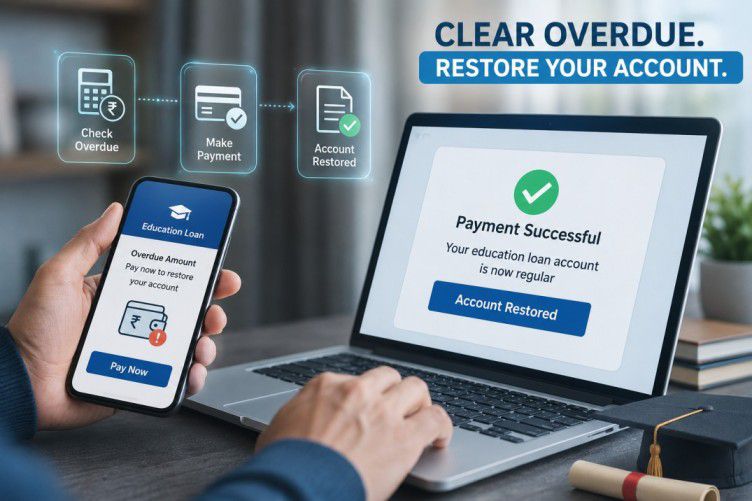
What should you do if your loan statement shows overdue dues
Check whether the overdue amount relates to an unpaid EMI or another outstanding amount. If you have already made the relevant payment, compare the transaction details with the entries shown in your statement.
You can take the following steps:
- Check the overdue amount shown in the statement.
- Review your repayment history to identify the relevant pending payment.
- Verify recent payment records if you have already made a payment.
- Make the required payment through an authorised payment channel, where applicable.
- Retain payment confirmation for your records.
- Contact the lender through official channels if the statement does not reflect a payment or if you need clarification about the account.
Addressing overdue amounts on time can help keep your payments up to date and make it easier to track your loan account.
Loan support made easy
Frequently Asked Questions
Loan Statement Basics
Repayment & Dues
What is the difference between a loan statement and a repayment schedule?
A loan statement records actual transactions and payments on your loan account, while a repayment schedule generally shows the planned EMI payments and their due dates over the loan tenure.
How often should I review my loan statement?
You can review your loan statement whenever you make a payment or need to check your account position. Regular checks can help you keep track of repayments and identify any changes or pending amounts.
Can I use a loan statement as proof of repayment?
A loan statement can show payments recorded against your loan account and may help verify your repayment history. If you need a specific document as proof of repayment, check with your lender about the applicable document.
What should I check before saving my loan statement?
Before saving your statement, check that the loan account details, repayment entries, outstanding amount, and loan status are correct. Keeping recent statements can also help you refer to your repayment records when required.
Can I request a loan statement for an older period?
Statements for earlier periods can depend on your loan account and the lender's records. If an older statement is not available through the digital platform, contact the lender through an authorised channel for assistance.
More Articles

Disclaimer
While care is taken to update the information, products, and services included in or available on our website and related platforms/websites, there may be inadvertent inaccuracies or typographical errors or delays in updating the information. The material contained in this site, and on associated web pages, is for reference and general information purpose and the details mentioned in the respective product/service document shall prevail in case of any inconsistency. Subscribers and users should seek professional advice before acting on the basis of the information contained herein. Please take an informed decision with respect to any product or service after going through the relevant product/service document and applicable terms and conditions. In case any inconsistencies observed, please click on reach us.
*Terms and conditions apply.