Point of Sale (POS): Full Form, Meaning, and Workings

Learn how POS works and manage your shopping bills easily by using the Insta EMI Card at any partner point of sale system for flexible Easy EMIs.
Point of Sale (POS): Full Form, Meaning, and Workings
4 min
March 28, 2026

A point of sale system acts as the central hub where customers finish their shopping journey and pay for their goods. These systems handle modern payment methods, manage inventory, and provide digital receipts for better record-keeping. They ensure that businesses run smoothly by tracking every transaction in real-time. 

For a smarter shopping experience, you can use the Bajaj Finserv Insta EMI Card at these terminals. This card offers a pre-approved card loan offer, allowing you to convert your high-value bills into manageable Easy EMIs at various partner outlets.
 

What is a point of sale system?

A point of sale system consists of the hardware and software that businesses use to process customer payments. It serves as the digital version of a cash register, but with advanced features like stock management and sales reporting. The hardware typically includes a screen, a barcode scanner, and a card reader, while the software calculates the total price including taxes. By recording every sale, these systems help shop owners understand their business performance and ensure that shoppers enjoy a quick and secure checkout process every single time.
 

How does a point of sale machine work? Step-by-step process

A point of sale machine follows a logical sequence to finalise your purchase quickly and securely. You can see how this technology streamlines your checkout experience through the following simple steps.

  • Item scanning: The cashier scans the barcodes of your selected products to pull up the correct pricing from the digital database.
  • Total calculation: The system automatically adds up the prices, applies any active discounts, and calculates the final tax amount for the invoice.
  • Payment selection: You choose your preferred payment method, such as a debit card, credit card, or your Bajaj Finserv Insta EMI Card.
  • Authentication: You insert or tap your card and enter your secure pin or provide a one-time password to authorise the payment.
  • Receipt generation: The system confirms the transaction, updates the store inventory, and prints a physical or digital receipt for your personal records.
     

Types of point of sale transactions

Point of sale systems handle a variety of payment types to provide maximum convenience to every shopper. Understanding these options helps you choose the quickest way to pay for your purchases.

Transaction typeDescription
Physical card paymentsInserting or swiping a debit or credit card into the terminal to pay.
Contactless paymentsTapping a card or a smartphone over the reader using NFC technology.
QR code paymentsScanning a code displayed on the screen using a mobile wallet app.
EMI transactionsConverting the total bill into Easy EMIs using the Insta EMI Card.
Cash transactionsEntering the amount of physical currency received into the digital system.

 
Where can you spot point of sale systems?

You can find point of sale systems in almost every modern retail environment today. These machines help different types of businesses manage their daily sales and provide professional service to their clients.

  • Retail showrooms: Large electronics stores and clothing boutiques use these systems to handle high customer volumes and track inventory across multiple floors.
  • Supermarkets: Grocery stores use fast scanners at checkout counters to process long lists of items and manage loyalty programme points.
  • Restaurants and cafes: Servers use portable terminals to take orders at your table and process payments without making you walk to a counter.
  • Pharmacies: Medical shops use these systems to maintain records of prescriptions and ensure that they have essential medicines in stock.
  • Petrol pumps: Fuel stations use rugged handheld devices to accept card payments directly at the fuel dispensing unit for your convenience.
     

Benefits of point of sale machines for shoppers and businesses

Both customers and business owners enjoy significant advantages when using modern point of sale technology. These systems create a transparent environment where transactions remain secure and data stays organised.

Benefit for shoppersBenefit for businesses
Quick checkout times reduce long queues.Real-time inventory tracking prevents stock-outs.
Multiple payment options provide flexibility.Detailed sales reports help in better planning.
Digital receipts ensure easy return processes.Automated tax calculations reduce human errors.
Accurate billing prevents overcharging issues.Integrated loyalty programmes increase repeat sales.

 
Advantages and disadvantages of point of sale systems

While point of sale systems offer incredible efficiency, they also come with certain considerations that businesses must manage. Evaluating these factors helps in selecting the most reliable system for a shop.

AdvantageDisadvantage
Boosts overall speed and accuracy of sales.Requires a stable internet connection to function.
Simplifies complex accounting and tax tasks.Higher initial setup costs for hardware and software.
Enhances security with encrypted payment data.Vulnerable to software glitches or hardware failures.
Improves the professional image of the brand.Staff members require training to use advanced features.

 
What is a Bajaj Finserv Insta EMI Card?

The Bajaj Finserv Insta EMI Card is a digital financial tool that provides a pre-approved card loan offer of up to Rs. 3 lakh. You can use this card to shop for over 1 million products across various categories like electronics, home appliances, and furniture. It allows you to split your bills into Easy EMIs over a flexible tenure of your choice. The application process is entirely paperless and offers instant digital activation, making it a convenient way to manage your expenses without any immediate financial burden.

Check your Insta EMI Card eligibility online using your mobile number and OTP. If eligible, you can apply instantly and start shopping for your preferred product easily and affordably.
 

How to use your Insta EMI Card at point of sale systems

Using your Insta EMI Card at a partner retail outlet is a simple and efficient way to shop. You can follow these actionable steps to convert your purchase into instalments at the billing counter.

  • Visit a partner retail store and select the products you wish to purchase for your home or lifestyle.
  • Carry your selected items to the billing counter and inform the executive that you will pay using the Insta EMI Card.
  • Provide your card details or your registered mobile number to the cashier to initiate the payment on the machine.
  • Choose a repayment tenure that fits your monthly budget from the options displayed on the terminal screen.
  • Enter the one-time password sent to your registered mobile phone to successfully authorise the Easy EMI transaction.
Benefits of using the Insta EMI Card

FeatureDetails
Easy EMIsSplit the cost of your purchase into affordable monthly instalments with minimal interest, making it budget-friendly.
High pre-qualified limitGet up to Rs. 3 lakh card loan offer amount to buy multiple products without upfront stress.
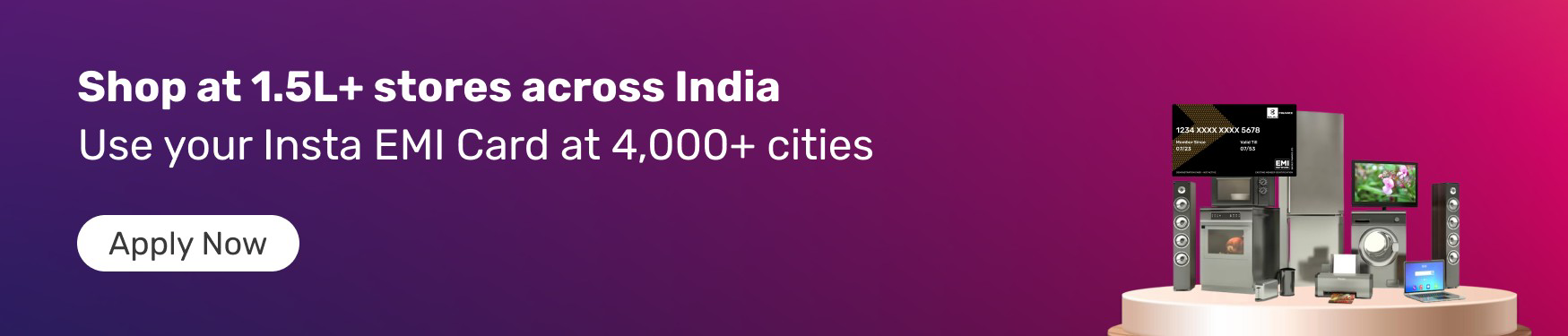
Wide acceptance networkAccepted at over 1.5 lakh partner stores across 4,000 cities and major e-commerce platforms.
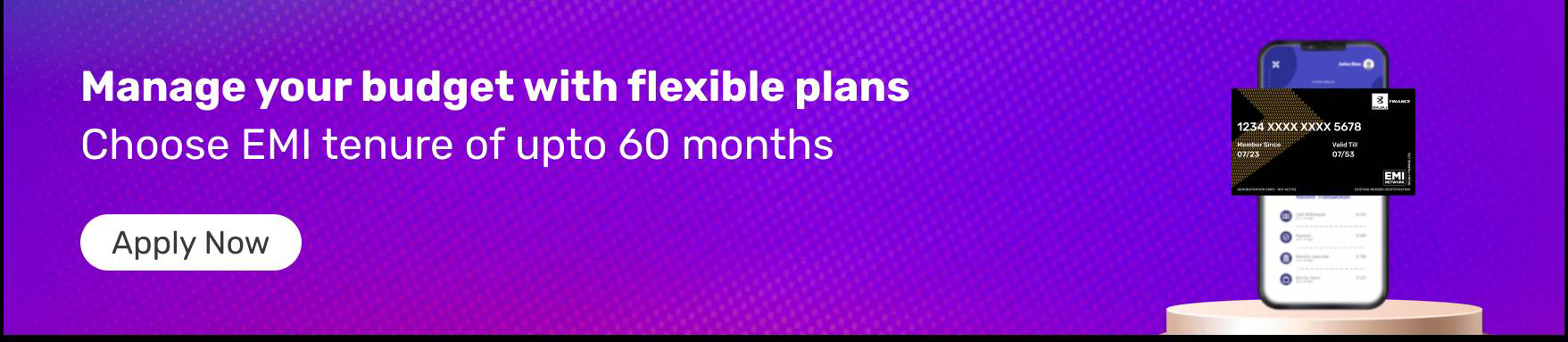
Flexible repayment tenureChoose a repayment period from 3 to 60 months based on your financial comfort.
Zero down payment offersAvail deals with no upfront payment requirement on select models.
No foreclosure chargesClose your loan early without any penalties or extra fees.
Credit score benefitTimely EMI payments may help strengthen your credit profile and financial health.

 
Also read: Features and benefits of the Bajaj Finserv Insta EMI Card
 

Eligibility criteria for the Insta EMI Card

  • Nationality: Indian Citizen.
  • Age: 21 years to 65 years.
  • Credit score: A healthy credit score per Bajaj Finserv policies.
  • Income: A steady, regular source of income.
  • Documents: PAN Card, Aadhaar Card, and a cancelled cheque for e-mandate.

 
Also read: Eligibility criteria for the Insta EMI Card
 

How to apply for an Insta EMI Card

  • Verify mobile number: Enter your 10-digit mobile number and verify the OTP sent to your phone to initiate the process.
  • Auto-fetch details: Provide your full name and select the option to auto-fetch your details for a faster application experience.
  • Confirm information: Verify your pre-filled personal details carefully and click on the continue button to move to the next stage.
  • Check offer: Review your pre-qualified card loan offer amount and select continue to proceed with the specified limit.
  • Set up wallet: Review your wallet setup details and verify the security OTP to integrate the card with your account.
  • Verify identity: Complete your identity verification process by confirming your current residential address as per the required official records.
  • Pay fee: Make the mandatory one-time joining fee payment of Rs. 530 through the secure digital payment gateway provided.
  • View card: Access and view your new digital card details instantly on the Bajaj Finserv application after the successful payment.
      

Also read: How to apply for the Insta EMI Card
 

Explore more:

EMI full formBNPLPOS full form

Bajaj Finserv app for all your financial needs and goals

Trusted by 50 million+ customers in India, Bajaj Finserv App is a one-stop solution for all your financial needs and goals.

You can use the Bajaj Finserv App to:

  • Apply for loans online, such as Instant Personal Loan, Home Loan, Business Loan, Gold Loan, and more.
  • Invest in fixed deposits and mutual funds on the app.
  • Choose from multiple insurance for your health, motor and even pocket insurance, from various insurance providers.
  • Pay and manage your bills and recharges using the BBPS platform. Use Bajaj Pay and Bajaj Wallet for quick and simple money transfers and transactions.
  • Apply for Insta EMI Card and get a pre-qualified limit on the app. Explore over 1 million products on the app that can be purchased from a partner store on Easy EMIs.
  • Shop from over 100+ brand partners that offer a diverse range of products and services.
  • Use specialised tools like EMI calculators, SIP Calculators
  • Check your credit score, download loan statements and even get quick customer support—all on the app.

Download the Bajaj Finserv App today and experience the convenience of managing your finances on one app.

Do more with the Bajaj Finserv App!

UPI, Wallet, Loans, Investments, Cards, Shopping and more

Disclaimer

1. Bajaj Finance Limited (“BFL”) is a Non-Banking Finance Company (NBFC) and Prepaid Payment Instrument Issuer offering financial services viz., loans, deposits, Bajaj Pay Wallet, Bajaj Pay UPI, bill payments and third-party wealth management products. The details mentioned in the respective product/ service document shall prevail in case of any inconsistency with respect to the information referring to BFL products and services on this page.

2. All other information, such as, the images, facts, statistics etc. (“information”) that are in addition to the details mentioned in the BFL’s product/ service document and which are being displayed on this page only depicts the summary of the information sourced from the public domain. The said information is neither owned by BFL nor it is to the exclusive knowledge of BFL. There may be inadvertent inaccuracies or typographical errors or delays in updating the said information. Hence, users are advised to independently exercise diligence by verifying complete information, including by consulting experts, if any. Users shall be the sole owner of the decision taken, if any, about suitability of the same.
For customer support, call Personal Loan IVR: 7757 000 000

Frequently asked questions

What is a point of sale transaction?

A point of sale transaction is the final step in a retail purchase where a customer pays a merchant for goods or services. It occurs at the checkout counter using a terminal that processes cards, mobile wallets, or cash. The system records the sale and provides a receipt immediately.

What is an EMI-enabled point of sale machine?

An EMI-enabled point of sale machine is a terminal that allows you to convert a large bill into smaller monthly instalments. These machines partner with financiers to offer flexible payment plans directly at the counter. You can use your Bajaj Finserv Insta EMI Card at these specific terminals for Easy EMIs.

Can I pay in EMIs at any point of sale machine?

You can only pay in instalments at point of sale machines that have the EMI facility activated by the merchant. Most large retail chains and partner stores of Bajaj Finserv across India support this feature. Always ask the cashier if they offer the Easy EMI option before starting the checkout.

What are point of sale charges in banks?

Point of sale charges are fees that banks or service providers collect for processing card transactions. Merchants usually pay a small percentage of the sale value, known as the Merchant Discount Rate. Most retailers in India do not pass these specific costs on to the customers during a standard purchase.

How can merchants receive point of sale transactions?

Merchants receive these transactions by setting up a terminal provided by a bank or a fintech company. They must link the machine to their business bank account. When a customer pays, the system authenticates the funds and transfers the amount to the merchant's account within a few business days.

What is the difference between a point of sale machine and a card swipe machine?

A card swipe machine is a basic tool that only processes payments. A point of sale machine is a more advanced system that manages inventory, tracks sales data, and generates detailed reports. While all point of sale systems include card reading capabilities, they offer much more than just simple transactions.

Show more Show less