








₹ 2 lakh – ₹ 80 lakh
Check your pre-approved business loan
Enter mobile and OTP | Check offer | Know your exact loan terms
-
If you plan to set up your enterprise in India, you need to know everything about MSME (micro, small, and medium enterprises).
MSMEs are micro, small, and medium enterprises that engage in the service sector or the manufacturing, processing, production, and preservation of goods. MSMEs contribute significantly to India’s total GDP, and the government’s objective is to raise this contribution to 50% in the coming years. That is why MSMEs are considered to be the backbone of the economy. They are also pivotal to the nation’s growth as they employ lakh of unskilled and semi-skilled individuals.
Once you have understood everything about MSMEs and their impact on the economy, you can identify an area of demand in the market and carve a niche for your enterprise.
What is the MSME sector and how are enterprises classified?
-
The MSME sector comprises micro, small, and medium enterprises that are classified according to certain parameters.
Before 2018, MSMEs were categorised based on the amount invested. After a change in regulations, they are classified based on their annual turnover, whether they operate in the manufacturing or service sector. The new conditions are as follows.
- Micro enterprise: When annual turnover is up to Rs. 5 crore.
- Small enterprise: When annual turnover is above Rs. 5 crore and less than Rs. 75 crore.
- Medium enterprise: When annual turnover is above Rs. 75 crore and less than Rs. 250 crore.
Announcement for MSME Growth in Union Budget 2026
The Union Budget 2026 introduces strong steps to support MSME growth, with a clear focus on funding, easier compliance, and better cash flow.
- Access to growth capital: A new Rs. 10,000 crore SME Growth Fund has been launched, along with an additional Rs. 2,000 crore support for the SRI Fund.
- Improved cash flow: Use of TReDS is now mandatory for CPSEs and linked with GeM, helping small suppliers receive payments faster.
- Support for Key sectors: Rs. 40,000 crore has been allocated to Electronics Manufacturing, and 200 old industrial clusters will be upgraded to strengthen the ‘Make in India’ initiative.
Together, these measures aim to reduce day-to-day challenges for MSMEs and help them grow and compete more effectively.
Historical trends in MSME contribution to the Indian economy
-
The MSME sector has shown strong resilience and an ability to adapt over time.
- Before the Pandemic (2019): MSMEs contributed 30.27% to India’s GDP, supported by initiatives such as Make in India and Startup India.
- During the Pandemic (2020–21): The sector faced major challenges including supply chain disruptions, labour shortages, and reduced demand, bringing its GDP contribution down to around 29%.
- Recovery and digital shift (From 2022): MSMEs saw a solid recovery in manufacturing and exports. More than 50% began using digital tools for daily operations, marketing, and sales.
- Looking ahead (From 2025): With continued government and financial support, MSMEs are expected to contribute up to 35% of GDP by 2025 and generate millions of new jobs.
Key takeaways:
- MSMEs play a key role in India’s economic growth.
- They are flexible and skilled, helping the country recover from tough times.
- MSMEs continue to move toward big national goals and are essential for India's future development.
Importance of MSME in the economic development of India
The importance of MSMEs (Micro, Small, and Medium Enterprises) in India's economic development includes:
- Employment generation by providing jobs to millions across urban and rural areas.
- Promoting entrepreneurship by fostering innovation and encouraging self-reliance and business ownership.
- Contributing significantly to India's GDP, enhancing economic growth.
- Boosting exports by producing diverse goods and services, improving India's global trade position.
- Supporting balanced regional development by promoting industrialisation in less developed areas.
Encouraging inclusive growth by offering economic opportunities to various socio-economic segments.
How do MSMEs contribute to the Indian economy?
MSMEs contribute around 29–30% to India’s GDP, showing how important they are to the country’s economy.
This means nearly one-third of the nation’s total output comes from small and medium businesses. Whether it’s in manufacturing, services, trade, or innovation, MSMEs play a big role—often matching or even doing better than some of the biggest industries.
This shows that MSMEs are not just supporting the economy from the side—they are a core part of India’s economic strength.
Check your pre-approved business loan offer
What are the benefits of MSME?
MSMEs have a lower capital-output ratio, meaning that even a small investment offers a good growth rate. They manufacture thousands of products, which means that you have plenty of options as a budding entrepreneur. Another by-product of the vast footprint of the sector is that it creates ample job opportunities in both urban and rural parts of the country.
Additional read: What are the benefits of an MSME loan?
Challenges faced by MSMEs in contributing to Indian economy
Even though MSMEs are a key part of India’s economy, they face many problems that stop them from reaching their full potential.
Main challenges:
1. Lack of access to credit:
Most MSMEs find it hard to get loans from banks and other formal sources. Around 70% still depend on informal financing.
Banks often have slow and complicated loan approval processes, which discourages MSMEs from applying—even when they meet the requirements.
2. Poor infrastructure:
In rural and semi-urban areas, problems like unreliable electricity and bad roads increase business costs and lower efficiency.
Limited access to modern facilities makes it harder for MSMEs to grow their manufacturing and service operations.
3. Complicated regulations:
MSMEs struggle with complex rules related to tax, labour laws, and the environment.
Following these rules takes a lot of time and money, leaving fewer resources for the actual business.
4. Technology gap:
Many MSMEs do not use modern tools or digital technology, which leads to lower productivity and makes it harder to compete.
Only about 30% of MSMEs have adopted digital solutions, according to a recent survey.
5. Impact of COVID-19:
The pandemic made things worse:
- Over 25% of MSMEs had to shut down operations temporarily.
- Supply chains were disrupted.
- Labour shortages and weak demand reduced business output.
Government schemes available for MSMEs
-
Considering the role of this sector in the Indian economy, the central government, along with the RBI, has launched schemes to help the MSME entrepreneurs. A few notable initiatives are:
With the help of these schemes, you too can grow your business in this sector and contribute to India’s economic development.
If you are looking to access a higher amount of funds, you can consider the Bajaj Finance MSME Loan to boost revenue and streamline operations. Whether you are looking to set up or expand your SME. This collateral-free loan of up to Rs. 80 lakh at a competitive interest rate is the perfect fit for your small or medium-sized entity.
Get business loan for your needs
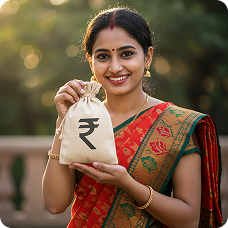
Women Business Loan
Get Women Business Loan upto 80 Lakh

Medical Store Business Loan
Get Medical Store Business Loan upto 80 Lakh

Manufacturer Business Loan
Get Manufacturer Business Loan upto 80 Lakh
Opportunities and financial support for MSMEs in India
-
MSMEs, or micro, small, and medium enterprises, are vital for the economic growth and development of India. They provide employment opportunities, contribute to manufacturing and exports, and support innovation and entrepreneurship. Here are some of the opportunities in MSMEs:
- Export promotion and potential for Indian products
- Access funding – finance and subsidies
- Government’s promotion and support
- Cater to rising demand in the domestic market.
- Less capital required
- Workforce training
To address your cash flow concerns, you can avail the Flexi-loan facility, which allows you to pay interest only on what you withdraw from your total sanction. Further, you can pay interest-only EMIs throughout the tenure and repay the principal only at the end. This method helps reduce your EMIs by up to 45%, allowing for more effective and efficient working capital management.
Check your pre-approved offer and enjoy a hassle-free MSME loan application and approval process to get started today.
Conclusion
The MSME sector is at a turning point, backed by supportive government policies, growing use of digital technology, and a strong push towards self-reliance under Atmanirbhar Bharat. For entrepreneurs, this is a major opportunity to build businesses that can grow and last—if they make the right choices when taking a business loan.
Success depends on making the most of government schemes, adopting digital tools, and choosing finance wisely. Before taking a loan, it is important to check your business loan eligibility, compare business loan interest rates, and plan repayments using a business loan EMI calculator. These steps help ensure the funding works for your business, not against it. By understanding the wider MSME ecosystem and using well-designed MSME business loans, businesses can move from simply surviving to growing steadily, while improving financial discipline.
Looking to take your MSME to the next level? A customised business loan—based on your eligibility, a competitive interest rate, and manageable EMIs—can provide the financial support needed to upgrade technology, increase capacity, and enter new markets.
Our loan variants




Loans for business needs






Select loan by amount
Business loan in different cities

Business loan in bangalore

Business loan in mumbai

Business loan in pune

Business loan in Jaipur

Business loan in Kerala

Business Loan in Telangana

Business Loan in Surat

Business Loan in Ranchi

Business Loan in Odisha

Business Loan in Noida

Business Loan in Kolkata

Business Loan in Karnataka

Business Loan in Hyderabad

Business Loan in Gujarat

Business Loan in Coimbatore

Business Loan in Assam

Business Loan in Ahmedabad
Business loan for different budgets

2 lakh business loan
3 lakh business loan
5 lakh business loan
10 lakh business loan

15 lakh business loan
20 lakh business loan
25 lakh business loan
30 lakh business loan
50 lakh business loan
Types of business loan
Unsecured Business Loan
Secured Business Loan
Term Loan
Cash Credit
Working Capital Loan
Machinery Loan
Line of Credit
Micro Loan
Merchant cash Loan
Frequently Asked Questions
Overview
Who is eligible under MSME?
Any business entity involved in manufacturing, production, processing, or preservation of goods or providing services can qualify as an MSME in India. The eligibility is based on the enterprise’s investment in plant and machinery or equipment and its annual turnover. These criteria determine whether a business falls under micro, small, or medium categories.
What is the function of MSME in India?
MSMEs play a vital role in India's economy by promoting industrialisation in rural and less developed areas, generating employment, fostering innovation, and enhancing the production of goods and services. They also contribute significantly to exports, economic growth, and inclusive development, ensuring a more equitable distribution of wealth and resources across the country.
How much do MSMEs contribute to the GDP of India?
MSMEs contribute around 30% to India's GDP. This sector is crucial for economic growth as it supports various industries and services, creates jobs, and encourages entrepreneurial initiatives. By driving significant export volumes and fostering regional development, MSMEs are a cornerstone of India's economic strategy and inclusive growth.
What is the impact of SMEs in India?
SMEs in India have a significant impact by driving economic growth, fostering innovation, and creating employment. They contribute to exports, regional development, and the diversification of the economy. SMEs also play a crucial role in social development by enabling economic opportunities for various sections of society, particularly in rural and semi-urban areas.
Is GST registration mandatory for MSME?
GST registration is mandatory for MSMEs if their annual turnover exceeds the threshold limit set by the government, which is currently Rs. 40 lakhs for goods and Rs. 20 lakhs for services. However, MSMEs below this threshold can voluntarily register for GST to avail of input tax credits and expand their market reach.
More articles

Disclaimer
Bajaj Finance Limited has the sole and absolute discretion, without assigning any reason to accept or reject any application. Terms and conditions apply*.