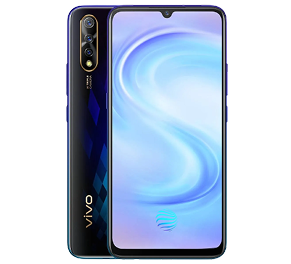
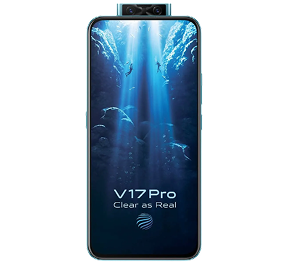
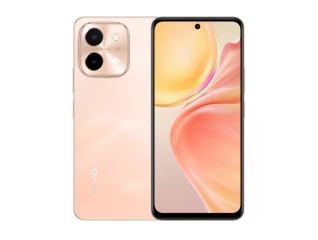
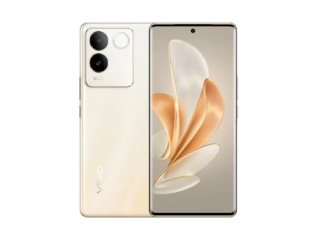
The vivo X100 5G launched in India in January 2024 on the Dimensity 9300 chip; the vivo X200 5G launched in December 2024 on the newer Dimensity 9400. Both are Zeiss-camera flagships with 5,000 mAh+ batteries, but the X200 brings a generational leap in chip performance, a larger battery, and a stronger camera system.
| Component | vivo X100 5G | vivo X200 5G | What it means |
|---|
| Launch date | 4 January 2024 (India) | 12 December 2024 (India) | X200 is one generation newer |
| Processor | MediaTek Dimensity 9300 (4 nm) | MediaTek Dimensity 9400 (3 nm) | X200 uses a newer, more efficient chip |
| Operating system | Android 14, Funtouch OS 14 | Android 15, Funtouch OS 15 | X200 ships with a newer OS |
| SIM slots | Dual SIM (Nano) | Dual SIM (Nano) | Both support two physical SIMs |
| Network | 5G, 4G, 3G, 2G | 5G, 4G, 3G, 2G | Full network support on both |
How does performance compare between the vivo X100 5G and X200 5G?
The Dimensity 9400 in the X200 is built on a more advanced 3 nm process compared to the X100's 4 nm Dimensity 9300, and delivers a meaningfully higher AnTuTu score. In everyday tasks both phones feel smooth, but the X200 has a clear edge for sustained gaming and heavy multitasking.
| Component | vivo X100 5G | vivo X200 5G | What it means |
|---|
| Processor | Dimensity 9300 (4 nm) | Dimensity 9400 (3 nm) | X200 is faster and more power-efficient |
| GPU | Immortalis-G720 MC12 | Immortalis-G925 MC12 | X200 handles graphics-intensive tasks better |
| RAM | 12 GB / 16 GB | 12 GB / 16 GB | Same RAM options on both |
| AnTuTu | ~2,039,000–2,447,000 | ~2,394,000–2,727,000 | X200 scores approximately 10–15% higher |
| Storage | 256 GB / 512 GB / 1 TB | 256 GB / 512 GB / 1 TB | Same storage range on both |
| Security | In-display optical fingerprint | In-display optical fingerprint | Identical biometrics |
| Sensors | Accelerometer, Gyroscope, Proximity, Compass, Colour spectrum | Accelerometer, Gyroscope, Proximity, Compass | Same core sensors |
| Audio | Stereo speakers | Stereo speakers | Comparable audio output |
| Water resistance | IP68 | IP68 | Both survive submersion up to 1.5 m for 30 min |
➜ Pro tip: For everyday use, both phones are smooth and capable. The X200's chip advantage shows most clearly in sustained workloads — extended gaming sessions, 4K video recording, and running multiple heavy apps simultaneously.
How do the displays compare?
The X100's LTPO AMOLED display gives it an adaptive refresh rate from 1–120 Hz, which can help battery life during static content. The X200 has a fixed 120 Hz AMOLED but is brighter at 4,500 nits peak versus the X100's 3,000 nits — a significant outdoor visibility advantage.
| Component | vivo X100 5G | vivo X200 5G | What it means |
|---|
| Screen size | 6.78 inch | 6.67 inch | X100 is slightly larger |
| Screen resolution | 1260 × 2800 pixels | 1260 × 2800 pixels | Identical resolution on both |
| Aspect ratio | 20:9 | 20:9 | Same proportions |
| Pixel density | 452–453 PPI | 460 PPI | X200 is marginally crisper |
| Display type | LTPO AMOLED, 1–120 Hz | AMOLED, 120 Hz | X100 has adaptive refresh; X200 is fixed |
| Peak brightness | 3,000 nits | 4,500 nits | X200 is significantly brighter outdoors |
| Screen protection | Corning Gorilla Glass 6 | Schott Xensation Alpha | Both are premium; different glass brands |
| HDR | HDR10+ | HDR10+ | Same HDR standard on both |
➜ Pro tip: If you spend a lot of time outdoors or in direct sunlight, the X200's 4,500-nit display is a meaningful real-world upgrade over the X100's 3,000 nits.
How do the cameras compare?
The X100 and X200 have different camera configurations. The X100 uses a 64 MP periscope telephoto; the X200 uses a 50 MP periscope telephoto but with a larger Sony IMX882 sensor. Both use Zeiss T* coating and OIS. The X200's ultrawide is also a stronger 50 MP unit versus the X100's 50 MP ultrawide.
| Component | vivo X100 5G | vivo X200 5G | What it means |
|---|
| Camera setup | Triple | Triple | Same number of lenses |
| Main camera | 50 MP, f/1.57, 1/1.49" Sony IMX920, OIS | 50 MP, f/1.6, 1/1.56" Sony IMX921, OIS | Comparable main cameras; X100 has slightly larger sensor |
| Ultrawide | 50 MP, f/2.0, 119°, AF | 50 MP, f/2.0, 119°, AF | Identical ultrawide specs |
| Telephoto | 64 MP, f/2.57, 3x optical zoom, 1/2" Omnivision OV64B | 50 MP, f/2.6, 3x optical zoom, 1/1.95" Sony IMX882 | X200 uses a larger telephoto sensor despite lower MP |
| OIS | Main + telephoto | Main + telephoto | Both have OIS on two lenses |
| Flash | LED | LED | Same flash type |
| Front camera | 32 MP, f/2.0 | 32 MP, f/2.0 | Identical selfie cameras |
| Video | 4K @ 30/60 fps | 4K @ 30/60 fps | Same max video resolution |
| Zeiss optics | Yes, Zeiss T* coating | Yes, Zeiss T* coating | Both carry Zeiss optical coating |
➜ Pro tip: The X200's 50 MP Sony IMX882 telephoto has a larger 1/1.95" sensor versus the X100's 1/2" OmniVision sensor, meaning better light capture and detail at 3x zoom despite the lower megapixel count.
How do connectivity specs compare?
Both phones offer strong connectivity. The X200 upgrades to Wi-Fi 7 and Bluetooth 5.4 over the X100's Wi-Fi 6E and Bluetooth 5.3 — both are incremental but useful improvements.
| Component | vivo X100 5G | vivo X200 5G | What it means |
|---|
| SIM size | Dual Nano SIM | Dual Nano SIM | Both support two physical SIMs |
| Network support | 5G, 4G, 3G, 2G | 5G, 4G, 3G, 2G | Full network compatibility |
| VoLTE | Yes | Yes | HD voice calls on Jio, Airtel, Vi |
| SIM 1 / SIM 2 | 5G / 5G | 5G / 5G | Both SIM slots are 5G-enabled |
| Wi-Fi | Wi-Fi 6E | Wi-Fi 7 | X200 supports next-gen Wi-Fi |
| Bluetooth | 5.3 | 5.4 | X200 has marginally newer Bluetooth |
| NFC | Yes | Yes | Both support contactless payments |
How do batteries and charging speeds compare?
The X200 has a significantly larger 5,800 mAh battery versus the X100's 5,000 mAh — an 800 mAh advantage. However, the X100 charges faster at 120W versus the X200's 90W. Neither phone supports wireless charging.
| Component | vivo X100 5G | vivo X200 5G | What it means |
|---|
| Capacity | 5,000 mAh | 5,800 mAh | X200 has a substantially larger battery |
| Type | Li-Po | Li-Ion (Si/C) | X200 uses newer silicon-carbon battery chemistry |
| Wired charging | 120 W | 90 W | X100 charges faster — 50% in 11 min versus ~30 min |
| Wireless charging | No | No | Neither phone supports wireless charging |
| Reverse charging | Yes | Yes | Both can charge accessories |
➜ Pro tip: The X100's 120W charging is one of the fastest on any flagship — it hits 50% in just 11 minutes. If fast top-ups matter more than total battery capacity, the X100 has a clear edge here.