








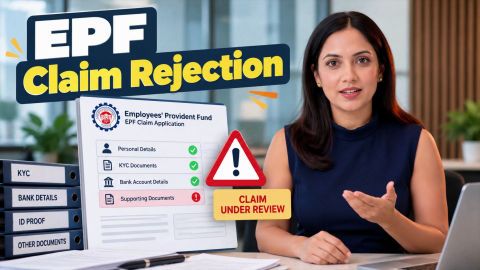
EPF Claim Rejection Reasons
In summary
An EPF claim rejection does not necessarily mean that the member has permanently lost access to the eligible funds. It may result from a correctable error in personal information, bank details, KYC, employment records or supporting documents. A claim can also be declined if the withdrawal purpose, amount or form does not meet the applicable EPF Scheme requirements.
Before submitting another claim, members should:
- Check the claim status and read the rejection remarks on the EPFO member portal.
- Compare the details in the claim with their UAN, KYC and employment records.
- Correct discrepancies through the appropriate process and confirm that the changes have been updated.
- Check the eligibility conditions and claim form before applying again.
- Contact the employer or EPFO if the reason is unclear or the issue remains unresolved.
The correct solution depends on the specific rejection reason, so members should avoid submitting repeated claims without addressing the underlying issue.
What are the common reasons for EPF claim rejection?
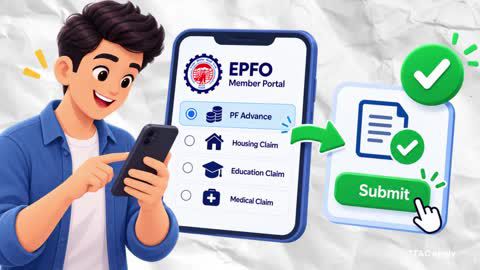
EPF withdrawal online
-
EPF claims can be rejected when the information submitted does not match EPFO records, required verification is incomplete or the claim does not meet the applicable conditions. The following are common issues to check:
Incorrect personal information
A mismatch in the member’s name, date of birth or other personal details can affect claim verification. Differences between the information in EPFO records and the details on identity documents may also cause problems.
How to resolve it: Check the details recorded against the Universal Account Number (UAN) and compare them with the relevant identity documents. Follow the applicable correction process for any discrepancy before submitting another claim.
Aadhaar or KYC discrepancies
KYC refers to the verification of a member’s identity and associated details. Incomplete verification, incorrect information or a mismatch between Aadhaar and EPFO records may affect online claim processing.
How to resolve it: Review the KYC status on the member portal. Check whether the required details are correct and verified, and follow the prescribed process to correct any mismatch. If an employer’s approval is required for the particular update, contact the HR or payroll team.
Incorrect bank account details
An incorrect account number, IFSC code, account-holder name or other banking detail can prevent the claim from being verified or the payment from being credited successfully.
How to resolve it: Check the bank details recorded against the UAN and confirm that the account is active and the information is accurate. Make any necessary correction through the applicable EPFO process before reapplying.
Incorrect or missing date of exit
The date of exit records when a member’s employment with an establishment ended. An absent or incorrect date can create a discrepancy when EPFO assesses a claim that depends on employment status or the period since leaving a job.
How to resolve it: Review the employment details on the member portal. If the date of exit is missing or incorrect, follow the applicable procedure to update it. Contact the former employer if its records need correction or verification.
Mismatch in employment or service records
A difference between the service history in the EPFO system and the information provided in the claim may affect verification. This can include discrepancies in employment dates, member details or records maintained by an employer.
How to resolve it: Compare the claim details with the service history available on the portal. Ask the relevant employer to correct or clarify its records where necessary. If multiple employers or member IDs are involved, check that the relevant service details have been recorded correctly.
Ineligible withdrawal purpose or amount
EPF withdrawals are subject to scheme conditions. A claim may be rejected if the reason selected does not qualify, the requested amount exceeds the permitted limit or the member does not meet the applicable conditions for that type of withdrawal.
How to resolve it: Check the eligibility requirements for the specific claim type, including the permitted purpose, service conditions and withdrawal limits. Use the appropriate claim form and enter the amount supported by the applicable rules and available balance.
Incorrect claim form or incomplete documentation
Different EPF claim types have different purposes and requirements. Submitting an incorrect form, leaving required fields incomplete or failing to provide applicable supporting information can delay or prevent processing.
How to resolve it: Confirm which claim form applies to the intended withdrawal. Review the information entered and the supporting documents or declarations required for that claim category. Complete any missing information before submitting a fresh application.
Employer verification or signature mismatch
Certain claim processes may require employer verification or attestation. A mismatch between the member’s signature and the signature held in employer records, or incomplete verification, can prevent a claim from progressing.
How to resolve it: Check whether employer verification is required for the claim. Contact the relevant HR or payroll team to resolve discrepancies in the records or complete the required verification. Do not assume that every online claim requires employer attestation; the requirements depend on the claim and applicable process.
Technical or submission-related issues
A temporary technical issue, interrupted submission or incomplete transaction may affect the submission process. A technical problem should be distinguished from a rejection based on eligibility or incorrect information.
How to resolve it: Check the claim status on the official portal to establish whether the claim was successfully submitted and whether a rejection reason is recorded. If the issue appears technical, follow the portal’s instructions or contact EPFO for assistance rather than repeatedly submitting duplicate claims.
How can you check why your EPF claim was rejected?
The rejection remarks are the starting point for identifying the correct remedy. Follow these steps:
- Visit the EPFO member portal.
- Sign in using your UAN and the credentials required by the portal.
- Open the claim-status or claim-tracking service available in your account.
- Locate the relevant claim and read its current status and remarks.
- Note the specific issue mentioned, such as a KYC mismatch, incorrect bank details or a discrepancy in member records.
- Check the corresponding information in your EPFO account and supporting documents.
The exact menu labels and available services may change. If the rejection remarks are unclear, contact the relevant employer or EPFO rather than assuming the reason.
What should you do after an EPF claim is rejected?
-
The next step depends on whether the issue relates to incorrect information, eligibility, verification or a technical problem:
Step 1: Identify the precise rejection reason
Read the rejection remarks carefully and establish which information or condition needs attention. If the remarks are too brief to explain the issue, seek clarification through the appropriate EPFO or employer channel.
Step 2: Correct the underlying issue
Update the relevant information through the prescribed process. For example, a bank-detail mismatch may require a correction to the recorded bank information, while an employment-record discrepancy may require action by the employer.
Step 3: Verify that the correction is reflected
Do not assume that a correction request has been completed simply because it was submitted. Check the updated details and their verification status before proceeding.
Step 4: Recheck eligibility and documents
Confirm that the withdrawal purpose, claim form, requested amount and supporting information comply with the conditions applicable to the claim. Correcting a data mismatch will not resolve a separate eligibility issue.
Step 5: Submit a fresh claim if appropriate
Once the issue has been resolved, submit a fresh claim through the applicable process if the portal and claim rules permit it. Ensure that the new application reflects the corrected information.
Step 6: Escalate unresolved issues
If the claim continues to be rejected despite the correction, or the rejection appears inconsistent with the records and applicable rules, seek clarification from the employer or EPFO. You can also lodge a grievance through the EPFO grievance portal.
-
How to check PF balance online with UAN number?
To check your EPF balance with UAN number, you can use the Member Passbook facility provided by the Employees’ Provident Fund Organisation (EPFO). After registering on the Unified Member Portal, your passbook will be available after 6 hours.
How can you reduce the chances of EPF claim rejection?
Reviewing the details before submission can help prevent avoidable errors:
- Check personal details: Ensure that your name, date of birth and other relevant information match the records and documents used for verification.
- Review KYC status: Confirm that the required KYC details are correct and verified.
- Verify bank information: Check the account number, IFSC code and other recorded banking details.
- Review employment history: Confirm that your service details and date of exit are accurate where relevant.
- Select the correct claim type: Check whether the application is for a final settlement, partial withdrawal or another eligible claim.
- Confirm the permitted amount: Ensure that the requested amount complies with the rules for the selected claim category.
- Complete the required fields: Review the application and any supporting documents or declarations before submitting.
- Keep a record: Retain the claim reference, submission details and rejection remarks to help with follow-up.
These checks can reduce avoidable errors, but they cannot guarantee approval. EPFO assesses each claim against the applicable records and rules.
When should you contact your employer or EPFO?
-
Contact your employer’s HR or payroll team if the issue concerns employment records, service details, employer verification or information that the employer needs to correct.
Contact EPFO if the rejection reason remains unclear, the relevant information appears correct but the claim is still rejected, or the issue requires clarification from the organisation. The EPFO member portal provides member services, while the EPFO grievance portal can be used to raise an unresolved complaint.
When seeking assistance, keep the claim reference, rejection remarks and relevant supporting records available. Share personal or financial information only through official channels.
-
EPF claim rejection can result from incorrect KYC or bank details, discrepancies in employment records, incomplete documentation or failure to meet the conditions for a particular withdrawal. The most useful first step is to read the rejection remarks and identify the specific issue rather than immediately submitting another claim.
Correct the relevant records through the prescribed process, confirm that the changes have been reflected and recheck the claim’s eligibility requirements before reapplying. If the reason remains unclear or the problem persists, contact the employer or EPFO and use the official grievance channel where appropriate. Following these steps can help members address avoidable errors and understand what action is required next.
Check out different FD Rates
Fixed Deposit variants
Get ROI up to
8.15% p.a.
Senior citizen
Starting with just Rs. 15,000
Get ROI up to
7.75% p.a.
Age below 60 years
Starting with just Rs. 15,000
Get ROI up to
7.75% p.a.
Minor
Starting with just Rs. 15,000
Get ROI up to
7.75% p.a.
HUF
Starting with just Rs. 15,000
Get ROI up to
7.75% p.a.
Sole proprietor
Starting with just Rs. 15,000
Locate to your nearest FD branch

Related Articles


Frequently Asked Questions
Overview
What is the rejection rate for EPF claims?
As per recent data, around 22% of EPF claims were either rejected or returned, with final withdrawal claims reflecting a rejection rate of approximately 11.92%.
How To see rejection reasons in EPF?
Log in to the EPFO portal, navigate to ‘Online Services’, click on ‘Track Claim Status’, and verify using OTP to view the rejection reason.
How do I resubmit my rejected PF claim?
After identifying the rejection reason, correct the errors such as KYC or bank details, then reapply through the EPFO member portal.
What should I do if my EPF claim is rejected due to incorrect documentation?
You should update or upload the correct documents through the unified EPFO portal and ensure all details match your UAN records before resubmitting.
Can I open an FD while waiting for my EPF claim to process?
Yes, you can open a Bajaj Finance FD online in just a few clicks. Choose flexible tenures based on when you expect your EPF claim to be approved. Open FD.
What to do if my PF claim is rejected?
If your PF claim gets rejected, the first step is to find out the reason for rejection. Common issues include missing KYC details, signature mismatch, incorrect bank account details, or lack of employer attestation. You can:
- Check the rejection reason on the EPFO portal under the “Track Claim Status” section.
- Correct the errors (e.g., update bank details, re-submit attested forms, or complete KYC).
- Re-file the claim online or offline once the corrections are made.
- If you believe the rejection was in error, you may raise a grievance on the EPFO Grievance Portal for resolution
What is the rejection rate for EPFO claims?
As per the latest reports, EPFO processed 98.5% of 15.24 lakh higher pension applications. However, the rejection rate for claims is significant:
- Nationwide rejection rate: 72.3%
- Chennai and Puducherry rejection rate: 87.5%
This shows that while a majority of applications are processed, technical issues, documentation gaps, and eligibility mismatches still lead to a high rejection percentage.
How many times can an EPF claim be rejected?
There is no fixed limit to how many times an EPF claim can be rejected. A claim will continue to be denied until all errors, discrepancies, or unresolved issues are rectified and eligibility criteria are met.
How do I know if my PF claim is rejected?
You will receive a notification via SMS or email from the Employees' Provident Fund Organisation (EPFO) if your claim is rejected. Alternatively, you can log in to the EPFO Member Portal to check the status of your claim and view the reason for rejection under the “Claim Status” section.
Can I apply for PF again after rejection?
Yes, you can reapply for a PF claim after rejection. Ensure you identify the reason for rejection, correct the errors (such as updating your UAN, personal details, or documents), and resubmit the claim through the EPFO portal.
Disclaimer
1. Bajaj Finance Limited (“BFL”) is a Non-Banking Finance Company (BAJAJ FINANCE) and Prepaid Payment Instrument Issuer offering financial services viz., loans, deposits, Bajaj Pay Wallet, Bajaj Pay UPI, bill payments and third-party wealth management products. The details mentioned in the respective product/ service document shall prevail in case of any inconsistency with respect to the information referring to BFL products and services on this page.
2. All other information, such as, the images, facts, statistics etc. (“information”) that are in addition to the details mentioned in the BFL’s product/ service document and which are being displayed on this page only depicts the summary of the information sourced from the public domain. The said information is neither owned by BFL nor it is to the exclusive knowledge of BFL. There may be inadvertent inaccuracies or typographical errors or delays in updating the said information. Hence, users are advised to independently exercise diligence by verifying complete information, including by consulting experts, if any. Users shall be the sole owner of the decision taken, if any, about suitability of the same.