







Health insurance goes beyond hospitalization—it covers OPD visits, medicines, ambulance charges, preventive checkups, and even alternative treatments, giving you all-around financial security.

Check health insurance plans with comprehensive coverage
Get Quote
Health plans from leading insurers | Comprehensive coverage | Offers multiple optional add-ons to enhance coverage
Increase Stamina Naturally
In summary
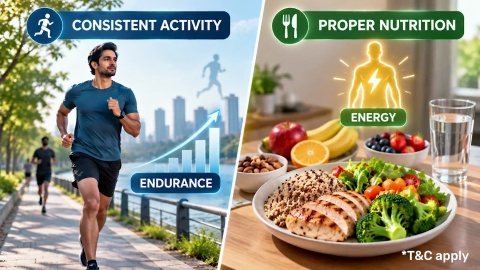
Stamina helps you sustain physical and mental activities for longer without excessive fatigue. Regular exercise, balanced nutrition, adequate hydration, quality sleep, and appropriate recovery can support stamina and overall endurance. Improving stamina can also help you manage daily activities and maintain an active lifestyle.
Key takeaways
- Regular physical activity can support cardiovascular and muscular endurance.
- A balanced diet provides nutrients needed for energy and exercise.
- Staying hydrated supports normal physical performance.
- Adequate sleep and recovery are important for maintaining energy levels.
- Gradually increasing activity can help build stamina over time.
If you are looking for financial protection against eligible healthcare expenses, apply now to explore available plans and policy terms. You can learn more about health insurance and the coverage available under different plans.
Why stamina matters for your daily life and fitness
Stamina helps you sustain physical activity and daily tasks while managing fatigue. It is influenced by cardiovascular fitness, muscular endurance, sleep, nutrition, hydration, and regular physical activity. Cardiorespiratory fitness is commonly assessed using VO₂ max, which measures the maximum amount of oxygen the body can use during intense exercise.
- Supports cardiovascular fitness: Regular aerobic activity can improve cardiorespiratory endurance and contribute to a higher VO₂ max.
- Supports daily activities: Better endurance can make activities such as walking, climbing stairs, and household tasks easier to sustain.
- Supports exercise performance: Improved stamina allows you to maintain physical activity for longer periods.
- Supports recovery: Regular aerobic and resistance training can improve exercise tolerance over time.
- Supports overall fitness: The World Health Organization recommends adults complete at least 150 minutes of moderate-intensity aerobic activity each week, alongside muscle-strengthening activities on 2 or more days.
Building stamina involves consistent activity, adequate nutrition, hydration, sleep, and recovery.
Show more
Show less
Pro tip

What are the ideal foods to increase stamina naturally?
Foods that provide carbohydrates, protein, healthy fats, iron, and other essential nutrients can support energy production, muscle function, and exercise performance. Including a variety of nutrient-rich foods in your diet can help support stamina and sustained physical activity.
| Food | Key nutrient | Stamina benefit |
|---|---|---|
| Bananas | Carbohydrates, potassium, vitamin B6 | Provides carbohydrate for energy and supports normal muscle function. |
| Oats | Complex carbohydrates, fibre | Provides a steady source of energy for sustained activity. |
| Nuts and seeds | Protein, healthy fats, magnesium | Supports energy metabolism and normal muscle function. |
| Eggs, chicken, fish, paneer | Protein | Supports muscle repair and maintenance. |
| Green leafy vegetables | Iron, folate | Supports normal red blood cell formation and oxygen transport. |
| Whole grains | Complex carbohydrates, fibre | Provides carbohydrate to support energy needs during activity. |
| Beetroot | Dietary nitrates | Nitrates can support nitric oxide production and exercise blood flow. |
A balanced diet that combines carbohydrates, protein, healthy fats, and micronutrient-rich foods can support stamina as part of an active lifestyle.
Show more
Show less
What exercises build endurance and stamina effectively?
Exercises that raise your heart rate, strengthen muscles, and improve movement efficiency can support endurance and stamina. A balanced routine can combine aerobic activity, strength training, mobility work, and interval training based on your fitness level and goals.
| Exercise type | Example | Benefit |
|---|---|---|
| Aerobic exercise | Running, cycling, swimming | Supports cardiovascular endurance and sustained physical activity. |
| Strength training | Squats, push-ups, resistance exercises | Builds muscular strength and endurance. |
| Interval training | Short periods of higher-intensity exercise with recovery | Improves cardiorespiratory fitness and exercise capacity. |
| Yoga and breathing exercises | Yoga, controlled breathing | Supports flexibility, body awareness, and breathing control. |
| Mobility and flexibility | Dynamic stretches, mobility drills | Supports range of motion and movement quality. |
| Circuit training | Strength and aerobic exercises performed in sequence | Combines muscular and cardiovascular demands in one workout. |
The World Health Organization recommends adults complete at least 150 minutes of moderate-intensity aerobic activity per week, alongside muscle-strengthening activities on 2 or more days.
Show more
Show less
Popular plans for you


How do hydration and sleep affect your stamina?
Hydration and sleep both support physical performance, recovery, and stamina. Losing around 2% or more of body weight through dehydration can impair aspects of physical and cognitive performance, particularly during exercise. Fluid needs vary, so drink regularly and increase intake when exercising or in hot conditions. Adults generally need 7–9 hours of sleep each night to support recovery and daytime functioning. Poor or insufficient sleep can affect energy, concentration, reaction time, and exercise performance. Maintaining regular sleep hours and replacing fluids lost through sweating can therefore support sustained physical activity.
| Factor | Recommended focus | Effect on stamina |
|---|---|---|
| Hydration | Drink regularly according to individual needs | Supports fluid balance and physical performance |
| Sleep | Aim for 7–9 hours nightly | Supports recovery, energy, and exercise performance |
Lifestyle changes to improve energy and stamina
Here are some lifestyle changes to improve energy and stamina-
- Maintain a balanced diet – Include proteins, healthy fats, and complex carbohydrates in meals to sustain energy levels and support muscle recovery.
- Follow a consistent exercise routine – Engage in at least 30–45 minutes of physical activity daily, focusing on cardio, strength training, and flexibility exercises.
- Practice stress management – High stress drains energy. Meditation, deep breathing, and relaxation techniques help maintain stamina and reduce fatigue.
- Avoid smoking and alcohol – These habits negatively impact lung capacity, circulation, and endurance, making it harder to sustain energy levels.
- Take breaks during work – Short breaks prevent burnout, improve focus, and help maintain consistent energy throughout the day.
- Stay hydrated and get enough sleep – Proper hydration and rest support stamina, muscle recovery, and overall well-being.
Making these lifestyle adjustments can significantly enhance stamina, improve productivity, and boost overall energy levels.
Common mistakes that reduce stamina — And how to fix them
Several daily habits and training errors can affect energy, recovery, and exercise performance. Identifying them can help you maintain a more consistent approach to building stamina.
| Common mistake | How to fix it |
|---|---|
| Skipping meals | Eat balanced meals that provide carbohydrates, protein, and other essential nutrients. |
| Overtraining | Include rest and recovery days between demanding workouts. |
| Not drinking enough fluids | Drink regularly and replace fluids lost through sweating, especially during exercise or hot weather. |
| Poor sleep habits | Maintain a regular sleep schedule and aim for 7–9 hours of sleep. |
| Ignoring strength training | Combine aerobic exercise with muscle-strengthening activities. |
| Excessive caffeine intake | Moderate caffeine intake and avoid it close to bedtime if it affects sleep. |
Show more
Show less
Breathing techniques to increase stamina naturally
Breathing techniques can help you develop better breathing control and maintain a steady breathing pattern during physical activity. Practise them regularly and stop if you feel dizzy, breathless, or uncomfortable.
- Diaphragmatic breathing: Breathe slowly through your nose while allowing your abdomen to expand, then exhale gently. This encourages deeper, controlled breathing.
- 4-7-8 breathing: Inhale for 4 seconds, hold for 7 seconds, and exhale for 8 seconds. Practise this while seated rather than during strenuous exercise.
- Rhythmic breathing during exercise: Match your breathing pattern to your movement, such as inhaling for two steps and exhaling for two steps while running.
- Practise consistently: Add controlled breathing to warm-ups, cool-downs, or low-intensity exercise sessions to develop breathing awareness.
Health Insurance in different cities

Health Insurance in Bangalore

Health Insurance in Jaipur

Health Insurance in Pune

Health Insurance in Mumbai

Health Insurance in Kerala
Compare types of Health Insurance Plans
Tax-savings plans for you
What our customer say about us
+ Customers
Play Store Rating
Reviews
Arjun Mehta
13 Jul 2025
I opted for the Health Infinity plan for my parents. The digital onboarding was incredibly fast with no medical tests required since they are under 50. We had a minor daycare procedure last month, and the cashless approval came through in less than 2 hours. Very impressed with the efficiency.
Priya Sharma
28 Feb 2025
The Bajaj Finance Health app is a lifesaver. I use it for my regular OPD consultations and medicine orders. The 10% discount on pharmacy bills and the easy reimbursement for doctor visits make it much more than just a 'hospitalization' policy. It’s daily health support.
Sneha Kapoor
15 Mar 2025
Switched my family floater to Bajaj General this year. The network of hospitals in my city (Pune) is excellent. The only downside was a slight delay in getting my physical card, but the digital copy on the app works everywhere. The 'Wellness Rewards' for hitting step goals is a cool touch!
How long does it take to increase stamina naturally?
You may notice changes in stamina within a few weeks of consistent exercise, although the pace differs between individuals. Gradually increasing activity while allowing adequate recovery can support steady improvements. Avoid treating the timeline as a fixed guarantee.
| Timeline | What you may notice |
|---|---|
| Week 1–2 | Better familiarity with exercise and breathing patterns. |
| Week 3–4 | Improved tolerance for regular physical activity. |
| Week 5–6 | Longer exercise sessions may feel more manageable. |
| After 2 months | Continued improvements may occur with consistent training, recovery, and nutrition. |
Individual results depend on your starting fitness level, exercise routine, health, sleep, nutrition, and consistency.
Conclusion
Building stamina involves a combination of balanced nutrition, regular exercise, adequate hydration, quality sleep, and sufficient recovery. Eating nutrient-rich foods, following endurance-focused workouts, and maintaining healthy daily habits can support sustained energy and physical performance. Avoiding skipped meals, excessive training, inadequate hydration, and poor sleep can further support consistent progress.
Gradual and sustainable changes to your diet, exercise routine, and lifestyle can help improve stamina over time. If you are also planning for eligible healthcare expenses, check now to explore health insurance plans and understand their coverage, exclusions, and applicable policy terms.
Explore and stay informed
Can you buy health insurance on EMI
Why buy health insurance
Health Insurance for family
Health Insurance Claim settlement ratio
Health Insurance waiting period
Importance of health insurance
Health Insurance for Senior Citizens
Health Insurance tax benefits
Health Insurance for parents
Health Insurance premium calculator
Health Insurance for Other Diseases

Antral Gastritis

Hepatomegaly Symptoms Causes & Treatment

Blood Pressure Range

PCOS Causes and Symptoms

Health insurance for Obesity
Frequently asked questions
Frequently asked questions
What are the ideal foods to increase stamina naturally?
Foods containing carbohydrates, protein, healthy fats, iron, and other essential nutrients can support energy and physical performance. Include whole grains, oats, bananas, nuts, seeds, eggs, fish, lean meats, vegetables, and fruits in a balanced diet.
How does exercise help in improving stamina?
Regular aerobic exercise improves cardiorespiratory fitness, while strength training supports muscular endurance. Activities such as walking, running, cycling, swimming, and resistance exercises can gradually improve your ability to sustain physical activity when combined with adequate recovery.
Can hydration and sleep affect stamina levels?
Yes. Adequate hydration supports normal physical performance, while sufficient sleep supports recovery, energy, concentration, and exercise performance. Adults generally need 7–9 hours of sleep each night, while fluid requirements vary according to activity, climate, and individual needs.
What are the quickest ways to boost energy and endurance?
There is no single instant method for improving stamina. Regular physical activity, balanced meals, adequate hydration, sufficient sleep, and appropriate recovery support gradual improvements. Avoid skipping meals and suddenly increasing exercise intensity, as these can affect energy and recovery.
Are there medicines or supplements to increase stamina naturally?
No medicine or supplement universally increases stamina. Supplements are useful when a nutrient deficiency or specific medical need exists. Consult a doctor before taking supplements, particularly if you have an underlying condition or take medicines.








Articles and Insights


Disclaimer
*T&C Apply - Bajaj Finance Limited (‘BFL’) is a registered corporate agent of third party insurance products of Bajaj Allianz Life Insurance Company Limited, HDFC Life Insurance Company Limited, Life Insurance Corporation of India (LIC), Bajaj Allianz General Insurance Company Limited, SBI General Insurance Company Limited, ACKO General Insurance Company Limited, HDFC ERGO General Insurance Company, TATA AIG General Insurance Company Limited, ICICI Lombard General Insurance Company Limited, New India Assurance Limited, Chola MS General Insurance Company Limited, Zurich Kotak General Insurance Co. Limited , Star Health & Allied Insurance Co. Limited, Care Health Insurance Company Limited, Niva Bupa Health Insurance Company Limited , Aditya Birla Health Insurance Company Limited and Manipal Cigna Health Insurance Company Limited under the IRDAI composite CA registration number CA0101. Please note that, BFL does not underwrite the risk or act as an insurer. Your purchase of an insurance product is purely on a voluntary basis after your exercise of an independent due diligence on the suitability, viability of any insurance product. Any decision to purchase insurance product is solely at your own risk and responsibility and BFL shall not be liable for any loss or damage that any person may suffer, whether directly or indirectly. Please refer insurer's website for Policy Wordings. For more details on risk factors, terms and conditions and exclusions please read the product sales brochure carefully before concluding a sale. Tax benefits applicable if any, will be as per the prevailing tax laws. Tax laws are subject to change. Tax laws are subject to change. BFL does NOT provide Tax/Investment advisory services. Please consult your advisors before proceeding to purchase an insurance product. Visitors are hereby informed that their information submitted on the website may also be shared with insurers. BFL is also a distributor of other third-party products from Assistance Services providers such as CPP Assistance Services Pvt. Ltd., Bajaj Finance Health Ltd. etc. All product information such as premium, benefits, exclusions, sum insured, value added services, etc. are authentic and solely based on the information received from the respective insurance company or the respective Assistance service provider company.
Note – While we have made all efforts and taken utmost care in gathering precise information about the products, features, benefits, etc. However, BFL cannot be held liable for any direct or indirect damage/loss. We request our customers to conduct their research about these products and refer to the respective product’s sales brochures before concluding their sale.