The Ideal Credit Score for a Loan: What Lenders Really Look At

The Ideal Credit Score for a Loan: What Lenders Really Look At

There is no single ideal credit score for every loan. Each lender sets its own minimum by loan type, and the score is one input alongside income, existing loan repayments and your record.

Rs. 40,000 - Rs. 75 lakh

You may be eligible for a pre-approved offer

Enter mobile and OTP | Check offer | No branch visit needed


In summary

A credit score sums up how you have handled credit, on a range of 300 to 900. Lenders use it as a first filter and then look at the rest of your profile. Unsecured loans, such as personal loans and credit cards, lean on the score most, because no asset backs them. Secured loans can accept lower scores, as the asset reduces the lender's risk. A higher credit score can also bring a lower rate.


  • Each lender sets its own minimum.
  • Unsecured loans weigh the score most.
  • A higher score can mean a lower rate.
  • No credit history means no score yet.

Checking whether your score fits? Check your loan offer with your phone number and a one-time password (OTP) → apply online → receive funds within 24 hours* of approval.

What does a lender use your credit score for?

The credit score answers one question at a glance: how likely are you to repay on time, based on your past. Lenders use it in 3 ways:

  • As a filter: Below a set minimum, an application may not go further.
  • To set terms: Above the minimum, a higher score can mean a larger amount or a lower rate, as the lender prices the loan to the risk.
  • As a pointer to the report: The score leads the lender to the details behind it, such as late payments, high card balances and recent enquiries.

A strong credit score does not guarantee approval. The lender also checks whether your income leaves room for the new equated monthly instalment (EMI) alongside existing ones, and whether your details match across documents.

Show More Show Less

How much does the score matter for each type of loan?

The weight of the credit score depends on what else protects the lender. The table compares the main loan types.


LoanWeight of the credit scoreWhat else the lender weighs
Personal loanHigh: no asset backs the loanIncome, existing EMIs, employer, repayment record
Credit cardHigh: revolving, unsecured creditIncome and existing card limits
Vehicle loanModerate: the vehicle is securityDown payment, income, the vehicle
Home loanModerate: the property is securityIncome, property value, down payment, age
Business loanHigh for the owner; firms also ratedBusiness turnover, profits, CIBIL MSME Rank

Last updated: 27th October, 2026


For a personal loan, the credit score and income do most of the work, since there is no asset to fall back on. For a home loan, the property and the down payment carry part of the risk, so lenders can look past a modest score if income and the property check out.

Show More Show Less

How are business borrowers assessed?

Business borrowing works on 2 levels. For a proprietor or a small firm, lenders look at the owner's personal credit score, as the owner is responsible for the debt. For a company with its own credit history, TransUnion CIBIL also produces the CIBIL MSME Rank, a rank from 1 to 10 where 1 is the least risk. Turnover, profits, bank statements and tax returns then fill in the picture. A clean personal record helps a business owner on both counts.

Show More Show Less

What if you have no credit score?

If you have never had a loan or card, your report shows no credit score, marked as NH or NA. That is not a bad score; it is the absence of one. Some lenders will not lend without a credit score, while others assess first-time borrowers on income alone. To build one, open a credit card, or a card backed by a fixed deposit, spend a little on it and clear the full bill for 6 to 12 months to form a credit score.


Rekha's application

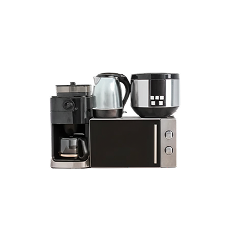
Rekha, 33, a relationship manager at a Mangaluru bank, draws Rs. 61,000 monthly. With a CIBIL score of 781, no late payments and low card balances, her profile sat well above the lender's minimum. She borrowed Rs. 2.45 lakh to renovate her kitchen, at an illustrative 13.25% per annum, and looked at the EMI over 24 and 36 months.


EMI = P × R × (1 + R)^N ÷ [(1 + R)^N − 1]. Here P = Rs. 2,45,000, R = 13.25 ÷ 1,200 and N = months.


TenureMonthly EMI (Rs.)Total interest (Rs.)EMI as share of salary (%)
24 months (2 years)11,67735,23719.1
36 months (3 years)8,28553,24413.6

Last updated: 27th October, 2026


Choosing 3 years means paying Rs. 3,392 less each month and Rs. 18,007 more in all. The processing charge would not go above Rs. 10,118. Rekha chose 36 months, keeping her total EMIs comfortably within her salary and her credit score intact.


What can delay approval: a CIBIL score below 650 or existing EMIs that take up a large share of your income. Names or addresses that do not match across documents, and more than one loan application in the same month, can also slow it down.


Score above the minimum? With a Bajaj Finance Personal Loan, you can borrow Rs. 40,000 to Rs. 75 lakh, subject to eligibility. Check your loan offer with your phone number and a one-time password (OTP) → apply online → receive funds within 24 hours* of approval.

Show More Show Less

How do you lift your score before applying?

If your score sits near a lender's minimum, 3 to 6 months of steady habits can make a difference:

  • Pay every bill on time: Set auto-pay on all cards and loans, as payment history weighs most in a credit score.

  • Cut card balances: Keep each card below 30% of its limit before the statement date.

  • Pause applications: Avoid new loans or cards, so no new enquiries are added.
  • Fix errors: Download your report and dispute anything wrong, such as a closed loan shown as open.
  • Keep old accounts open: A long, clean history helps; closing an old card shortens it.
Show More Show Less

Does a higher score lower your interest rate?

It can. Lenders price loans by risk, so a higher credit score with a clean report can bring a lower rate or a larger amount than a score just above the minimum. The Key Fact Statement shows the difference; put offers side by side on the annual percentage rate. Even a small cut in rate saves real money over a 3 to 5 year tenure.

Show More Show Less

Can you apply with your current score?

A CIBIL score of 650 or higher meets the score criterion for a Bajaj Finance Personal Loan. It offers Rs. 40,000 to Rs. 75 lakh over 12 months to 108 months, for Indian nationals aged 21 years to 80 years. Income and existing EMIs are also assessed.

Show More Show Less

Key offerings: 3 loan types

Personal loan interest rate and applicable charges

Type of fee

Applicable charges

Rate of interest per annum

10% to 30.5% p.a.

Processing fees

Up to 4.13% of the loan amount (inclusive of applicable taxes).

Flexi Facility Charge

Term Loan – Not applicable

Flexi Loans –Up To Rs 1,999 To Up To Rs 18,999/- (Inclusive Of Applicable Taxes)

Will be deducted upfront from loan amount.

Bounce charges

Rs. 700 to Rs. 1,200/- per bounce

“Bounce charges” shall mean charges for (i) dishonor of any payment instrument; or (ii) non-payment of instalment (s) on their respective due dates due to dishonor of payment mandate or non-registration of the payment mandate or any other reason.

Part-prepayment charges

Full Pre-payment:

  • Term Loan: Up to 4.72% (Inclusive of applicable taxes) on the outstanding loan amount as on the date of full pre-payment

  • Flexi Term (Dropline) Loan: Up to 4.72% (Inclusive of applicable taxes) on the outstanding loan amount, as on the date of full prepayment.

  • Flexi Hybrid Term Loan: Up to 4.72% (Inclusive of applicable taxes) on the outstanding loan amount, as on the date of full prepayment.

Part Pre-payment

  • Up to 4.72% (Inclusive of applicable taxes) of the principal amount of Loan prepaid on the date of such part Pre-Payment.

  • Not Applicable for Flexi Term (Dropline) Loan and Flexi Hybrid Term Loan.

Penal charge

Delay in payment of instalment(s) shall attract Penal Charge at the rate of up to 36% per annum per instalment from the respective due date until the date of receipt of the full instalment(s) amount.

Stamp duty (as per respective state)

Payable as per state laws and deducted upfront from loan amount.

Annual maintenance charges

Term Loan: Not applicable

Flexi Term (Dropline) Loan:

Up to 0.295% (Inclusive of applicable taxes) of the Dropline limit (as per the repayment schedule) on the date of levy of such charges.


Flexi Hybrid Term Loan:

Up to 0.472% (Inclusive Of Applicable Taxes) Of The Dropline Limit During Initial Tenure. Up to 0.295% (Inclusive Of Applicable Taxes) Of Dropline Limit During Subsequent Tenure

Credit guarantee scheme feeUp to 1.18% p.a. (pro-rated daily till 31st March) (inclusive of all applicable taxes) of the loan amount
Credit guarantee scheme renewal feeUp to 1.18% p.a. (inclusive of all applicable taxes) on the outstanding loan amount as on April 01 of the subsequent Financial Year.
*Renewal Fee to be collected only for 3 subsequent financial years.
 
**If the Remaining Tenure is less than 12 months, the CG Fee in subsequent years shall be charged prorated.

Frequently asked questions

Scores and loans

Building a score

What is a good credit score for a loan in India?

There is no single figure for every loan. Each lender sets its own minimum by loan type, and the score sits alongside income and existing EMIs. A Bajaj Finance Personal Loan asks for a CIBIL score of 650 or higher. A higher credit score with a clean report widens your options and can lower your rate.

An asset, such as a home or vehicle, stands behind a secured loan, which the lender can sell if you default. That asset carries part of the risk, so the lender can rely less on the score. Unsecured loans, such as personal loans, have nothing pledged, so the score and income do more of the work.

Some lenders assess first-time borrowers on income and employment alone, while others need a credit score. If you have no credit history, building one first widens your options. Start with a credit card, or a card secured on a fixed deposit, keep spending small and clear the bill in full each month; within 6 to 12 months, a score lenders can read appears.

It depends on what is holding it down. Lenders report each month, so lower card balances and corrected errors can show within 1 or 2 cycles. A past late payment takes longer to fade, as newer on-time payments need to build up. Six months of steady habits is a sound plan before you apply.

Show More Show Less

Disclaimer

Bajaj Finance Limited has the sole and absolute discretion, without assigning any reason to accept or reject any application. Terms and conditions apply*.
For customer support, call Personal Loan IVR: 7757 000 000