







Health insurance goes beyond hospitalization—it covers OPD visits, medicines, ambulance charges, preventive checkups, and even alternative treatments, giving you all-around financial security.

Check health insurance plans with comprehensive coverage
Get Quote
Health plans from leading insurers | Comprehensive coverage | Offers multiple optional add-ons to enhance coverage
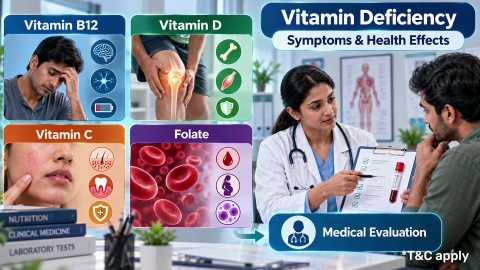
Vitamin Deficiency
In summary
Vitamin C deficiency occurs when your body does not receive enough vitamin C, also known as ascorbic acid, over time. Vitamin C supports immune function, collagen formation, wound healing and iron absorption. Severe deficiency can cause scurvy and symptoms such as fatigue, swollen or bleeding gums and poor wound healing.
Key takeaways
- Vitamin C is an essential nutrient required for several physiological functions.
- Vitamin C supports collagen formation and wound healing.
- It helps the body absorb iron from plant-based foods.
- Severe vitamin C deficiency can lead to scurvy.
- Fruits and vegetables are important dietary sources of vitamin C.
- Diagnosis and treatment depend on the severity and underlying cause of deficiency.
For broader healthcare needs, you can explore health insurance and check now to review available coverage options.
Pro tip

What is Vitamin C deficiency?
Vitamin C deficiency occurs when your body does not receive enough vitamin C, also known as ascorbic acid, for normal physiological functions. Humans cannot produce vitamin C, so you need to obtain it through food or supplements. Prolonged deficiency can lead to scurvy, a condition associated with impaired collagen formation and wound healing. Common symptoms can include fatigue, weakness, swollen or bleeding gums, easy bruising and slow wound healing. The severity of symptoms depends on the extent and duration of the deficiency.
Popular plans for you


What does vitamin C do in the body?
Vitamin C is a water-soluble vitamin that supports collagen production, wound healing, immune function and iron absorption. It also acts as an antioxidant, helping protect cells from oxidative stress caused by free radicals.
| Function | Body system affected |
|---|---|
| Supports collagen production for skin, bones and connective tissues | Skin and connective tissue |
| Supports wound healing and tissue repair | Skin and tissues |
| Supports normal immune function | Immune system |
| Improves absorption of non-haem iron from plant-based foods | Digestive system |
| Acts as an antioxidant that helps protect cells from oxidative stress | Cells and tissues |
What causes vitamin C deficiency?
Vitamin C deficiency can result from inadequate dietary intake, reduced absorption or increased nutritional requirements. People who smoke require 35 mg more vitamin C per day than non-smokers because smoking increases oxidative stress and vitamin C requirements.
| Cause | Explanation |
|---|---|
| Limited dietary intake | Eating too few fruits and vegetables can reduce vitamin C intake. |
| Malabsorption | Digestive conditions that impair nutrient absorption can increase deficiency risk. |
| Smoking | Smoking increases vitamin C requirements; smokers need an additional 35 mg per day. |
| Increased requirements | Pregnancy, breastfeeding, illness and inflammation can increase vitamin C requirements. |
| Alcohol misuse | Heavy alcohol use can contribute to inadequate dietary intake and nutrient deficiency. |
| Haemodialysis | People with kidney disease receiving chronic haemodialysis can have low vitamin C levels. |
What are the signs and symptoms of vitamin C deficiency?
The signs and symptoms of vitamin C deficiency develop as vitamin C stores decline and can progress to scurvy. Symptoms result mainly from impaired collagen formation and weakened connective tissues. Common signs include:
- Fatigue and weakness: Low vitamin C levels can cause fatigue, weakness and general malaise.
- Mood changes: Irritability and depression can occur as deficiency progresses.
- Keratosis pilaris: Follicular hyperkeratosis can cause rough, thickened skin around hair follicles.
- Perifollicular haemorrhage: Small areas of bleeding can develop around hair follicles.
- Corkscrew-shaped hair: Hair can become coiled, dry and brittle.
- Bleeding gums: Gums can become swollen, inflamed and prone to bleeding.
- Easy bruising: Weakened blood vessels can cause bruising and small skin haemorrhages.
- Slow wound healing: Impaired collagen formation can delay wound healing.
- Joint pain: Deficiency can cause joint pain, muscle aches and, in some cases, bleeding around joints.
- Weak bones: Severe deficiency can impair bone formation and growth, particularly in children.
- Iron-deficiency anaemia: Reduced iron absorption and blood loss can contribute to anaemia.
- Secondary infections: Connective-tissue damage and untreated scurvy can be associated with secondary infections.
These symptoms can have other causes, so persistent or multiple symptoms require medical assessment.
Health Insurance in different cities

Health Insurance in Bangalore

Health Insurance in Jaipur

Health Insurance in Pune

Health Insurance in Mumbai

Health Insurance in Kerala
Compare types of Health Insurance Plans
How is vitamin C deficiency diagnosed?
Vitamin C deficiency is diagnosed through a combination of a clinical assessment and blood test. A healthcare professional may examine symptoms such as bleeding gums, skin changes, easy bruising, joint pain and poor wound healing. A blood test can measure the plasma vitamin C or ascorbic acid level to assess vitamin C status. The results are interpreted alongside symptoms, dietary history and relevant medical conditions. Severe deficiency can indicate scurvy, particularly when characteristic symptoms are present. NIH guidance identifies plasma vitamin C measurement as the usual laboratory method for assessing vitamin C status.
How is vitamin C deficiency treated?
Vitamin C deficiency is treated by increasing vitamin C intake through a nutritious diet and supplements when required. Foods such as citrus fruits, strawberries, peppers and broccoli provide vitamin C. For scurvy in adults, one clinical regimen uses 500–1,000 mg of ascorbic acid orally once daily for 1–2 weeks, under medical supervision.
Common supplement forms include ascorbic acid, sodium ascorbate and calcium ascorbate. Research has not established that one form is better than another.
Treatment should account for the underlying cause, particularly when deficiency results from malabsorption or another medical condition.
Tax-savings plans for you
What our customer say about us
+ Customers
Play Store Rating
Reviews
Arjun Mehta
13 Jul 2025
I opted for the Health Infinity plan for my parents. The digital onboarding was incredibly fast with no medical tests required since they are under 50. We had a minor daycare procedure last month, and the cashless approval came through in less than 2 hours. Very impressed with the efficiency.
Priya Sharma
28 Feb 2025
The Bajaj Finance Health app is a lifesaver. I use it for my regular OPD consultations and medicine orders. The 10% discount on pharmacy bills and the easy reimbursement for doctor visits make it much more than just a 'hospitalization' policy. It’s daily health support.
Sneha Kapoor
15 Mar 2025
Switched my family floater to Bajaj General this year. The network of hospitals in my city (Pune) is excellent. The only downside was a slight delay in getting my physical card, but the digital copy on the app works everywhere. The 'Wellness Rewards' for hitting step goals is a cool touch!
How can you prevent vitamin C deficiency?
You can prevent vitamin C deficiency by meeting your daily vitamin C requirement through a varied diet and appropriate supplementation when needed. Adults need 75 mg per day for women and 90 mg per day for men. People who smoke need an additional 35 mg per day because smoking increases vitamin C requirements.
- Eat vitamin C-rich foods: Include citrus fruits, guava, strawberries, peppers, broccoli and tomatoes in your diet.
- Preserve vitamin C during cooking: Eat some foods raw or lightly cooked. Steaming or microwaving can reduce nutrient losses compared with prolonged cooking in water.
- Avoid smoking: Smoking increases vitamin C requirements and can lower vitamin C status.
- Consider supplements: If your diet does not provide enough vitamin C, discuss supplementation with a healthcare professional.
How much vitamin C do you need each day?
Adult men need 90 mg of vitamin C per day, while adult women need 75 mg per day. Requirements vary by age and life stage. Pregnant and breastfeeding women require higher amounts. People who smoke need an additional 35 mg per day because smoking increases vitamin C requirements.
| Age group | Daily requirement of vitamin C (mg) |
|---|---|
| Infants (0–6 months) | 40 mg |
| Infants (7–12 months) | 50 mg |
| Children (1–3 years) | 15 mg |
| Children (4–8 years) | 25 mg |
| Boys (9–13 years) | 45 mg |
| Girls (9–13 years) | 45 mg |
| Teen boys (14–18 years) | 75 mg |
| Teen girls (14–18 years) | 65 mg |
| Adult men | 90 mg |
| Adult women | 75 mg |
| Pregnant women | 85 mg |
| Breastfeeding women | 120 mg |
| Smokers | Add 35 mg to the age- and sex-specific requirement |
Explore and stay informed
Can you buy health insurance on EMI
Why buy health insurance
Health Insurance for family
Health Insurance Claim settlement ratio
Health Insurance waiting period
Importance of health insurance
Health Insurance for Senior Citizens
Health Insurance tax benefits
Health Insurance for parents
Health Insurance premium calculator
What are the ideal food sources of vitamin C?
Fruits and vegetables are important sources of vitamin C, including citrus fruits, peppers, kiwi, strawberries and broccoli. Indian sources such as amla (Indian gooseberry) and guava also provide vitamin C. Acerola cherries and blackcurrants are particularly rich sources. The table shows vitamin C content and the percentage of the 90 mg Daily Value provided by each serving.
| Food source | Vitamin C content (mg per serving) | % of daily requirement* |
|---|---|---|
| Orange juice, 1 cup | 124 mg | 138% |
| Red bell pepper, raw, ½ cup | 95 mg | 106% |
| Kiwi, 1 medium | 71 mg | 79% |
| Strawberries, 1 cup | 89 mg | 99% |
| Broccoli, cooked, ½ cup | 51 mg | 57% |
| Brussels sprouts, cooked, ½ cup | 48 mg | 53% |
| Guava, 1 medium | 126 mg | 140% |
| Papaya, ½ fruit | 95 mg | 106% |
| Amla (Indian gooseberry), 100 g | 600 mg | 667% |
| Acerola cherry, 1 cup | 1,644 mg | 1,827% |
| Blackcurrants, 1 cup | 203 mg | 226% |
Health Insurance for Other Diseases

Antral Gastritis

Hepatomegaly Symptoms Causes & Treatment

Blood Pressure Range

PCOS Causes and Symptoms

Health insurance for Obesity
Who is most at risk of vitamin C deficiency?
People who smoke, follow highly restrictive diets, have limited food variety, or have conditions that affect nutrient absorption are more likely to develop inadequate vitamin C intake. People receiving chronic haemodialysis can also have low vitamin C levels.
| Risk group | Reason |
|---|---|
| Smokers | Smoking increases vitamin C requirements. Smokers need 35 mg more per day than non-smokers. |
| Older adults with limited food variety | Limited food choices can reduce intake of vitamin C-rich fruits and vegetables. |
| People with low food access | Limited access to a varied diet can make it harder to obtain sufficient vitamin C. |
| People with malabsorption disorders | Severe intestinal malabsorption can reduce vitamin C absorption. |
| Dialysis patients | Chronic haemodialysis can be associated with low vitamin C concentrations. |
| People following restrictive diets | Highly limited food choices can reduce vitamin C intake. |
| Infants fed evaporated or boiled cow’s milk | Cow’s milk contains little vitamin C, and heating can further reduce its content. Standard infant formula provides vitamin C. |
Which foods help prevent vitamin C deficiency?
Eating a varied diet containing fruits and vegetables can help you meet your vitamin C requirement and prevent deficiency. Indian choices such as guava, amla and tomatoes can be included alongside global sources such as oranges, peppers, kiwi and strawberries. Vitamin C is sensitive to heat and water, so prolonged cooking can reduce its content. Choose fresh foods where practical, and use steaming or microwaving to limit cooking losses.
| Food | Vitamin C per serving |
|---|---|
| Red sweet pepper, raw, ½ cup | 95 mg |
| Orange juice, ¾ cup | 93 mg |
| Orange, 1 medium | 70 mg |
| Kiwi, 1 medium | 64 mg |
| Green sweet pepper, raw, ½ cup | 60 mg |
| Broccoli, cooked, ½ cup | 51 mg |
| Strawberries, ½ cup | 49 mg |
| Guava, 1 medium | 126 mg |
| Tomato, 1 medium | 17 mg |
| Acerola cherry, 1 cup | 1,644 mg |
Frequently Asked Questions
Frequently Asked Questions
What are some diseases associated with vitamin C deficiency?
Severe vitamin C deficiency can cause scurvy, which affects collagen formation and connective tissues. It can lead to bleeding gums, poor wound healing, bruising, joint pain and anaemia. Children can develop impaired bone growth.
What happens if vitamin C is deficient?
Vitamin C deficiency can cause fatigue, weakness, bleeding gums, easy bruising, joint pain, rough skin and slow wound healing. Prolonged severe deficiency can develop into scurvy, which requires medical treatment.
How to check vitamin deficiency?
A healthcare professional can assess symptoms, dietary intake and medical history before ordering blood tests. For suspected vitamin C deficiency, a plasma vitamin C test can help assess vitamin C status and support clinical diagnosis.
How much vitamin C do I need daily to prevent deficiency?
Adult men need 90 mg of vitamin C daily, while adult women need 75 mg. Pregnant women need 85 mg and breastfeeding women need 120 mg daily. Smokers require an additional 35 mg daily.







Articles and Insights


Disclaimer
*T&C Apply - Bajaj Finance Limited (‘BFL’) is a registered corporate agent of third party insurance products of Bajaj Allianz Life Insurance Company Limited, HDFC Life Insurance Company Limited, Life Insurance Corporation of India (LIC), Bajaj Allianz General Insurance Company Limited, SBI General Insurance Company Limited, ACKO General Insurance Company Limited, HDFC ERGO General Insurance Company, TATA AIG General Insurance Company Limited, ICICI Lombard General Insurance Company Limited, New India Assurance Limited, Chola MS General Insurance Company Limited, Zurich Kotak General Insurance Co. Limited , Star Health & Allied Insurance Co. Limited, Care Health Insurance Company Limited, Niva Bupa Health Insurance Company Limited , Aditya Birla Health Insurance Company Limited and Manipal Cigna Health Insurance Company Limited under the IRDAI composite CA registration number CA0101. Please note that, BFL does not underwrite the risk or act as an insurer. Your purchase of an insurance product is purely on a voluntary basis after your exercise of an independent due diligence on the suitability, viability of any insurance product. Any decision to purchase insurance product is solely at your own risk and responsibility and BFL shall not be liable for any loss or damage that any person may suffer, whether directly or indirectly. Please refer insurer's website for Policy Wordings. For more details on risk factors, terms and conditions and exclusions please read the product sales brochure carefully before concluding a sale. Tax benefits applicable if any, will be as per the prevailing tax laws. Tax laws are subject to change. Tax laws are subject to change. BFL does NOT provide Tax/Investment advisory services. Please consult your advisors before proceeding to purchase an insurance product. Visitors are hereby informed that their information submitted on the website may also be shared with insurers. BFL is also a distributor of other third-party products from Assistance Services providers such as CPP Assistance Services Pvt. Ltd., Bajaj Finance Health Ltd. etc. All product information such as premium, benefits, exclusions, sum insured, value added services, etc. are authentic and solely based on the information received from the respective insurance company or the respective Assistance service provider company.
Note – While we have made all efforts and taken utmost care in gathering precise information about the products, features, benefits, etc. However, BFL cannot be held liable for any direct or indirect damage/loss. We request our customers to conduct their research about these products and refer to the respective product’s sales brochures before concluding their sale.