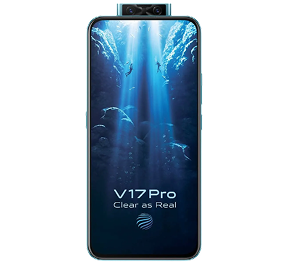
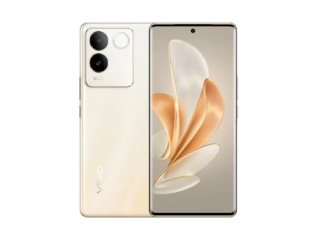
Here is a side-by-side look at the key specifications to make the differences between the two vivo phones easier to understand.
General
Both phones have a glass back, curved design, dual-SIM support, and IP68 water and dust resistance. The X100 Pro is slightly thicker and heavier, while both run Android 14 with Funtouch OS 14.
| Spec | vivo X100 | vivo X100 Pro |
|---|
| Brand | vivo | vivo |
| Model name | X100 | X100 Pro |
| Network support | 4G, 5G, VoLTE | 4G, 5G, VoLTE |
| Operating system | Android 14 | Android 14 |
| UI | Funtouch OS 14 | Funtouch OS 14 |
| Dimensions | 164.05 x 75.19 x 8.49 mm | 164.05 x 75.28 x 8.91 mm |
| Weight | Approx. 206 g | 225 g |
| Water and dust resistance | IP68 | IP68 |
| Back material | Glass | Glass |
Display and design
Both phones use a 6.78-inch 8T LTPO AMOLED display with 2800 x 1260-pixel resolution, up to 120Hz refresh rate, and 3,000 nits local peak brightness. This means the viewing experience is broadly similar for streaming, gaming, reading, and scrolling.
| Spec | vivo X100 | vivo X100 Pro |
|---|
| Display size | 6.78-inch | 6.78-inch |
| Display type | 8T LTPO AMOLED | 8T LTPO AMOLED |
| Refresh rate | Up to 120Hz | Up to 120Hz |
| Resolution | 1260 x 2800 pixels | 1260 x 2800 pixels |
| Peak brightness | 3,000 nits | 3,000 nits |
| Pixel density | 452 PPI | 452 PPI |
| Backplane technology | 8T LTPO | 8T LTPO |
| PWM | 2,160Hz | 2,160Hz |
| Protection | Not specified | Not specified |
| Thickness | 8.49 mm | 8.91 mm |
| Weight | Approx. 206 g | 225 g |
Pro tip: Both screens are closely matched, so display quality does not create a major difference in everyday use. The lighter X100 may feel easier to carry, while the X100 Pro has a more substantial build.
Performance and software
Both phones use the same MediaTek Dimensity 9300 processor, LPDDR5X RAM, and UFS 4.0 storage. The X100 Pro comes with 16GB RAM and 512GB storage, while the X100 is available with 12GB + 256GB and 16GB + 512GB configurations.
| Spec | vivo X100 | vivo X100 Pro |
|---|
| Processor | MediaTek Dimensity 9300 | MediaTek Dimensity 9300 |
| Chipset | Dimensity 9300, 4nm | Dimensity 9300, 4nm |
| RAM options | 12GB, 16GB | 16GB |
| RAM type | LPDDR5X | LPDDR5X |
| GPU | Immortalis-G720 | Immortalis-G720 |
| Storage options | 256GB, 512GB | 512GB |
| Storage type | UFS 4.0 | UFS 4.0 |
| OS | Android 14 | Android 14 |
| UI | Funtouch OS 14 | Funtouch OS 14 |
Camera features
The biggest difference between these phones is the camera hardware. The X100 uses a 50MP main camera, 50MP ultrawide camera, and 64MP telephoto camera. The X100 Pro uses a 50MP 1-inch-type main sensor, 50MP ultrawide camera, and 50MP ZEISS APO floating telephoto camera.
| Spec | vivo X100 | vivo X100 Pro |
|---|
| Rear camera setup | 50MP wide + 50MP ultrawide + 64MP telephoto | 50MP wide + 50MP ultrawide + 50MP telephoto |
| Main sensor | Sony IMX920, 1/1.49-inch | Sony IMX989, 1-inch |
| Main aperture | f/1.57 | f/1.75 |
| Telephoto | 64MP | 50MP APO floating telephoto |
| Optical zoom | 3x | 4.3x |
| Front camera | 32MP | 32MP |
| OIS | Yes | Yes |
| Video recording | Up to 4K | Up to 4K |
| Camera features | ZEISS Multifocal Portrait, VCS True Color, Supermoon, Astro, Pro | ZEISS Multifocal Portrait, APO Floating Telephoto, 4K Cinematic Portrait Video, Supermoon, Astro, Pro |
| Imaging chip | vivo V2 | vivo V3 |
Storage and connectivity
Both phones support 5G, Wi-Fi 6 and Wi-Fi 7, Bluetooth 5.4, NFC, GPS, and USB Type-C. Neither supports expandable storage, so selecting the right internal storage capacity is important.
| Spec | vivo X100 | vivo X100 Pro |
|---|
| Internal storage | 256GB, 512GB | 512GB |
| Expandable storage | Not supported | Not supported |
| 5G | Yes | Yes |
| 4G | Yes | Yes |
| Wi-Fi | Wi-Fi 6, Wi-Fi 7 | Wi-Fi 6, Wi-Fi 7 |
| Bluetooth | v5.4 | v5.4 |
| USB port | USB Type-C, USB 2.0 | USB Type-C, USB 3.2 Gen 1 |
| SIM type | Nano-SIM + Nano-SIM | Nano-SIM + Nano-SIM or nano-SIM + eSIM |
| GPS | Yes | Yes |
| NFC | Yes | Yes |
Battery and other features
The X100 packs a 5,000 mAh battery with 120 W wired charging, while the X100 Pro has a larger 5,400 mAh battery with 100 W wired and 50 W wireless charging. vivo says the X100 can reach 50% in 11 minutes, while the X100 Pro can reach 50% in 14 minutes.
| Spec | vivo X100 | vivo X100 Pro |
|---|
| Battery capacity | 5,000 mAh | 5,400 mAh |
| Charging speed | 120 W | 100 W |
| Wireless charging | No | 50 W |
| Reverse charging | Yes | Yes |
| Fingerprint sensor | In-display optical | In-display optical |
| Face unlock | Yes | Yes |
| Speakers | Stereo speakers | Stereo speakers |
| Water and dust resistance | IP68 | IP68 |
| Sensors | Accelerometer, gyroscope, compass, proximity, ambient light, colour temperature | Accelerometer, gyroscope, compass, proximity, ambient light, colour temperature, multispectral |
Pro tip: The X100 is built around faster wired charging, while the X100 Pro adds a larger battery and wireless charging. The difference matters more for charging habits than for basic day-to-day battery use.
Quick questions
Here are a few common questions about using the vivo X100 and vivo X100 Pro in everyday situations.
Q. Which phone is easier to carry around all day, the vivo X100 or X100 Pro?
The vivo X100 is lighter at around 206 g, compared with 225 g for the X100 Pro. This can make the X100 more comfortable for extended calls, commuting, browsing, and one-handed use.
Q. Which phone is more useful for travel photography?
The X100 Pro offers a 1-inch main sensor and 50MP APO floating telephoto camera, making it useful for portraits, low-light scenes, and distant subjects. The X100 also offers a versatile triple-camera setup.
Q. Which phone is more useful for gaming?
Both phones use the Dimensity 9300, LPDDR5X RAM, and UFS 4.0 storage, so both can handle demanding games. Their 120Hz displays also help keep scrolling, animations, and gameplay smooth.
Q. Which phone is more useful for storing photos and videos?
The 16GB + 512GB versions of both phones provide the same internal storage capacity. This gives enough space for large photo libraries, downloaded videos, games, and apps without expandable storage.