





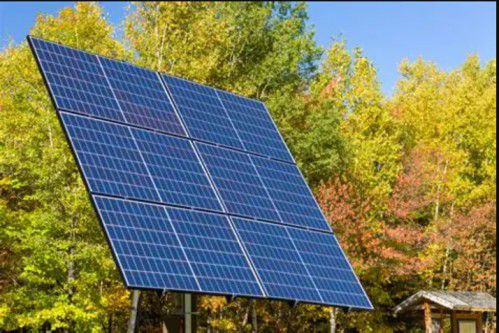
Vertical solar panels are photovoltaic panels installed in an upright or near-vertical position rather than at the angled tilt used in conventional rooftop solar systems. Also referred to as vertical PV panels or upright solar panels, these systems are mounted on building facades, walls, fences, or balcony railings, making them a practical solar energy system for spaces where roof mounting is not possible. Bifacial vertical panels can also capture reflected light from the rear, improving total energy yield without occupying additional space.

FAQs
Get a pre-approved loan offer of up to Rs. 5 lakh
Quick approval | Flexible tenure options | Zero approval fees
What are vertical solar panels?
How do vertical solar panels work?
Vertical solar panels generate electricity through the same photovoltaic effect as conventional panels, but their upright orientation changes how and when they capture sunlight most effectively. Here is how the process works:
- Sunlight strikes the panel surface at a low angle: Unlike tilted rooftop panels that are optimised for overhead sunlight, vertical PV panels capture light most effectively in the early morning and late afternoon when the sun is lower in the sky. This makes them particularly productive during the shoulder hours of the day.
- Photovoltaic cells convert light into DC electricity: Solar cells within the panel absorb incoming photons and release electrons, generating direct current electricity through the photovoltaic effect. The vertical orientation does not change this core process, only the angle and timing of peak generation.
- Bifacial panels capture rear-reflected light: Many vertical solar panels use bifacial technology, which allows the rear face of the panel to absorb light reflected from walls, ground surfaces, or surrounding structures. This rear-side generation can add 10 to 30 percent to total energy output depending on the albedo of the surrounding surfaces.
- An inverter converts DC to usable AC power: Electricity generated by the panels flows through cables to a string or micro-inverter, which converts the DC output into AC power compatible with your home or building's electrical system.
- Surplus power is exported or stored: In a grid-connected vertical solar system, surplus generation is exported to the grid through a net meter, while off-grid or hybrid systems store excess power in a battery bank for use during low-generation periods.
What are the different types of vertical solar panels?
Vertical solar panels are available in several configurations suited to different installation settings, architectural requirements, and energy goals. The table below breaks down the main types:
| Type | Description |
| Facade-mounted solar panel | Panels fixed directly to a building's exterior walls, often as part of a planned solar energy system for commercial or residential buildings. Well-suited to south-facing walls in India that receive consistent direct sunlight. |
| Building-integrated photovoltaics (BIPV) | Solar panels integrated into the building envelope itself, replacing conventional cladding, curtain walls, or glazing. BIPV systems serve a dual function as both structural material and electricity-generating surface. |
| Fence-mounted solar panel | Panels installed along boundary fences or compound walls, generating electricity while serving as a perimeter structure. A space-efficient choice for plots with limited rooftop availability. |
| Bifacial vertical solar panel | Panels with active cells on both front and rear surfaces, capturing direct sunlight from one side and reflected or diffuse light from the other. Best suited to open installations where the rear face is not obstructed. |
| Balcony solar panel | Compact vertical PV panels designed for balcony railings or walls in apartments and urban buildings where rooftop access is unavailable. Popular in Europe and gaining traction in Indian cities. |
| Noise barrier solar panel | Panels integrated into highway or railway sound barriers, generating electricity from vertical surfaces along transport corridors. More common in large infrastructure projects than residential applications. |
Key features and specifications of vertical solar panels
Vertical solar panels are designed to generate electricity from surfaces and orientations that conventional panels cannot use, combining smart design with durable construction suited to permanent outdoor installation.
- Bifacial cell technology: Most vertical solar panels use bifacial photovoltaic cells that generate electricity from both the front and rear surfaces. This dual-sided generation compensates for the reduced direct irradiance at a vertical angle and can meaningfully increase total annual output.
- Space-saving solar panel design: By utilising walls, fences, and facades rather than rooftop area, vertical panels unlock previously unused surfaces for solar generation, making them a practical solution for urban buildings, apartments, and plots with limited roof access.
- Architectural integration: Vertical PV panels can be designed to blend with building aesthetics, available in frameless, all-black, and custom-coloured configurations for building-integrated applications where appearance is a priority.
- Weather resistance and durability: Vertical mounting reduces dust and bird dropping accumulation on the panel surface compared to tilted rooftop installations, and the panels are built with tempered glass, UV-resistant coatings, and IP65 or higher ratings for year-round outdoor performance.
- Wider morning and evening generation window: Due to their upright orientation, vertical panels capture sunlight most effectively during morning and evening hours when the sun is at a lower angle, complementing a rooftop system's midday peak generation profile.
Specifications
| Specification | Typical range |
| Panel orientation | 90° vertical or near-vertical (75°–90°) |
| Peak power output | 100W – 550W per panel |
| Bifacial gain | 10% – 30% additional output |
| Panel efficiency | 18% – 22% |
| Operating temperature | -40°C to +85°C |
| IP rating | IP65 or higher |
| Frame material | Anodised aluminium or frameless |
| Warranty | 10–12 years product, 25–30 years performance |
What are the benefits of vertical solar panels?
Vertical solar panels open up surfaces that conventional rooftop systems cannot use, bringing solar power generation to a wider range of buildings and urban settings.
- Utilises unused vertical surfaces: Walls, fences, balcony railings, and facades that would otherwise contribute nothing to your energy system become active electricity-generating surfaces with vertical solar panel installation.
- Ideal for apartments and urban buildings: In high-rise residential buildings and commercial complexes where rooftop space is shared or restricted, vertical panels allow individual residents and businesses to generate their own renewable energy independently.
- Lower dust accumulation and maintenance: The near-vertical surface angle causes dust and debris to slide off naturally, reducing cleaning frequency compared to flat or tilted rooftop panels and lowering the overall maintenance effort.
- Complements rooftop solar systems: Vertical panels generate most of their power during morning and evening hours, which complements the midday peak output of a conventional rooftop installation and helps flatten the household's overall solar generation curve.
- Bifacial rear-side energy gain: In open or reflective environments, bifacial vertical panels collect additional energy from reflected light on the rear surface, improving total annual yield without increasing the panel footprint.
- Sustainable energy solution for dense cities: As Indian cities grow denser and rooftop space becomes more contested, vertical solar panels represent a viable, scalable path to expanding solar power system capacity across urban buildings.
Price list of vertical solar panels in India (October 2026)
Vertical solar panel systems in India are available across different capacities and budgets. Compare indicative prices below to find a setup that suits your energy requirements:
| Vertical solar panel system | Capacity | Approx. price |
| Residential vertical solar panel | 1 kW | Rs. 65,000 |
| Residential vertical solar panel | 2 kW | Rs. 1,15,000 |
| Residential vertical solar panel | 3 kW | Rs. 1,65,000 |
| Residential vertical solar panel | 5 kW | Rs. 2,75,000 |
| Commercial vertical solar panel | 10 kW | Rs. 5,20,000 |
Disclaimer: Each model's features, availability, and pricing are subject to change and may vary. For the most accurate and up-to-date information, please visit the official website.
Before you decide, explore the latest offers. You may find a great deal on a model that matches your needs.
How to choose the right vertical solar panel?
Choosing the right vertical solar panel depends on your available surface, energy requirements, building type, and how the panels will integrate with your existing or planned solar energy system.
- Assess your available vertical surface: Begin by identifying which surfaces, such as south-facing walls, boundary fences, or balcony railings, are available for installation and measure the usable area to estimate how much panel capacity you can accommodate.
- Choose bifacial panels for open installations: If the rear of the panel will be exposed to reflected light from walls, ground, or nearby structures, a bifacial vertical solar panel will deliver meaningfully higher output than a standard single-sided panel.
- Match wattage to your energy goal: Calculate your expected daily generation needs and select a panel wattage and quantity that meets them, keeping in mind that vertical panels typically generate 10 to 20 percent less than the same panel installed at an optimal tilt angle.
- Consider architectural requirements: For building-integrated or facade applications, select panels with frameless or low-profile designs in colours and finishes that complement the building's exterior, particularly if aesthetics or planning approvals are a consideration.
- Verify structural compatibility: Ensure that the wall, fence, or balcony structure you plan to mount panels on can bear the panel's weight and withstand wind loads, as vertical installations are more exposed to lateral wind pressure than rooftop systems.
- Check inverter and system compatibility: Confirm that the panels you select are compatible with your inverter specifications and that the system as a whole is eligible for net metering and any applicable government subsidies in your state.
Save more with Smart Savings Calculator
Get electronics and appliances on Easy EMIs with Bajaj Finance
Upgrading your home with the latest electronics and appliances is now easier and more affordable with Bajaj Finance’s flexible financing options. Follow these steps to get started:
- Explore products on Bajaj Mall: Browse a wide range of electronics and appliances from trusted brands on Bajaj Mall. Compare features like energy ratings, storage capacity, performance settings, and design to choose the right product for your home.
- Visit a partner store: Once you shortlist a model, step into any of Bajaj Finance’s 1.5 lakh partner stores across 4,000 cities in India. See the product in person, talk to experts, and make a confident decision.
- Choose the Easy EMI Loan option: At checkout, select the Bajaj Finance Easy EMI Loan. Avail financing of up to Rs. 5 lakh and split the cost into convenient monthly instalments. Some products also come with a zero down payment option.
- Check your loan eligibility online: Plan better by checking your loan eligibility in minutes. Simply enter your mobile number and OTP to know your pre-approved limit.
- Use the Insta EMI Card for purchases up to Rs. 3 lakh: Already own the Bajaj Finance Insta EMI Card? Use it for instant, paperless checkout and convert your purchases of up to Rs. 3 lakh into Easy EMIs.
Get the best offers near you


FAQs
General
Where can vertical solar panels be installed?
Vertical solar panels can be installed on south-facing building facades, compound walls, boundary fences, balcony railings, rooftop parapets, and highway sound barriers. They are particularly useful in urban settings where rooftop space is limited or shared, allowing residents and businesses to generate solar energy from previously unused vertical surfaces.
What are bifacial vertical solar panels?
Bifacial vertical solar panels are photovoltaic panels with active solar cells on both the front and rear surfaces. When installed vertically, the front face captures direct sunlight while the rear face absorbs light reflected from walls, ground, or nearby surfaces. This dual-sided generation can increase total annual energy output by 10 to 30 percent compared to standard single-sided panels.
Can vertical solar panels generate electricity efficiently?
Vertical solar panels generate electricity efficiently within their design parameters, though their output is typically 10 to 20 percent lower than panels installed at an optimal tilt angle for a given location. However, bifacial technology, rear-side light capture, and stronger morning and evening generation can offset this gap, making vertical panels a practical and productive choice for surfaces where tilted mounting is not possible.
Do vertical solar panels work in urban environments?
Yes, vertical solar panels are particularly well-suited to dense urban environments where rooftop space is scarce or shared across multiple occupants. Facade-mounted, balcony, and fence-mounted configurations allow individual flats, offices, and commercial units to generate their own renewable energy from walls and perimeter structures without needing access to a shared rooftop.
What factors affect the performance of vertical solar panels?
The performance of vertical solar panels is affected by panel orientation and compass direction, the amount of direct and reflected sunlight the surface receives, shading from adjacent buildings or structures, bifacial gain from rear-surface reflectance, panel efficiency, dust accumulation, and ambient temperature. South-facing vertical installations in India generally perform best, particularly during morning and late afternoon hours when the sun angle aligns most closely with the panel surface.
More articles
Disclaimer
While care is taken to update the information, products, and services included in or available on our website and related platforms/websites, there may be inadvertent inaccuracies or typographical errors or delays in updating the information. The material contained in this site, and on associated web pages, is for reference and general information purpose and the details mentioned in the respective product/service document shall prevail in case of any inconsistency. Subscribers and users should seek professional advice before acting on the basis of the information contained herein. Please take an informed decision with respect to any product or service after going through the relevant product/service document and applicable terms and conditions. In case any inconsistencies observed, please click on reach us.
*Terms and conditions apply