Published May 19, 2026 · 3 min read

How does the grid connected rooftop solar scheme work

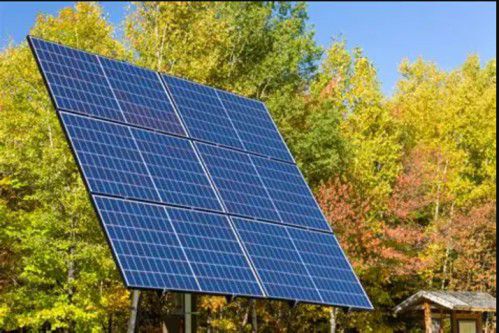
The grid connected rooftop solar scheme in India allows residential, commercial, and institutional consumers to generate electricity through rooftop solar panels connected directly to the power grid. Under the scheme, solar energy generated during the day is used for immediate electricity consumption, while surplus power can be exported to the grid through net metering systems. Implemented under the Ministry of New and Renewable Energy (MNRE), the scheme supports renewable energy adoption, lower electricity consumption from conventional sources, and long-term energy savings through clean solar power generation.

Who is eligible for the grid connected rooftop solar scheme and how can consumers apply

The grid connected rooftop solar scheme includes eligibility requirements, technical approvals, and application procedures for consumers planning to install rooftop solar systems.


  • Residential households with valid electricity connections are commonly eligible: Homeowners with suitable rooftop space and active electricity connections can apply for grid connected rooftop solar installations under approved renewable energy programmes.
  • Commercial buildings and institutions can install larger rooftop systems: Offices, schools, hospitals, commercial establishments, and institutional buildings may install higher-capacity rooftop solar systems according to electricity usage requirements.
  • Applications generally require technical feasibility approvals: Consumers commonly submit electricity bill details, rooftop ownership documents, identification proof, and installation applications before technical verification and approval.
  • Approved vendors and installation agencies are commonly required: Rooftop solar systems are generally installed through empanelled vendors or approved solar service providers to ensure quality and subsidy eligibility compliance.
  • Net metering approval is necessary for grid-connected operation: Grid-connected rooftop solar systems usually require net metering approval that enables surplus electricity generated by the solar system to be exported to the power grid.

How do rooftop solar subsidies and financial savings work under the scheme

The grid connected rooftop solar scheme supports renewable energy adoption through subsidy assistance, lower electricity expenses, and long-term financial savings.


  • Government subsidy support helps reduce rooftop solar installation costs: Residential rooftop solar systems may qualify for central financial assistance that helps lower the upfront expenses associated with solar panel installation and related equipment.
  • Electricity bill savings improve long-term financial benefits: Rooftop solar systems reduce dependence on conventional electricity supply, helping households and businesses lower monthly electricity expenses over time.
  • Net metering improves overall return on investment: Surplus solar electricity exported to the grid through net metering may offset future electricity usage and improve long-term savings potential.
  • Solar financing and loan options improve affordability: Banks and financial institutions commonly provide rooftop solar financing solutions, EMI options, and renewable energy loans depending on eligibility conditions.
  • Reduced operational electricity costs support businesses and institutions: Commercial and institutional users can reduce operational energy expenses through rooftop solar electricity generation and grid integration.

What components and systems are required for grid connected rooftop solar installations

Grid connected rooftop solar systems require solar generation equipment, electrical infrastructure, and net metering arrangements for stable renewable power generation and grid connectivity.


  • Solar panels generate electricity using sunlight: Photovoltaic solar panels convert solar radiation into electrical energy and are commonly installed across residential, commercial, and institutional rooftops.
  • Solar inverters convert generated electricity into usable power: Inverters convert direct current generated by solar panels into alternating current suitable for household appliances and power grid compatibility.
  • Net meters track imported and exported electricity usage: Net metering systems measure electricity consumed from the grid and surplus solar electricity exported back to the grid for billing adjustments.
  • Mounting structures and electrical protection systems improve safety: Mounting frames, electrical wiring, earthing systems, circuit protection devices, and safety equipment help ensure reliable rooftop solar system operation.
  • Grid connectivity enables continuous electricity availability: Grid connected rooftop solar systems continue receiving electricity from the utility grid whenever solar power generation becomes insufficient.

What are the benefits of grid connected rooftop solar systems for consumers

Grid connected rooftop solar systems support renewable electricity generation, lower energy expenses, and long-term sustainability across residential, commercial, and institutional sectors.


  • Households benefit from reduced electricity expenses: Rooftop solar systems help reduce household dependence on conventional electricity supply and improve long-term energy savings through self-generated solar power.
  • Businesses improve operational energy efficiency and cost management: Commercial establishments can reduce electricity costs and improve renewable energy usage through rooftop solar integration with grid-connected systems.
  • Institutions support sustainable energy adoption and infrastructure development: Schools, hospitals, government buildings, and educational institutions commonly adopt rooftop solar systems to improve renewable energy utilisation and sustainability goals.
  • Renewable solar electricity supports environmental sustainability objectives: Solar energy generation helps reduce carbon emissions and environmental pollution associated with fossil fuel-based electricity production.
  • Net metering improves energy efficiency and renewable power utilisation: Grid-connected solar systems maximise electricity usage efficiency by balancing solar generation, grid supply, and exported renewable electricity.


Frequently asked questions

What is grid connected rooftop solar scheme?

The grid connected rooftop solar scheme is a government-supported renewable energy initiative that allows consumers to generate electricity through rooftop solar panels connected directly to the power grid. The scheme supports renewable energy adoption, lower electricity expenses, and net metering-based electricity management across residential, commercial, and institutional sectors.

How does net metering work in rooftop solar systems?

Net metering allows surplus electricity generated by rooftop solar systems to be exported to the electricity grid through a bidirectional meter. The net meter records both electricity imported from the grid and excess solar electricity supplied back to the grid, helping reduce overall electricity billing through energy adjustments.

Who can apply for rooftop solar subsidy support?

Residential households with suitable rooftop space and valid electricity connections are commonly eligible for rooftop solar subsidy support under approved renewable energy schemes. Eligibility conditions may vary according to system capacity, installation guidelines, and applicable government policies.

What are the benefits of grid connected solar systems?

Grid connected solar systems help reduce electricity bills, improve renewable energy usage, support net metering benefits, reduce dependence on conventional electricity supply, and improve long-term energy sustainability across homes, businesses, and institutions.

Does a rooftop solar help reduce electricity bills?

Yes, rooftop solar systems commonly help reduce electricity bills by generating electricity directly from sunlight and lowering dependence on conventional grid electricity consumption. Net metering systems may also improve savings by allowing surplus solar electricity to offset future electricity usage.

Show More Show Less

Bajaj Finserv app for all your financial needs and goals

Trusted by 50 million+ customers in India, Bajaj Finserv App is a one-stop solution for all your financial needs and goals.

You can use the Bajaj Finserv App to:

  • Apply for loans online, such as Instant Personal Loan, Home Loan, Business Loan, Gold Loan, and more.
  • Invest in fixed deposits and mutual funds on the app.
  • Choose from multiple insurance for your health, motor and even pocket insurance, from various insurance providers.
  • Pay and manage your bills and recharges using the BBPS platform. Use Bajaj Pay and Bajaj Wallet for quick and simple money transfers and transactions.
  • Apply for Insta EMI Card and get a pre-qualified limit on the app. Explore over 1 million products on the app that can be purchased from a partner store on Easy EMIs.
  • Shop from over 100+ brand partners that offer a diverse range of products and services.
  • Use specialised tools like EMI calculators, SIP Calculators
  • Check your credit score, download loan statements and even get quick customer support—all on the app.

Download the Bajaj Finserv App today and experience the convenience of managing your finances on one app.

Disclaimer

1. Bajaj Finance Limited (“BFL”) is a Non-Banking Finance Company (BAJAJ FINANCE) and Prepaid Payment Instrument Issuer offering financial services viz., loans, deposits, Bajaj Pay Wallet, Bajaj Pay UPI, bill payments and third-party wealth management products. The details mentioned in the respective product/ service document shall prevail in case of any inconsistency with respect to the information referring to BFL products and services on this page.

2. All other information, such as, the images, facts, statistics etc. (“information”) that are in addition to the details mentioned in the BFL’s product/ service document and which are being displayed on this page only depicts the summary of the information sourced from the public domain. The said information is neither owned by BFL nor it is to the exclusive knowledge of BFL. There may be inadvertent inaccuracies or typographical errors or delays in updating the said information. Hence, users are advised to independently exercise diligence by verifying complete information, including by consulting experts, if any. Users shall be the sole owner of the decision taken, if any, about suitability of the same.