





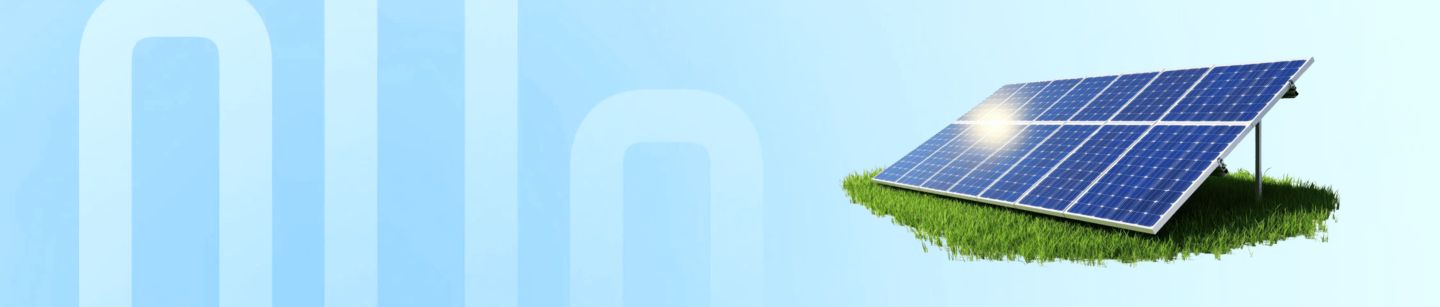
The Delhi Rooftop Solar Subsidy Scheme combines the Central Government's PM Surya Ghar Yojana with an additional Delhi Government top-up subsidy to make rooftop solar installation more affordable for residential households across the city. Together, these two subsidies support the Jawaharlal Nehru National Solar Mission and Delhi's broader renewable energy goals. Eligible Delhi households can receive a total subsidy of up to Rs. 1,08,000, significantly reducing installation costs while helping families save on monthly electricity bills and contribute to a cleaner energy future.

FAQs

Smart Savings Calculator
Get pre-approved Solar Loan offers
Get pre-approved Solar Loan offers
What is the Delhi rooftop solar subsidy scheme and how does it support solar adoption
What are the objectives of the Delhi Rooftop Solar Subsidy Scheme
The scheme is designed with clear goals that support both individual households and Delhi's larger clean energy ambitions. This is part of India's broader rooftop solar programme to accelerate renewable energy adoption at the residential level.
- Accelerate rooftop solar adoption in Delhi: The scheme aims to encourage a significantly larger number of Delhi households to install rooftop solar panels by reducing the financial barrier through direct government subsidies at both the central and state level.
- Reduce household electricity bills: By generating their own solar power, Delhi residents can reduce their dependence on grid electricity and lower their monthly electricity bills substantially, providing long-term financial relief from rising power tariffs.
- Support India's renewable energy targets: The scheme aligns with India's national commitment to significantly increase the share of renewable energy in the overall power mix, with rooftop solar playing a key role in decentralised clean energy generation across urban areas.
- Promote net metering for surplus energy: The scheme encourages households to adopt net metering under the Delhi Electricity Regulatory Commission, allowing them to export surplus solar power back to the grid and earn credits on their electricity bills.
- Reduce carbon emissions in Delhi: Widespread rooftop solar adoption across Delhi's residential areas helps reduce the city's dependence on fossil fuel-based electricity, contributing to lower carbon emissions and improved air quality over the long term.
What are the key features of the Delhi Rooftop Solar Subsidy Scheme
The scheme comes with several well-defined features that make it one of the most financially attractive rooftop solar programmes in India. It is part of the larger framework of the Solar Park Scheme in India that supports solar energy deployment across the country.
- Combined central and state government subsidy: The scheme combines the PM Surya Ghar Yojana central subsidy with an additional Delhi Government top-up subsidy, delivering a total subsidy amount that is higher than what the central scheme alone provides for Delhi residents.
- Subsidy of up to Rs. 1,08,000: The total combined subsidy available to eligible Delhi households is Rs. 40,000 for a 1 kW system, Rs. 80,000 for a 2 kW system and Rs. 1,08,000 for a 3 kW or above system, making rooftop solar significantly more affordable across different household sizes and electricity consumption levels.
- Net metering under DERC: Delhi residents who install rooftop solar under this scheme are eligible for net metering connections through their respective DISCOMs under the Delhi Electricity Regulatory Commission, allowing surplus power to be exported to the grid and offset against future electricity bills.
- Applicable across all three Delhi DISCOMs: The scheme is available to residential consumers served by all three electricity distribution companies operating in Delhi, which are BSES Rajdhani Power Limited, BSES Yamuna Power Limited and Tata Power Delhi Distribution Limited.
- Online application through PM Surya Ghar portal: Applications for the subsidy are submitted through the centralised PM Surya Ghar Yojana portal at pmsuryaghar.gov.in, making the process accessible and transparent for all eligible Delhi residents.
Who is eligible for the Delhi Rooftop Solar Subsidy Scheme
Understanding the eligibility criteria before applying ensures a smooth and successful subsidy application. This scheme complements national manufacturing initiatives such as the Solar PV Module PLI Scheme that supports the domestic solar supply chain.
- Residential property owner in Delhi: The applicant must be the owner of a residential property located within Delhi with a valid electricity connection under one of the three DISCOMs serving the city.
- Active electricity connection with a Delhi DISCOM: The property must have an active residential electricity connection with BSES Rajdhani, BSES Yamuna or Tata Power DDL. The subsidy is available to consumers across all three distribution companies operating in Delhi.
- Property with a suitable rooftop: The property must have a rooftop area that is adequate for the installation of a solar panel system. A minimum shadow-free rooftop area of approximately 10 sq. metres is required for a 1 kW system, with proportionally more space needed for larger system capacities.
- First-time rooftop solar installation: The subsidy is available for new rooftop solar installations. Properties that already have an existing solar system installed may not be eligible for the full subsidy under this scheme.
- Use of approved solar panels and vendors: The rooftop solar system must be installed using ALMM-listed solar panels and through a government-empanelled vendor registered under the PM Surya Ghar Yojana portal to qualify for the subsidy disbursement.
- Subsidy linked to system capacity and consumption: The subsidy amount is determined by the installed system capacity, which should be matched to the household's average monthly electricity consumption. A capacity of 1 to 2 kW is recommended for consumption up to 150 units per month, 2 to 3 kW for 150 to 300 units and above 3 kW for consumption exceeding 300 units per month.
What types of rooftop solar systems are covered under the Delhi scheme
The scheme covers specific types of rooftop solar systems that are connected to the electricity grid. Understanding the Grid Connected Rooftop Solar Scheme framework helps you identify which system type is right for your home.
- Grid-connected rooftop solar systems: The primary system type covered under this scheme is the grid-connected rooftop solar system, which connects directly to the household's electricity connection and the DISCOM grid. This configuration allows surplus power to be exported to the grid under net metering, maximising the financial benefit for the homeowner.
- Systems from 1 kW to above 3 kW capacity: The scheme covers residential rooftop solar installations from 1 kW up to and above 3 kW in capacity. The subsidy amount is highest for systems of 3 kW and above, with a total combined subsidy of Rs. 1,08,000 available for this capacity tier.
- ALMM-listed solar panels only: Only systems installed with solar panels on the Approved List of Models and Manufacturers issued by the Ministry of New and Renewable Energy are eligible for the subsidy. This ensures quality standards are maintained across all subsidised installations in Delhi.
- Systems installed by empanelled vendors: The system must be installed by a vendor empanelled under the PM Surya Ghar Yojana programme. Using a non-empanelled installer disqualifies the installation from receiving the subsidy, so always verify the vendor's registration status before signing any installation agreement.
- Off-grid systems are not covered: Standalone off-grid solar systems that are not connected to the DISCOM grid are not covered under this subsidy scheme. The scheme is specifically designed for grid-connected installations that support net metering and contribute to the broader grid-level renewable energy goals.

Save more with Smart Savings Calculator
What are the benefits of the Delhi Rooftop Solar Subsidy Scheme
The scheme delivers a wide range of financial, environmental and practical benefits for Delhi households who choose to install rooftop solar under its framework.
- Substantial reduction in installation cost: The combined central and Delhi Government subsidy of up to Rs. 1,08,000 for a 3 kW system significantly reduces the out-of-pocket installation cost for eligible households, making rooftop solar financially viable for a much wider range of Delhi residents than before.
- Significant monthly electricity bill savings: Once installed, a rooftop solar system can reduce a household's monthly electricity bill by 70 to 100 percent depending on the system size and consumption pattern, delivering immediate and ongoing financial relief from rising electricity tariffs across Delhi.
- Strong return on investment: Rooftop solar installations in Delhi typically deliver an annual return on investment of 21 to 25 percent after accounting for the subsidy, with the system paying back its net cost within four to five years and generating free electricity for the remaining 20-plus years of panel life.
- Net metering credits reduce bills further: Under net metering with the DISCOM, surplus solar power exported to the grid is credited against the household's electricity bills, further reducing or in some cases eliminating monthly electricity payments entirely during high-generation periods.
- 25-year panel performance warranty: Most solar panels installed under empanelled vendors come with a 25-year performance warranty, ensuring long-term energy generation and protecting the homeowner's investment across the full operational lifespan of the system.
- Increased property value: A rooftop solar installation adds measurable value to the property by demonstrating lower running costs and energy independence, which is an increasingly valued feature in Delhi's residential real estate market.
- Environmental contribution: Every kilowatt of solar power generated at home reduces dependence on coal-based electricity, lowering carbon emissions and contributing to Delhi's air quality improvement goals alongside the city's broader sustainability commitments.
How do you apply for the Delhi Rooftop Solar Subsidy Scheme
Applying for the Delhi Rooftop Solar Subsidy Scheme is a straightforward process managed primarily through the PM Surya Ghar Yojana online portal. Here is a step-by-step guide to getting your application right.
- Register on the PM Surya Ghar Yojana portal: Visit pmsuryaghar.gov.in and register using your mobile number, electricity consumer number and DISCOM details. This creates your applicant profile on the central portal through which the entire subsidy process is managed.
- Submit your application for rooftop solar: After registration, fill in the online application form with your property details, preferred system capacity based on your average monthly electricity consumption and your choice of empanelled vendor from the approved list on the portal.
- Get feasibility approval from your DISCOM: Your DISCOM will review the application and conduct a technical feasibility assessment of your rooftop. Once approved, you will receive a feasibility confirmation that allows you to proceed with the installation.
- Install the system through an empanelled vendor: Engage an empanelled vendor registered on the PM Surya Ghar Yojana portal to install the rooftop solar system using ALMM-listed panels. Ensure all installation documentation is maintained for the subsidy disbursement stage.
- Apply for net metering connection: After installation, apply to your DISCOM for a net metering connection. BSES Rajdhani, BSES Yamuna and Tata Power DDL all process net metering applications under the Delhi Electricity Regulatory Commission framework.
- Submit installation report for subsidy disbursement: Once the net metering connection is established, submit the installation completion report and required documents on the PM Surya Ghar portal. The combined central and Delhi Government subsidy amount is then disbursed directly to your bank account.
Get electronics and appliances on Easy EMIs with Bajaj Finance
Bringing home your preferred product is now hassle-free with Bajaj Finance's flexible financing options. Follow these steps to get started:
- Explore products on Bajaj Mall: Browse through a wide selection of products on Bajaj Mall. Compare features to find a model that meets your needs.
- Visit a partner store: Once you shortlist a model, step into any of Bajaj Finance’s 1.5 lakh partner stores across 4,000 cities in India. See the product in person, talk to experts, and make a confident decision.
- Choose the Easy EMI Loan option: At checkout, select the Bajaj Finance Easy EMI Loan. Avail financing of up to Rs. 5 lakh and split the cost into convenient monthly instalments. Some products also come with a zero down payment option.
- Check your loan eligibility online: Plan better by checking your loan eligibility in minutes. Simply enter your mobile number and OTP to know your pre-approved limit.
- Use the Insta EMI Card for purchases up to Rs. 3 lakh: Already own the Bajaj Finance Insta EMI Card? Use it for instant, paperless checkout and convert your purchases of up to Rs. 3 lakh into Easy EMIs.
Why use the Smart Savings Calculator
Bajaj Finance’s Smart Savings Calculator helps you unlock maximum savings every time you shop at partner stores. It brings together all available brand, dealer, and scheme offers—so you can see your total savings instantly and shop smarter with Easy EMIs.
1. Dealer offers - Grab exclusive in-store deals at over 1.5 lakh partner stores across India. Enjoy local discounts and special prices you will not find online.
2. Brand offers - Access limited-time discounts from top brands across electronics, appliances, and more. Discover brand-specific savings selected just for you.
3. Bajaj offers - Unlock exclusive Bajaj Finance deals on popular products—available only to our customers. More rewards, more value.
4. Scheme offers - Take advantage of time-sensitive offers on select EMI schemes. Get extra benefits after paying just 3 EMIs—visible during EMI selection at checkout.
Calculate your extra savings today!
Get the best offers near you


Related videos

Whirlpool 1 Ton AC - My Choice for the Summer

VOLTAS 1.5 All-Round Cool Performer

Haier Kinouchi Hexa AC – Power Up Without Heating Up

VOLTAS 1.5 Ton AC – Big Chill, Small Bill

Daikin 1.5 Ton AC – For Peaceful All-Nighters

IFB 1.5 Ton AC – Cool Setup for Every Batch

LG 1.5 Split Cooling with Performance

DAIKIN 1.5 Reliable Cooling on Budget
FAQs
General
What is the Delhi Rooftop Solar Subsidy Scheme?
The Delhi Rooftop Solar Subsidy Scheme combines the Central Government's PM Surya Ghar Yojana subsidy with an additional Delhi Government top-up subsidy to make rooftop solar installation affordable for residential households. Eligible Delhi residents can receive a total combined subsidy of up to Rs. 1,08,000 for a 3 kW or larger system. The scheme also supports net metering under the Delhi Electricity Regulatory Commission, allowing households to export surplus solar power to the grid.
Who is eligible for rooftop solar subsidy in Delhi?
Residential property owners in Delhi with an active electricity connection under BSES Rajdhani, BSES Yamuna or Tata Power DDL are eligible. The property must have adequate shadow-free rooftop space for solar panel installation. The system must be installed using ALMM-listed panels through a government-empanelled vendor registered on the PM Surya Ghar Yojana portal. First-time rooftop solar installations are eligible. Properties with an existing solar system already installed may not qualify for the full subsidy.
What subsidy is available for rooftop solar systems in Delhi?
Delhi residents can receive a combined central and state subsidy of Rs. 40,000 for a 1 kW system, Rs. 80,000 for a 2 kW system and Rs. 1,08,000 for a 3 kW or larger system. The central subsidy under PM Surya Ghar Yojana is Rs. 30,000 for 1 kW, Rs. 60,000 for 2 kW and Rs. 78,000 for 3 kW and above. The Delhi Government adds Rs. 10,000, Rs. 20,000 and Rs. 30,000 respectively as a top-up subsidy.
Does Delhi rooftop solar scheme support net metering?
Yes, net metering is available in Delhi under the Delhi Electricity Regulatory Commission. Households with grid-connected rooftop solar systems can export surplus power to the grid and receive credits on their electricity bills, further reducing monthly payments. Net metering applications are processed through your respective DISCOM, which are BSES Rajdhani, BSES Yamuna and Tata Power DDL. The net metering connection must be established before the subsidy amount is disbursed to the applicant's bank account.
What documents are required for rooftop solar subsidy in Delhi?
The documents typically required for the Delhi rooftop solar subsidy application include a valid proof of identity such as Aadhaar card, proof of property ownership, your electricity consumer number and recent electricity bill from your DISCOM, bank account details for subsidy disbursement and the installation completion certificate from your empanelled vendor. Documents may vary slightly based on your DISCOM and the specific requirements of the PM Surya Ghar Yojana portal at the time of application.
More articles
Disclaimer
While care is taken to update the information, products, and services included in or available on our website and related platforms/websites, there may be inadvertent inaccuracies or typographical errors or delays in updating the information. The material contained in this site, and on associated web pages, is for reference and general information purpose and the details mentioned in the respective product/service document shall prevail in case of any inconsistency. Subscribers and users should seek professional advice before acting on the basis of the information contained herein. Please take an informed decision with respect to any product or service after going through the relevant product/service document and applicable terms and conditions. In case any inconsistencies observed, please click on reach us.
*Terms and conditions apply