






The Snapdragon 4 Gen 2 and Snapdragon 750G are notable processors from Qualcomm, each offering distinct features. The Snapdragon 4 Gen 2 is designed for mid-range devices, boasting improved power efficiency and performance over its predecessors. It supports advanced AI capabilities and enhanced graphics. In contrast, the Snapdragon 750G, though slightly older, delivers robust 5G connectivity and solid performance with its Kryo 570 CPU and Adreno 619 GPU, making it ideal for more demanding applications.
You can buy smartphones on Easy EMIs from Bajaj Finance and enjoy exclusive discounts. Visit any of Bajaj Finance’s 1.5 lakh partner stores in over 4,000 cities, choose the model, and use the Easy EMI Loan of up to Rs. 5 lakh. Convert the price into Easy EMIs, enjoy zero down payment on select models. Check your loan eligibility online now.


Comparison

FAQs

Smart Savings Calculator
Get pre-approved loan offer
Quick approval | Flexible Tenure Options | Zero Approval Fees
Snapdragon 4 Gen 2 vs Snapdragon 750G - Comparison
The Snapdragon 4 Gen 2 vs Snapdragon 750G comparison highlights significant differences between these two mobile processors. The Snapdragon 4 Gen 2, an entry-level processor, is designed for budget-friendly smartphones, providing efficient performance for everyday tasks such as browsing and social media. On the other hand, the Snapdragon 750G, a mid-range processor, offers a more robust performance with advanced features like 5G connectivity, enhanced gaming capabilities, and superior AI functionalities. This makes the Snapdragon 750G ideal for users seeking a more dynamic mobile experience, including smooth multitasking and faster download speeds.
When comparing the two, the Snapdragon 4 Gen 2 is more energy-efficient, which can be advantageous for prolonging battery life in budget devices. However, the Snapdragon 750G excels in overall speed and graphics performance, making it a better choice for gaming and high-definition media consumption. Users looking for Snapdragon 8 Gen 1 mobile phones might find the 750G's features more appealing, as it bridges the gap between budget and premium experiences. Both processors contribute to the diverse range of Snapdragon processor phones, ensuring that users can find a device that meets their specific needs and budget.


Technical specifications - Snapdragon 4 Gen 2 vs Snapdragon 750G
General info
The Snapdragon 4 Gen 2, announced on 22 July 2024, is designed as a mid-range chipset, featuring model number SM4350 and brand Qualcomm. In comparison, the Snapdragon 750G, launched on 22 September 2020, also serves the mid-range class with model number SM7225, under the same brand, Qualcomm.
| Feature | Snapdragon 4 Gen 2 | Snapdragon 750G |
| Announced Date | 22 July 2024 | 22 September 2020 |
| Class | Mid-range | Mid-range |
| Model number | SM4350 | SM7225 |
| Brand | Qualcomm | Qualcomm |
CPU
The Snapdragon 4 Gen 2 boasts an ARM Cortex-A78 architecture with 8 cores running up to 2.2 GHz, manufactured using a 4nm process by TSMC. On the other hand, the Snapdragon 750G features an ARM Cortex-A77 architecture, also with 8 cores and a maximum frequency of 2.2 GHz, but it is manufactured using Samsung's 8nm process.
| Feature | Snapdragon 4 Gen 2 | Snapdragon 750G |
| Architecture | ARM Cortex-A78 | ARM Cortex-A77 |
| Cores | 8 | 8 |
| Frequency | Up to 2.2 GHz | Up to 2.2 GHz |
| Instruction set | ARMv8 | ARMv8 |
| Process | 4nm | 8nm |
| TDP (Sustained power limit) | 5W | 5W |
| Manufacturing | TSMC | Samsung |
Graphics
Both the Snapdragon 4 Gen 2 and the Snapdragon 750G come with an integrated Adreno 619 GPU, sharing the Adreno 6xx architecture and operating at a frequency of 950 MHz. With 128 shading units and a peak performance of 1.2 TFLOPS, these GPUs support Vulkan 1.1, OpenCL 2.0, and DirectX 12, ensuring robust graphics performance for mid-range devices.
| Feature | Snapdragon 4 Gen 2 | Snapdragon 750G |
| SoC | Integrated | Integrated |
| GPU name | Adreno 619 | Adreno 619 |
| Architecture | Adreno 6xx | Adreno 6xx |
| GPU frequency | 950 MHz | 950 MHz |
| Execution units | 2 | 2 |
| Shading units | 128 | 128 |
| Total shaders | 128 | 128 |
| FLOPS | 1.2 TFLOPS | 1.2 TFLOPS |
| Vulkan Version | 1.1 | 1.1 |
| OpenCL Version | 2.0 | 2.0 |
| DirectX Version | 12 | 12 |
Memory
The Snapdragon 4 Gen 2 and Snapdragon 750G both support LPDDR4x memory with a frequency of 2133 MHz and a 2x16-bit bus, providing a maximum bandwidth of 17 GB/s. However, while the Snapdragon 4 Gen 2 supports up to 8 GB of RAM, the Snapdragon 750G can handle up to 12 GB, offering more memory flexibility.
| Feature | Snapdragon 4 Gen 2 | Snapdragon 750G |
| Memory type | LPDDR4x | LPDDR4x |
| Memory frequency | 2133 MHz | 2133 MHz |
| Bus | 2x16-bit | 2x16-bit |
| Max bandwidth | 17 GB/s | 17 GB/s |
| Max size | 8GB | 12GB |
Multimedia (ISP)
The Snapdragon 4 Gen 2 features support for UFS 2.1 storage, FHD+ display resolution, and a maximum camera resolution of 64 MP, with 4K video capture at 30fps and playback at 60fps. Similarly, the Snapdragon 750G supports UFS 2.1 storage but offers a higher maximum display resolution of QHD+ and a camera resolution of 192 MP, making it suitable for more advanced multimedia applications.
| Feature | Snapdragon 4 Gen 2 | Snapdragon 750G |
| Storage type | UFS 2.1 | UFS 2.1 |
| Max Display Resolution | FHD+ | QHD+ |
| Max Camera Resolution | 64 MP | 192 MP |
| Video capture | 4K at 30fps | 4K at 30fps |
| Video Playback | 4K at 60fps | 4K at 60fps |
| Video codecs | H.264, H.265, VP9 | H.264, H.265, VP9 |
| Audio codecs | AAC, aptX, LDAC | AAC, aptX, LDAC |
Connectivity and network
The Snapdragon 4 Gen 2 includes the Snapdragon X61 modem, supporting both 4G and 5G networks with download speeds up to 2.5 Gbps and upload speeds up to 900 Mbps. It features Wi-Fi 6 and Bluetooth 5.2 for robust connectivity. In contrast, the Snapdragon 750G, with its Snapdragon X52 modem, supports download speeds up to 3.7 Gbps and upload speeds up to 1.6 Gbps, along with Wi-Fi 6 and Bluetooth 5.1.
| Feature | Snapdragon 4 Gen 2 | Snapdragon 750G |
| Modem | Snapdragon X61 | Snapdragon X52 |
| 4G support | Yes | Yes |
| 5G support | Yes | Yes |
| Download Speed | Up to 2.5 Gbps | Up to 3.7 Gbps |
| Upload Speed | Up to 900 Mbps | Up to 1.6 Gbps |
| Wi-Fi | Wi-Fi 6 | Wi-Fi 6 |
| Bluetooth | 5.2 | 5.1 |
| Navigation | GPS, GLONASS, BDS, GAL | GPS, GLONASS, BDS, GAL |
Benchmarking - Snapdragon 4 Gen 2 vs Snapdragon 750G
AnTuTu 10
The AnTuTu 10 benchmark scores for Snapdragon 4 Gen 2 indicate a balanced performance with a total score of 390,000, where CPU, GPU, memory, and UX components score 130,000, 110,000, 70,000, and 80,000 respectively. In comparison, the Snapdragon 750G demonstrates superior performance with a total score of 470,000, with higher individual scores in CPU (150,000), GPU (130,000), memory (90,000), and UX (100,000).
| Feature | Snapdragon 4 Gen 2 | Snapdragon 750G |
| CPU | 130,000 | 150,000 |
| GPU | 110,000 | 130,000 |
| Memory | 70,000 | 90,000 |
| UX | 80,000 | 100,000 |
| Total score | 390,000 | 470,000 |
GeekBench 6
In the GeekBench 6 benchmark, the Snapdragon 4 Gen 2 achieves respectable scores in various tasks like asset compression (3,000), HTML 5 browsing (4,000), and image detection (3,200). Comparatively, the Snapdragon 750G excels with higher scores in these areas, reflecting improved performance in tasks like PDF rendering (3,000) and photo processing (4,000).
| Feature | Snapdragon 4 Gen 2 | Snapdragon 750G |
| Asset compression | 3,000 | 3,500 |
| HTML 5 browse | 4,000 | 4,500 |
| PDF render | 2,500 | 3,000 |
| Image detection | 3,200 | 3,800 |
| HDR | 3,000 | 3,500 |
| Background blur | 2,800 | 3,200 |
| Photo Processing | 3,500 | 4,000 |
| Ray tracing | 2,000 | 2,500 |
3DMark
The 3DMark benchmark scores for the Snapdragon 4 Gen 2 show a solid performance in graphics-intensive tasks with a stability rating of 95% and a graphics test score of 1,200. Overall, it achieves a total score of 4,800. The Snapdragon 750G, however, outperforms with a higher stability of 97%, a graphics test score of 1,400, and a total score of 5,600, indicating better capabilities in handling graphic-intensive applications.
| Feature | Snapdragon 4 Gen 2 | Snapdragon 750G |
| Stability | 95% | 97% |
| Graphics test | 1,200 | 1,400 |
| Score | 4,800 | 5,600 |
Shop smart with Easy EMIs
Bajaj Finance puts you in control of your shopping. See if you are eligible for a loan and get instant approval in just a few steps. Once approved, go to any of 1.5 lakh partner stores across India. Pick from over 1 million products from 550+ leading brands. Pay in Easy EMIs with 50+ flexible options that fit your budget. Enjoy a fast, seamless, and stress-free shopping experience—with more freedom and more savings.
New release in mobile phones

Save more with Smart Savings Calculator
Why use the Smart Savings Calculator
Bajaj Finance’s Smart Savings Calculator helps you unlock maximum savings every time you shop at partner stores. It brings together all available brand, dealer, and scheme offers—so you can see your total savings instantly and shop smarter with Easy EMIs.
1. Dealer offers - Grab exclusive in-store deals at over 1.5 lakh partner stores across India. Enjoy local discounts and special prices you will not find online.
2. Brand offers - Access limited-time discounts from top brands across electronics, appliances, and more. Discover brand-specific savings selected just for you.
3. Bajaj offers - Unlock exclusive Bajaj Finance deals on popular products—available only to our customers. More rewards, more value.
4. Scheme offers - Take advantage of time-sensitive offers on select EMI schemes. Get extra benefits after paying just 3 EMIs—visible during EMI selection at checkout.
Calculate your extra savings today!
vivo Y19
Samsung Galaxy M36 5G
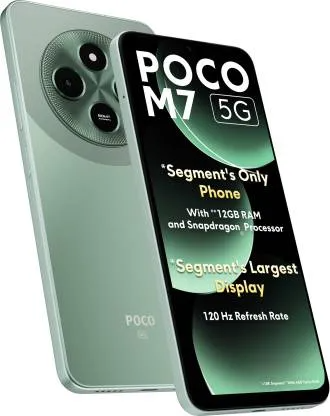
Poco M7 5G
Explore other Samsung smartphones
Get the best offers near you








Related videos

VIVO Y56 Perfect for Daily Smart Use

VIVO X200 Storage King, Feature Loaded

OPPO A58 – Smart Performer for Daily Life

TECNO Phantom V Flip – Flip & Flex in Style

Why ONEPLUS 13R 5G Is Worth It!

Samsung Galaxy A34 Reliable Smart Choice

Oppo Reno – Style Meets Performance

Realme 13 Plus - 5G Speed, Value Packed

VIVO V40 - Premium Power, Daily Ready
FAQs
General
The Snapdragon 750G is generally considered better than the Snapdragon 4 Gen 2, as it offers higher performance, better GPU capabilities, and supports advanced features like 5G. It is designed for mid-range smartphones, delivering superior gaming and multitasking experiences compared to the Snapdragon 4 Gen 2.
No, the Snapdragon 750G is not equal to the Snapdragon 4 Gen 2. The 750G is a more advanced processor with better performance, graphics, and 5G support. The Snapdragon 4 Gen 2, while efficient, is geared towards budget-friendly devices and lacks some of the high-end features found in the 750G.
The Snapdragon 4 Gen 2 is more power-efficient compared to the Snapdragon 750G. The 4 Gen 2 is built with a focus on battery life and efficiency for budget devices, while the 750G, although efficient, prioritizes performance and features, making it slightly less power-efficient.
Key differences include the Snapdragon 750G's superior CPU and GPU performance, 5G support, and better AI capabilities. The Snapdragon 4 Gen 2 focuses on power efficiency and cost-effectiveness for budget devices. The 750G offers a higher clock speed, better gaming performance, and more advanced connectivity options.
Yes, you can easily upgrade to a new smartphone with Bajaj Finance's Easy EMI options. Whether you already have the Insta EMI Card or are new to it, here is how you can get started:
If you have the Bajaj Finance Insta EMI Card:
- Explore smartphones on Bajaj Mall: Choose from top brands offering models with powerful processors, high-resolution cameras, and long-lasting batteries.
- Visit a partner store: Check out the latest phones in person at any of 1.5 lakh partner stores across 4,000 cities.
- Use your Insta EMI Card at checkout: Convert the total cost into Easy EMIs that fit your monthly budget.
- Zero down payment on select models: Bring home your smartphone without paying anything upfront.
If you do not have an Insta EMI Card:
Check your Insta EMI Card eligibility online using your mobile number and OTP. If eligible, you can apply instantly and start shopping for your favourite smartphone easily and affordably.
More articles

Best AI Smartphones in 2026 – Price, Features, and Specifications
Read more
Top Curved Display Mobile Phones List in India
Read more
Top Gaming Android Phones (2026) - Best Picks for Power, Performance and Play
Read more
Android 16 New Features, Release Date and Supported Phones
Read more