









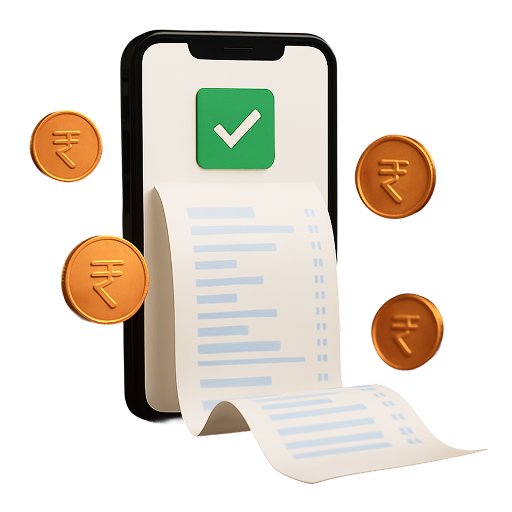

























































































































































































































A partial payment receipt is a formal acknowledgement issued by a lender after you pay an amount exceeding your regular EMI. In the Indian financial landscape, this document serves as a crucial bridge between your transaction and the updated loan ledger. When you make a part-payment, the funds are directly adjusted against your outstanding principal. Without a receipt, you lack the primary evidence needed to ensure that the lender has correctly applied the surplus amount to your debt rather than misallocating it as a future interest advance.
For borrowers at a Non-Banking Financial Company (NBFC), this receipt is a vital tool for financial transparency. It acts as a legal record that protects you against discrepancies in your statement of account (SOA). Given that part-payments significantly alter your interest calculations and tenure, having a documented "paper trail" ensures that your savings are accurately reflected. In an era of digital banking, these receipts also provide the necessary confirmation for your internal auditing, helping you stay in control of your journey toward becoming debt-free.
Key details to check in your partial payment acknowledgement
When you receive your receipt, verify these specific fields to ensure your records are legally and financially sound:
- Transaction Reference Number: A unique ID issued by the bank or payment gateway to track the specific transfer.
- Payment Date and Time: The exact timestamp when the funds were received by the lender.
- Amount Paid: The total sum of the part-payment made, excluding any convenience fees.
- Loan Account Number (LAN): Ensure the payment is mapped to the correct loan relation.
- Principal Adjustment Note: A confirmation that the amount will be adjusted against the principal balance.
- Applicable Taxes: Breakup of GST (usually 18%) if any part-prepayment charges were applied.
- Revised Outstanding Balance: Some receipts provide an indicative new balance, though this is usually updated in the SOA after 48 hours.
Step-by-step: How to download your partial payment receipt on Bajaj Finserv
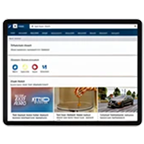
Downloading your acknowledgement is a straightforward process through the Bajaj Finserv digital ecosystem. Follow these steps to secure your copy:
- Visit the portal: Go to the Bajaj Finserv website and navigate to the ‘My Account’ section.
- Authentication: Sign in using your registered mobile number and the One Time Password (OTP) sent to you.
- Navigate to relations: Once on the dashboard, click on the ‘My Relations’ or ‘View All’ tab to see your active loans.
- Select the loan: Click on the specific personal, home, or gold loan for which the part-payment was made.
- Access documents: Look for the ‘Statements & Documents’ or ‘Receipts’ section within the loan details page.
- Filter by type: Select ‘Payment Receipts’ from the dropdown menu and locate the transaction based on the date.
- Download and save: Click the download icon to save the PDF. It is recommended to keep a digital copy in your email and a physical printout for your loan file.
- App alternative: You can follow a similar path on the Bajaj Finserv App by clicking on the ‘Download’ icon on your loan card.
Benefits of keeping records: Beyond just proof of payment
- Dispute resolution: If your loan statement does not reflect the payment, the receipt is your primary evidence to raise a service request and rectify the ledger.
- Interest verification: You can use the receipt data to manually calculate and verify if the lender has correctly reduced your interest outgo from the next billing cycle.
- Tax filing support: For home loans, part-payments towards the principal are eligible for deductions under Section 80C. The receipt serves as proof for your tax consultant.
- CIBIL accuracy: If your credit report shows a higher outstanding than actual, you can submit the receipt to the credit bureau to trigger a data correction.
- Smooth loan closure: Keeping all part-payment receipts ensures that at the time of final foreclosure, there are zero "unreconciled" amounts, making the No Dues Certificate (NDC) process faster.