








Pay Overdue EMI
One platform for all your EMI payments – regular, advance & overdue
Online loan payments processed in real-time.
In Summary
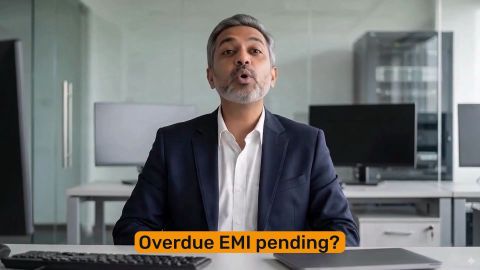
EMI Payment: Pay Overdue EMI Online
You can manage your loan payment online by signing in to My Account or the app, selecting your loan account and choosing the payment option that applies, such as a regular EMI or the Missed instalments or Other overdues option. Available payment methods include UPI, net banking and a debit card, and a payment reference is generated after a successful payment. Pay the full overdue amount, because a part-payment does not clear the overdue status, and remember that a missed EMI attracts penal charges and is reported to credit bureaus.
- Sign in to My Account or the app with your registered mobile number and OTP, and select the loan account you want to pay.
- To pay a regular EMI, choose the EMI or outstanding amount payment option, enter the amount and pay using UPI, net banking or a debit card.
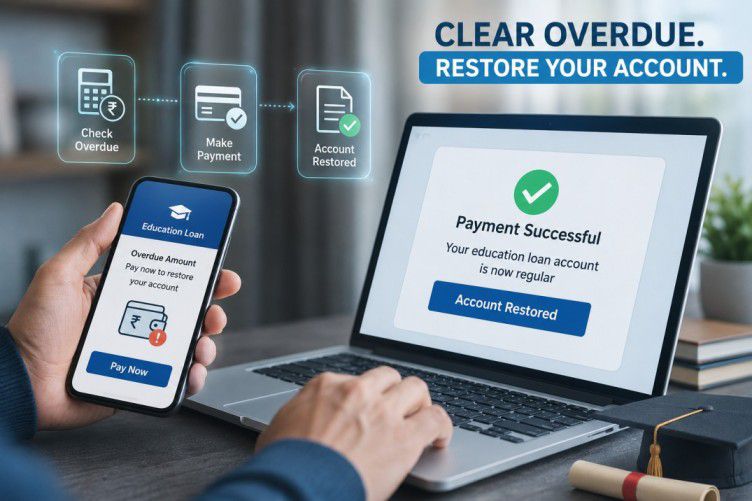
- To clear an overdue EMI, go to Make Loan Payments and choose Missed instalments or Other overdues.
- Pay the full overdue amount. A partial payment reduces the outstanding amount but does not clear the overdue status.
- A missed EMI attracts penal charges and is reported to credit bureaus, and a later payment does not remove the earlier delay from your credit history.
- In My Account you can also download your Statement of Account, interest certificate and repayment schedule, and your closure documents after closure.
What is loan repayment and why managing it online is smarter
Repaying a loan on time is central to managing your finances well, but how you make that payment matters too. While loan repayment itself follows a fixed structure, the method you choose to manage it, whether online through My Account or manually, can affect how quickly your payments are confirmed and how easily you can track your outstanding balance.
Loan repayment meaning: what you need to know
Loan repayment is the process of paying back the amount borrowed from a lender, along with interest, in regular monthly instalments called EMIs. Each EMI consists of two components: a portion that goes towards repaying the principal amount and a portion that covers the interest charged for that period. As you make each payment, the outstanding principal reduces, and the interest component of subsequent EMIs decreases accordingly. Missing an EMI adds to your outstanding balance and attracts penal charges.
Why online loan payment management beats manual methods
Managing your loan repayment online through My Account is faster, more reliable, and available at any time compared to manual methods such as cheque submission.
| Feature | Online payment via My Account | Manual cheque submission |
|---|---|---|
| Availability | 24 hours a day, 7 days a week | Branch hours only |
| Confirmation | Instant, with reference number | Delayed, subject to processing |
| Branch visit required | No | Yes |
| Risk of overdue due to delay | Low | Higher, depends on submission timing |
| Document access | Immediate download | Requires request or branch visit |
How to pay your EMI online through My Account
Paying your EMI online through My Account is simple and can be done at any time using UPI, net banking, or a debit card.
- Sign in to My Account by visiting the Bajaj Finance website or opening the Bajaj Finance app. Log in using your registered mobile number or email ID.
- Go to your loan account by selecting the appropriate loan type from your dashboard.
- Choose your payment option. Click on Pay EMI or Pay Outstanding Amount depending on what you need to clear.
- Enter the amount you wish to pay.
- Select your payment method. Choose from UPI, net banking, or debit card.
- Confirm the transaction. Verify all details on the payment summary screen and complete the payment securely.
- Save your confirmation. A payment reference number is generated immediately after a successful transaction. An SMS and email confirmation is also sent to your registered contact details.
How to clear overdue EMIs online
If you have missed one or more EMIs, clearing the overdue amount quickly limits the impact on your CIBIL score and stops further penal charges from building up.
To pay overdue EMIs through My Account:
- Sign in using your registered mobile number and OTP
- Go to Services and select your loan from Your Relations
- Click on Make Loan Payments and select the Missed Instalments or Other Overdues option
- Proceed to payment using UPI, net banking, or debit card
- Save your confirmation receipt
Pay the full overdue amount, not just the most recent missed EMI. If multiple EMIs are outstanding, all of them contribute to your overdue balance and the associated charges. Partial payment reduces the outstanding but does not clear the overdue status entirely.
How to download your loan statement and documents
My Account gives you access to all loan-related documents without needing to call customer care or visit a branch.
Documents available for download in My Account:
- Statement of Account (SOA): A full record of all debits, credits, EMI payments, charges, and outstanding balance on your loan account
- Interest certificate: Useful for tax purposes, this document shows the interest paid on your loan in a financial year
- No Dues Certificate (NDC): Available after full loan closure, confirming no outstanding balance remains
- Repayment schedule: Shows the full schedule of EMIs from disbursement to loan closure
To download, sign in to My Account, select your loan account, and go to the Documents section. Select the document you need and download it directly.
Related Loan Payment, Foreclosure and Account Management Guides
Frequently Asked Questions
Basics
Online Payment Methods
Overdue & Missed Payment
What does loan repayment mean?
Loan repayment is the process of paying back the amount you borrowed from a lender, along with interest, in regular monthly instalments called EMIs. Each EMI reduces your outstanding principal over time. Completing all payments as per the agreed schedule closes your loan account.
How is my monthly EMI amount calculated?
Your EMI is calculated based on three factors: the loan amount, the interest rate, and the repayment tenure. A higher loan amount or interest rate increases the EMI, while a longer tenure reduces it. You can use the EMI calculator on the Bajaj Finance website to check your amount.
Can I change my EMI amount after my loan is disbursed?
EMI amounts are fixed at the time of loan disbursal based on the agreed terms. Changes to your EMI amount are not standard and depend on your loan type and Bajaj Finance's assessment. Contact Bajaj Finance customer care to understand what options are available for your specific loan account.
What is the difference between EMI payment and part prepayment?
An EMI payment is your regular monthly instalment paid as per the agreed schedule. A part prepayment is an additional lump sum amount paid over and above your EMI towards the outstanding principal. Part prepayment reduces your principal balance and can lower future interest costs or shorten your loan tenure.
Can I pay my loan in full before the end of tenure?
Yes. You can foreclose your loan before the end of the tenure by paying the full outstanding amount. Log in to My Account, go to the Services section, and select the Foreclosure option. Applicable foreclosure charges, if any, will be displayed before you confirm the transaction.
How do I pay my Bajaj Finance loan EMI online?
Log in to My Account on the Bajaj Finance website or app using your registered mobile number and OTP. Select your loan account, click on Pay EMI or Pay Outstanding Amount, enter the amount, choose your payment method, and confirm the transaction. A confirmation is sent immediately after payment.
Which payment modes does Bajaj Finance accept for loan repayment?
Bajaj Finance accepts UPI, net banking, and debit card payments for online loan repayment through My Account. You can also set up a NACH mandate to automate monthly EMI debits from your registered bank account. Choose the method that is most convenient for your repayment schedule.
Can I use UPI to pay my Bajaj Finance loan EMI?
Yes. UPI is one of the accepted payment methods for loan EMI repayment through My Account on the Bajaj Finance website and app. Select UPI as your payment method during the payment process, complete the transaction through your UPI app, and save the confirmation reference number generated.
Is there a fee for paying my EMI online?
Convenience fees may apply depending on the payment method you choose. For accurate and current information on applicable fees, refer to the Fees and Charges section on the official Bajaj Finance website or contact Bajaj Finance customer care before completing your payment.
How do I get a payment receipt after paying my loan EMI online?
A payment reference number is generated immediately after a successful transaction in My Account. A confirmation SMS and email are also sent to your registered mobile number and email address. You can also log in to My Account and check your payment history to download your transaction record.
What happens if I miss my loan EMI payment date?
A missed EMI results in penal charges being applied to your account and the payment being reported to credit bureaus as a missed payment, which reduces your CIBIL score. The longer the EMI remains unpaid, the greater the financial and credit impact. Clear the overdue amount as soon as possible.
How do I pay overdue EMI on Bajaj Finance?
Log in to My Account on the Bajaj Finance website or app. Go to the Services section, select your loan, click on Make Loan Payments, and choose the Missed Instalments or Other Overdues option. Proceed to payment using UPI, net banking, or debit card, and save your confirmation.
Can I reschedule my loan EMI due date?
EMI due dates are set at the time of loan disbursal. Whether a change is possible depends on your loan type and Bajaj Finance's assessment of your account. Contact Bajaj Finance customer care directly to understand if an EMI date change is available for your specific loan.
Will missed EMI payment be reported to CIBIL?
Yes. Bajaj Finance reports loan account status to credit bureaus including CIBIL on a monthly cycle. A missed EMI is recorded as a late payment or Days Past Due entry on your credit report. This reduces your CIBIL score and remains visible to future lenders who check your credit history.
What is the grace period for EMI payment in Bajaj Finance?
Bajaj Finance does not offer a standard grace period for EMI payments. Your EMI is due on the date specified in your loan agreement, and penal charges apply from the date of default if the payment is not received. Contact Bajaj Finance customer care for details specific to your loan account.
More Articles



Disclaimer
While care is taken to update the information, products, and services included in or available on our website and related platforms/websites, there may be inadvertent inaccuracies or typographical errors or delays in updating the information. The material contained in this site, and on associated web pages, is for reference and general information purpose and the details mentioned in the respective product/service document shall prevail in case of any inconsistency. Subscribers and users should seek professional advice before acting on the basis of the information contained herein. Please take an informed decision with respect to any product or service after going through the relevant product/service document and applicable terms and conditions. In case any inconsistencies observed, please click on reach us.
*Terms and conditions apply.