Bajaj Finance
|
Notifications
Notifications
|
English
  • English - EN
  • हिंदी - HI
  • తెలుగు - TE (BETA)
Sign In
EMI Card
Notifications
Notifications
Cart
Rewards
Partners
  • Fixed Deposit (IFA) Partner Fixed Deposit (IFA) Partner
  • Loan (DSA) Partner Loan (DSA) Partner
  • Debt Management Partner Debt Management Partner
  • EMI Network Partner EMI Network Partner
  • Become a Merchant Become a Merchant
  • Partners Sign In Partners Sign In
Menu
  • Loans
  • All on EMI
  • Bajaj Mall
  • Card
  • Investments
  • Insurance
  • Payments
  • Offers
  • Services
  • About Bajaj Finance
  • Pay EMIs Pay EMIs
  • Do not call Do not call
  • Download the app Download the app
  • Home
  • Service
  • Offers
  • Menu
  • Chat
Select Language
  • English - EN
  • हिंदी - HI
  • తెలుగు - TE (BETA)
  • Meaning
  • Types
  • How they work
  • Benefits
  • Drawbacks
  • Capital gains
  • Conclusion

Understanding Triggers in Mutual Funds: A Smart Way to Automate Investments

When it comes to investments, triggers refer to market or investment-related events that prompt an action by either the system or the investor.

Your goals won’t wait, begin your SIP today with just Rs. 100 and start building your future

Article 8

Triggers in mutual funds are predetermined commands to automatically buy or sell depending on the condition you set such as price levels and index values etc. The objective of these triggers is to enable an investor to automate their portfolio management by using scientific algorithms in order for return maximization, bringing stability in risks as well as, disciplined investing. In this article, we will look at the meaning of triggers in mutual funds, the types of triggers, their working mechanism, pros & cons, and how it changes investment strategy.

What are triggers in mutual funds?

A trigger in mutual funds is an automated action generally set by an investor or fund manager based on certain pre-defined factors. This trigger fires a particular action like the purchase of mutual fund units when these chosen conditions are fulfilled. For investors who can't or don't want to sit and watch their investments all day, triggers in mutual funds are generally the best way to go. You can also use it for risk minimization, profit booking and to maintain your investment discipline.

Build your wealth with SIP

Types of triggers

Investors can automate their investment strategy and use triggers in mutual funds. They are all meant to serve different market conditions or investor preferences. Generally speaking, there are five types of triggers which can be classified into value triggers, downside triggers, date-based triggers, etc.


Value trigger

Value triggers mean that when the net asset value (NAV) of a mutual fund reaches a set threshold, then either buy or sell action will be triggered. For instance, an investor could trigger to sell its units if the NAV of a mutual fund reaches a certain value so that they do not lose their profits. On the other hand, if investors set a value trigger then more units of the investment can be bought at a lower price; provided NAV falls to a certain level so that investor buys it cheaper. Value triggers ensure that investors can benefit from changes in the market by automatically changing their portfolio holdings based on the value of investments.


Downside triggers

Downside triggers sell mutual fund units when portfolios fall below a percentage of the investment value so that losses are controlled. An investor could, for instance, set a downside trigger where they can sell their units if the NAV falls by 10% to protect themselves. An automatic stop-loss trigger like this protects an investor's capital from severe market declines by immediately reducing market exposure if losses exceed the predetermined limit. This type of trigger is most effective for conservative investors who are scared of volatile markets and seeking to limit potential losses.


Triggers at transaction levels

Transaction level triggers are the instructions which would automate a buy/sell in mutual fund units as and when a certain number of transactions get triggered. For example, an investor can have a trigger to buy additional units when he receives his dividend payment. Such a trigger helps to make gradual investments without losing compounding over time. It can be particularly useful for long-term investors who prefer the discipline of buying into investments systematically and without chasing a constantly moving market.


Index-based triggers

Triggers that are index-based will carry out a buy or sell order as soon as a particular stock market index hits predetermined levels. An investor can frame a trigger that if for example, NIFTY 50 reaches a specific value then, they must sell their mutual fund units as there might be some adverse effects in the near future. Index-based triggers enable investors to keep their mutual fund investments in tandem with the broader market, offering a tactical method for managing share-market exposure. These triggers can be used for a variety of reasons but they are utilized when the markets are volatile and investors can try to lock profits or limit losses.


Date trigger

Date triggers are set to run something on a specified date. For example – an investor can put in a date trigger so that all units of a mutual fund get sold on a specific date for his/her financial goal like children’s education or buying a house, etc. Investors use this type of trigger as it helps them to align their investment with their personal finances by etching something, which is needed at some future stage. These triggers are best suited for those investors who have time-bound financial goals and want to remain away from such stress of timing the market.

How triggers work in mutual funds?

Triggers in mutual funds work based on automation which executes buy or sell orders when certain conditions are met. These are the instructions pre-set by either the investor (self) or fund manager based on investment strategy. As an example, if the NAV of a mutual fund unit has fallen by 10%, then investors who set up a downside trigger to sell their units will see the units being sold as soon as that lower threshold is achieved. Once the condition is met, the system will sell those units without any manual intervention from an investor which could help him or her in minimizing potential losses.

  1. Setting the trigger: The investor chooses the type of trigger (value-based, downside-based or index-triggered etc.) and defines when it should be executed; for instance, sell if NAV falls by 10%.
  2. Monitoring: The chosen mutual fund system is continuously monitoring the NAV or other conditions that have been specified against the set trigger.
  3. Execution: The system will execute the buy or sell order automatically when the required conditions are met. Therefore, as a trader, you do not need to perform any manual transactions.

Triggers are a seamless and efficient tool to leverage, allowing investors to set it and forget, in ensuring their portfolio is always calibrated around exposure levels that conform with risk tolerance constraints/financial objectives.

Types of Mutual Funds

# Mutual Funds image

# Mutual Funds

New Fund Offer image

New Fund Offer

Debt Mutual Funds image

Debt Mutual Funds

Equity Mutual Funds image

Equity Mutual Funds

Hybrid Mutual Funds image

Hybrid Mutual Funds

Multi-cap Mutual Funds image

Multi-cap Mutual Funds

Thematic Mutual Funds image

Thematic Mutual Funds

Large-cap Mutual Funds image

Large-cap Mutual Funds

Mid-cap Mutual Funds image

Mid-cap Mutual Funds

Small-cap Mutual Funds image

Small-cap Mutual Funds

Liquid Mutual Funds image

Liquid Mutual Funds

Aggressive Hybrid Mutual Funds image

Aggressive Hybrid Mutual Funds

Show More Show Less

Benefits of using triggers

Mutual funds offer triggers to ensure that investors invest automatically, with discipline and strategy. These benefits include automatic portfolio management, risk management, profit booking and investment discipline.


Automatic portfolio management

The triggers also facilitate automatic adjustments of the portfolio without requiring constant monitoring. It serves as a boon for investors, who do not either get time to trade actively or are no professional traders.


Risk management

Triggers facilitate long-term planning for risk by placing constraints on the acceptability of loss beyond a predefined limit and avoiding purely emotional decision-making. For example, downside triggers can decrease the portfolio exposure when investments are below a certain level, in order to protect an individual investor's capital.


Profit booking

These triggers allow investors the ability to protect their gains after defined criteria are triggered. This may for example sell units of a mutual fund when the NAV crosses a particular level, thus automatically locking in profits without requiring human intervention.


Discipline in investing

Triggers automate the process of making buy and sell decisions, inculcating discipline into your investing habits while minimizing any emotional influence of the markets. This is a systematic process that ensures investment decisions are consistent with the financial goals and risk appetite of an investor.

Potential drawbacks of triggers

Although there are a number of potential benefits to such triggers in mutual funds, some aspects can be disadvantageous. Some of these are related to issues such as fluctuating markets and over-dependence on automatic action.


Market volatility

Short-term market volatility sometimes triggers these levels, causing needless buy and sell actions. This ends up causing more transaction costs and potentially realising losses if the market rebounds quickly later.


Missed opportunities

Missing out on an extra percentage or two because a trigger is set up to execute if specific conditions are met is a missed opportunity. A downside trigger, for example, would invest in but then subsequently sell units with a loss; but the market may recover after these sales and, thus miss out on potential gain.


Over-reliance

Depending on a trigger alone may result in inadequate portfolio management and decision-making. That complacency can cause investors to go in assuming their triggers are always going to protect them, something that's typically true but may not be so much in such a highly unpredictable environment.

Capital gains distribution and reinvestment facility

Capital gains distribution is the money made when a security in your mutual fund sells, and that gain passes through to you as an investor. These distributions can be reinvested automatically with the help of triggers, which maximizes compounding and potentially enhances returns over time. Investors can avoid having the cash returns go dormant or worse, evaporate through spending while setting up a reinvestment trigger to invest all capital gains distribution into buying more units. This approach corresponds with a long-term investment strategy where wealth builds up in time without intervention.

Conclusion

Triggers in mutual funds mechanisms are useful tools that can be used to automate decision-making when it comes to investments as well as, partnering risks while at the same time ensuring that investors have a disciplined approach to aspects of portfolio management. Some of the advantages to consider include portfolio rebalancing, risk management, profit-making and staying disciplined with investments. But investors must also learn the disadvantages of triggers including the fluctuation in market prices, the adverse effect of missed opportunities, and the problem of dependency on automated operations.

For people who want to get more detailed information about triggers available or receive individual consultancy regarding investment, Bajaj Finance offers a rich set of tools and options for effective management of portfolios.

Based on your financial goals, you can choose from a plethora of mutual fund schemes and use their resources that make investing in mutual funds easy and hassle-free.

Frequently asked questions

What are triggers in mutual funds?

Triggers in mutual funds are the automated actions put forth by an investor or fund manager to buy and sell a unit under certain conditions.

How do triggers work in mutual funds?

Triggers execute financial transactions automatically when certain thresholds are reached, such as NAV levels, market indices or dates.

What types of triggers can be set in mutual funds?

Triggers are a way in which you can set alerts such as value triggers, downside triggers, index-based triggers, date based triggers and transaction levels.

Why should an investor use triggers in mutual funds?

Triggers help with automatic portfolio management; they act as risk managers, take away profit-booking pain and keep investing discipline in place.

Are there any risks associated with using triggers in mutual funds?

Yes, possible over-reliance on automation, and market volatility that may trigger too early or miss opportunities for returns are some risks.

Can triggers be set for both buying and selling mutual fund units?

Yes, you can use triggers to purchase and sell mutual fund units on the exchange based on certain criteria.

What is an NAV-based trigger in mutual funds?

An NAV triggers actions a buy or sell when the Net Asset Value (NAV) of a fund attains a certain level.

What is an index-based trigger in mutual funds?

An index-based trigger is a scenario wherein the action needs to be taken when for example, say Nifty 50 or any index reaches predefined levels.

How do event-based triggers work in mutual funds?

Event-based triggers perform actions when certain market events occur, or the behaviour of markets changes. E.g. economic announcements and geopolitical events.

Can triggers in mutual funds be customized?

Triggers are configurable to an individual investor's personal triggers, risk-taking ability, and financial goals.

Show More Show Less

Investment Calculators

Systematic Investment Plan Calculator image

SIP Calculator

Lumpsum Calculator image

Lumpsum Calculator

Mutual Fund Calculator    image

Mutual Fund Calculator

Step Up SIP Calculator image

Step Up SIP Calculator

SBI SIP Calculator image

SBI SIP Calculator

HDFC SIP Calculator image

HDFC SIP Calculator

ICICI SIP Calculator image

ICICI SIP Calculator

Brokerage Calculator image

Brokerage Calculator

Gratuity Calculator image

Gratuity Calculator

FD Calculator image

FD Calculator

Show More Show Less

More articles

Article 3

Market Psychology

Jun 09, 2026

Passive investing - A beginners guide to building wealth 4

Portfolio Rebalancing

Jul 16, 2026

More Videos

FD & The Power of Compounding


FD & The Power of Compounding

Make your money work hard with FD


Make your money work hard with FD

Why choose Bajaj Finance Fixed Deposit


Why choose Bajaj Finance Fixed Deposit

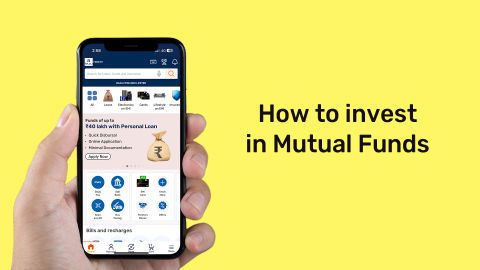
How to invest in mutual funds


How to invest in mutual funds

Top AMCs in India

Bajaj Finserv Mutual Fund image

Bajaj Finserv Mutual Fund

SBI Mutual Fund image

SBI Mutual Fund

HDFC Mutual Fund image

HDFC Mutual Fund

ICICI Prudential Mutual Fund image

ICICI Prudential Mutual Fund

UTI Mutual Fund image

UTI Mutual Fund

Axis Mutual Fund image

Axis Mutual Fund

Nippon India Mutual Fund image

Nippon India Mutual Fund

DSP Mutual Fund image

DSP Mutual Fund

Canara Robeco Mutual Fund image

Canara Robeco Mutual Fund

PPFAS Mutual Fund image

PPFAS Mutual Fund

Bandhan Mutual Fund image

Bandhan Mutual Fund

Sundaram Mutual Fund image

Sundaram Mutual Fund

Motilal Oswal Mutual Fund image

Motilal Oswal Mutual Fund

Navi Mutual Fund image

Navi Mutual Fund

PGIM India Mutual Fund image

PGIM India Mutual Fund

LIC Mutual Fund image

LIC Mutual Fund

Invesco Mutual Funds image

Invesco Mutual Funds

IDBI Mutual Fund image

IDBI Mutual Fund

Mahindra Manulife Mutual Fund image

Mahindra Manulife Mutual Fund

360 One Mutual Fund image

360 One Mutual Fund

HSBC Mutual Fund image

HSBC Mutual Fund

Union Mutual Fund image

Union Mutual Fund

Franklin Templeton Mutual Fund image

Franklin Templeton Mutual Fund

Tata Mutual Fund image

Tata Mutual Fund

Shriram Mutual Fund image

Shriram Mutual Fund

Aditya Birla Sun Life Mutual Fund image

Aditya Birla Sun Life Mutual Fund

ITI Mutual Fund image

ITI Mutual Fund

Kotak Mahindra Mutual Fund image

Kotak Mahindra Mutual Fund

Mirae Asset Mutual Fund image

Mirae Asset Mutual Fund

Baroda BNP Mutual Fund image

Baroda BNP Mutual Fund

Bank of India Mutual Fund image

Bank of India Mutual Fund

Edelweiss Mutual Fund image

Edelweiss Mutual Fund

JM Financial Mutual Fund image

JM Financial Mutual Fund

Trust Mutual Funds image

Trust Mutual Funds

Taurus Mutual Fund image

Taurus Mutual Fund

WhiteOak Capital Mutual Fund image

WhiteOak Capital Mutual Fund

Show More Show Less

 Bajaj Finance App for All Your Financial Needs and Goals

Trusted by 50 million+ customers in India, Bajaj Finance App is a one-stop solution for all your financial needs and goals.

You can use the Bajaj Finance App to:

  • Apply for loans online, such as #, Home Loan, Business Loan, Gold Loan, and more.
  • Explore and apply for co-branded credit cards online.
  • Invest in fixed deposits and mutual funds on the app.
  • Choose from multiple insurance for your health, motor and even pocket insurance, from various insurance providers.
  • Pay and manage your bills and recharges using the BBPS platform. Use Bajaj Pay and Bajaj Wallet for quick and simple money transfers and transactions.
  • Apply for Insta EMI Card and get a pre-approved limit on the app. Explore over 1 million products on the app that can be purchased from a partner store on Easy EMIs.
  • Shop from over 100+ brand partners that offer a diverse range of products and services.
  • Use specialised tools like EMI calculators, SIP Calculators.
  • Check your credit score, download loan statements and even get quick customer support—all on the app.

Download the Bajaj Finance App today and experience the convenience of managing your finances on one app.

  1. Home
  2. Investments
  3. Triggers in Mutual Funds

 Related links

  • Exploring Assets and Liabilities
  • Long Term Capital Gain Tax
  • SIP Calculators
  • Short Term Capital Gains Tax

Disclaimer

Bajaj Finance Limited (“BFL”) is an NBFC offering loans, deposits and third-party wealth management products.

The information contained in this article is for general informational purposes only and does not constitute any financial advice. The content herein has been prepared by BFL on the basis of publicly available information, internal sources and other third-party sources believed to be reliable. However, BFL cannot guarantee the accuracy of such information, assure its completeness, or warrant such information will not be changed.

This information should not be relied upon as the sole basis for any investment decisions. Hence, User is advised to independently exercise diligence by verifying complete information, including by consulting independent financial experts, if any, and the investor shall be the sole owner of the decision taken, if any, about suitability of the same.

Disclaimer

Bajaj Finance Limited ("BFL") is registered with the Association of Mutual Funds in India ("AMFI") as a distributor of third party Mutual Funds (shortly referred as 'Mutual Funds) with ARN No. 90319

BFL does NOT:

(i) provide investment advisory services in any manner or form.

(ii) carry customized/personalized suitability assessment.

(iii) carry independent research or analysis, including on any Mutual Fund schemes or other investments; and provide any guarantee of return on investment.

In addition to displaying the Mutual fund products of Asset Management Companies, some general information is sourced from third parties, is also displayed on As-is basis, which should NOT be construed as any solicitation or attempt to effect transactions in securities or the rendering any investment advice. Mutual Funds are subject to market risks, including loss of principal amount and Investor should read all Scheme/Offer related documents carefully. The NAV of units issued under the Schemes of mutual funds can go up or down depending on the factors and forces affecting capital markets and may also be affected by changes in the general level of interest rates. The NAV of the units issued under the scheme may be affected, inter-alia by changes in the interest rates, trading volumes, settlement periods, transfer procedures and performance of individual securities forming part of the Mutual Fund. The NAV will inter-alia be exposed to Price/Interest Rate Risk and Credit Risk. Past performance of any scheme of the Mutual fund do not indicate the future performance of the Schemes of the Mutual Fund. BFL shall not be responsible or liable for any loss or shortfall incurred by the investors. There may be other/better alternatives to the investment avenues displayed by BFL. Hence, the final investment decision shall at all times exclusively remain with the investor alone and BFL shall not be liable or responsible for any consequences thereof.

Investment by a person residing outside the territorial jurisdiction of India is not acceptable nor permitted.

Disclaimer on Risk-O-Meter:

Investors are advised before investing to evaluate a scheme not only on the basis of the Product labeling (including the Riskometer) but also on other quantitative and qualitative factors such as performance, portfolio, fund managers, asset manager, etc, and shall also consult their Professional advisors, if they are unsure about the suitability of the scheme before investing.


Disclosure
: Bajaj Finance Limited (BFL) is a distributor of Mutual Funds with ARN - 90319 and distributes mutual funds of Bajaj Finance Asset Management Limited (BFSAMC). BFL receives commission towards distribution of mutual fund products. BFSAMC is a group company of BFL, carrying business on arm’s length basis without any conflict of interest and in accordance with the prevailing law / regulation.


Download app image

Download App

Now request money from your friends and family and make instant payments.

Download App
  • 1.  Apply for Loans: Choose from personal, business, gold loans and more
  • 2. Transact: Pay utility bills, use UPI, get FASTag and more
  • 3. Shop: Buy over 1 million products on No Cost EMI
  • 4. Invest: Buy stocks, mutual funds and invest in FD

Go To Top

Languages

  • English - EN
  • हिंदी - HI
  • తెలుగు - TE (BETA)

Application Forms

  • Personal Loan
  • Business Loan
  • Home Loan
  • Gold Loan
  • Insta EMI Card
  • Wallet Care
  • Health Insurance
  • Loan for Doctors
  • Fixed Deposit
  • Loan Against Property
  • Loan for Chartered Accountants
  • Open Demat Account
  • Two-wheeler Loan
  • New Car Loan
  • Used Car Loan
  • Loan Against Car
  • Car Loan Balance Transfer and Top-up
  • Mutual Fund
  • Secured Business Loan
  • Loan for Lawyer
  • Used Tractor Loan
  • Loan Against Tractor
  • Tractor Loan Balance Transfer

Products Portfolio

Loans

  • Personal Loan
  • Insta Personal Loan
  • Business Loan
  • Home Loan
  • Gold Loan
  • MSME Loan
  • Mortgage Loan
  • Loan Against Property
  • Education Loan on Property
  • Personal Loan for Self-employed Individuals
  • Two-wheeler Loan
  • New Car Finance
  • Used Car Loan
  • Loan Against Car
  • Car Loan Balance Transfer and Top-up
  • Used Cars and Loan
  • Secured Business Loan
  • Secured Business Loan Balance Transfer
  • New Tractor Loan
  • Used Tractor Loan
  • Loan Against Tractor
  • Tractor Loan Balance Transfer
  • Loan for Doctors
  • Loan for Chartered Accountants
  • Loan for Lawyers

Insurance

  • Insurance
  • Health Insurance
  • Life insurance
  • Term Insurance
  • ULIP Plans
  • Car Insurance
  • Pocket Insurance
  • Investment Plans
  • Appliances Extended Warranty
  • Pocket Subscription

Finance for Professionals

  • Loan for Doctors
  • Loan for Chartered Accountants

Investments

  • Fixed Deposit
  • Open Demat Account
  • Mutual Funds
  • NFO (New Fund Offer)
  • ELSS Mutual Funds
  • Equity Mutual Funds
  • Hybrid Mutual Funds
  • Debt Mutual Funds
  • Multi Cap Mutual Funds
  • Large Cap Mutual Funds
  • Mid Cap Mutual Funds
  • Small Cap Mutual Funds
  • Liquid Mutual Funds
  • Aggressive Hybrid Mutual Funds

Pocket Subscription

  • Mobile Protection Plan
  • Wallet Care
  • Fonesafe Lite
  • Neuro Care Plan
  • Health Prime Max
  • Cpp Road Assist
  • Healthy Body Package

Bajaj Mall

  • Smartphones
  • Mattress
  • Smartwatches
  • Cycles
  • Music & Audio
  • Speakers
  • Water Purifiers
  • Laptops
  • Two-wheeler
  • Washing Machine
  • Televisions
  • Air Conditioner
  • Refrigerators
  • Furniture
  • Tractor

Services

  • Sign-in to our Customer Portal (My Account)
  • Manage your Profile
  • Manage your Mandate
  • Manage your Loans
  • Manage your Flexi Loans
  • Manage your Insta EMI card
  • Manage your Fixed Deposit

Wallets & Cards

  • Wallet
  • Bajaj Finance Ltd Insta EMI Card

Value Added Services

  • Gold Rate

Payments

  • All Payments
  • Wallet
  • UPI
  • Mobile recharge
  • Electricity Bill Payment
  • DTH Recharge
  • Loan Repayment
  • Gas Booking
  • Rewards
  • Bajaj Pay FASTAg
  • Bajaj Pay Wallet KYC Upgrade
  • Bajaj Pay FASTAg Registration
  • Bajaj Pay FASTag Replacement
  • Bajaj Pay FASTag Closure
Offer World
Article and Insights

Calculators

  • Personal Loan EMI Calculator
  • Home Loan EMI Calculator
  • Home Loan Eligibility Calculator
  • Business Loan EMI Calculator
  • Personal Loan Eligibility Calculator
  • Loan Against Property EMI Calculator
  • Education Loan on Property Calculator
  • FD Calculator
  • Gratuity Calculator
  • Income Tax Calculator
  • Top-up Loan Calculator
  • Part-prepayment Calculator
  • GST Calculator
  • Gold Loan Calculator
  • EMI Calculator
  • Used Car Loan EMI Calculator
  • Interest Calculator
  • SIP Calculator
  • Flexi Day Wise Interest Calculator
  • Flexi Transaction Calculator
  • Secured Business Loan EMI Calculator
  • Secured Business Loan Eligibility Calculator
  • Lumpsum Calculator
  • Step Up SIP Calculator
  • BMI Calculator
  • IDV Calculator
  • Commercial Loan EMI Calculator
  • Medical Equipment Finance EMI Calculator
  • Term Loan Calculator
  • Equipment Machinery Loan EMI Calculator
  • Doctor Loan EMI Calculator
  • Doctor Loan Eligibility Calculator
  • Chartered Accountant Loan EMI Calculator
  • Simple Interest Calculator
  • Compound Interest Calculator
  • Brokerage Calculator
  • Mutual Fund Calculator
  • Two wheeler Loan EMI Calculator
  • New Car Loan EMI Calculator
  • Used Tractor Loan EMI Calculator

Important Links

  • Information Security Practices
  • Information Security Measures
  • Citizens Charter
  • Privacy Policy
  • Phishing
  • Disclaimer
  • Forms Centre
  • Fees & Charges
  • Fair Practices Code
  • Interest Rate Policy
  • Disclosures
  • Cautionary Notice
  • Whistle Blower Policy
  • Confidential Feedback
  • Terms & Conditions
  • Ombudsman Scheme
  • SMA/NPA Account Classification
  • Terms of Use
  • Sachet
  • Handover of Property Documents
  • Notices
  • Policy on Fees & Charges
  • BFL - Floating Reference Rates
  • Suppliers Code of Conduct
  • Code of Conduct – DSA/DMA & Recovery Partners
  • Code of Conduct – Representative of Insurance Partners

Reach Us

  • Contact us
  • Lodge a Complaint/Query/Request
  • Frequently Asked Questions
  • Make Online Payment
  • Branch Locator
  • Our Partners
  • Bajaj Finance Ltd for Business
  • Call Us

Corporate Office

Ground Floor, Bajaj Finserv House, Off Pune-Ahmednagar Road, Viman Nagar, Pune, Maharashtra – 411 014

Bajaj Finance Limited Regd. Office

4th Floor, Bajaj Finance House, Off Pune-Ahmednagar Road, Viman Nagar, Pune - 411014
Ph No.: 020 7157-6403
Email ID: investor.service@bajajfinserv.in

Corporate Identity Number (CIN)

L65910MH1987PLC042961

IRDAI Corporate Agency (Composite) Regn No.

CA0101
(Valid till 31-Mar-2028)

URN - WEB/BFL/23-24/1/V1

Our Companies

  • Bajaj Finserv Ltd.
  • Bajaj Finance Ltd.
  • Bajaj General Insurance Limited
  • Bajaj Life Insurance Limited
  • Bajaj Markets
  • Bajaj Housing Finance Ltd.
  • Bajaj Broking
  • Bajaj Finserv Health Ltd.
  • Bajaj Finserv Asset Management Ltd.
Company Name
Download App

© Bajaj Finance Ltd 2007-2026. All rights reserved.