











































































































































































































































































Loan Types

Calculator

FAQs

Video
Rs. 40,000 - Rs. 55 lakh
You may be eligible for a pre-approved offer
Enter mobile and OTP | Check offer | No branch visit needed
Whether you are planning a wedding, renovating your home, covering medical expenses, or managing any other personal financial need, choosing the right type of loan is important. A personal loan is a popular financing option because it does not require collateral and can provide quick access to funds for eligible applicants. However, loans are broadly classified into two categories: secured debt and unsecured debt. The key difference between them is whether you need to pledge an asset as security. This distinction can influence the loan amount, interest rate, repayment terms, and overall borrowing experience. Understanding the differences between secured and unsecured debt can help you choose the financing option that best suits your financial needs.
If you need funds without delay, a Bajaj Finance Personal Loan can help. Eligible applicants can receive the loan amount within24 hours* of approval. Simply check your offer online and complete the application in a few easy steps. Check your offer in just 2 steps and apply online to get our loan.
What is secured debt?
As the term rightly suggests, debt that is secured by assets (like property, gold, etc.) is known as secured debt. An asset that the borrower provides as a guarantee of the loan is known as collateral. Lenders have the right to take possession of that collateral to recover their losses if a borrower defaults on a loan. Mortgages, car loans, and secured credit cards are a few examples of secured debt.
The key benefit of secured debt is that its interest rates are often lower than those of unsecured debt. This is because the collateral provides the lender with additional security and lowers their risk. Secured loans could also be simpler to get because the collateral acts as a guarantee of repayment.
Secured debt example
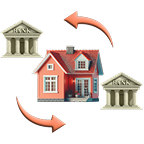
A common example of secured debt is a mortgage loan. When individuals or businesses borrow money to purchase real estate, such as a house or commercial property, they often offer the property as collateral to secure the loan. The lender places a lien on the property, giving it the right to seize and sell it if the borrower fails to repay the loan. This provides a level of security for the lender, reducing the risk associated with the loan. In case of default, the lender can recover the outstanding debt by selling the property through a legal process, ensuring a measure of protection for their investment.
What is unsecured debt?
Unsecured debt refers to funds borrowed without any collateral. These loans often come with higher rate of interest as compared to secured loans due to the absence of a safety for the lender in the form of a collateral. Here the lender considers borrower's creditworthiness and his ability to repay while offering an unsecured loan. This often entails looking into a borrower's past debt and repayment history, CIBIL Score and bank statements. To determine if the borrower will have sufficient funds for loan payments, lenders may additionally consider the borrower's income.
Credit cards, personal loans, and education loans are only a few types of unsecured debt.
Unsecured debt example
An example of unsecured debt in India is a personal loan. Unlike secured loans that require collateral, personal loans are granted based on the borrower's creditworthiness and financial history. Individuals can obtain unsecured personal loans for various purposes without pledging any assets as security. Since there's no collateral involved, lenders rely heavily on the borrower's credit score and income stability to determine loan eligibility. In the absence of collateral, unsecured debt poses a higher risk for lenders, often resulting in comparatively higher interest rates to compensate for the increased uncertainty.
Secured or unsecured debt: Which one is better?
There are a few factors to consider when comparing secured and unsecured debt:
Colateral
Collateral is the primary distinction between secured and unsecured debt. Secured debt is backed by collateral, which is an asset put up as security for the loan by the borrower. Anything of value, such as a home, car, gold or other significant assets, might serve as collateral. The lender has the right to take possession of the collateral to recover the losses in the event that the borrower defaults on the loan.
On the other hand, there is no need for collateral for unsecured debt. Instead, when establishing eligibility criteria for personal loan, the borrower's creditworthiness is the prime concern. In fact, given the nature of unsecured loans, its eligibility parameters may be marginally stricter than a secured loan.Rate of interest
Secured debt carries a lower risk for the lender. With unsecured debt, the lender has no recourse and must rely exclusively on the borrower's ability to repay the loan.
The value of the collateral is frequently considered when determining the interest rate for secured loans, with higher-value collateral typically resulting in relatively lower interest rates. In contrast, the interest rate on personal loan is typically determined by the borrower's credit score, with better scores resulting in lower rates.Eligibility criteria
As secured debt is backed by collateral, eligibility criteria are simple, and lenders may be more inclined to issue loans to borrowers with lower credit ratings. However, the available credit could be restricted by the collateral's value.
The eligibility criteria are often stricter for unsecured debt. Lenders will evaluate eligibility based on the borrower's credit score, income, and other financial factors. Unsecured loan applications are more likely to be granted to borrowers with higher credit scores and lower debt burdens.Repayment tenure
Secured and unsecured loans have different terms for repayment. The payback time for secured debt may be longer, often spanning many years. Due to the increased security provided by the collateral, the lender may be more prepared to grant a loan with a longer duration.
Unsecured debt, on the other hand, typically has shorter payback periods, which range from a month to a few years. This is because the lender possesses no collateral and may wish to limit their risk exposure.
When taking out a loan, it is critical to comprehend the distinction between unsecured and secured debt. You may make smarter financial decisions and stand a greater chance of attaining your financial objectives by being aware of how they differ and the benefits and drawbacks of each.
Bajaj Finance Personal Loans are a great illustration of unsecured debt. This loan does not require collateral, and customers can borrow funds ranging from Rs. 40,000 to Rs. 55 lakh with flexible tenures ranging from 12 months to 108 months
- .
Key offerings: 3 loan types
Personal loan interest rate and applicable charges
Type of fee | Applicable charges |
Rate of interest per annum | 10% to 30.5% p.a. |
Processing fees | Up to 4.13% of the loan amount (inclusive of applicable taxes). |
Flexi Facility Charge | Term Loan – Not applicable Flexi Loans –Up To Rs 1,999 To Up To Rs 18,999/- (Inclusive Of Applicable Taxes) |
Bounce charges | Rs. 700 to Rs. 1,200/- per bounce “Bounce charges” shall mean charges for (i) dishonor of any payment instrument; or (ii) non-payment of instalment (s) on their respective due dates due to dishonor of payment mandate or non-registration of the payment mandate or any other reason. |
Part-prepayment charges | Full Pre-payment:
Part Pre-payment
|
Penal charge | Delay in payment of instalment(s) shall attract Penal Charge at the rate of up to 36% per annum per instalment from the respective due date until the date of receipt of the full instalment(s) amount. |
Stamp duty (as per respective state) | Payable as per state laws and deducted upfront from loan amount. |
Annual maintenance charges | Term Loan: Not applicable Flexi Term (Dropline) Loan: Up to 0.295% (Inclusive of applicable taxes) of the Dropline limit (as per the repayment schedule) on the date of levy of such charges.
Up to 0.472% (Inclusive Of Applicable Taxes) Of The Dropline Limit During Initial Tenure. Up to 0.295% (Inclusive Of Applicable Taxes) Of Dropline Limit During Subsequent Tenure |
| Credit guarantee scheme fee | Up to 1.18% p.a. (pro-rated daily till 31st March) (inclusive of all applicable taxes) of the loan amount |
| Credit guarantee scheme renewal fee | Up to 1.18% p.a. (inclusive of all applicable taxes) on the outstanding loan amount as on April 01 of the subsequent Financial Year. *Renewal Fee to be collected only for 3 subsequent financial years. **If the Remaining Tenure is less than 12 months, the CG Fee in subsequent years shall be charged prorated. |
Not your nearest branch?

Frequently asked questions
Overview
A home loan is a common example of secured debt, where the property acts as collateral. Other examples include vehicle loans and loans secured against fixed deposits or other assets.
A personal loan is a common example of unsecured debt because it does not require collateral. Other examples include credit cards, consumer durable loans, and education loans offered without security. Check your offer in just 2 steps and apply online to get our loan.
The seven common types of loans are personal loans, home loans, vehicle loans, education loans, business loans, gold loans, and loan against property, each designed to meet different financial needs.
Related articles




Disclaimer
Bajaj Finance Limited has the sole and absolute discretion, without assigning any reason to accept or reject any application. Terms and conditions apply*.
For customer support, call Personal Loan IVR: 7757 000 000