





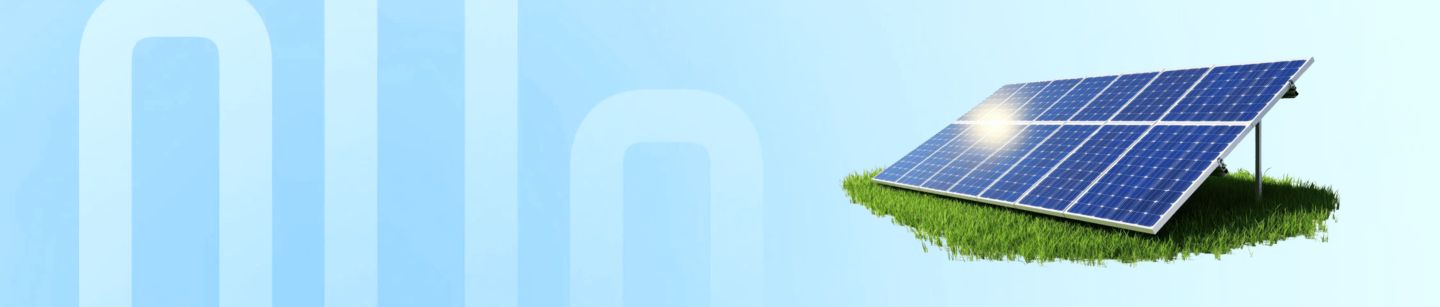
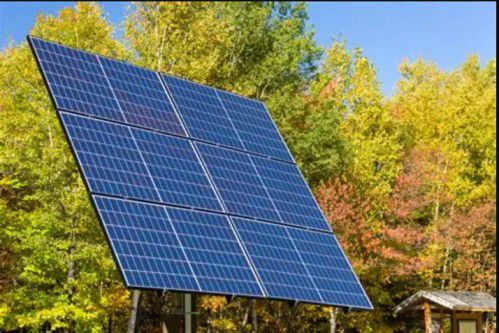
A 10V solar panel is a low-voltage photovoltaic panel that generates electricity from sunlight at a nominal output of around 10 volts. Unlike higher-capacity solar panels used for rooftop installations, a 10V solar PV panel is compact, lightweight, and suited for small-scale uses such as battery charging, garden lighting, and portable electronics. It is a practical solar power solution for off-grid hobbyists and anyone who needs reliable, eco-friendly energy generation without the scale of a full residential system.

FAQs
Get a pre-approved loan offer of up to Rs. 5 lakh
Quick approval | Flexible tenure options | Zero approval fees
What is a 10V solar panel?
How does a 10V solar panel work?
A 10V solar panel converts sunlight into usable DC electricity through the photovoltaic effect, following a straightforward process that happens entirely within the panel itself. Here is how solar electricity generation works at this scale:
- Sunlight strikes the solar cells: The panel's surface is made up of multiple photovoltaic cells arranged in a series and parallel configuration. When sunlight hits these silicon-based cells, it excites electrons and causes them to flow, initiating the generation of direct current electricity.
- Cells combine to reach 10V output: Each individual solar cell generates around 0.5 to 0.6 volts. Multiple cells are wired in series within the panel so their voltages add up, reaching a nominal 10V output under standard test conditions.
- Current flows to the output terminals: The electricity generated by the cells is collected through busbars and ribbon wires and delivered to the panel's output terminals or cables, ready to power a device or charge a battery.
- A charge controller regulates the output: When used for battery charging, a solar charge controller is connected between the panel and the battery to regulate the voltage and current, preventing overcharging and protecting the battery from damage.
- The load receives power: The regulated electricity is then delivered to the connected load, whether a small battery, a garden light, a USB charging device, or any other compatible low-voltage application.
What are the different types of 10V solar panels?
10V solar panels are available in several technologies, each suited to different applications and environments. Understanding the differences helps you match the right panel type to your specific use case.
| Panel type | Description |
| Monocrystalline solar panel | Made from a single crystal of silicon, monocrystalline panels offer the highest efficiency among 10V panels and perform well even in low-light conditions. Ideal for users who need maximum output from a small surface area. |
| Polycrystalline solar panel | Made from multiple silicon fragments fused together, polycrystalline panels are more affordable but slightly less efficient than monocrystalline. A good choice for budget-conscious buyers with sufficient space. |
| Flexible solar panel | Built on a thin, bendable substrate rather than a rigid frame, flexible solar panels can be mounted on curved surfaces such as vehicle rooftops, backpacks, or boats. Well-suited to portable and mobile applications. |
| Portable solar panel | Designed for easy transport and quick deployment, portable 10V solar panels often fold flat and include built-in handles or carry cases. Widely used for camping, trekking, and outdoor activities across India. |
| Amorphous thin-film panel | Uses a thin layer of silicon deposited on glass or plastic, making it lighter and better suited to diffuse or indirect light conditions. Less efficient than crystalline panels but more versatile in low-light environments. |
Key features and specifications of 10V solar panels
A 10V solar panel combines portability and reliability in a compact form that suits a wide range of low-power applications. Here are the features that define a good quality panel:
- Compact and lightweight build: Most 10V solar panels weigh under 1 kg and are small enough to carry in a bag or mount on a narrow surface, making them easy to deploy for outdoor and portable use.
- Weather-resistant construction: Quality 10V panels feature tempered glass or durable polymer encapsulation, UV-resistant coatings, and an IP65 or higher rating, ensuring reliable performance through rain, dust, and India's harsh summer conditions.
- Wide voltage compatibility: A 10V photovoltaic panel can charge 6V or smaller lithium-ion batteries directly and work with standard solar charge controllers, making it compatible with a broad range of small electronic systems.
- Low maintenance requirements: With no moving parts and a sealed construction, a 10V solar panel requires nothing more than occasional surface cleaning to maintain consistent output over its operational lifespan.
Specifications
| Specification | Typical range |
| Nominal voltage | 10V |
| Peak power output | 5W – 20W |
| Open circuit voltage (Voc) | 12V – 14V |
| Short circuit current (Isc) | 0.5A – 1.5A |
| Panel efficiency | 14% – 22% |
| Operating temperature | -20°C to +60°C |
| Dimensions | 200mm x 300mm approx. (varies by wattage) |
| Weight | 0.3 kg – 1.2 kg |
What are the benefits of using a 10V solar panel?
A 10V solar panel delivers clean, renewable energy in a format that is accessible, affordable, and easy to use without any technical expertise. Here is why it makes a practical solar power solution:
- Completely portable: A 10V low-voltage solar panel can be carried anywhere, set up in minutes, and repositioned to track sunlight throughout the day, making it far more flexible than fixed rooftop installations.
- No electricity costs for small loads: Running garden lights, charging mobile devices, or powering small sensors through a 10V photovoltaic panel eliminates ongoing electricity costs for these loads entirely.
- Eco-friendly and renewable: Using solar power instead of grid electricity or disposable batteries reduces your carbon footprint and eliminates chemical waste from single-use cells.
- Easy to set up without professional help: Unlike rooftop solar systems, a 10V panel requires no installation, permits, or technical support. It connects directly to a compatible battery or device and begins generating immediately.
- Reliable in remote locations: In areas with unreliable grid supply or no electricity access, a 10V solar panel provides a dependable off-grid energy source for essential low-power needs.
- Long operational lifespan: Quality 10V solar panels have a functional lifespan of 20 to 25 years with minimal degradation, making them a one-time purchase with long-term value.
Price list of 10V solar panels in India (2026)
The price of a 10V solar panel in India varies depending on wattage, panel technology, efficiency rating, portability features, and brand. Monocrystalline panels command a premium over polycrystalline equivalents, while flexible and portable formats typically cost more than rigid-framed options of similar output. Here is an indicative pricing range for 2026.
| Model | Power output | Approx. price |
| 10V 3W Solar Panel | 3W | Rs. 500 |
| 10V 5W Solar Panel | 5W | Rs. 850 |
| 10V 10W Polycrystalline Solar Panel | 10W | Rs. 1,350 |
| 10V 20W Monocrystalline Solar Panel | 20W | Rs. 2,100 |
| 10V 30W Monocrystalline Solar Panel | 30W | Rs. 3,250 |
Disclaimer: Each model's features, availability, and pricing are subject to change and may vary. For the most accurate and up-to-date information, please visit the official website.
Note: Although you can only use Bajaj Finance’s financing options to split any purchase above Rs. 5,000 into Easy EMIs, you can always club your product with other electronics and home appliances to meet the minimum amount and enjoy the same benefits.
Before you decide, explore the latest offers. You may find a great deal on a model that matches your needs.
How to choose the right 10V solar panel?
With several panel types, wattages, and formats available, selecting the right 10V solar panel comes down to matching the panel's output and form to your specific application.
- Start with your power requirement: Calculate the daily watt-hours needed by your intended load before selecting a panel, since a higher-wattage 10V panel charges batteries faster and handles larger loads more effectively.
- Match the panel to your application: For outdoor or mobile use, a flexible or portable solar panel is the most practical choice, while a rigid monocrystalline panel suits fixed outdoor installations such as garden lights or remote sensors.
- Check efficiency if space is limited: If mounting area is restricted, choose a monocrystalline panel with higher efficiency so you get more output per square centimetre of panel surface.
- Look for weatherproofing ratings: For panels used outdoors permanently, confirm the IP rating and check that the encapsulation material is UV-resistant and suited to India's temperature range.
- Verify compatibility with your battery: Confirm that the panel's open circuit voltage is compatible with your charge controller and battery chemistry, whether lead-acid, lithium-ion, or lithium iron phosphate, before purchasing.
- Compare warranty terms: A longer warranty, typically 1 to 3 years for low-voltage panels, reflects the manufacturer's confidence in the product and protects your purchase against early defects.
Get electronics and appliances on Easy EMIs with Bajaj Finance
Upgrading your home with the latest electronics and appliances is now easier and more affordable with Bajaj Finance’s flexible financing options. Follow these steps to get started:
- Explore products on Bajaj Mall: Browse a wide range of electronics and appliances from trusted brands on Bajaj Mall. Compare features like energy ratings, storage capacity, performance settings, and design to choose the right product for your home.
- Visit a partner store: Once you shortlist a model, step into any of Bajaj Finance’s 1.5 lakh partner stores across 4,000 cities in India. See the product in person, talk to experts, and make a confident decision.
- Choose the Easy EMI Loan option: At checkout, select the Bajaj Finance Easy EMI Loan. Avail financing of up to Rs. 5 lakh and split the cost into convenient monthly instalments. Some products also come with a zero down payment option.
- Check your loan eligibility online: Plan better by checking your loan eligibility in minutes. Simply enter your mobile number and OTP to know your pre-approved limit.
- Use the Insta EMI Card for purchases up to Rs. 3 lakh: Already own the Bajaj Finance Insta EMI Card? Use it for instant, paperless checkout and convert your purchases of up to Rs. 3 lakh into Easy EMIs.
Get the best offers near you


FAQs
General
What is a 10V solar panel?
A 10V solar panel is a compact, low-voltage photovoltaic panel that converts sunlight into direct current electricity at a nominal output of 10 volts. It is commonly used for small-scale applications such as battery charging, garden lighting, portable electronics, and off-grid hobby projects where a full rooftop solar system would be unnecessary.
Is a 10V solar panel suitable for battery charging?
Yes, a 10V solar panel is well suited for charging small batteries, particularly 6V lead-acid batteries and smaller lithium-ion cells. A solar charge controller should always be used between the panel and battery to regulate voltage and current, preventing overcharging and extending the battery's operational lifespan.
Can a 10V solar panel be used outdoors?
Yes, most 10V solar panels are designed for outdoor use and feature weather-resistant encapsulation, UV-resistant coatings, and an IP65 or higher rating. They can withstand rain, dust, and temperature extremes. However, for permanent outdoor installations, always verify the panel's IP rating and confirm that the frame and mounting hardware are corrosion-resistant.
What factors affect 10V solar panel performance?
The performance of a 10V solar panel is affected by the amount of direct sunlight it receives, shading, panel orientation, temperature, and the cleanliness of the glass surface. Dust and pollution accumulation can reduce output by 5 to 20 percent, while high cell temperatures during peak summer hours can temporarily reduce voltage and efficiency.
How long does a 10V solar panel typically last?
A quality 10V solar panel typically lasts 20 to 25 years, with most manufacturers guaranteeing no more than 0.5 to 0.7 percent annual degradation in output. Flexible and portable panels may have a shorter functional lifespan due to repeated handling and bending, but rigid-framed panels under normal outdoor conditions remain productive for two decades or more.
More articles
Disclaimer
While care is taken to update the information, products, and services included in or available on our website and related platforms/websites, there may be inadvertent inaccuracies or typographical errors or delays in updating the information. The material contained in this site, and on associated web pages, is for reference and general information purpose and the details mentioned in the respective product/service document shall prevail in case of any inconsistency. Subscribers and users should seek professional advice before acting on the basis of the information contained herein. Please take an informed decision with respect to any product or service after going through the relevant product/service document and applicable terms and conditions. In case any inconsistencies observed, please click on reach us.
*Terms and conditions apply