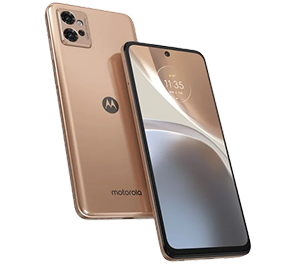
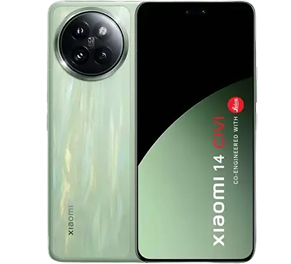
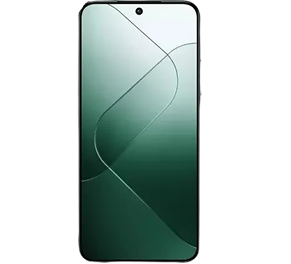
The Xiaomi 14 Civi and Motorola Edge 50 Pro 5G are both premium mid-range smartphones launched in 2024, but they are built around different chipsets and cater to different priorities. Here is a full breakdown across six key categories.
What are the general specs and platform differences?
Both phones run Android 14 with 5G, dual-SIM support, and Nano-SIM cards — but the similarities end at the processor. The Xiaomi 14 Civi runs Qualcomm's faster Snapdragon 8s Gen 3, while the Edge 50 Pro is built on the Snapdragon 7 Gen 3. This is a meaningful performance gap, not just a naming difference.
| Feature | Xiaomi 14 Civi | Motorola Edge 50 Pro | What this means |
|---|
| Launch date | 12 June 2024 | 3 April 2024 | Edge 50 Pro launched first |
| Processor | Snapdragon 8s Gen 3 (4 nm) | Snapdragon 7 Gen 3 (4 nm) | Xiaomi's chip is a tier higher — closer to flagship performance |
| GPU | Adreno 735 | Adreno 720 | Xiaomi has a stronger GPU — better for gaming and video |
| OS | Android 14, HyperOS | Android 14, Hello UI | Both ship with Android 14; different skins on top |
| SIM slots | Dual Nano-SIM | Dual Nano-SIM (or Nano + eSIM) | Edge 50 Pro supports eSIM on select variants |
| Network | 5G, 4G, 3G, 2G | 5G, 4G, 3G, 2G | Full network compatibility on both |
How does the performance compare?
The Snapdragon 8s Gen 3 in the Xiaomi 14 Civi is a notably more powerful chip than the Snapdragon 7 Gen 3 in the Edge 50 Pro. This gap is clear in real-world use and benchmarks. Both phones support UFS storage but at different speeds, which affects app load times and file transfers.
| Feature | Xiaomi 14 Civi | Motorola Edge 50 Pro | What this means |
|---|
| Processor | Snapdragon 8s Gen 3 (4 nm) | Snapdragon 7 Gen 3 (4 nm) | Xiaomi handles heavier tasks and gaming more capably |
| GPU | Adreno 735 | Adreno 720 | Xiaomi offers smoother gameplay at higher settings |
| RAM | 8 GB / 12 GB | 8 GB / 12 GB | Equal options; both use LPDDR5X |
| AnTuTu (v10) | ~1,400,000 | ~840,000 | Xiaomi scores ~67% higher — a substantial difference |
| Storage | 256 GB / 512 GB (UFS 4.0) | 128 GB / 256 GB / 512 GB (UFS 2.2) | Xiaomi's UFS 4.0 is significantly faster for read/write |
| Security | Under-display optical fingerprint | Under-display optical fingerprint | Identical unlocking method on both |
| Sensors | Accelerometer, gyro, proximity, compass | Accelerometer, gyro, proximity, compass, Time-of-Flight | Edge 50 Pro adds a ToF sensor — better depth sensing for AR |
| Audio | Stereo speakers, Dolby Atmos | Stereo speakers, Dolby Atmos, Spatial Sound | Edge 50 Pro adds Motorola's Spatial Sound tuning |
| Thermal | Vapour chamber cooling | Vapour chamber cooling | Both manage heat under sustained loads |
➜ Pro tip: If you play graphics-intensive games or use demanding apps, the Xiaomi 14 Civi's Snapdragon 8s Gen 3 and UFS 4.0 storage offer a noticeably faster experience.
Which phone has the better display?
Both phones have high-quality OLED panels with 120Hz+ refresh rates, but they differ in size, resolution, technology, and peak brightness. The Edge 50 Pro's P-OLED goes up to 144Hz; the Xiaomi 14 Civi is sharper pixel-for-pixel.
| Feature | Xiaomi 14 Civi | Motorola Edge 50 Pro | What this means |
|---|
| Screen size | 6.55 inches | 6.7 inches | Edge 50 Pro is better for media consumption; Xiaomi is easier to handle one-handed |
| Display type | AMOLED | P-OLED | Both are high-quality OLED panels; P-OLED offers excellent curve rendering |
| Resolution | 1236 × 2750 pixels | 1220 × 2712 pixels | Both are 1.5K class; virtually identical sharpness |
| Pixel density | 460 PPI | 446 PPI | Xiaomi is marginally sharper |
| Refresh rate | 120 Hz | 144 Hz | Edge 50 Pro is smoother — better for scrolling and gaming |
| Peak brightness | 3,000 nits | 2,000 nits | Xiaomi is significantly easier to read outdoors in sunlight |
| Screen protection | Gorilla Glass Victus 2 | Gorilla Glass (version unspecified) | Xiaomi has confirmed superior drop protection |
| Aspect ratio | 20:9 | 20:9 | Identical; both suitable for widescreen content |
Which phone has the better cameras?
This is a meaningful differentiator. The Xiaomi 14 Civi uses Leica-tuned optics across a 50MP + 50MP + 12MP triple setup, with dual 32MP front cameras — a clear advantage for selfie shooters. The Edge 50 Pro offers a wider primary aperture and a 3x optical zoom telephoto, making it stronger for telephoto shots.
| Feature | Xiaomi 14 Civi | Motorola Edge 50 Pro | What this means |
|---|
| Rear camera setup | 50 MP (f/1.6) + 50 MP telephoto (f/2.0, 2x) + 12 MP ultrawide | 50 MP (f/1.4) + 10 MP telephoto (f/2.0, 3x OIS) + 13 MP ultrawide | Edge 50 Pro has a wider aperture and longer optical zoom; Xiaomi has Leica tuning |
| Main sensor | 1/1.55", 1.0 µm, PDAF, OIS | 1/1.55", 1.0 µm, PDAF + Laser AF, OIS | Equivalent sensor size; Edge 50 Pro adds laser AF for faster focusing |
| Optical zoom | 2x | 3x | Edge 50 Pro zooms further with less quality loss |
| Max image resolution | 8192 × 6144 pixels | 8160 × 6144 pixels | Effectively identical output resolution |
| OIS | Yes (main + telephoto) | Yes (main + telephoto) | Both support optical stabilisation on key lenses |
| Flash | Dual-LED | Dual-LED | Equal |
| Front camera | Dual 32 MP (wide + ultrawide) | 50 MP (f/1.9, AF) | Xiaomi's dual-front setup is unique; Edge 50 Pro's single 50MP front is sharper |
| Video | 4K@60fps | 4K@30fps | Xiaomi supports smoother 4K video |
What are the connectivity differences?
Both phones cover all essentials for Indian users — 5G on both SIMs, NFC, Wi-Fi 6E, and Bluetooth 5.4. The Edge 50 Pro adds eSIM support and USB 3.1; the Xiaomi 14 Civi includes an IR blaster.
| Feature | Xiaomi 14 Civi | Motorola Edge 50 Pro | What this means |
|---|
| SIM 1 / SIM 2 | 5G / 5G | 5G / 5G (or eSIM) | Edge 50 Pro's eSIM allows a digital second connection |
| VoLTE | Yes | Yes | HD voice calls on 4G networks for both |
| Wi-Fi | Wi-Fi 6E | Wi-Fi 6E | Both support the latest Wi-Fi standard for faster speeds |
| Bluetooth | 5.4 | 5.4 | Equal |
| NFC | Yes | Yes | Both support contactless payments |
| IR blaster | Yes | No | Xiaomi can control TVs and ACs; Edge 50 Pro cannot |
| USB | Type-C 3.2 | Type-C 3.1 | Xiaomi has a slightly faster USB port |
| IP rating | IP53 (splash resistant) | IP68 (immersible up to 1.5m/30 min) | Edge 50 Pro offers full water resistance — a significant durability advantage |
Which phone has the better battery?
The Edge 50 Pro has a larger battery and dramatically faster wired charging — 125W TurboPower can fill it in around 18 minutes. The Xiaomi 14 Civi charges at 67W but has no wireless charging option. The Edge 50 Pro supports both 50W wireless and 10W reverse wireless charging.
| Feature | Xiaomi 14 Civi | Motorola Edge 50 Pro | What this means |
|---|
| Battery capacity | 4,700 mAh | 4,500 mAh | Xiaomi has a slightly larger cell — marginally longer backup |
| Battery type | Li-Po | Li-Po | Equal |
| Wired charging | 67W | 125W (TurboPower) | Edge 50 Pro charges from 0–100% in ~18 minutes; Xiaomi takes ~40 minutes |
| Wireless charging | Not supported | 50W TurboPower wireless | Edge 50 Pro is the only option here |
| Reverse wireless | Not supported | 10W | Edge 50 Pro can charge earbuds or other devices wirelessly |
| In-box charger | 67W | 68W (phone supports 125W) | Both include a charger; Edge 50 Pro's full 125W wired speed requires the sold-separately adapter |
➜ Pro tip: The Motorola Edge 50 Pro's 125W wired charging is one of the fastest in its class — ideal if you need a quick top-up. Note that the 68W charger ships in the box; the 125W adapter may need to be purchased separately depending on the variant.