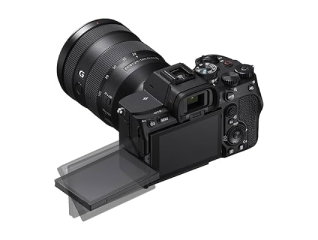

Telephoto Lens vs Optical Zoom: Compare Features for Sharp, Detailed Shots

Telephoto Lens vs Optical Zoom: Compare Features for Sharp, Detailed Shots

Learn how telephoto lenses differ from optical zoom, their benefits, and how to buy your favourite camera on Easy EMIs with Bajaj Finance.

Get pre-approved loan offer of upto Rs. 5 Lakh

Quick approval | Flexible Tenure Options | Zero Approval Fees

In Summary

A telephoto lens uses a fixed long focal length — typically 100mm and above — to magnify distant subjects with maximum optical clarity and shallow depth of field. Optical zoom uses the camera's built-in lens elements to magnify a subject without cropping or degrading the image. Both are optically superior to digital zoom, which simply crops pixels and reduces quality.

  • Telephoto lens: Separate, attachable lens; focal lengths typically 100mm to 600mm+; best for wildlife, sports, portrait, and professional photography
  • Optical zoom: Built-in to the camera or smartphone; variable focal range (e.g. 3x, 10x, 30x); best for travel, vlogging, family events, and casual photography
  • Image quality: Both maintain quality at their respective focal lengths; telephoto gives more detail and bokeh at longer distances
  • Digital zoom: Crops and enlarges existing pixels; always reduces image quality — not the same as optical zoom
  • Portability: Optical zoom is lighter and built-in; telephoto lenses are heavier, require attachment, and are camera-specific
  • Cost: Telephoto lenses represent a higher investment (from Rs. 15,000 to several lakh for professional glass); optical zoom is bundled with the device

You can browse cameras and accessories on Easy EMIs at over 1.5 lakh partner stores across 4,000 cities, including Reliance Digital, Croma, and Vijay Sales.
Why does the choice between a telephoto lens and optical zoom matter?

The right zoom option shapes everything from the weight you carry to the quality of the final image. A telephoto lens gives you dedicated glass at a long focal length — precise, detailed, and capable of professional-grade bokeh — but requires a compatible camera body and additional investment. Optical zoom is built into most modern cameras and smartphones, making it the more practical choice for everyday shooting. This guide explains how each works, when to use which, and what to look for when buying.


If you are looking for a new camera, visit any of Bajaj Finance's 1.5 lakh partner stores — like Vijay Sales, Croma, Reliance Digital, and more — across 4,000 cities, including Tier 2 cities like Jaipur, Lucknow, Kochi, Bhopal, and more in India. Choose your preferred model, then use the Bajaj Finance Insta EMI Card or Bajaj Finance Easy EMI Loan to finance it. Convert the cost into Easy EMIs that suit your monthly budget and enjoy zero down payment on select models — take it home without any upfront payment. Check your loan eligibility online in minutes so you know exactly what you can get before you step into the store.

What is a telephoto lens?

A telephoto lens is a separate, attachable lens designed to capture distant subjects with sharp detail and clarity. It achieves this by using a long focal length — typically starting at 100mm and going up to 600mm or beyond for professional wildlife and sports photography.

At longer focal lengths, a telephoto lens also creates a shallow depth of field, producing the blurred background effect (bokeh) that makes subjects stand out clearly from their surroundings. This is a characteristic of the optics itself, not achievable through zoom alone.

Most modern telephoto lenses also include optical image stabilisation to compensate for camera shake at long focal lengths — particularly important when shooting handheld at 200mm or above. If you run into technical issues while shooting, our guide on how to fix camera not working covers common troubleshooting steps for DSLR and mirrorless bodies.

What is optical zoom?

Optical zoom refers to a camera's built-in ability to magnify a distant subject by physically moving the lens elements, which changes the effective focal length. Because the magnification is done optically — using actual glass — the image quality is maintained throughout the zoom range. This is the key distinction from digital zoom, which simply crops the image and enlarges the remaining pixels. Digital zoom always reduces image quality. Optical zoom does not.


Optical zoom is built into compact cameras, bridge cameras, and many smartphones. A 3x optical zoom on a smartphone typically corresponds to a focal length shift from approximately 26mm (wide) to 78mm (telephoto). A 10x optical zoom on a bridge camera can reach 250mm equivalent or more. For vlogging and travel, best vlogging cameras with built-in optical zoom give you flexibility without carrying additional lenses.

How do telephoto lenses and optical zoom compare?

The table below places both options side by side across the seven factors that most directly affect a photographer's decision. Use it to identify which option fits your shooting style and budget. Both options outperform digital zoom in image quality — this table compares them only against each other:


FeatureTelephoto lensOptical zoom
Best forProfessional, wildlife, sports, portrait photographyCasual, travel, vlogging, family events
Image qualityVery high; full optical detail at long focal lengthsGood; maintained throughout the optical zoom range
Focal length rangeTypically 100mm to 600mm+ (fixed or zoom telephoto)Variable; typically 3x to 30x equivalent depending on model
Depth of fieldShallow — strong bokeh effect at long focal lengthsModerate — bokeh possible at maximum zoom on some models
FlexibilityRequires lens attachment; camera-body specificBuilt-in; no attachment needed
PortabilityHeavier; adds to kit bag weight significantlyLightweight; compact; all-in-one
CostHigher investment; from Rs. 15,000 to several lakh for professional glassModerate; bundled with the camera or smartphone

For a detailed comparison of camera bodies to pair with telephoto lenses, see our guide to Sony vs Nikon cameras.

What are the benefits of using a telephoto lens or optical zoom?

Both telephoto lenses and optical zoom help you capture distant subjects with clarity and sharpness that digital zoom cannot match. The benefits below apply to both options collectively, with notes where one has a specific advantage over the other. These ten benefits explain why optical magnification — whether through a dedicated lens or a built-in zoom — is worth investing in for any photographer:


  • Capture distant subjects clearly without moving closer, which is essential for wildlife and sports where approaching the subject is not possible.
  • Maintain full image quality throughout the zoom range — unlike digital zoom, which degrades resolution.
  • Reduce distortion compared to wide-angle shooting when photographing portraits, making facial features appear more natural.
  • Create background blur (bokeh) — more pronounced with telephoto lenses at longer focal lengths, but achievable with optical zoom at maximum range on capable models.
  • Improve composition by compressing the apparent distance between foreground and background elements, a technique used widely in landscape and street photography.
  • Compatible with DSLR, mirrorless cameras, and modern smartphones — optical zoom is standard across all categories; telephoto lenses require a compatible mount.
  • Reduce the need for post-processing cropping, preserving full sensor resolution in the final image.
  • Perform well in travel and outdoor photography where changing physical position is not always an option.
  • Telephoto lenses offer greater consistency across shots at the same focal length, which matters for professional series work such as wildlife sets or sports sequences.
  • Optical zoom gives casual photographers a single versatile tool that covers wide, standard, and telephoto perspectives without carrying additional equipment.

When should you choose a telephoto lens over optical zoom?

The decision comes down to your photography goals, the type of camera you own, and how much you want to carry. The five scenarios below give a clear answer for each type of buyer. Use these decision rules to identify your match before visiting a store:


  • Choose a telephoto lens for wildlife or sports photography: When you need to capture fast-moving animals or athletes from a fixed distance without disturbing them, a dedicated telephoto lens (300mm to 600mm) gives you the reach and shutter speed performance that built-in optical zoom on compact cameras cannot match.
  • Choose optical zoom for travel and everyday use: If you want a single camera that covers wide landscapes and close-up subjects without carrying extra glass, a bridge camera or smartphone with 10x–30x optical zoom is the more practical choice.
  • Choose a telephoto lens for portrait photography: Focal lengths between 85mm and 135mm on a telephoto lens produce the most flattering perspective for portraits, with a naturally shallow depth of field that separates the subject from the background.
  • Choose optical zoom for vlogging: Most vlogging setups favour compact, lightweight cameras with built-in optical zoom for ease of handling, quick focal length adjustments, and compatibility with gimbals and stabilisers.
  • Choose a telephoto lens if you already own a DSLR or mirrorless camera: Attaching a telephoto lens to a body you already own gives you a significant quality upgrade for long-distance shooting without replacing the entire kit.

Updated price list of cameras and lenses with telephoto and optical zoom in India (2026)

The prices below cover camera bodies with strong optical zoom and standalone telephoto lenses across a range of budgets. Whether you are buying a complete camera system or adding a lens to your existing body, these prices help you plan your purchase.

The table below lists models across both categories so you can compare the investment at each level:


ModelTypeKey zoom specPrice
Canon PowerShot SX430 ISBridge camera with optical zoom45x optical zoom (24–1080mm equiv.)Rs. 16,999
Sony Cyber-shot DSC-H300Bridge camera with optical zoom35x optical zoom (25–875mm equiv.)Rs. 14,990
Nikon Coolpix P950Bridge camera with optical zoom83x optical zoom (24–2000mm equiv.)Rs. 49,990
Canon EF 70–300mm f/4–5.6 IS II USMTelephoto zoom lens (Canon DSLR)70–300mm focal length rangeRs. 35,995
Nikon AF-P DX 70–300mm f/4.5–6.3G EDTelephoto zoom lens (Nikon DSLR)70–300mm focal length rangeRs. 18,995
Sony FE 70–200mm f/4 G OSSTelephoto zoom lens (Sony mirrorless)70–200mm focal length rangeRs. 89,990

Disclaimer: Each model's features, availability, and pricing are subject to change and may vary. For the most accurate and up-to-date information, please visit the official website.


Before you decide, explore the latest offers. You may find a great deal on a model that matches your needs.


What are my financing options to buy a camera or telephoto lens?

Bajaj Finance offers two financing options for purchasing cameras and lenses. Both options are available at over 1.5 lakh partner stores across 4,000 cities in India, including Croma, Reliance Digital and Vijay Sales.


OptionLimitKey features
Bajaj Finance Insta EMI CardPre-approved card limit up to Rs. 3 lakhZero annual fee —upto 60 months tenure — works at 1.5 lakh partner outlets — 1 million+ eligible products
Bajaj Finance Easy EMI LoanLoan limit up to Rs. 5 lakhQuick loan approval — upto 60 months tenure — basic KYC documents needed — ideal for higher-value purchases

How to choose? Both options require you to be physically present at a partner store. The Insta EMI Card is ideal for shoppers who want to purchase across multiple categories over time. The Easy EMI Loan suits buyers looking to finance a higher-value camera purchase in a single transaction. A minimum CIBIL score of 650 is required for both options.

How do I buy a camera or telephoto lens on EMI at a Bajaj Finance partner store?

Getting a new camera is simple and affordable with Bajaj Finance's in-store financing options. The entire process usually takes just 10–15 minutes. Follow these steps:


  1. Browse models on Bajaj Mall: Explore the range of camera models available on Bajaj Mall. Compare camera types, sensor size, resolution, video features, and prices before heading to the store.
  2. Find a partner store near you: Use the Bajaj Finance store locator to find a nearby partner outlet such as Croma, Vijay Sales, or other authorised retailers.
  3. Check the camera in person: Visit the partner store and explore available models. Check image quality, autofocus speed, lens compatibility, battery life, and ergonomics to find the one that suits your photography style.
  4. Choose a suitable EMI option: At checkout, ask the store executive about the Bajaj Finance Insta EMI Card or Easy EMI Loan. Confirm available tenure options and whether your chosen model comes with a zero down payment offer.
  5. Complete payment and take your camera home: Once approved, your purchase is processed immediately and you can leave the partner store the same day.

You can also check your loan eligibility online in advance by entering your mobile number and OTP, helping you plan your purchase better.

Maximise your savings with Maha Bachat

Combine the best summer offers, EMI plans, and exclusive vouchers with Maha Bachat to save big.

20k+ people used their offers at the store

Why use the Smart Savings Calculator

Bajaj Finance’s Smart Savings Calculator helps you unlock maximum savings every time you shop at partner stores. It brings together all available brand, dealer, and scheme offers—so you can see your total savings instantly and shop smarter with Easy EMIs.


1. Dealer offers - Grab exclusive in-store deals at over 1.5 lakh partner stores across India. Enjoy local discounts and special prices you will not find online.

2. Brand offers - Access limited-time discounts from top brands across electronics, appliances, and more. Discover brand-specific savings selected just for you.

3. Bajaj offers - Unlock exclusive Bajaj Finance deals on popular products—available only to our customers. More rewards, more value.

4. Scheme offers - Take advantage of time-sensitive offers on select EMI schemes. Get extra benefits after paying just 3 EMIs—visible during EMI selection at checkout.


Calculate your extra savings today!

Disclaimer

While care is taken to update the information, products, and services included in or available on our website and related platforms/websites, there may be inadvertent inaccuracies or typographical errors or delays in updating the information. The material contained in this site, and on associated web pages, is for reference and general information purpose and the details mentioned in the respective product/service document shall prevail in case of any inconsistency. Subscribers and users should seek professional advice before acting on the basis of the information contained herein. Please take an informed decision with respect to any product or service after going through the relevant product/service document and applicable terms and conditions. In case any inconsistencies observed, please click on reach us.

*Terms and conditions apply