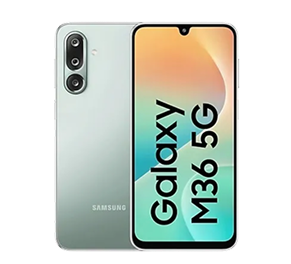
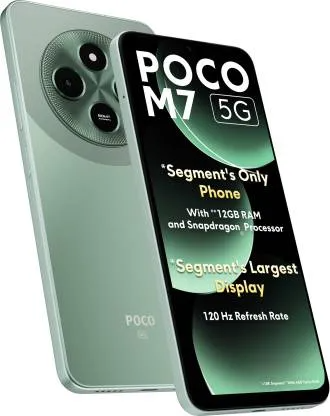
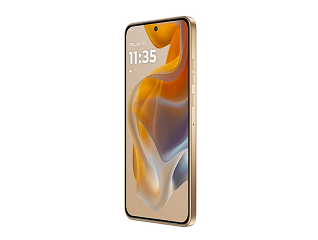
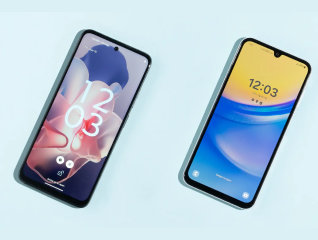
The technical specifications below compare Snapdragon 4 Gen 2 and Snapdragon 8 Gen 1 across CPU architecture, GPU, memory, multimedia, and connectivity. These details highlight the differences in performance, efficiency, and supported features, helping you choose the processor that best matches your gaming, multitasking, and everyday smartphone requirements.
General info
Snapdragon 4 Gen 2 and Snapdragon 8 Gen 1 target different smartphone categories. Snapdragon 4 Gen 2 is designed for affordable 5G smartphones with a focus on efficiency, while Snapdragon 8 Gen 1 is Qualcomm's flagship chipset built for premium devices with top-tier performance, AI, and gaming capabilities.
| Specification | Snapdragon 4 Gen 2 | Snapdragon 8 Gen 1 |
|---|
| Announced | 26 June 2023 | 30 November 2021 |
| Class | Entry-level | Flagship |
| Model number | SM4450 | SM8450 |
| Brand | Qualcomm | Qualcomm |
CPU
The CPU architecture plays an important role in multitasking, gaming, and app performance. Snapdragon 8 Gen 1 offers flagship processing power with ARMv9 architecture, while Snapdragon 4 Gen 2 delivers efficient everyday performance for budget 5G smartphones.
| Specification | Snapdragon 4 Gen 2 | Snapdragon 8 Gen 1 |
|---|
| Architecture | 2× Cortex-A78 + 6× Cortex-A55 | 1× Cortex-X2 + 3× Cortex-A710 + 4× Cortex-A510 |
| Cores | 8 | 8 |
| Frequency | Up to 2.2GHz | Up to 3.0GHz |
| Instruction set | ARMv8-A | ARMv9-A |
| Process | 4nm | 4nm |
| Manufacturing | Samsung | Samsung |
Graphics
Graphics performance determines how well a processor handles games, videos, and graphics-intensive applications. Snapdragon 8 Gen 1 features the flagship Adreno 730 GPU, while Snapdragon 4 Gen 2 uses the Adreno 613 GPU for efficient everyday graphics performance.
| Specification | Snapdragon 4 Gen 2 | Snapdragon 8 Gen 1 |
|---|
| GPU | Adreno 613 | Adreno 730 |
| GPU frequency | Up to 955MHz | Up to 818MHz |
| Vulkan | 1.1 | 1.1 |
| OpenCL | 2.0 | 2.0 |
| DirectX | 12 | 12 |
Memory
Memory support affects multitasking and application performance. Snapdragon 8 Gen 1 supports more RAM and higher memory bandwidth, while Snapdragon 4 Gen 2 focuses on efficient performance for mainstream smartphones.
| Specification | Snapdragon 4 Gen 2 | Snapdragon 8 Gen 1 |
|---|
| Memory type | LPDDR5 | LPDDR5 |
| Memory frequency | 3,200MHz | 3,200MHz |
| Bus | 64-bit | 64-bit |
| Maximum bandwidth | 25.6GB/s | 51.2GB/s |
| Maximum RAM | 8GB | 16GB |
Multimedia (ISP)
Both processors support advanced multimedia features, but Snapdragon 8 Gen 1 provides significantly better camera, display, and video capabilities for flagship smartphones.
| Specification | Snapdragon 4 Gen 2 | Snapdragon 8 Gen 1 |
|---|
| Storage type | UFS 2.2 | UFS 3.1 |
| Maximum display resolution | 2520 × 1080 pixels | 3840 × 2160 pixels |
| Maximum camera resolution | 108MP | 200MP |
| Video capture | 1080p at 60fps | 8K at 30fps |
| Video playback | 1080p | 8K HDR |
| Video codecs | H.264, H.265 | H.264, H.265, VP9, AV1 |
| Audio codecs | AAC, aptX, MP3 | AAC, aptX Adaptive, LDAC, MP3 |
Connectivity and network
Connectivity features determine download speeds and wireless performance. Both processors support 5G, but Snapdragon 8 Gen 1 offers a faster modem and newer wireless technologies for flagship smartphones.
| Specification | Snapdragon 4 Gen 2 | Snapdragon 8 Gen 1 |
|---|
| Modem | Snapdragon X61 5G | Snapdragon X65 5G |
| 4G support | Yes | Yes |
| 5G support | Yes | Yes |
| Download speed | Up to 2.5Gbps | Up to 10Gbps |
| Upload speed | Up to 900Mbps | Up to 3.5Gbps |
| Wi-Fi | Wi-Fi 5 | Wi-Fi 6E |
| Bluetooth | 5.1 | 5.2 |
| Navigation | GPS, GLONASS, Galileo, BeiDou, NavIC | GPS, GLONASS, Galileo, BeiDou, NavIC |