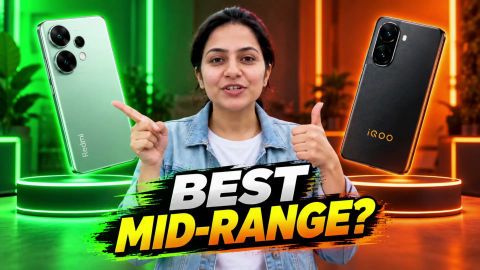
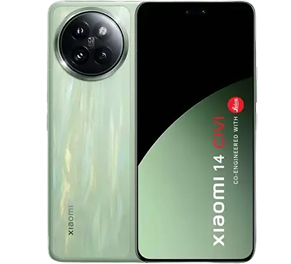
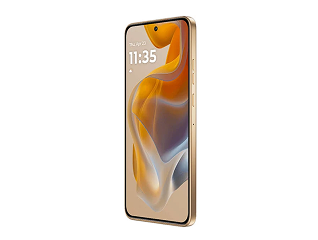
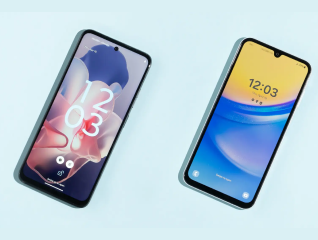
The main difference is their hardware focus. The iQOO Z9s combines the Dimensity 7300 5G processor, up to 12GB RAM, a 6.77-inch curved AMOLED display, and a 5,500 mAh battery. The Redmi Note 14 combines the Dimensity 7025-Ultra, up to 8GB RAM, a 6.67-inch AMOLED display, and a 5,110 mAh battery.
| Feature | Redmi Note 14 | iQOO Z9s |
| Processor | MediaTek Dimensity 7025-Ultra | MediaTek Dimensity 7300 5G |
| Display | 6.67-inch AMOLED, 120 Hz | 6.77-inch curved AMOLED, 120 Hz |
| Rear camera | 50 MP + 8 MP + 2 MP | 50 MP + 2 MP |
| Front camera | 20 MP | 16 MP |
| Battery | 5,110 mAh | 5,500 mAh |
| Charging | 45 W | 44 W |
| RAM | Up to 8GB | Up to 12GB |
| Storage | 128GB / 256GB | 128GB / 256GB |
Also check: Gaming Android phones
The iQOO Z9s suits users who want higher RAM, a larger curved display, and a bigger battery. The Redmi Note 14 adds an ultrawide camera, expandable storage, higher peak brightness, and a headphone jack.
Which phone should I choose for performance?
The iQOO Z9s uses the MediaTek Dimensity 7300 5G, while the Redmi Note 14 uses the MediaTek Dimensity 7025-Ultra. The iQOO Z9s also offers up to 12GB RAM compared with up to 8GB RAM on the Redmi Note 14.
| Performance factor | Redmi Note 14 | iQOO Z9s |
| Processor | MediaTek Dimensity 7025-Ultra | MediaTek Dimensity 7300 5G |
| RAM | Up to 8GB | Up to 12GB |
| Extended RAM | Up to 8GB | Up to 12GB |
| Process technology | 6 nm | 4 nm |
| Best suited to | Everyday use and regular multitasking | Gaming and heavier multitasking |
Also check: MediaTek Processor phones
The iQOO Z9s offers more RAM and a newer 4 nm processor platform. The Redmi Note 14 remains suitable for browsing, streaming, social media, calls, and regular multitasking.
→ Pro tip: If gaming and heavy multitasking are your priorities, compare the processor and RAM configuration before choosing your storage variant.
Which display is better for my everyday use?
Both phones use AMOLED displays with a 120 Hz refresh rate. The iQOO Z9s gives you a larger curved screen, while the Redmi Note 14 offers higher peak brightness and HDR10+ support.
| Display factor | Redmi Note 14 | iQOO Z9s |
| Screen size | 6.67-inch | 6.77-inch |
| Display type | AMOLED | Curved AMOLED |
| Resolution | 2400 x 1080 pixel | 2392 x 1080 pixel |
| Refresh rate | Up to 120 Hz | 120 Hz |
| Peak brightness | Up to 2,100 nits | 1,800 nits |
| Colour support | 100% DCI-P3, HDR10+ | 1.07 billion colours, 100% P3 |
Also check: Big screen mobile phones
The iQOO Z9s provides more screen area for videos and gaming. The Redmi Note 14 offers higher peak brightness for outdoor viewing and supports HDR10+ content.
→ Pro tip: Choose the iQOO Z9s for a larger curved screen, or the Redmi Note 14 if high peak brightness and HDR10+ matter more to you.
Redmi Note 14 vs iQOO Z9s: which camera suits me?
The Redmi Note 14 has a 50 MP Sony LYT-600 main camera with OIS, an 8 MP ultrawide camera, and a 2 MP macro camera. The iQOO Z9s has a 50 MP Sony IMX882 OIS main camera and a 2 MP bokeh camera.
| Camera factor | Redmi Note 14 | iQOO Z9s |
| Main camera | 50 MP Sony LYT-600, OIS + EIS | 50 MP Sony IMX882, OIS |
| Secondary camera | 8 MP ultrawide + 2 MP macro | 2 MP bokeh |
| Front camera | 20 MP | 16 MP |
| Video recording | Up to 1080p at 30 fps | Up to 4K |
Also check: Camera phones under Rs. 30,000
The Redmi Note 14 gives you an ultrawide camera for wider scenes, while the iQOO Z9s supports 4K video recording through its main camera. Both phones provide OIS on the main rear camera.
→ Pro tip: Choose the Redmi Note 14 if you often shoot wider scenes, or the iQOO Z9s if 4K video recording is important to you.
Which phone offers better battery and charging?
The iQOO Z9s has a larger 5,500 mAh battery, while the Redmi Note 14 has a 5,110 mAh battery. The Redmi Note 14 supports 45 W charging, compared with 44 W FlashCharge on the iQOO Z9s.
| Battery factor | Redmi Note 14 | iQOO Z9s |
| Battery capacity | 5,110 mAh | 5,500 mAh |
| Charging | 45 W | 44 W FlashCharge |
| Battery features | Smart Charging Engine | 4-year battery health claim |
| Reverse charging | Not specified | Up to 7.5 W |
Also check: 6,000mah battery phones
The larger battery on the iQOO Z9s can be useful for long days of streaming, gaming, calls, and navigation. The Redmi Note 14 offers battery management features such as Overnight Protection and real-time battery protection.
→ Pro tip: If you spend long hours away from a charger, compare battery capacity along with charging speed instead of looking at wattage alone.
Which phone has more useful storage options?
Both smartphones offer 128GB and 256GB storage options. The Redmi Note 14 also supports expandable storage through a hybrid microSD card slot, while the iQOO Z9s offers a 12GB RAM configuration.
| Storage factor | Redmi Note 14 | iQOO Z9s |
| RAM options | 6GB / 8GB | 8GB / 12GB |
| Storage options | 128GB / 256GB | 128GB / 256GB |
| Expandable storage | Yes, hybrid microSD slot | Not specified |
| Virtual RAM | Up to 8GB | Up to 12GB |
The Redmi Note 14 gives you the option to expand storage later, which can help if you keep many photos, videos, downloads, or documents. The iQOO Z9s offers more RAM for users who regularly keep multiple apps open.
→ Pro tip: If you store large files on your phone, check expandable storage before choosing your RAM and storage configuration.
What other features should I compare?
Both phones support 5G, dual SIM functionality, and IP64-rated protection. They also include in-display fingerprint sensors, but their audio and connectivity features differ.
| Feature | Redmi Note 14 | iQOO Z9s |
| Speakers | Dual stereo speakers with Dolby Atmos | Speaker system |
| Headphone jack | 3.5 mm | No 3.5 mm jack |
| Fingerprint sensor | In-display | In-display optical |
| Wi-Fi | Wi-Fi 5 | Wi-Fi 6 |
| Bluetooth | Bluetooth 5.3 | Bluetooth 5.4 |
| Special feature | IR blaster | Wet Touch technology |
Also check: Upcoming 5G mobile phones
The Redmi Note 14 can suit you if you use wired headphones or want an IR blaster. The iQOO Z9s adds Wet Touch technology, which helps the screen respond more reliably when your fingers or display are wet.
→ Pro tip: Check smaller features such as the headphone jack, Wi-Fi version, fingerprint sensor, and water resistance if they affect your daily phone use.