








Pay pending dues & close loan fully from ₹1,000
Full repayment > settlement – protect your credit score permanently
*Loan settlement is a last-resort option. Always prefer full closure. T&C apply.
In Summary

Loan Settlement vs Loan Closure
Loan closure means repaying the full outstanding amount, after which the lender marks the account as 'closed'. Loan settlement means the lender accepts a reduced amount as final payment, and the account is marked 'settled' instead. A 'settled' status remains on your credit record, so the two outcomes are viewed differently by future lenders.
- Loan closure means the full outstanding amount, including principal, interest and applicable charges, has been repaid.
- Loan settlement means the lender accepts a reduced amount as final payment, usually after prolonged overdue or financial difficulty.
- A closed account and a settled account are reported differently on your credit report.
- The 'Settled' status remains in your credit history and may affect future loan eligibility.
- Continued non-payment after a legal notice may lead to further credit reporting, additional charges and further legal steps.
- Your rights as a borrower remain protected, and you can still take steps to resolve the account.
What is loan closure and loan settlement
Loan closure and loan settlement are two different ways a loan account can be resolved. The difference lies in how much you repay and how it is reported in your credit history.
Loan closure happens when you repay the full outstanding loan amount, including principal, interest, and applicable charges. Once completed, the lender marks the loan as “closed” and issues a No Objection Certificate (NOC).
Loan settlement happens when you are unable to repay the full amount, and the lender agrees to accept a reduced amount as final payment. In this case, the account is marked as “settled” instead of “closed”. An NOC / No Dues Certificate is NOT issued for settled loans.
Key points to understand:
- Closure reflects complete repayment and strengthens your credit profile
- Settlement indicates partial repayment and may lower your CIBIL score
- Settlement is usually considered after prolonged overdue or financial difficulty
A settled loan does not erase your repayment history. Instead, the account is marked as “settled” on your credit report, which may remain visible and can affect your ability to access new credit in the future.
Loan settlement vs loan closure: Key differences
Loan settlement and closure differ in repayment amount, credit reporting, and long-term impact. The table below explains these differences clearly:
| Aspect | Loan Closure | Loan Settlement |
| Repayment amount | Full outstanding amount paid | Partial amount agreed with lender |
| Account status | Marked as “closed” | Marked as “settled” |
| Credit score impact | Positive or neutral | Negative impact |
| Future loan eligibility | Easier approval | May face difficulty |
| Credit history | Clean repayment record | Settlement remark remains |
Choosing between the two depends on your ability to repay the full amount and your long-term financial plans.
Credit score impact of settlement vs closure
Your repayment status is reported to credit bureaus such as CIBIL, and it directly affects your credit score.
When you close a loan fully, it shows that you have honoured your repayment commitment. This supports your credit profile and improves your chances of getting future loans.
When a loan is settled, the credit report reflects that the lender accepted less than the total due amount. This can reduce your credit score and remain visible for future lenders.
Important points:
- Even a single overdue payment can impact your credit score
- Settlement status remains in your credit history
- A lower score can affect loan approvals, limits, and interest rates
What happens if you ignore repayment after a legal notice
Ignoring repayment after receiving a legal notice can lead to further escalation. The process follows a defined path based on your overdue status.
The following may happen:
- Continued overdue is reported to credit bureaus
- Additional charges may apply as per your loan terms
- The lender may initiate further legal steps as per applicable laws
This process does not happen instantly but progresses depending on the duration of non-payment. Your rights as a borrower remain protected, and you can still take steps to resolve the account.
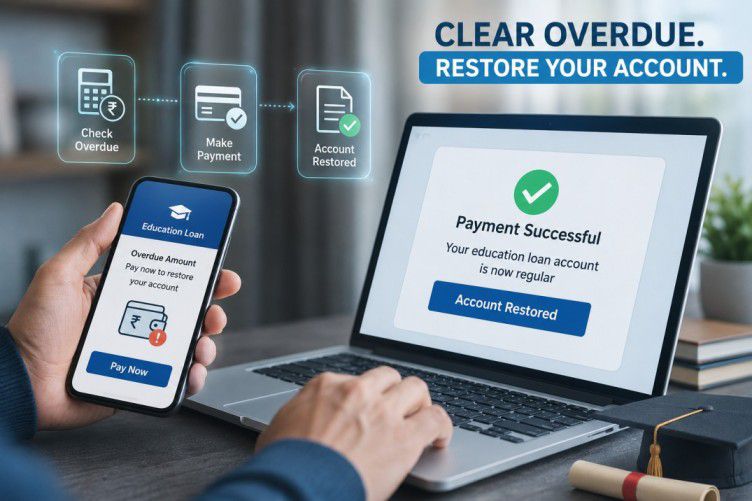
Steps to check and repay through the Bajaj Finance platform:
You can conveniently review your loan details and make repayments through the Bajaj Finance platform. The process is designed to help you stay updated on your outstanding amount and complete payments in a simple, secure manner.
Follow these steps to proceed:
- Sign in using your registered mobile number and OTP
- Go to your loan account under “Your relations”
- Check your total outstanding amount
- Select the preferred repayment option
- Complete payment using UPI, net banking, or debit card
- Download the payment receipt for reference
Once the payment is completed, ensure you save or download the receipt for your records. Regularly checking your loan account and making timely payments can help you manage your obligations more effectively and maintain your credit profile.
More Guides on Managing Your Bajaj Finance Loan Account
Not your nearest branch?

Frequently Asked Questions
Settlement vs Closure Basics
CIBIL Impact
Resolution Options
How long does a “settled” status remain on my credit report?
A “settled” status may remain on your credit report for several years, depending on the credit bureau. During this time, lenders reviewing your profile may consider this status when evaluating your creditworthiness and future loan eligibility.
Will paying my dues after a delay improve my credit profile?
Paying overdue dues, even after a delay, may help gradually improve your credit profile. While past delays may still be reflected, consistent and timely repayments going forward can positively influence your overall credit behaviour over time.
What happens if I ignore a loan repayment after receiving a notice?
Ignoring repayment after receiving a notice may lead to continued follow-ups and further recovery actions as per applicable processes. It can also result in additional charges and continued negative impact on your credit profile over time.
Can I convert my overdue amount into EMIs again?
In certain situations, lenders may provide options such as restructuring or revised repayment plans, subject to internal policies and eligibility. You can check available options by signing in to your account or contacting the lender for further guidance.
Why is it important to regularly review my loan account?
Regularly reviewing your loan account helps you stay aware of outstanding dues, avoid missed payments, and take timely action when required. It also allows you to manage repayments better and maintain a more stable credit profile over time.
More Articles

Disclaimer
While care is taken to update the information, products, and services included in or available on our website and related platforms/websites, there may be inadvertent inaccuracies or typographical errors or delays in updating the information. The material contained in this site, and on associated web pages, is for reference and general information purpose and the details mentioned in the respective product/service document shall prevail in case of any inconsistency. Subscribers and users should seek professional advice before acting on the basis of the information contained herein. Please take an informed decision with respect to any product or service after going through the relevant product/service document and applicable terms and conditions. In case any inconsistencies observed, please click on reach us.
*Terms and conditions apply.