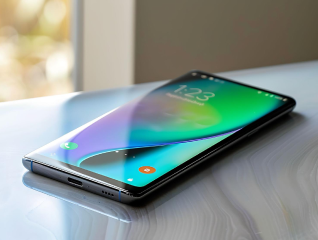
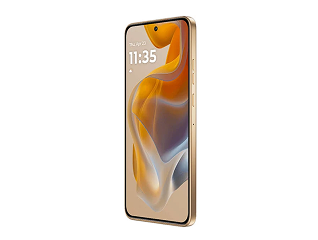
Both phones come from POCO's budget C series and share a similar footprint, but differ in network capability, chip generation, display size, and software support. The POCO C75 launched in December 2024; the POCO C65 launched in December 2023.
How do they compare in general specifications?
The C75 adds 5G support and IP52 splash resistance over the older C65, which is limited to 4G and has no rated water resistance. Both carry a one-year warranty and support dual Nano-SIM use.
| Specification | POCO C75 | POCO C65 | What this means |
|---|
| SIM | Dual Nano-SIM | Dual Nano-SIM | Both support two physical SIMs simultaneously |
| Network | 5G, 4G | 4G | C75 is 5G-ready; C65 is limited to 4G networks |
| Dimensions | 171.88 × 77.8 × 8.22 mm | 168 × 78 × 8.09 mm | C75 is taller; both are similarly wide and thin |
| Weight | 205 g | 192 g | C65 is lighter by 13 g — noticeable over long use |
| Water and dust resistance | IP52 | Not specified | C75 has basic splash resistance; C65 has none rated |
| Warranty | 1 year | 1 year | Standard manufacturer warranty on both |
How do the displays compare?
The POCO C75 has a larger 6.88-inch panel with a faster 120Hz refresh rate. The POCO C65 has a slightly smaller 6.74-inch display at 90Hz but adds Corning Gorilla Glass 3 protection, which the C75 does not specify.
| Specification | POCO C75 | POCO C65 | What this means |
|---|
| Display type | IPS LCD | IPS LCD | Same panel technology on both |
| Screen size | 6.88-inch | 6.74-inch | C75 gives more screen space for media and reading |
| Resolution | 720 × 1640 pixels | 720 × 1650 pixels | Both are HD+; sharpness is similar at normal viewing distance |
| Refresh rate | 120Hz | 90Hz | C75 scrolling and animations feel noticeably smoother |
| Brightness | 600 nits | 450 nits typical, 600 nits HBM | C75 is brighter at standard use; C65 matches only at peak |
| Aspect ratio | 20:9 | 20:9 | Same tall widescreen format on both |
| Pixel density | 260 ppi | 267 ppi | Marginally sharper on the C65; imperceptible in daily use |
| Screen protection | Not specified | Corning Gorilla Glass 3 | C65 has confirmed drop and scratch resistance; C75 does not |
| Build | Mineral glass back | Not specified | C75 has a specified back material; C65 does not |
| Display design | Waterdrop notch | Waterdrop notch | Same notch design on both |
-> *Pro tip: If you tend to drop your phone, the C65's Gorilla Glass 3 front protection is a practical advantage the C75 cannot match.
How does performance compare?
The POCO C75 uses Qualcomm's Snapdragon 4s Gen 2 on a modern 4nm process node, while the POCO C65 runs MediaTek's Helio G85 on a 12nm process. The C75 is the faster and more efficient chip, though both handle everyday tasks comfortably.
| Specification | POCO C75 | POCO C65 | What this means |
|---|
| Chipset | Qualcomm Snapdragon 4s Gen 2 | MediaTek Helio G85 | C75 uses a newer, more efficient chip generation |
| Processor core | Octa-core, up to 2 GHz | Octa-core, up to 2 GHz | Same core count and peak speed; architecture differs |
| CPU configuration | 2 × Cortex-A78 + 6 × Cortex-A55 | 2 × Cortex-A75 + 6 × Cortex-A55 | C75 has newer A78 performance cores for better responsiveness |
| Process node | 4 nm | 12 nm | C75's smaller node means better efficiency and less heat |
| GPU | Adreno 611 | Mali-G52 MC2 | Different GPU vendors; C75's Adreno handles light gaming reliably |
| RAM | 4GB | 4GB / 6GB / 8GB | C65 offers more RAM options for smoother multitasking |
| RAM type | LPDDR4X | LPDDR4X | Same memory type on both |
| Operating system | Android 14 | Android 13 | C75 ships with a newer Android version out of the box |
| Custom UI | HyperOS | MIUI | Both are Xiaomi-based UIs; HyperOS is the newer version |
| OS updates | 2 years | Not specified | C75 has a committed update timeline; C65 does not |
| Security updates | 4 years | Not specified | C75 commits to longer security support |
-> *Pro tip: The C65's RAM advantage — up to 8GB versus the C75's 4GB — is meaningful if you keep many apps open or multitask heavily. More RAM keeps apps loaded in the background and reduces reload times.
How do the cameras compare?
The POCO C65 has a dual rear camera with a 2MP macro lens and an 8MP front camera. The POCO C75 has a single 50MP rear camera with a named Sony IMX582 sensor and a 5MP front camera. Both record Full HD video at 30fps.
| Specification | POCO C75 | POCO C65 | What this means |
|---|
| Rear camera | 50MP wide-angle | 50MP wide-angle + 2MP macro | C65 adds a macro lens for close-up shots |
| Main rear aperture | f/1.8 | Not specified | C75's wider aperture lets in more light for better low-light shots |
| Rear camera sensor | Sony Exmor-RS IMX582 | Not specified | C75 uses a named Sony sensor — a quality indicator |
| Rear autofocus | Yes | Not specified | C75 confirms autofocus; C65 does not specify |
| Rear flash | LED | LED | Both have a rear flash |
| Rear video | Full HD at 30fps | Full HD at 30fps | Identical video recording on both |
| Front camera | 5MP, f/2.2 | 8MP, f/2.0 | C65 has a sharper, wider-aperture front camera for selfies and video calls |
| Front video | Full HD at 30fps | Full HD at 30fps | Identical front video on both |
How do storage and connectivity compare?
Both phones support microSD expansion up to 1TB. The POCO C75 uses faster UFS 2.2 storage and adds 5G, while the POCO C65 uses eMMC 5.1 and is limited to 4G. Both support Wi-Fi 5, Bluetooth 5.3, and USB Type-C.
| Specification | POCO C75 | POCO C65 | What this means |
|---|
| Internal storage | 64GB / 128GB | 128GB / 256GB | C65 starts at more storage and goes higher |
| Storage type | UFS 2.2 | eMMC 5.1 | C75's UFS 2.2 is significantly faster for app loading and file transfers |
| Expandable storage | Up to 1TB | Up to 1TB | Both support large microSD cards |
| 5G | Yes | No | C75 is 5G-ready; C65 is not |
| 4G | Yes | Yes | Both support 4G LTE |
| Wi-Fi | Wi-Fi 5 | Wi-Fi 5 | Same Wi-Fi standard on both |
| Bluetooth | v5.3 | v5.3 | Identical Bluetooth version |
| GPS | A-GPS, GLONASS | A-GPS, GLONASS | Same navigation support |
| NFC | No | No | Neither supports tap-to-pay |
| USB | USB Type-C | USB Type-C | Both use Type-C |
| 3.5mm headphone jack | Yes | Not specified | C75 confirms a headphone jack; C65 does not specify |
| FM radio | Yes | Yes | Both have FM radio |
-> *Pro tip: The storage type difference matters more than it sounds. eMMC 5.1 on the C65 can feel sluggish when opening apps or loading photos. UFS 2.2 on the C75 is measurably faster in daily use.
How do the batteries and features compare?
Both phones use 18W fast charging and Li-Polymer batteries. The POCO C75 has a slightly larger 5,160 mAh battery. Both have side-mounted fingerprint sensors and a standard set of everyday sensors.
| Specification | POCO C75 | POCO C65 | What this means |
|---|
| Battery capacity | 5,160 mAh | 5,000 mAh | C75 has a marginally larger battery; difference is negligible in daily use |
| Battery type | Li-Polymer | Li-Polymer | Same chemistry on both |
| Fast charging | 18W | 18W | Identical charging speed |
| Wireless charging | No | No | Neither supports wireless charging |
| Fingerprint sensor | Side-mounted | Side-mounted | Convenient thumb placement on both |
| Accelerometer | Yes | Yes | Supports screen rotation and motion detection |
| Compass | Yes | Not specified | C75 confirms compass for navigation apps |
| Proximity sensor | Yes | Yes | Auto-dims screen during calls on both |
| Light sensor | Yes | Yes | Adjusts brightness based on ambient light on both |
| Colours | Aqua Blue, Enchanted Green, Silver Stardust | Matte Black, Pastel Blue | Different colour palettes; C75 has more vibrant options |