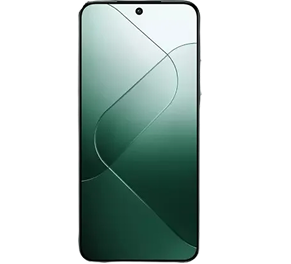
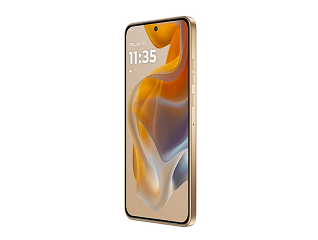
The POCO M7 Pro 5G and Redmi Note 14 5G are closely related phones — same chipset, same display, same battery, and nearly identical dimensions. Both launched in December 2024 under ₹20,000. The differences are narrow but meaningful: the POCO adds NFC; the Redmi Note 14 adds an ultrawide camera. Here is the full breakdown.
What are the general specs and platform differences?
Both phones share the same physical dimensions, weight, operating system, and warranty. They are manufactured by sister brands under Xiaomi and run identical software. The primary differences show up in camera hardware and connectivity.
| Feature | POCO M7 Pro 5G | Redmi Note 14 5G | What this means |
|---|
| Manufacturer | POCO | Redmi | Different brands, same Xiaomi parent company |
| Launch date | 17 December 2024 | 9 December 2024 | Launched within the same week |
| OS | Android 14, HyperOS | Android 14, HyperOS | Identical software experience |
| OS updates | 2 years | 2 years | Equal |
| Security updates | 4 years | 4 years | Equal |
| SIM | Dual Nano, hybrid slot | Dual Nano, hybrid slot | Both support a microSD card in place of the second SIM |
| Network | 5G, 4G, 3G, 2G | 5G, 4G, 3G, 2G | Full network support on both |
| Dimensions | 162.4 × 75.7 × 7.99 mm | 162.4 × 75.7 × 7.99 mm | Identical — same hand feel |
| Weight | 190 g | 190 g | Equal |
| Warranty | 1 year | 1 year | Equal |
How does the display and design compare?
Both phones use the same 6.67-inch FHD+ AMOLED panel with identical specs across resolution, refresh rate, brightness, and screen protection. There is no meaningful display difference between the two.
| Feature | POCO M7 Pro 5G | Redmi Note 14 5G | What this means |
|---|
| Screen size | 6.67 inches | 6.67 inches | Equal |
| Display type | AMOLED | AMOLED | Equal — both support HDR10+ and Dolby Vision |
| Resolution | 1080 × 2400 pixels | 1080 × 2400 pixels | Equal — FHD+ on both |
| Pixel density | 395 ppi | 395 ppi | Equal sharpness |
| Refresh rate | 120 Hz | 120 Hz | Equal — smooth scrolling on both |
| Touch sampling rate | 240 Hz | 240 Hz | Equal — identical touch responsiveness |
| Peak brightness | 2,100 nits | 2,100 nits | Equal — both are readable outdoors |
| Screen protection | Gorilla Glass 5 | Gorilla Glass 5 | Equal drop protection |
| Water resistance | IP64 | IP64 | Both resist dust and water splashes — not immersible |
| Build | Plastic back | Plastic back | Equal |
How does the performance compare?
Both phones run the identical Dimensity 7025 Ultra chipset, GPU, RAM options, and storage type. Performance is effectively the same across daily use, gaming, and multitasking. The POCO M7 Pro edges ahead slightly on AnTuTu, likely due to software optimisation differences.
| Feature | POCO M7 Pro 5G | Redmi Note 14 5G | What this means |
|---|
| Processor | Dimensity 7025 Ultra (6 nm) | Dimensity 7025 Ultra (6 nm) | Identical chip — same real-world performance |
| CPU | 2 × Cortex-A78 + 6 × Cortex-A55, up to 2.5 GHz | 2 × Cortex-A78 + 6 × Cortex-A55, up to 2.5 GHz | Equal |
| GPU | IMG BXM-8-256 | IMG BXM-8-256 | Equal gaming and graphics capability |
| RAM | 6 GB / 8 GB (LPDDR4X) | 6 GB / 8 GB (LPDDR4X) | Equal |
| AnTuTu score | ~486,435 | ~457,426 | POCO scores marginally higher — negligible in daily use |
| Storage | 128 GB / 256 GB (UFS 2.2) | 128 GB / 256 GB (UFS 2.2) | Equal |
| Expandable storage | Up to 1 TB | Up to 1 TB | Both support microSD via hybrid slot |
| Fingerprint | In-display optical | In-display optical | Equal |
| Audio | Stereo speakers, Dolby Atmos, 3.5 mm jack | Stereo speakers, Dolby Atmos, 3.5 mm jack | Equal — both retain the headphone jack |
Which phone has the better cameras?
This is the clearest differentiator. The Redmi Note 14 5G adds an 8MP ultrawide lens, giving it more versatility for group shots and wide scenes. The POCO M7 Pro 5G has only a 50MP primary and a 2MP depth sensor — no ultrawide. Both share the same Sony LYT-600 main sensor with OIS.
| Feature | POCO M7 Pro 5G | Redmi Note 14 5G | What this means |
|---|
| Rear camera setup | 50 MP + 2 MP | 50 MP + 8 MP + 2 MP | Redmi adds an ultrawide lens — more shooting versatility |
| Primary camera | 50 MP Sony LYT-600, f/1.5, OIS | 50 MP Sony LYT-600, f/1.5, OIS | Identical main sensor and aperture |
| Ultrawide camera | Not included | 8 MP, f/2.2 | Redmi Note 14 can capture wider scenes — useful for group photos and landscapes |
| Macro camera | 2 MP, f/2.4 | 2 MP, f/2.4 | Equal |
| OIS | Yes | Yes | Both offer optical stabilisation on the main camera |
| Front camera | 20 MP, f/2.2 | 20 MP, f/2.2 | Equal |
| Rear video | 1080p@30fps | 1080p@30fps | Equal — neither shoots 4K |
➜ *Pro tip: Neither phone supports 4K video recording. If video quality matters to you, consider stepping up to the Redmi Note 14 Pro 5G, which shoots at higher resolutions with better stabilisation.
What are the connectivity differences?
This is the second meaningful differentiator. The POCO M7 Pro 5G includes NFC for contactless payments; the Redmi Note 14 5G also supports NFC but availability may vary by variant. Both include Wi-Fi 5, Bluetooth 5.3, GPS, and an IR blaster.
| Feature | POCO M7 Pro 5G | Redmi Note 14 5G | What this means |
|---|
| NFC | Yes | Yes (variant dependent) | Both support contactless payments; confirm at purchase |
| Wi-Fi | Wi-Fi 5 (802.11 a/b/g/n/ac) | Wi-Fi 5 (802.11 a/b/g/n/ac) | Equal — Wi-Fi 6 not supported on either |
| Bluetooth | 5.3 | 5.3 | Equal |
| GPS | GPS, GLONASS, BeiDou, Galileo | GPS, A-GPS, GLONASS, BeiDou | Equal for everyday navigation |
| USB | Type-C | Type-C | Equal |
| IR blaster | Yes | Yes | Both can control TVs and ACs |
| VoLTE | Yes | Yes | HD voice calls on 4G on both |
Which phone has the better battery?
Both phones have identical 5,110 mAh batteries and 45W charging. The Redmi Note 14 5G charges noticeably faster (approximately 32 minutes versus 53 minutes for the POCO) and lasts longer in PCMark testing. Neither supports wireless charging.
| Feature | POCO M7 Pro 5G | Redmi Note 14 5G | What this means |
|---|
| Battery capacity | 5,110 mAh | 5,110 mAh | Equal |
| Quick charging | 45W | 45W | Equal rated speed — Redmi charges faster in practice |
| Wireless charging | Not supported | Not supported | Neither supports wireless charging |
| PCMark battery life | 17h 46m | 19h 21m | Redmi lasts about 1.5 hours longer in testing |
| Charging time | ~53 minutes | ~32 minutes | Redmi charges to full significantly faster |
➜ *Pro tip: Both phones include a 45W charger in the box — you do not need to purchase one separately.