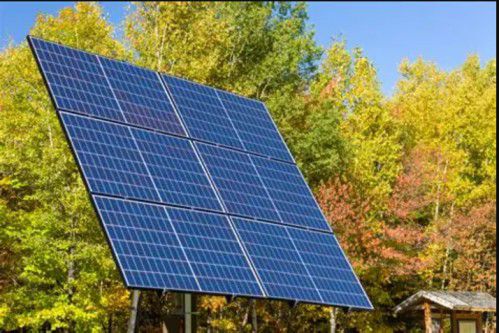
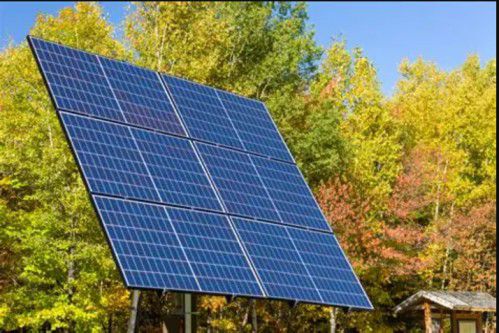
Choosing the right solar panel type for your home depends on your roof space, budget, and electricity consumption. Three main panel technologies are available in India — each suited to different household profiles. Here is how the leading options compare.
| Panel type | Efficiency | Price per watt (approx.) | Best for | Lifespan |
| Monocrystalline | 18–22% | Rs. 30–45 per watt | Limited roof space; high efficiency priority | 25–30 years |
| Polycrystalline | 15–17% | Rs. 22–30 per watt | Larger roofs; budget-conscious buyers | 20–25 years |
| Bifacial monocrystalline | 20–23% | Rs. 35–50 per watt | Maximum generation; open or elevated installations | 25–30 years |
| Thin-film (CIGS/CdTe) | 10–13% | Rs. 18–25 per watt | Flexible installations; low-light environments | 15–20 years |
Top solar panel brands available in India
- Adani Solar: One of India's largest domestic manufacturers. Monocrystalline panels rated at 400–540W per panel with 25-year performance warranty. Widely available through authorised installers across India
- Waaree Energies: India's largest solar panel exporter. Offers monocrystalline and bifacial panels with strong after-sales network. Commonly used in residential rooftop installations from 1–10 kW
- Tata Power Solar: Part of the Tata group, offering integrated rooftop solar solutions including panels, inverter, and installation. Known for service reliability and pan-India installer network
- Luminous Solar: Offers complete solar kits — panel, inverter, and battery — suited to off-grid and hybrid home installations. Strong distribution network in Tier 2 and Tier 3 cities
- Vikram Solar: Premium monocrystalline panels with high efficiency ratings. Often specified for installations where roof space is limited and maximum power output per square metre is required
Trade-off to note: Monocrystalline panels generate more electricity per square metre but cost more per watt than polycrystalline. If your roof has ample space and budget is a priority, polycrystalline delivers a lower cost per unit of electricity generated over the system's lifetime. If roof space is limited, monocrystalline or bifacial panels are the better investment despite the higher upfront cost.
Understanding the different solar panel parts and components can help you compare complete systems and choose the right setup for your home.