Exynos 2400 vs Snapdragon 8 Gen 3 - Which is Better

Exynos 2400 vs Snapdragon 8 Gen 3 - Which is Better

The Snapdragon 8 Gen 3 leads in overall performance, with a higher AnTuTu 11 score than the Exynos 2400.

Get a loan offer of up to Rs. 5 lakh

Quick approval | Flexible Tenure Options | Zero Approval Fees

In summary


Samsung Exynos 2400 and Snapdragon 8 Gen 3 are 4nm flagship mobile processors with different CPU and GPU designs. Exynos 2400 uses ten CPU cores and Xclipse 940 graphics, while Snapdragon 8 Gen 3 uses eight CPU cores and Adreno graphics.


  • Exynos 2400 uses a tri-cluster deca-core CPU with Cortex-X4 as its prime core.
  • Snapdragon 8 Gen 3 uses a Kryo CPU with one prime, five performance and two efficiency cores.
  • Exynos 2400 uses the Xclipse 940 GPU based on AMD RDNA 3 architecture.
  • Snapdragon 8 Gen 3 uses an Adreno GPU with hardware-accelerated ray tracing.
  • Both processors use a 4nm manufacturing process for their mobile platforms.
  • Exynos 2400 supports hardware-accelerated ray tracing for compatible mobile games.
  • Snapdragon 8 Gen 3 supports real-time hardware-accelerated ray tracing and Unreal Engine 5 Lumen.
  • Both processors include dedicated hardware for on-device artificial intelligence workloads.


With Bajaj Finance, you can convert the cost of your preferred smartphone into Easy EMIs at more than 1.5 lakh+ partner stores, including Reliance Digital, Croma, and Vijay Sales, making your purchase easier to manage.


How do Samsung Exynos 2400 and Snapdragon 8 Gen 3 compare?

The Exynos 2400 and Snapdragon 8 Gen 3 use different processor designs despite sharing a 4nm manufacturing process. Exynos 2400 has a deca-core CPU and Xclipse 940 GPU, while Snapdragon 8 Gen 3 uses an octa-core CPU and Adreno GPU. Both support hardware-accelerated ray tracing, on-device artificial intelligence and high-speed 5G connectivity. Their benchmark results also vary by test, so CPU, GPU, efficiency and sustained performance should be considered separately rather than relying on one score.


You can get smartphones through Easy EMIs when an eligible model is available at a partner store. You can visit more than 1.5 lakh+ partner stores across 4,000+ cities, including Jaipur, Lucknow, Kochi, and Bhopal. Choose your preferred model and use the Bajaj Finance Insta EMI Card or Easy EMI Loan. You can convert the purchase cost into Easy EMIs that suit your monthly budget. Zero down payment is available on select models. You can also check loan eligibility online in minutes before visiting the store.

How do the technical specifications of Samsung Exynos 2400 and Snapdragon 8 Gen 3 compare?

The technical specifications show that Exynos 2400 prioritises a ten-core CPU and AMD-based graphics, while Snapdragon 8 Gen 3 combines eight CPU cores with Adreno graphics and extensive memory and storage support.


General

Exynos 2400 is Samsung's 4nm mobile processor with a deca-core tri-cluster CPU, while Snapdragon 8 Gen 3 is Qualcomm's 4nm platform with an octa-core Kryo CPU.

SpecificationsSamsung Exynos 2400Snapdragon 8 Gen 3
Processor familyExynosSnapdragon
Process technology4nm4nm
CPUDeca-coreOcta-core
CPU architectureTri-clusterHeterogeneous multi-core
CPU prime coreCortex-X4 up to 3.2GHzKryo prime core up to 3.4GHz on specified platform
GPUXclipse 940Adreno
AI processorNPUHexagon NPU
ModemIntegrated 5G modemSnapdragon X75 5G Modem-RF System

Keep in mind: CPU core count is not a direct measure of performance. Architecture, clock speeds, GPU design, software optimisation and thermal behaviour also affect real-world results.


CPU architecture

Exynos 2400 uses ten CPU cores across three clusters, while Snapdragon 8 Gen 3 uses eight cores divided into one prime core, five performance cores and two efficiency cores.

CPU specificationSamsung Exynos 2400Snapdragon 8 Gen 3
CPU core count108
Prime coreCortex-X4, up to 3.2GHzCortex-X4, up to 3.3GHz or 3.4GHz depending on version
Performance cores2 Cortex-A720 up to 2.9GHz + 2 Cortex-A720 up to 2.6GHz5 performance cores up to 3.2GHz
Efficiency cores4 Cortex-A520 up to 2.0GHz2 efficiency cores up to 2.3GHz
ArchitectureArm 64-bit64-bit

Samsung confirms the Exynos 2400's tri-cluster deca-core design and Cortex-X4 CPU. Qualcomm specifies one prime core, five performance cores and two efficiency cores for Snapdragon 8 Gen 3, with the maximum clock depending on the platform version.


GPU and gaming

Exynos 2400 uses the Xclipse 940 GPU based on AMD RDNA 3, while Snapdragon 8 Gen 3 uses an Adreno GPU with hardware ray tracing and gaming technologies.

GPU specificationSamsung Exynos 2400Snapdragon 8 Gen 3
GPUXclipse 940Qualcomm Adreno
ArchitectureAMD RDNA 3Adreno architecture
Ray tracingHardware acceleratedHardware accelerated
Ray tracing generationSecond-generation ray tracing acceleratorsReal-time hardware-accelerated ray tracing
Gaming technologyVariable Rate Shading, FidelityFX Super ResolutionSnapdragon Game Super Resolution, Adreno Frame Motion Engine 2.0
Unreal Engine 5 supportNot specifiedLumen Global Illumination and Reflections

Samsung states that the Xclipse 940 is based on AMD RDNA 3 and includes hardware-accelerated ray tracing. Qualcomm lists real-time hardware ray tracing, Unreal Engine 5 Lumen support and Snapdragon Game Super Resolution for Snapdragon 8 Gen 3.


Pro tip: For gaming, GPU architecture and sustained thermal performance matter alongside benchmark scores. Both processors support hardware ray tracing, but they use different graphics architectures.


Artificial intelligence

Exynos 2400 includes an NPU for on-device artificial intelligence, while Snapdragon 8 Gen 3 uses Qualcomm's Hexagon NPU and fused AI accelerator architecture for supported AI workloads.

AI specificationSamsung Exynos 2400Snapdragon 8 Gen 3
AI hardwareNPUHexagon NPU
AI processingOn-device AIOn-device generative AI and other AI workloads
AI architectureNPUFused AI accelerator architecture
Precision supportNot specified in supplied official informationINT4, INT8, INT16 and FP16 support, subject to SKU
AI use casesTranslation and on-device AI featuresGenerative AI, image processing and other supported workloads

Samsung says Exynos 2400 delivers a 14.7-fold improvement in AI performance over Exynos 2200 in its stated comparison. Qualcomm says Snapdragon 8 Gen 3's Hexagon NPU delivers 98% faster performance and 40% improved performance-per-watt compared with its predecessor. These are manufacturer-reported generational comparisons, not direct Exynos-versus-Snapdragon measurements.


Memory and storage

Both processors support LPDDR5X memory and UFS 4.0 storage, while the Exynos 2400 supports memory speeds up to 4,200MHz and the Snapdragon 8 Gen 3 supports speeds up to 4,800MHz.

SpecificationSamsung Exynos 2400Snapdragon 8 Gen 3
Memory standardLPDDR5XLPDDR5X
Maximum memory speedUp to 4,200MHzUp to 4,800MHz
Maximum memory densityUp to 24GBUp to 24GB
Storage standardUFS 3.1, UFS 4.0UFS 4.0

What this means: The Snapdragon 8 Gen 3 supports a higher listed memory speed, while both processors can support up to 24GB of LPDDR5X memory. The Exynos 2400 additionally supports UFS 3.1 alongside UFS 4.0, giving device makers more storage-interface options.


Camera and imaging

Exynos 2400 supports camera configurations of up to 320MP, while Snapdragon 8 Gen 3 supports single-camera capture up to 200MP and uses the Qualcomm Spectra Cognitive ISP for image processing.

Camera specificationSamsung Exynos 2400Snapdragon 8 Gen 3
Maximum stated camera supportUp to 320MPUp to 200MP
Image processorIntegrated imaging systemQualcomm Spectra ISP
HDR processingSupportedMulti-frame HDR support
Video processingNot specified in supplied official informationUp to 8K HDR video capabilities
AI imagingOn-device AIAI-enhanced photo and video processing

Samsung states support for cameras up to 320MP. Qualcomm lists support for up to 200MP photo capture, triple-camera capture and real-time semantic segmentation through its Cognitive ISP. These maximum values do not mean every phone using the processors will have cameras at those resolutions.


Connectivity

Exynos 2400 supports high-speed 5G connectivity with download speeds of up to 12.12Gbps, while Snapdragon 8 Gen 3 uses the Snapdragon X75 modem system with download speeds of up to 10Gbps.

Connectivity specificationSamsung Exynos 2400Snapdragon 8 Gen 3
5G modemIntegratedSnapdragon X75 5G Modem-RF System
Maximum download speedUp to 12.12GbpsUp to 10Gbps
Satellite connectivityNTN satellite connections supportedNot specified in supplied official information
GNSSIntegrated GNSSSnapdragon Location Suite
Dual 5GNA5G Dual-SIM Dual-Active supported

The maximum speeds are theoretical platform capabilities. Actual network speeds depend on the smartphone design, carrier, spectrum, signal strength and network conditions.


 

What are users looking for in these processors?

The main questions around these processors involve gaming, AI features, CPU performance and long-term everyday workload handling.


Which processor is better for gaming performance

The Snapdragon 8 Gen 3 records a higher 3DMark Wild Life Extreme score of 4,676 compared with 3,812 for Exynos 2400 in the cited benchmark comparison. This test focuses on graphics performance, making it useful when assessing demanding 3D workloads. Both processors support hardware-accelerated ray tracing, but their GPUs use different architectures. Snapdragon uses Adreno graphics, while Exynos 2400 uses the AMD RDNA 3-based Xclipse 940 GPU. Actual gaming performance still depends on the phone's cooling system, software and game optimisation.


How do the processors handle artificial intelligence

Both processors include dedicated AI hardware for supported on-device workloads. Exynos 2400 uses an NPU, while Snapdragon 8 Gen 3 uses a Hexagon NPU and fused AI accelerator architecture. Samsung highlights on-device translation and AI processing, while Qualcomm supports generative AI and AI-enhanced camera processing. The manufacturers' claimed generational improvements use different comparison baselines, so they should not be treated as direct Exynos 2400 versus Snapdragon 8 Gen 3 benchmark results.


Which processor has more CPU cores

Exynos 2400 has ten CPU cores, while Snapdragon 8 Gen 3 has eight. Exynos uses one Cortex-X4 prime core, four Cortex-A720 performance cores and four Cortex-A520 efficiency cores. Snapdragon 8 Gen 3 uses one prime core, five performance cores and two efficiency cores. A higher core count does not automatically mean higher performance because the core architecture, clock speed, software scheduling and workload also influence results.

What are the benchmark scores of Samsung Exynos 2400 and Snapdragon 8 Gen 3?

Benchmark scores provide a numerical reference for processor performance, but results can differ between devices. Hardware, software optimisation, cooling, memory, and testing conditions can influence final scores.


BenchmarkSamsung Exynos 2400Snapdragon 8 Gen 3
AnTuTu 112,046,4352,345,563
Geekbench 6 single-core2,1152,203
Geekbench 6 multi-core6,8266,511
3DMark Wild Life Extreme3,8124,676

The figures show that Snapdragon 8 Gen 3 records a higher AnTuTu 11 and single-core score, while Exynos 2400 records a higher Geekbench 6 multi-core score.

What is the price of smartphones using Samsung Exynos 2400 and Snapdragon 8 Gen 3?

Smartphones powered by these processors are available across different flagship price segments. The following examples show devices using the exact processors and highlight their prices and key specifications.


SmartphoneProcessorPriceKey highlight
Samsung Galaxy S24Samsung Exynos 2400Rs. 74,9996.2-inch Dynamic AMOLED 2X display and 5G connectivity
Samsung Galaxy S24+Samsung Exynos 2400Rs. 99,9996.7-inch Dynamic AMOLED 2X display and flagship performance
OnePlus 12Snapdragon 8 Gen 3Rs. 64,9996.82-inch AMOLED display and 5G connectivity
iQOO 12Snapdragon 8 Gen 3Rs. 52,9996.78-inch AMOLED display and high-performance hardware

Disclaimer: Each model's features, availability, and pricing are subject to change and may vary. For the most accurate and up-to-date information, please visit the official website.


Before you decide, explore the latest offers. You may find a great deal on a model that matches your needs.

Save more with Smart Savings Calculator

Combine the best offers, EMI plans, and exclusive vouchers with Smart Savings Calculator to save big.

20k+ people used their offers at the store

What are my financing options to buy a mobile phone?

Bajaj Finance offers two ways to convert an eligible mobile purchase into monthly payments at 1.5 lakh+ partner stores across 4,000+ cities.

OptionLimitKey features
Bajaj Finance Insta EMI CardPre-approved limit up to Rs. 3 lakh3–60 months tenure; 1.5 lakh+ outlets; 1 million+ eligible products; zero annual fee
Bajaj Finance Easy EMI LoanLoan limit up to Rs. 5 lakh3–60 months tenure; basic KYC; suitable for higher-value purchases

Both options require physical presence at a partner store. The Insta EMI Card suits repeat, multi-category shoppers. The Easy EMI Loan suits a single higher-value purchase. A minimum CIBIL score of 650 applies to the Easy EMI Loan. 


Get a Bajaj Finance Easy EMI Loan of up to Rs. 5 lakh on your next mobile phone purchase. If you are an existing Bajaj Finance Insta EMI Card holder, you may have a pre-approved loan limit of up to Rs. 3 lakh. Choose repayment tenures of up to 60 months.

How do I buy a mobile phone on EMI at a Bajaj Finance partner store?

Upgrading to a new mobile is simple with Bajaj Finance in-store financing. The process usually takes 10–15 minutes.

  1. Browse models: Compare mobile brands, features, storage, and prices on Bajaj Mall before visiting.
  2. Find a partner store: Use the Bajaj Finance store locator to find Croma, Vijay Sales, or another authorised retailer.
  3. Check the mobile: Compare the display, camera, battery, processor, and storage in person.
  4. Choose an EMI option: Ask about the Insta EMI Card or Easy EMI Loan and confirm tenure and zero down payment eligibility.
  5. Complete payment: Once approved, complete the purchase and take the mobile home.

Enter your mobile number to check your loan eligibility.

You can also opt for the Bajaj Finance Insta EMI Card and split the cost of your mobile into affordable instalments. Check your eligibility today.

Explore more electronics: You can also use Easy EMIs for other eligible electronics available through Bajaj Finance partner stores.

What are the advantages of shopping with Bajaj Finance?

Bajaj Finance gives you financing choices that can match different purchase patterns and budgets.

  • Wide store network: Shop through 1.5 lakh+ partner stores across more than 4,000 cities.
  • Flexible repayment: Choose eligible repayment periods from 3 to 60 months.
  • Higher financing limit: The Easy EMI Loan can provide financing of up to Rs. 5 lakh.
  • Repeat shopping: The Insta EMI Card can suit shoppers buying across multiple categories.
  • Zero down payment: Select products can qualify for zero down payment offers.
  • Smart Savings Calculator: The calculator brings available dealer, brand, and scheme offers together to show potential savings.

For a phone priced around Rs. 40,000–Rs. 50,000, the Easy EMI Loan can be relevant when you want to finance one larger purchase. The Insta EMI Card can be useful if you expect to make more eligible purchases later.

Why use the Smart Savings Calculator

Bajaj Finance’s Smart Savings Calculator helps you unlock maximum savings every time you shop at partner stores. It brings together all available brand, dealer, and scheme offers—so you can see your total savings instantly and shop smarter with Easy EMIs.


1. Dealer offers - Grab exclusive in-store deals at over 1.5 lakh partner stores across India. Enjoy local discounts and special prices you will not find online.

2. Brand offers - Access limited-time discounts from top brands across electronics, appliances, and more. Discover brand-specific savings selected just for you.

3. Bajaj offers - Unlock exclusive Bajaj Finance deals on popular products—available only to our customers. More rewards, more value.

4. Scheme offers - Take advantage of time-sensitive offers on select EMI schemes. Get extra benefits after paying just 3 EMIs—visible during EMI selection at checkout.


Calculate your extra savings today!

vivo Y19

vivo Y19

4.5

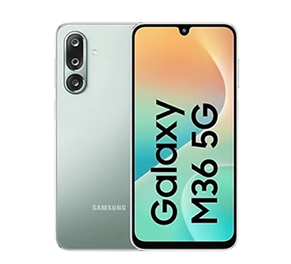
Samsung Galaxy M36 5G

Samsung Galaxy M36 5G

4.5

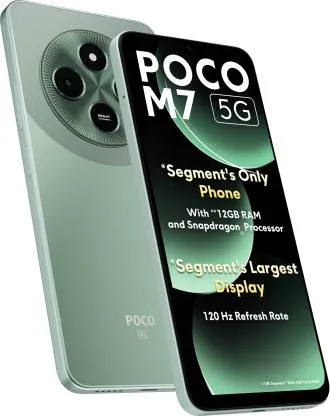
Poco M7 5G

Poco M7 5G

4.4

EMIs starting from

Rs. 1,083/month

Rs. 1,502/month

Rs. 831/month

Front camera

8 MP, f/2.0, (wide)

13MP (wide)

Motorised pop-up 32 MP, f/2.0, 26mm (wide), 1/2.8", 0.8µm Motorised pop-up 8 MP, 17mm (ultrawide)

Screen size

6.88-inch

6.7-inch

6.85-inch

RAM

6GB/8GB

6GB

8GB

Internal storage

256GB

128GB

128GB

Processor

Qualcomm SM4450 Snapdragon 4 Gen 2 (4 nm)

Exynos 1380 S5E8835

Qualcomm SDM675 Snapdragon 675 (11 nm)

Explore other Samsung smartphones

FAQs

EMI details

General

Can I get a smartphone on EMI?

Yes, you can easily upgrade to a new smartphone with Bajaj Finance's Easy EMI options. Whether you already have the Insta EMI Card or are new to it, here is how you can get started:



If you have the Bajaj Finance Insta EMI Card:

  • Explore smartphones on Bajaj Mall: Choose from top brands offering models with powerful processors, high-resolution cameras, and long-lasting batteries.
  • Visit a partner store: Check out the latest phones in person at any of 1.5 lakh partner stores across 4,000 cities.

  • Use your Insta EMI Card at checkout: Convert the total cost into Easy EMIs that fit your monthly budget.
  • Zero down payment on select models: Bring home your smartphone without paying anything upfront.


If you do not have an Insta EMI Card:

Check your Insta EMI Card eligibility online using your mobile number and OTP. If eligible, you can apply instantly and start shopping for your favourite smartphone easily and affordably.

The answer varies by workload and benchmark. In the cited comparison, Snapdragon 8 Gen 3 scores higher in AnTuTu 11, Geekbench 6 single-core and 3DMark Wild Life Extreme, while Exynos 2400 scores higher in Geekbench 6 multi-core. This means the processors have different strengths rather than one chip leading every test.

Exynos 2400 is designed for demanding mobile gaming and uses the Xclipse 940 GPU based on AMD RDNA 3 architecture. It also supports hardware-accelerated ray tracing and features such as Variable Rate Shading. Gaming performance depends on the smartphone's cooling system, software optimisation and game settings, so the processor alone does not determine frame rates.

Samsung Exynos 2400 has ten CPU cores, while Snapdragon 8 Gen 3 has eight. Exynos uses a tri-cluster architecture, while Snapdragon uses one prime core, five performance cores and two efficiency cores. Core count alone does not determine performance because the core design, clock speeds, software and workload also affect how quickly a processor completes tasks.

Both processors include dedicated AI hardware. Exynos 2400 uses an NPU for on-device AI processing, while Snapdragon 8 Gen 3 uses a Hexagon NPU and fused AI accelerator architecture. Samsung highlights on-device AI features, while Qualcomm supports generative AI and AI-enhanced image processing. Their manufacturers' AI improvement claims use different baselines, so those figures should not be directly compared.

Show More Show Less

Disclaimer

1. Bajaj Finance Limited (“BFL”) is a Non-Banking Finance Company (NBFC) and Prepaid Payment Instrument Issuer offering financial services viz., loans, deposits, Bajaj Pay Wallet, Bajaj Pay UPI, bill payments and third-party wealth management products. The details mentioned in the respective product/ service document shall prevail in case of any inconsistency with respect to the information referring to BFL products and services on this page. 

2. All other information, such as, the images, facts, statistics etc. (“information”) that are in addition to the details mentioned in the BFL’s product/ service document and which are being displayed on this page only depicts the summary of the information sourced from the public domain. The said information is neither owned by BFL nor it is to the exclusive knowledge of BFL. There may be inadvertent inaccuracies or typographical errors or delays in updating the said information. Hence, users are advised to independently exercise diligence by verifying complete information, including by consulting experts, if any. Users shall be the sole owner of the decision taken, if any, about suitability of the same.