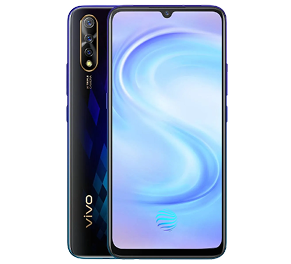
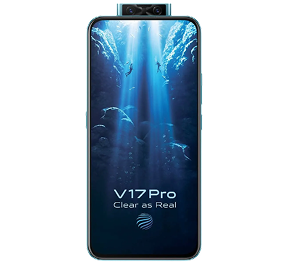
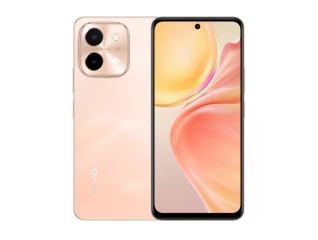
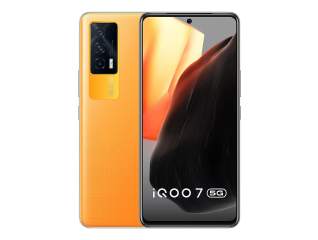
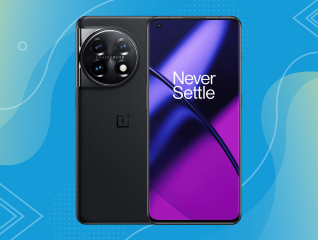
The iQOO 13 offers higher benchmark performance, a 144Hz display, a larger battery, and faster charging, while the vivo X200 provides a lighter body and 3x optical telephoto camera.
General
Both are premium dual-SIM 5G smartphones, but the vivo X200 is noticeably lighter at around 197-202 g compared with 213 g for the iQOO 13.
| Spec | iQOO 13 | vivo X200 |
|---|
| Model | iQOO 13 | X200 |
| Manufacturer | iQOO | vivo |
| SIM | Dual nano SIM | 2 nano SIMs or nano SIM + eSIM |
| Network support | 2G, 3G, 4G, 5G | 2G, 3G, 4G, 5G |
| Dimensions | Approx. 163.3 x 76.7 x 8.1 mm | 160.27 x 74.81 x 7.99 mm |
| Weight | 213 g | 197 g or 202 g, depending on colour |
| India availability | Available | Available |
| Warranty | 1-year manufacturer warranty | 1-year manufacturer warranty |
The vivo is smaller and at least 11 g lighter, making it easier to hold during long photography, reading, or video sessions. The iQOO carries a slightly larger battery and a bigger 6.82-inch screen, which contributes to its larger body.
Display and design
The iQOO 13 has the larger and sharper screen with a 6.82-inch 3168 x 1440 pixel AMOLED panel and refresh rate of up to 144Hz.
| Spec | iQOO 13 | vivo X200 |
|---|
| Display size | 6.82-inch | 6.67-inch |
| Display type | LTPO AMOLED | AMOLED |
| Resolution | 3168 x 1440 pixel | 2800 x 1260 pixel |
| Refresh rate | 1-144Hz | Up to 120Hz |
| Pixel density | 510 ppi | 460 ppi |
| High brightness mode | Up to 1,800 nits | Not confirmed |
| Local peak brightness | Not used as primary rating | Up to 4,500 nits |
| Fingerprint sensor | 3D ultrasonic in-display | Optical in-display |
| Water and dust resistance | IP68 and IP69 | IP68 and IP69 |
The iQOO provides higher resolution, pixel density, and refresh rate, which can benefit detailed games, text, and supported high-frame-rate content. The vivo has a smaller display but reaches a higher verified local peak brightness figure under supported conditions.
→ Keep in mind: Peak brightness values apply under specific conditions and do not represent normal full-screen brightness during everyday use.
Performance and software
The iQOO 13 uses Snapdragon 8 Elite with CPU speeds reaching around 4.3 GHz, while the vivo X200 uses Dimensity 9400 reaching up to 3.626 GHz.
| Spec | iQOO 13 | vivo X200 |
|---|
| Processor | Qualcomm Snapdragon 8 Elite | MediaTek Dimensity 9400 |
| Processor cores | Octa-core | Octa-core |
| Maximum CPU speed | Up to about 4.3 GHz | Up to 3.626 GHz |
| GPU | Adreno 830 | Immortalis-G925 |
| Manufacturing process | 3 nm | 3 nm |
| RAM | 12GB / 16GB | 12GB / 16GB |
| RAM type | LPDDR5X Ultra | LPDDR5X |
| Operating system at launch | Android 15 | Android 15 |
| User interface | Funtouch OS 15 | Funtouch OS 15 |
| Storage | 256GB / 512GB | 256GB / 512GB |
| Storage type | UFS 4.0 / UFS 4.1 | UFS 4.0 |
The iQOO also has a Supercomputing Chip Q2 that supports gaming functions such as frame interpolation and higher-resolution rendering in compatible games.
→ Buy this if: Choose the iQOO 13 if demanding gaming, emulation, or sustained processor-heavy work is a priority. Its 7,000 mm² vapour chamber is designed to help control heat during heavy use.
Camera features
Both phones have three 50MP rear cameras, but the vivo X200 provides a telephoto camera with 3x optical zoom, while the iQOO focuses on portrait and general photography.
| Spec | iQOO 13 | vivo X200 |
|---|
| Rear camera setup | Triple 50MP | Triple 50MP |
| Main camera | 50MP Sony IMX921, OIS | 50MP Sony IMX921, OIS |
| Telephoto camera | 50MP Sony IMX816, 4x lossless zoom | 50MP Sony IMX882, OIS, 3x optical zoom |
| Ultra-wide camera | 50MP | 50MP, 119-degree field of view |
| Front camera | 32MP | 32MP |
| Rear video recording | Up to 8K / 4K modes | Up to 4K at 60 fps |
| Front video recording | Up to 4K at 60 fps | Up to 4K at 60 fps |
| Optical image stabilisation | Main and telephoto | Main and telephoto |
The vivo's 3x optical telephoto camera can be useful for portraits, travel photography, buildings, stage events, and subjects that are farther away. The iQOO provides 50MP resolution across all three rear cameras and supports a range of portrait focal lengths and computational imaging modes.
→ Pro tip: If zoom photography is important, optical zoom matters more than digital enlargement. The vivo provides a clearly verified 3x optical telephoto system.
Storage and connectivity
Both phones provide up to 512GB storage, LPDDR5X-class memory, Bluetooth 5.4, NFC, and 5G connectivity.
| Spec | iQOO 13 | vivo X200 |
|---|
| Storage options | 256GB / 512GB | 256GB / 512GB |
| Expandable storage | No | No |
| Wi-Fi | Wi-Fi 7 | Wi-Fi 6 / Wi-Fi 7 support |
| Bluetooth | Bluetooth 5.4 | Bluetooth 5.4 |
| GPS | Supported | Supported |
| NavIC | Supported | Supported |
| NFC | Yes | Yes |
| USB | USB Type-C | USB Type-C, USB 2.0 |
| IR blaster | Yes | Yes |
| 3.5 mm headphone jack | No | No |
Neither phone supports microSD expansion. If you shoot a lot of high-resolution video or keep several large games, consider the 512GB configuration before purchase.
Battery and other features
The iQOO 13 has a 6,000 mAh battery with 120 W charging, compared with the vivo X200's 5,800 mAh battery and 90 W charging.
| Spec | iQOO 13 | vivo X200 |
|---|
| Battery capacity | 6,000 mAh | 5,800 mAh |
| Wired charging | 120 W | 90 W |
| Charging claim | About 1%-50% in 14 minutes under test conditions | Charging speed varies with usage |
| Bypass charging | Supported | Not confirmed |
| Stereo speakers | Yes | Supported |
| Fingerprint sensor | Ultrasonic | Optical |
| Water resistance | IP68 | IP68 |
| High-pressure water protection | IP69 | IP69 |
The iQOO combines 200 mAh more battery capacity with higher 120 W charging power. iQOO states that the phone can charge from 1% to 50% in around 14 minutes and reach 100% in around 30 minutes under its laboratory conditions. Real charging times can vary.