Published Apr 22, 2026 · 3 Min Read

What does speaker wattage actually mean

Speaker wattage simply shows how much power a speaker can handle, measured in watts. Many people assume it defines sound quality, but it actually indicates how loud a speaker can play without distortion. There are two key figures: RMS wattage, which reflects continuous power handling during normal use, and peak wattage, which is the maximum power a speaker can take in short bursts. Knowing the difference helps you choose the right speaker for home or outdoor use.


If you are looking for a new speaker, head to any of Bajaj Finserv’s 1.5 lakh partner stores in 4,000 cities in India. Choose your ideal model, pay with Easy EMIs, and enjoy zero down payment on select deals. Simply check your loan eligibility now and bring home your desired speaker without worrying about overspending.
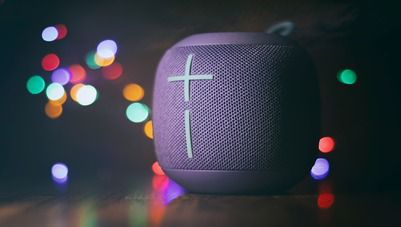

Speaker wattage by room size: 60W vs 100W vs 240W

Choosing the right wattage for your space is essential for balanced, distortion-free sound. Pairing a Bluetooth speaker or home audio system to your room size ensures you get the best audio experience without overpowering or underwhelming your space.


Room sizeRecommended wattageIdeal speaker typeUsage
Up to 100 sq. ft. (Bedroom / Study)10W – 30WPortable / Bluetooth SpeakerPersonal listening, background music
100–200 sq. ft. (Living Room)40W – 60WBookshelf / 2.1 Speaker SystemMovies, casual listening, small gatherings
200–400 sq. ft. (Large Hall / Lounge)80W – 100WFloorstanding / SoundbarHouse parties, home theatre setups
400–800 sq. ft. (Open Area / Terrace)150W – 240WPA System / Tower SpeakersLarge gatherings, outdoor events
Above 800 sq. ft. (Commercial / Venue)300W and aboveProfessional PA / Line ArrayEvents, commercial spaces, auditoriums

How to calculate speaker power consumption

Understanding how much electricity your speaker actually uses helps you manage energy costs and choose models from the best speaker brands that balance audio performance with efficient power draw.


Formula: Units (kWh) = Wattage x Hours of Use divided by 1000


  • Identify the RMS wattage: Check the speaker manual or label for the RMS wattage rating. This is the figure to use for realistic power consumption calculations, not the peak wattage.
  • Estimate daily usage hours: Calculate how many hours per day the speaker is actively in use. Standby mode also draws a small amount of power on many models.
  • Apply the formula: Multiply the wattage by daily hours of use, then divide by 1,000 to get daily units consumed in kWh.
  • Calculate monthly consumption: Multiply the daily kWh figure by 30 to estimate your monthly electricity usage from the speaker.
  • Factor in amplifier draw: In home theatre or hi-fi setups, the amplifier or receiver draws additional power separately from the speaker. Include this in your overall calculation.
  • Check idle and standby draw: Many powered speakers consume 2W to 8W even in standby. Over a month, this adds a small but measurable amount to your electricity bill.

Matching speaker wattage to your usage needs

Selecting the right wattage is not simply about buying the most powerful speaker available. It is about matching output capability to your actual listening environment and habits.


  • Personal and bedroom use: A 10W to 30W Bluetooth or portable speaker is more than sufficient for close-range personal listening. Higher wattage in a small room creates unnecessary loudness and distortion at high volumes.
  • Living room and home theatre: A 2.1 or 5.1 system rated between 40W and 100W RMS delivers rich, room-filling sound for movies and music without straining the speakers or the amplifier.
  • Outdoor and party use: For open-air settings, sound disperses quickly. Choose a speaker rated at 150W or above to maintain adequate volume and clarity across a wider area.
  • Studio and critical listening: In recording or mixing environments, accuracy matters more than loudness. Studio monitors rated between 30W and 80W per channel are designed for flat, precise sound reproduction.
  • Commercial and event use: Venues and events require professional-grade systems rated at 300W or more, often with separate subwoofers and line arrays to achieve consistent coverage across large spaces.
  • Children and casual use: For light background music in small spaces, a 5W to 15W portable speaker is adequate, energy-efficient and easier to manage for everyday household use.

Energy-efficient speaker tips for lower bills

Enjoying great sound does not have to come at the cost of high electricity bills. A few mindful habits and smart choices from a reliable speaker buying guide can significantly reduce the energy your audio setup consumes.


  • Choose class D amplification: Speakers with Class D amplifiers are significantly more energy-efficient than Class A or Class AB designs, converting more power into sound with less heat and waste.
  • Turn off speakers when not in use: Many powered speakers and soundbars continue drawing power in standby mode. Switching them off at the mains when not in use prevents unnecessary consumption.
  • Match wattage to room size: Oversized speakers running at low volumes are inefficient. Using a right-sized speaker at moderate volume is more energy-efficient and delivers better sound quality.
  • Use sleep and auto-off features: Many modern speakers include an auto-off or sleep timer function. Enabling this ensures the speaker powers down automatically after a set period of inactivity.
  • Opt for battery-powered portables for light use: For casual listening in small spaces, a battery-powered Bluetooth speaker consumes far less electricity than a mains-powered system running continuously.
  • Reduce bass-heavy EQ settings: Heavy bass requires more amplifier power to reproduce. Moderating bass boost settings reduces power draw noticeably over extended listening sessions.


Get electronics and appliances on Easy EMIs with Bajaj Finserv


Upgrading your home with the latest electronics and appliances is now easier and more affordable with Bajaj Finserv’s flexible financing options. Follow these steps to get started:


  • Explore products on Bajaj Mall: Browse a wide range of electronics and appliances from trusted brands. Compare features like energy ratings, storage capacity, performance settings, and design to choose the right product for your home.
  • Visit a partner store: Once you shortlist a model, step into any of Bajaj Finserv’s 1.5 lakh partner stores across 4,000 cities in India. See the product in person, talk to experts, and make a confident decision.
  • Choose the Easy EMI Loan option: At checkout, select the Bajaj Finserv Easy EMI Loan. Avail financing of up to Rs. 5 lakh and split the cost into convenient monthly instalments. Some products also come with a zero down payment option.
  • Check your loan eligibility online: Plan better by checking your loan eligibility in minutes. Simply enter your mobile number and OTP to know your pre-approved limit.
  • Use the EMI Network Card for purchases up to Rs. 3 lakh: Already own the Bajaj Finserv EMI Network Card? Use it for instant, paperless checkout and convert your purchases of up to Rs. 3 lakh into Easy EMIs.

FAQ

Can I buy a speaker on EMI?

Yes, you can easily upgrade to a new speaker with Bajaj Finserv’s Easy EMI options. Whether you already have the EMI Network Card or are new to it, here’s how you can get started:


If you have the Bajaj Finserv EMI Network Card:

  • Explore speakers on Bajaj Mall: Choose from top brands offering models with powerful sound, long battery life, and rugged, travel-friendly designs.
  • Visit a partner store: Check out the latest speakers in person at any of1.5 lakh partner stores across 4,000 cities.
  • Use your EMI Network Card at checkout: Convert the total cost into Easy EMIs that fit your monthly budget.
  • Zero down payment on select models: Bring home your speaker without paying anything upfront.


If you do not have an EMI Network Card:

Check your Insta EMI Card eligibility online using your mobile number and OTP. If eligible, you can apply instantly and start shopping for your favourite speaker easily and affordably.

How many watts do I need for a house party?

For a house party in an average Indian living room or hall of 200 to 400 sq. ft., a speaker system rated between 80W and 150W RMS is generally sufficient. For larger open areas or terraces, consider 200W to 300W to maintain volume and clarity across the space. Always account for background noise levels and the number of guests, as these factors affect the perceived loudness significantly.

Is a 60W speaker enough for a bedroom or small room?

A 60W speaker is more than adequate for a bedroom or small room. In fact, for spaces up to 150 sq. ft., even a 20W to 30W speaker delivers ample volume for comfortable listening. A 60W speaker in a small room will rarely need to exceed 30 to 40 percent of its volume capacity. What matters more in a small room is sound quality and frequency response rather than raw wattage.

Does a higher wattage speaker consume more electricity?

Not necessarily during typical use. A 200W speaker running at low volume consumes far less electricity than its maximum rated wattage suggests. Power consumption depends on actual playback volume, not the speaker's maximum rating. However, higher wattage powered speakers and amplifiers do draw more power at idle and peak loads. For everyday casual listening, the difference in electricity cost between a 60W and a 200W speaker is relatively minor.

Why do two speakers with the same wattage sound different?

Wattage only measures power handling, not sound quality. Two speakers with identical wattage can sound very different due to variations in driver quality, cabinet design, frequency response, sensitivity rating and crossover components. A speaker with higher sensitivity produces more volume from the same wattage. Additionally, the type of amplifier, the quality of internal components and the acoustic design of the enclosure all play a significant role in determining the final sound output.

Show More Show Less

Bajaj Finserv app for all your financial needs and goals

Trusted by 50 million+ customers in India, Bajaj Finserv App is a one-stop solution for all your financial needs and goals.

You can use the Bajaj Finserv App to:

  • Apply for loans online, such as Instant Personal Loan, Home Loan, Business Loan, Gold Loan, and more.
  • Invest in fixed deposits and mutual funds on the app.
  • Choose from multiple insurance for your health, motor and even pocket insurance, from various insurance providers.
  • Pay and manage your bills and recharges using the BBPS platform. Use Bajaj Pay and Bajaj Wallet for quick and simple money transfers and transactions.
  • Apply for Insta EMI Card and get a pre-qualified limit on the app. Explore over 1 million products on the app that can be purchased from a partner store on Easy EMIs.
  • Shop from over 100+ brand partners that offer a diverse range of products and services.
  • Use specialised tools like EMI calculators, SIP Calculators
  • Check your credit score, download loan statements and even get quick customer support—all on the app.

Download the Bajaj Finserv App today and experience the convenience of managing your finances on one app.

Disclaimer

1. Bajaj Finance Limited (“BFL”) is a Non-Banking Finance Company (BAJAJ FINANCE) and Prepaid Payment Instrument Issuer offering financial services viz., loans, deposits, Bajaj Pay Wallet, Bajaj Pay UPI, bill payments and third-party wealth management products. The details mentioned in the respective product/ service document shall prevail in case of any inconsistency with respect to the information referring to BFL products and services on this page.

2. All other information, such as, the images, facts, statistics etc. (“information”) that are in addition to the details mentioned in the BFL’s product/ service document and which are being displayed on this page only depicts the summary of the information sourced from the public domain. The said information is neither owned by BFL nor it is to the exclusive knowledge of BFL. There may be inadvertent inaccuracies or typographical errors or delays in updating the said information. Hence, users are advised to independently exercise diligence by verifying complete information, including by consulting experts, if any. Users shall be the sole owner of the decision taken, if any, about suitability of the same.