Published Apr 26, 2026 · 3 Min Read

What is stereo sound

Stereo sound uses two channels—left and right—to make audio feel more natural, like how our ears hear in real life. Unlike mono, which plays the same sound through one channel, stereo separates the audio between both sides. This creates a sense of width and direction, making music, movies and games more immersive. From home theatres and music systems to phones and laptops, stereo has become the standard format for modern media worldwide.


If you are looking for a new speaker, head to any of Bajaj Finserv’s 1.5 lakh partner stores in 4,000 cities in India. Choose your ideal model, pay with Easy EMIs, and enjoy zero down payment on select deals. Simply check your loan eligibility now and bring home your desired speaker without worrying about overspending.

How do stereo speakers work

Stereo speakers produce sound through a carefully coordinated process involving multiple components working together. Understanding how each element contributes to the final output helps you appreciate what separates a good stereo system from a poor one.


  1. Two‑channel audio signal processing: Stereo sound comes from two separate channels—left and right. The amplifier sends each channel to its matching speaker, so they play different parts of the audio.
  2. The speaker driver converts signals to sound: Each speaker has a driver with a cone, coil and magnet. It turns the electrical signal into vibrations, which move air and create sound waves.
  3. The crossover splits frequencies: Most stereo speakers have a tweeter for high sounds and a woofer for low sounds. A crossover divides the signal so each driver plays only the frequencies it is best at.
  4. The enclosure shapes the sound: The cabinet around the drivers controls airflow and prevents sound waves from cancelling each other. A good design improves bass and overall balance.
  5. Stereo imaging creates a soundstage: When placed correctly, two speakers make it seem like instruments and voices are coming from different positions between them, creating a realistic listening experience.
  6. Amplification drives the speakers: The amplifier boosts the audio signal to power the drivers and keeps both channels balanced, ensuring accurate stereo sound.

How do stereo speakers compare to mono speakers

Understanding the difference between stereo and mono helps clarify why stereo has become the dominant standard for music and home entertainment, and when mono might still be the more practical choice for specific applications.


ParameterStereo speakersMono speaker
Number of channelsTwo (left and right)One
Spatial audio experienceYes, creates width and depthNo, flat and centred sound
SoundstageWide and immersiveNarrow or absent
Number of speaker unitsTwo or moreOne
Best forMusic, home theatre, gamingVoice calls, announcements, background audio
Setup complexityRequires correct positioningSimple, single placement
Audio accuracyHigher, more detail and separationLower, all frequencies combined
Typical use caseLiving rooms, studios, headphonesPortable speakers, PA systems, radios
Price rangeModerate to premiumBudget to moderate
Power requirementHigher (two channels)Lower (single channel)

What are the benefits of stereo sound

Stereo sound offers a range of tangible listening advantages over mono that make it the preferred choice for music enthusiasts, home theatre users and anyone who wants a more engaging and accurate audio experience.


  1. Natural and realistic listening: Humans hear with both ears. Stereo copies this by sending different sounds to each ear, making audio feel more real than mono.
  2. Clearer instruments and vocals: In stereo mixes, instruments and voices are placed across the soundstage. This separation makes each part easier to hear and enjoy.
  3. More emotional connection: Stereo’s spatial effect makes music and films feel more engaging, helping listeners connect more deeply than with mono.
  4. Accurate film and gaming audio: Stereo reproduces directional sounds—like a car moving left to right—making movies and games more immersive.
  5. Better bass and sound range: Stereo systems, especially with subwoofers, deliver fuller bass, cleaner mids and sharper highs compared to mono.

Where are stereo speakers used

Stereo speakers are found across a remarkably wide range of environments and applications, reflecting how fundamental two-channel audio has become to modern life in India and globally.


  • Home music systems: Stereo speaker pairs with an amplifier are the base of most home music setups, from small bookshelf speakers to large floorstanding systems.
  • Home theatre and living rooms: Stereo speakers act as the left and right channels, giving clearer dialogue, music and effects. Even a basic two‑speaker setup is far better than TV speakers.
  • Computer and desktop audio: Small stereo speakers for laptops or desktops give much better sound for music, calls, gaming and content creation than built‑in speakers, especially in the Rs. 5,000–15,000 range.
  • Recording studios: Studio monitors are special stereo speakers made for accurate sound. Engineers use them to mix and master music so it plays correctly everywhere.
  • Retail and hospitality: Restaurants, hotels, shops and offices use stereo systems to create pleasant background sound, which feels more natural than mono PA systems.
  • Gaming setups: Gamers depend on stereo positioning to hear footsteps, gunfire and effects. Good stereo speakers—or surround systems built on stereo—boost both immersion and performance.

What are the different types of stereo speaker systems

Stereo speakers are available in several distinct configurations, each suited to a different room size, budget and listening application. Understanding these types helps you identify the most appropriate system for your specific needs.


  • Bookshelf stereo speakers: Compact two-way speakers designed to sit on a shelf, desk or dedicated speaker stands. They are well-suited for small to medium rooms and desktop listening setups, offering excellent sound quality relative to their size at a wide range of price points from budget to audiophile grade.
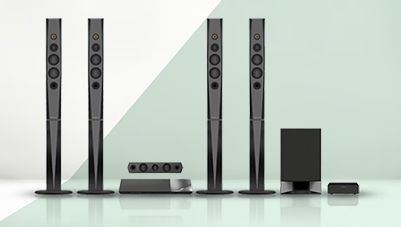
  • Floorstanding or tower speakers: Large, floor-standing cabinets containing multiple drivers including dedicated woofers, midrange drivers and tweeters. They deliver the most powerful and extended sound of any passive stereo speaker type and are best suited for large living rooms and dedicated listening spaces where their physical presence and bass output can be fully appreciated.
  • Soundbars with stereo output: Compact all-in-one speaker bars that contain left and right channel drivers within a single enclosure. While they do not create a true stereo soundstage in the traditional sense, quality soundbars deliver a significant improvement over television speakers and are a practical space-saving solution for living room audio.
  • Active or powered stereo speakers: Speakers with built-in amplifiers that connect directly to an audio source without requiring a separate amplifier or receiver. Popular in desktop, studio and compact home audio setups, they offer a streamlined and cost-effective stereo solution that reduces the total equipment footprint.
  • 2.1 stereo speaker systems: A two-channel stereo system combined with a dedicated subwoofer for enhanced bass reproduction. The 2.1 configuration is popular for computer audio, compact home entertainment and gaming setups where a full floor standing system is impractical but strong bass performance is still desired.

How do you choose the right stereo speaker

Selecting the right stereo speaker system requires balancing your room size, listening preferences, source equipment and budget. These pointers will help you navigate the wide range of options available in the Indian market and arrive at the most suitable choice for your setup.


  1. Match speaker size to room: Bookshelf speakers suit rooms up to 150 sq. ft. Floorstanding models work best in rooms over 200 sq. ft. Oversized speakers in small rooms cause too much bass, while small speakers in big rooms sound weak.
  2. Choose active or passive: Active speakers are easy and all‑in‑one. Passive speakers with a separate amplifier give more flexibility and better long‑term performance.
  3. Check sensitivity and amp match: Sensitivity shows how loud a speaker gets with a given power. Higher sensitivity means more volume from a low‑power amp—important if you are using a budget amplifier.
  4. Look at frequency range: A wider range, especially below 50 Hz, means stronger bass. This matters for genres like electronic, hip‑hop or classical music.
  5. Listen before buying: Specs do not tell the whole story. Visit a showroom and test speakers with music you know to see if the sound suits you.
  6. Plan total system cost: Speakers are just one part. Budget for the amp, cables and stands. A balanced system with mid‑range speakers and a good amp often beats expensive speakers with a weak amp.


Get electronics and appliances on Easy EMIs with Bajaj Finserv


Upgrading your home with the latest electronics and appliances is now easier and more affordable with Bajaj Finserv’s flexible financing options. Follow these steps to get started:


  • Explore products on Bajaj Mall: Browse a wide range of electronics and appliances from trusted brands. Compare features like energy ratings, storage capacity, performance settings, and design to choose the right product for your home.
  • Visit a partner store: Once you shortlist a model, step into any of Bajaj Finserv’s 1.5 lakh partner stores across 4,000 cities in India. See the product in person, talk to experts, and make a confident decision.
  • Choose the Easy EMI Loan option: At checkout, select the Bajaj Finserv Easy EMI Loan. Avail financing of up to Rs. 5 lakh and split the cost into convenient monthly instalments. Some products also come with a zero down payment option.
  • Check your loan eligibility online: Plan better by checking your loan eligibility in minutes. Simply enter your mobile number and OTP to know your pre-approved limit.
  • Use the EMI Network Card for purchases up to Rs. 3 lakh: Already own the Bajaj Finserv EMI Network Card? Use it for instant, paperless checkout and convert your purchases of up to Rs. 3 lakh into Easy EMIs.

FAQ

Can I buy speaker on EMI?

Yes, you can easily upgrade to a new speaker with Bajaj Finserv’s Easy EMI options. Whether you already have the EMI Network Card or are new to it, here’s how you can get started:


If you have the Bajaj Finserv EMI Network Card:

  • Explore speakers on Bajaj Mall: Choose from top brands offering models with powerful sound, long battery life, and rugged, travel-friendly designs.
  • Visit a partner store: Check out the latest speakers in person at any of1.5 lakh partner stores across 4,000 cities.
  • Use your EMI Network Card at checkout: Convert the total cost into Easy EMIs that fit your monthly budget.
  • Zero down payment on select models: Bring home your speaker without paying anything upfront.


If you do not have an EMI Network Card:

Check your Insta EMI Card eligibility online using your mobile number and OTP. If eligible, you can apply instantly and start shopping for your favourite speaker easily and affordably.

What are stereo speakers?

Stereo speakers are a pair of audio speakers, one for the left channel and one for the right, that work together to reproduce sound in a way that creates a sense of width, depth and directionality. By delivering different audio information to each ear, stereo speakers replicate the way we naturally hear sound in the real world, making music, films and games feel more immersive and lifelike than a single mono speaker can achieve. They are the standard for home audio, music systems and entertainment setups across India.

What is the difference between stereo and mono speakers?

 Mono speakers use a single audio channel and play identical sound regardless of how many speaker units are present, resulting in a flat, centred sound with no spatial dimension. Stereo speakers use two separate channels, left and right, each carrying different audio information, which creates a soundstage with width, depth and positional accuracy. The difference is most noticeable when listening to music, where stereo separation allows individual instruments and vocals to occupy distinct positions across the listening space.

Are stereo speakers better than mono speakers?

For music listening, home theatre and gaming, stereo speakers are significantly better than mono because they deliver spatial audio, instrument separation and a realistic soundstage that mono cannot replicate. However, mono speakers are more practical and cost-effective for applications where audio directionality is unimportant, such as voice announcements, background music in large commercial spaces or portable outdoor listening where speaker positioning cannot be controlled. The better choice depends entirely on the intended use and listening environment.

Where are stereo speakers used?

Stereo speakers are used across a wide range of environments including home music systems, living room home theatre setups, desktop computer audio, recording studios, gaming setups, retail stores, restaurants and hotels. They are the standard speaker configuration for virtually all consumer audio products including soundbars, hi-fi systems and multimedia speaker sets. Wherever music, film or interactive audio content is consumed with an expectation of quality and spatial realism, stereo speakers are the appropriate and preferred choice.

How do you choose the right stereo speaker?

Start by matching the speaker size to your room dimensions, then decide between active powered speakers for simplicity or passive speakers for upgrade flexibility. Check sensitivity ratings for amplifier compatibility, evaluate the frequency response range for your preferred music genres and consider the total system cost including amplifier, cables and stands. Where possible, audition shortlisted models with familiar music before purchasing, as tonal character is subjective and specifications alone do not fully capture how a speaker sounds in a real listening environment.

Show More Show Less

Bajaj Finserv app for all your financial needs and goals

Trusted by 50 million+ customers in India, Bajaj Finserv App is a one-stop solution for all your financial needs and goals.

You can use the Bajaj Finserv App to:

  • Apply for loans online, such as Instant Personal Loan, Home Loan, Business Loan, Gold Loan, and more.
  • Invest in fixed deposits and mutual funds on the app.
  • Choose from multiple insurance for your health, motor and even pocket insurance, from various insurance providers.
  • Pay and manage your bills and recharges using the BBPS platform. Use Bajaj Pay and Bajaj Wallet for quick and simple money transfers and transactions.
  • Apply for Insta EMI Card and get a pre-qualified limit on the app. Explore over 1 million products on the app that can be purchased from a partner store on Easy EMIs.
  • Shop from over 100+ brand partners that offer a diverse range of products and services.
  • Use specialised tools like EMI calculators, SIP Calculators
  • Check your credit score, download loan statements and even get quick customer support—all on the app.

Download the Bajaj Finserv App today and experience the convenience of managing your finances on one app.

Disclaimer

1. Bajaj Finance Limited (“BFL”) is a Non-Banking Finance Company (BAJAJ FINANCE) and Prepaid Payment Instrument Issuer offering financial services viz., loans, deposits, Bajaj Pay Wallet, Bajaj Pay UPI, bill payments and third-party wealth management products. The details mentioned in the respective product/ service document shall prevail in case of any inconsistency with respect to the information referring to BFL products and services on this page.

2. All other information, such as, the images, facts, statistics etc. (“information”) that are in addition to the details mentioned in the BFL’s product/ service document and which are being displayed on this page only depicts the summary of the information sourced from the public domain. The said information is neither owned by BFL nor it is to the exclusive knowledge of BFL. There may be inadvertent inaccuracies or typographical errors or delays in updating the said information. Hence, users are advised to independently exercise diligence by verifying complete information, including by consulting experts, if any. Users shall be the sole owner of the decision taken, if any, about suitability of the same.