








₹ 2 lakh – ₹ 80 lakh
Check your pre-approved offer and other benefits
Enter mobile and OTP | Check offer | Know your exact loan terms

Best Business Ideas in India
-
In summary
The right MSME business idea depends on your skills, available funds, local demand, and ability to manage operations. Service businesses can need less initial spending when you already own the required equipment. Product-based ventures may require inventory, materials, packaging, or delivery costs.
- Freelance development, digital marketing, and online tutoring can be started from home if you already have the necessary skills and equipment.
- E-commerce, food, tailoring, and kiosk businesses need careful planning for stock, materials, equipment, permissions, and fulfilment.
- Calculate setup costs, monthly expenses, working capital, and break-even sales before investing.
- Government programmes may provide eligible businesses with credit support, training, technology assistance, or market access; verify current scheme rules before relying on them.
Test demand with potential customers, build a cash-flow forecast, and avoid large commitments until the business model has been validated.
How do you choose the right MSME business idea?
-
Start with a customer need you understand and a product or service you can deliver consistently. Assess your skills, available capital, local competition, supplier access, and the time you can commit. Calculate break-even sales before signing a lease, buying machinery, or ordering inventory.
- Demand: speak to prospective customers and test whether they will pay your proposed price.
- Setup costs: list equipment, deposits, software, training, licences, and initial stock.
- Monthly costs: estimate rent, wages, utilities, marketing, packaging, logistics, and subscriptions.
- Cash-flow timing: compare when customers pay with when you must pay suppliers, staff, and taxes.
- Risk: decide how much you can afford to lose if sales take longer than expected.
What are 10 MSME business ideas to consider?
-
These MSME business ideas cover service-based and product-based models. Actual costs and outcomes depend on location, experience, demand, and the scale of your operation.
1. Freelance developer
Build websites, applications, integrations, or business software. You need technical skills, a suitable computer, internet access, and a portfolio that demonstrates your work. Start with a clear service, such as website maintenance or small-business automation. Revenue depends on project scope, pricing, repeat work, and your ability to find clients.
2. Personal trainer
Offer fitness coaching, yoga, or tailored exercise plans in person or online. Check the qualifications, insurance, and safety measures appropriate to your services. Equipment needs depend on your training model. Client retention, session pricing, referrals, and available hours influence revenue.
3. E-commerce store owner
Sell products through an online store or marketplace. Budget for sourcing, inventory, packaging, shipping, platform fees, returns, customer support, and marketing. Test demand with a focused range before buying large quantities. Track margin after discounts, shipping, returns, and marketplace charges.
4. Home chef and meal delivery
Prepare regional meals, snacks, or customised menus for local customers. Estimate ingredient costs per portion, packaging, delivery, wastage, and preparation time. Check applicable food-safety registration and local requirements before selling. Test a limited menu and delivery area before investing in a larger kitchen.
5. Handmade crafts business
Sell jewellery, gifts, décor, or handmade products online, at exhibitions, or through local retailers. Include material costs, production time, packaging, platform fees, and shipping in your pricing. Small batches can test demand before you invest in bulk materials. Custom orders and wholesale partnerships may support growth.
6. Online tutor
Teach school subjects, test preparation, languages, or professional skills online. You may need a computer or phone, stable internet, lesson plans, and a quiet teaching space. Define your subject and learner group before marketing. Account for preparation time, cancellations, platform charges, and student retention.
7. Event planner
Coordinate weddings, corporate events, and private functions. Build relationships with venues, caterers, decorators, photographers, and other suppliers. Use written scopes, payment milestones, and cancellation terms. Cash flow matters because supplier deposits may be due before the client pays the full amount.
8. Digital marketing services
Offer search engine optimisation, social media management, content production, analytics, or paid campaign management. Build practical skills and a portfolio before promising results you cannot substantiate. Agree on deliverables, reporting, and budgets. You can grow by specialising or hiring additional support.
9. Food kiosk or franchise
Run a kiosk, takeaway counter, or franchise outlet. Costs may include premises, equipment, licences, ingredients, staff, branding, franchise fees, and working capital. Check local footfall, competitors, supplier terms, franchise restrictions, and the complete agreement before committing.
10. Garment designer and tailor
Offer alterations, made-to-measure clothing, uniforms, or custom designs. Requirements may include a sewing machine, tools, fabric, fitting space, and reliable suppliers. Track material usage and labour time to price orders properly. Repeat customers, bulk uniform orders, and online sales may support growth.
Which MSME business idea needs the lowest investment in India?
Service businesses can require less initial investment when you already own the equipment and have the relevant skills. Freelance development, digital marketing, and online tutoring are examples because they can operate from home without holding inventory.
- Freelance development: offer one defined service and build a portfolio with sample projects.
- Digital marketing: start with one service, such as content scheduling or basic website optimisation, and expand as you build evidence of your work.
- Online tutoring: begin with one subject or learner group and test demand with a small number of sessions.
Low investment does not mean zero cost. Internet access, software, training, marketing, and equipment repairs can require spending. List these costs and validate demand before investing further.
What is the most profitable MSME business in a tier-2 city?
There is no single most profitable MSME business for every tier-2 city. Profitability depends on local demand, competition, rent, supplier access, pricing, and operating efficiency. Choose a business that addresses a recurring need and fits your skills.
- Education hubs: tutoring, test preparation, or skills training may serve students and working professionals.
- Trading and industrial hubs: packaging, repair services, business-to-business supplies, or digital marketing may serve local companies.
- Areas with regular event demand: event planning, tailoring, catering, or décor services may work if you can manage suppliers and cash flow.
Interview prospective customers, compare competitors, and run a small pilot. Estimate contribution margin and break-even sales before assuming the business will be profitable.
Which MSME business can you start with technical skills but no capital?
If you are looking for msme business ideas with no capital, freelance development, digital marketing, and online tutoring are practical options when you already own a suitable device and have internet access. A msme business with low investment can still involve costs for connectivity, software, training, and customer acquisition.
An initial budget of Rs. 5,000 to Rs. 20,000 can serve as a planning range for some low-cost service models, but it is not a universal requirement. Your actual costs depend on the equipment you already own, the services you offer, and whether you need paid software or training. Start with a small service package and reinvest only after testing demand.
What MSME business can a retired person start with low risk?
Low investment MSME business ideas in India can include online tutoring, handmade crafts, or a home-chef service for a retired person, depending on experience, available time, and local demand. No business is risk-free, so choose an option that fits your skills and preferred workload.
- Online tutoring can use subject knowledge and scheduled sessions without renting a classroom.
- A crafts business can begin with small batches to test demand before buying materials in bulk.
- A home-chef service can test a limited menu with local customers before expanding equipment or delivery capacity.
Rs. 5,000 to Rs. 20,000 may be a useful initial planning range for some small pilots, but actual costs depend on existing equipment, training, materials, ingredients, and permissions. Set a spending limit and avoid major commitments until demand is proven. The best MSME business in India is the one that fits the person’s skills, demand, and risk tolerance.
What government schemes can support MSMEs in India?
Best Business Ideas in India
Government programmes can support eligible businesses through credit guarantees, subsidies, training, technology upgrades, quality improvement, or market access. Options and eligibility differ by scheme; not every programme provides a direct grant or loan to every MSME.
- Credit Guarantee Fund Trust for Micro and Small Enterprises (CGTMSE): provides guarantee support to eligible lending institutions for credit extended to qualifying micro and small enterprises.
- Prime Minister’s Employment Generation Programme (PMEGP): a credit-linked subsidy programme for eligible new micro-enterprises in the non-farm sector.
- Scheme of Fund for Regeneration of Traditional Industries (SFURTI): supports traditional industry and artisan clusters.
- Entrepreneurship and Skill Development Programme (ESDP): supports entrepreneurship awareness and skill development.
- Quality and market-support programmes: check current Ministry of MSME listings for the schemes and services available to your type of enterprise.
What did the Union Budget 2026 announce for MSMEs?
The Union Budget 2026–27 announced measures intended to support small and medium enterprises, micro-enterprises, liquidity, and industrial clusters. The Budget Speech proposes:
- A dedicated Rs. 10,000 crore SME Growth Fund to support eligible enterprises selected under specified criteria.
- A Rs. 2,000 crore top-up to the Self-Reliant India Fund to continue support for micro-enterprises and access to risk capital.
- A scheme to revive 200 legacy industrial clusters through infrastructure and technology upgrades.
- Measures to expand the use of the Trade Receivables Discounting System (TReDS) for purchases from MSMEs by Central Public Sector Enterprises and improve liquidity for suppliers.
How should you estimate startup costs and cash flow?
| Cost area | Examples | Question to answer |
| Setup costs | Equipment, deposit, software, licences, initial stock | What must be paid before the first sale? |
| Monthly operating costs | Rent, wages, utilities, packaging, marketing | What must be paid even when sales are low? |
| Variable costs | Materials, delivery, platform fees, payment charges | How much does each order or service cost? |
| Working capital | Supplier payments and wages before customer receipts | How long could cash remain tied up? |
| Contingency | Repairs, returns, wastage, delayed orders | What could disrupt the plan? |
Forecast sales and costs month by month and test a lower-sales scenario. Revenue is not profit: subtract direct costs, operating expenses, taxes, returns, and financing costs. If you borrow, include repayments in the cash-flow forecast.
How can financing support an MSME?
External finance can help you manage essential business expenses, from purchasing inventory and upgrading equipment to funding marketing activities and expanding operations. A Bajaj Finance Business Loan can provide eligible businesses with funding to meet such requirements, subject to business loan eligibility and approval. You can use the funds for eligible business needs while planning repayments around your cash flow and operating expenses. Before applying, assess your funding requirement, repayment capacity, and business loan interest rate, fees, tenure, and total borrowing cost.
How do you apply for a Bajaj Finance Business Loan?
- Click the 'Check Loan Offer' button to open the online application form.
- Enter your name, PAN, date of birth, PIN code, and business details, then click 'CONTINUE'.
- Complete the banking verification process.
- Review the available offer and select the loan type and repayment tenure.
- Check the application details and complete the required KYC process.
Approval and the final offer depend on the applicant’s details, verification, eligibility, and applicable terms.
Check your pre-approved business loan offer
Get business loan for your needs
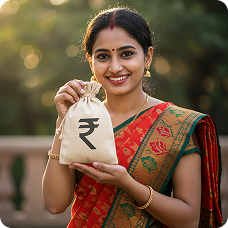
Women Business Loan
Get Women Business Loan upto 80 Lakh

Medical Store Business Loan
Get Medical Store Business Loan upto 80 Lakh

Manufacturer Business Loan
Get Manufacturer Business Loan upto 80 Lakh
Our loan variants


Loans for business needs





Select loan by amount
Business loan in different cities

Business loan in bangalore

Business loan in mumbai

Business loan in pune

Business loan in Jaipur

Business loan in Kerala

Business Loan in Telangana

Business Loan in Surat

Business Loan in Ranchi

Business Loan in Odisha

Business Loan in Noida

Business Loan in Kolkata

Business Loan in Karnataka

Business Loan in Hyderabad

Business Loan in Gujarat

Business Loan in Coimbatore

Business Loan in Assam

Business Loan in Ahmedabad
Business loan for different budgets

2 lakh business loan
3 lakh business loan
5 lakh business loan
10 lakh business loan

15 lakh business loan
20 lakh business loan
25 lakh business loan
30 lakh business loan
50 lakh business loan
Types of business loan
Unsecured Business Loan
Secured Business Loan
Term Loan
Cash Credit
Working Capital Loan
Machinery Loan
Line of Credit
Micro Loan
Merchant cash Loan
Frequently Asked Questions
Overview
What is an MSME business?
An MSME is a micro, small, or medium enterprise classified under the applicable Indian framework. MSMEs operate across manufacturing, trading, services, food, and technology. Classification depends on current investment and turnover criteria, so check the latest official definition if you need to establish whether your business qualifies.
Which MSME business ideas are suitable for a beginner?
The right MSME business ideas for a beginner depend on skills, budget, local demand, and risk tolerance. A service business may need less inventory than retail or food operations, but it still requires customer acquisition and reliable delivery. Compare setup costs, monthly expenses, competition, and cash flow before choosing an idea.
Can I get a business loan to start an MSME?
Eligibility for a business loan depends on the lender’s current criteria, your business profile, documents, and repayment capacity. Do not assume that a proposed business will qualify for a particular product. Review the current eligibility requirements and offer terms before applying.
How can I estimate earnings from an MSME business idea?
Estimate sales using realistic assumptions about customer numbers, order volume, prices, and repeat purchases. Subtract direct costs, rent, staff, logistics, marketing, taxes, financing costs, and other expenses. Treat online earning estimates as illustrative rather than guaranteed outcomes, and test assumptions through customer research or a small pilot.
Which MSME business can I start with technical skills but no capital?
If you are looking for MSME business ideas with no capital, freelance development, digital marketing, and online tutoring are options if you already have a device and internet access. An MSME business with low investment still has costs, including connectivity, software, and customer acquisition. Rs. 5,000 to Rs. 20,000 may cover some basic setups, but the amount depends on your existing equipment and service.
What MSME business can a retired person start with low risk?
Low investment MSME business ideas in India include online tutoring, handmade crafts, and a home-chef service, depending on skills, time, and local demand. An MSME business with low investment is not risk-free. Rs. 5,000 to Rs. 20,000 may cover some small pilots, but costs vary with equipment, materials, training, and permissions. The best MSME business in India is one that fits your circumstances.
More articles




Disclaimer
Bajaj Finance Limited has the sole and absolute discretion, without assigning any reason to accept or reject any application. Terms and conditions apply*.