Published May 11, 2026 · 4 Min Read

IPS display - Overview

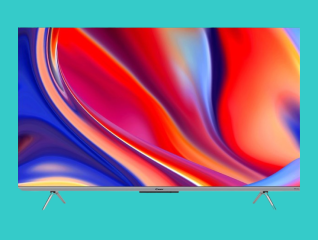
An IPS display is a type of LCD screen technology designed to deliver wide viewing angles, accurate colour reproduction, and consistent brightness, making it ideal for watching, gaming, and everyday entertainment. People usually search for IPS displays when they want better picture clarity, less colour shift from side angles, and a more comfortable viewing experience for family use or shared viewing. Its key USPs include stable image quality, natural colours, and smooth visibility even when viewed from different positions, which makes it a popular choice in modern televisions.


Explore TVs at any of Bajaj Finserv’s 1.5 lakh partner stores in 4,000 cities in India. Choose your ideal TV model, pay with Easy EMIs, and enjoy zero down payment on select deals. Simply check your loan eligibility now and bring home your desired product without worrying about overspending.

LED display - Overview

LED displays are one of the most popular TV technologies used in homes today. They use LED backlighting with an LCD panel to produce bright and clear pictures. Many buyers prefer Android TV vs Smart TV LED TV because they are slim, energy-efficient and available at different price points. From budget 32-inch models to premium 65-inch 4K smart TVs, LED displays offer options for every room size and budget. They also perform well in bright rooms, making them suitable for daytime viewing. Modern LED TVs often include smart features, multiple connectivity ports and better sound options for everyday entertainment use.

IPS vs LED display - Key differences

IPS and LED are often confused, but they are not directly competing technologies. IPS (In-Plane Switching) is a type of LCD panel known for better color accuracy and wide viewing angles, while LED refers to the backlighting system used in modern displays. In simple terms, IPS focuses on how images are displayed, whereas LED focuses on how the screen is lit. Most IPS displays today actually use LED backlights together.

FeatureIPS DisplayLED Display
Technology TypeLCD panel technologyBacklight technology
Image QualityHigh color accuracy, consistent viewing anglesDepends on panel type used with LED
Viewing AngleWide (up to 178°)Varies (depends on IPS/TN/VA panel)
ContrastModerateVaries with backlight type
UsageMonitors, smartphones, TVsTVs and monitors (as backlight system)

For better understanding of television technologies, you can also read this guide on LCD Vs LED TV. IPS is best for design, editing, and viewing quality, while LED mainly improves brightness and energy efficiency. In real-world usage, they usually work together rather than being direct alternatives.

IPS vs LED - Which is better for TV, gaming and work?

Choosing between IPS and LED depends on how you use the screen, where you sit and what picture quality you need.


  • Understand the difference first: IPS is a panel type used inside LCD TVs, while LED refers to the backlight technology. Many LED TVs actually use IPS or VA panels, so these terms are not direct opposites. 
  • Better for TV viewing: IPS TVs are often better for wide seating areas because colours and brightness stay more consistent from side angles. This suits family living rooms where people watch from different seats. 
  • Better for dark-room movie watching: Standard LED TVs with VA panels usually offer deeper blacks and stronger contrast than IPS panels. This can make movies look richer in dim rooms. 
  • Better for gaming: IPS panels are popular for gaming because they often deliver faster pixel response and better viewing angles. Fast games can look smoother, especially when paired with 120Hz refresh rates. 
  • Better for office work and productivity: IPS displays are commonly preferred for work because text looks consistent across the screen and colours remain accurate when viewed from different positions. 
  • Better for bright rooms: LED TVs with high brightness levels perform well in rooms with windows or daytime sunlight. Screen visibility remains stronger during daytime use.
  • Best choice for mixed home use: If you watch TV, game and work occasionally, an IPS LED TV can be a balanced option with good angles and decent overall performance.
  • Final buying tip: Do not choose by IPS or LED label alone. Check refresh rate, brightness, resolution, HDMI ports and sound quality before buying.

Get electronics and appliances on Easy EMIs with Bajaj Finserv

Upgrading your home with the latest electronics and appliances is now easier and more affordable with Bajaj Finserv’s flexible financing options. Follow these steps to get started:

  • Explore products on Bajaj Mall: Browse a wide range of electronics and appliances from trusted brands. Compare features like energy ratings, storage capacity, performance settings, and design to choose the right product for your home.
  • Visit a partner store: Once you shortlist a model, step into any of Bajaj Finserv’s 1.5 lakh partner stores across 4,000 cities in India. See the product in person, talk to experts, and make a confident decision.
  • Choose the Easy EMI Loan option: At checkout, select the Bajaj Finserv Easy EMI Loan. Avail financing of up to Rs. 5 lakh and split the cost into convenient monthly instalments. Some products also come with a zero down payment option.
  • Check your loan eligibility online: Plan better by checking your loan eligibility in minutes. Simply enter your mobile number and OTP to know your pre-approved limit.
  • Use the EMI Network Card for purchases up to Rs. 3 lakh: Already own the Bajaj Finserv EMI Network Card? Use it for instant, paperless checkout and convert your purchases of up to Rs. 3 lakh into Easy EMIs.

FAQ

Can I buy a TV on EMI?

Yes, you can easily bring home your preferred TV using Bajaj Finserv’s Easy EMI options. Whether you already have the EMI Network Card or are new to it, here is how to begin:
 

If you have the Bajaj Finserv EMI Network Card:

  • Explore TV on Bajaj Mall: Choose from a wide range of popular TV brands.
  • Visit a partner store: Check out the product in person at any of Bajaj Finserv’s 1.5 lakh partner stores across 4,000 cities in India.
  • Use your EMI Network Card at checkout: Convert the cost into Easy EMIs that fit your monthly budget.
  • Zero down payment on select models: Take your chosen TV home without paying anything upfront.


If you do not have an EMI Network Card:

Check your Insta EMI Card eligibility online using your mobile number and OTP. If you are eligible, apply instantly and enjoy a smarter, more affordable way to buy your favourite TV on Easy EMIs.

Is IPS display better than LED for eyes?

Yes, IPS is generally better for eyes because it offers stable brightness, less color shift, and wider viewing angles, reducing strain during long use. LED only refers to backlighting, so eye comfort depends more on the panel type (IPS/TN/VA) used with it.

Which display is better for gaming: IPS or LED?

IPS is better for gaming in most cases because it gives better color accuracy and clear visuals from all angles. However, some LED-backlit gaming monitors with fast refresh rates can also perform well—so response time matters more than LED itself.

Is IPS display better than LED for TV?

Yes, IPS is better for TV viewing quality, especially for family or group watching, because the picture stays clear even from side angles. LED mainly improves brightness, but IPS improves overall picture consistency.

What lasts longer: IPS or LED display?

Both can last a long time because they are related technologies. However, LED-backlit TVs often last slightly longer in brightness performance, while IPS panels are known for stable color quality over time.

Which is more energy efficient: IPS or LED?

LED is more energy efficient, but this is because of its backlighting system, not the panel itself. IPS panels may consume a bit more power compared to basic LCD types, but modern IPS + LED TVs are still quite efficient overall.

What are the advantages of LED over IPS?

LED displays offer higher brightness, better energy efficiency, and slimmer designs compared to IPS. They are more affordable and perform well in bright rooms. However, LED focuses on backlighting, while IPS mainly improves color accuracy and viewing angles.

Show more Show less

Bajaj Finserv app for all your financial needs and goals

Trusted by 50 million+ customers in India, Bajaj Finserv App is a one-stop solution for all your financial needs and goals.

You can use the Bajaj Finserv App to:

  • Apply for loans online, such as Instant Personal Loan, Home Loan, Business Loan, Gold Loan, and more.
  • Invest in fixed deposits and mutual funds on the app.
  • Choose from multiple insurance for your health, motor and even pocket insurance, from various insurance providers.
  • Pay and manage your bills and recharges using the BBPS platform. Use Bajaj Pay and Bajaj Wallet for quick and simple money transfers and transactions.
  • Apply for Insta EMI Card and get a pre-qualified limit on the app. Explore over 1 million products on the app that can be purchased from a partner store on Easy EMIs.
  • Shop from over 100+ brand partners that offer a diverse range of products and services.
  • Use specialised tools like EMI calculators, SIP Calculators
  • Check your credit score, download loan statements and even get quick customer support—all on the app.

Download the Bajaj Finserv App today and experience the convenience of managing your finances on one app.

Disclaimer

1. Bajaj Finance Limited (“BFL”) is a Non-Banking Finance Company (BAJAJ FINANCE) and Prepaid Payment Instrument Issuer offering financial services viz., loans, deposits, Bajaj Pay Wallet, Bajaj Pay UPI, bill payments and third-party wealth management products. The details mentioned in the respective product/ service document shall prevail in case of any inconsistency with respect to the information referring to BFL products and services on this page.

2. All other information, such as, the images, facts, statistics etc. (“information”) that are in addition to the details mentioned in the BFL’s product/ service document and which are being displayed on this page only depicts the summary of the information sourced from the public domain. The said information is neither owned by BFL nor it is to the exclusive knowledge of BFL. There may be inadvertent inaccuracies or typographical errors or delays in updating the said information. Hence, users are advised to independently exercise diligence by verifying complete information, including by consulting experts, if any. Users shall be the sole owner of the decision taken, if any, about suitability of the same.