
Choosing the Right Inverter Size for Your Home

Choosing the Right Inverter Size for Your Home

Find the right inverter size for your home with our easy-to-use calculator. Discover optimal battery size and solar panel compatibility for efficient energy use.

Get pre-approved loan offer of upto Rs. 5 Lakh

Quick approval | Flexible Tenure Options | Zero Approval Fees

In Summary


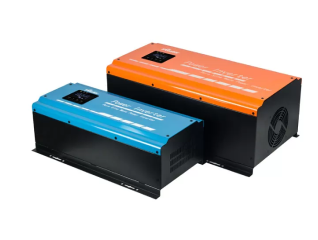
A small home — a 1BHK or 2BHK running two to three fans, LED lights, a television, and a router — needs a 750VA to 1,100VA pure sine wave inverter paired with a 150Ah tubular battery. This combination provides four to five hours of backup at a typical load of 350–400W. Inverter unit prices start at Rs. 3,499; a complete system (inverter plus 150Ah battery) costs Rs. 18,000–Rs. 25,000.

  • Typical small home load (2BHK): 2–3 fans (65W each) + 8 LED lights (9W each) + 1 TV (65W) + 1 router (12W) = 340–400W
  • Recommended inverter VA: 750VA–1,100VA (minimum 20–25% headroom above calculated load)
  • Recommended battery: 150Ah tubular for 4–5 hours backup; 200Ah for 5–6 hours or larger loads
  • Inverter type: Pure Sine Wave is essential for LED televisions, computers, and modern appliances
  • Inverter price range: Rs. 3,499 (700VA) to Rs. 7,586 (1,100VA) for leading brands
  • Battery price range: Rs. 11,499 (135Ah short tubular) to Rs. 14,999 (150Ah tall tubular)
  • Full system cost (inverter + 150Ah battery): Approximately Rs. 18,000–Rs. 25,000
  • Formula: Battery Ah = (Total Load W × Backup Hours) ÷ (Battery Voltage × Efficiency)

You can buy inverters and inverter batteries on Easy EMIs at over 1.5 lakh partner stores across 4,000 cities, including Reliance Digital, Croma, and Vijay Sales. Check your loan eligibility before visiting a store.


Why does inverter sizing matter specifically for a small home?

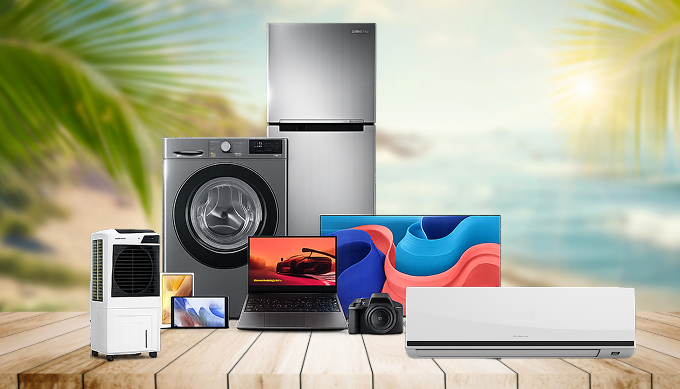
Choosing an inverter that is too small means it cannot power all your appliances simultaneously and trips under peak load. Choosing one that is too large means you pay for capacity you never use and the inverter runs inefficiently at low load. For a small home, the right size is typically narrower than buyers expect — a 750VA to 1,100VA pure sine wave inverter covers the vast majority of 1BHK and 2BHK backup needs at a price that makes the investment easy to justify. This guide shows you how to calculate the exact size for your specific home.


If you are looking for an inverter, visit any of Bajaj Finance's 1.5 lakh partner stores — like Vijay Sales, Croma, Reliance Digital, and more — across 4,000 cities, including Tier 2 cities like Jaipur, Lucknow, Kochi, Bhopal, and more in India. Choose your preferred model, then use the Bajaj Finance Insta EMI Card or Bajaj Finance Easy EMI Loan to finance it. Convert the cost into Easy EMIs that suit your monthly budget and enjoy zero down payment on select models — take it home without any upfront payment. Check your loan eligibility online in minutes so you know exactly what you can get before you step into the store.

What do you need from an inverter for a small home?

Before selecting a model, understanding the four core requirements of a small home inverter helps you identify the right specification without over- or under-spending. The four requirements below apply to most 1BHK and 2BHK Indian households with standard appliance usage:


  • Sufficient VA capacity for your peak load: A small home typically draws 300W–500W simultaneously during a power cut. An inverter rated at 750VA–1,100VA handles this load with the 20–25% headroom required for safe peak-load operation. For detailed calculations, see the inverter buying guide.
  • Pure sine wave output: A pure sine wave inverter is essential for LED televisions, computers, inverter-type fans, and any appliance with a variable-speed motor or sensitive electronics. Small homes typically have at least one such appliance. For a full explanation of why waveform type matters, see square wave vs sine wave inverters.
  • Battery backup duration of four to six hours: For most Indian cities, power cuts of three to five hours are the planning baseline. A 150Ah tubular battery paired with a 750VA–1,100VA inverter provides approximately four to five hours at a 350W load. For longer backup needs, a 200Ah battery extends this to five to six hours. The formula: Backup Hours = (Battery Ah × 12V × 0.8) ÷ Load W.
  • Fast or smart charging: In areas with frequent outages, the battery must recharge completely between cuts. An inverter with ASIC or DSP-based three-stage charging recharges a 150Ah battery in 12–14 hours and a 200Ah battery in 10–12 hours at 20A — reducing the risk of incomplete charge cycles. See the how to charge inverter battery guide for a full charging time table.

How do you calculate the right inverter size for a small home?

The correct inverter size for any home is determined entirely by your connected load — not by the number of rooms or the home's square footage. The four-step calculation below gives you the exact minimum VA rating for your household. Follow the steps in order using the wattage of your own appliances:


Step 1 — List every appliance you will run during a power cut and its wattage

Common wattage values for small Indian homes:

  • Ceiling fan: 50–75W (standard); 25–35W (BLDC or inverter-type)
  • LED tube light: 18–20W
  • LED bulb: 7–9W
  • 32-inch LED television: 55–65W
  • 40-inch LED television: 70–80W
  • Wi-Fi router: 10–15W
  • Laptop charger: 45–65W
  • Phone charger: 10–18W
  • Small refrigerator (150L direct cool): 80–100W

Step 2 — Add up all appliances running simultaneously

Example for a 2BHK during a typical evening outage:

  • 2 ceiling fans at 65W each = 130W
  • 8 LED lights at 9W each = 72W
  • 1 × 40-inch television = 75W
  • 1 Wi-Fi router = 12W
  • Total: 289W

Step 3 — Calculate minimum inverter VA with 20–25% headroom

Divide your total load by the inverter's power factor (typically 0.8): 289W ÷ 0.8 = 361VA minimum

Add 25% headroom for peak loads and efficiency losses: 361 × 1.25 = 451VA minimum

Choose the next standard VA size above this: 600VA or 750VA. A 750VA inverter provides comfortable headroom for the load above, with room to add another fan or appliance without overloading.


Step 4 — Confirm with the battery size calculation

Use the battery formula: Ah = (Load W × Backup Hours) ÷ (Battery Voltage × Efficiency)

For 289W × 4 hours of backup at 12V and 80% efficiency: (289 × 4) ÷ (12 × 0.8) = 1,156 ÷ 9.6 = 120Ah minimum

A 150Ah tubular battery gives approximately 4.4 hours of backup at this load, plus useful headroom for battery aging. A 200Ah battery gives approximately 5.6 hours.


For further detail on battery calculations, see the battery backup time guide.


What is the right battery size for a small home inverter?

Battery selection for a small home follows directly from the load calculation above. The five-step process below converts your load and backup duration requirement into a specific Ah rating. Work through the five steps below after completing the load calculation in the section above:


  • Calculate power consumption: Use the appliance wattage list from Step 1 above. For a 2BHK example: 289W total continuous load.
  • Determine backup duration: Decide how long the inverter should provide power during a typical outage in your area. For most tier 2 and tier 3 cities, three to five hours is the practical target.
  • Compute battery capacity using the formula: Ah = (Total Load W × Backup Hours) ÷ (Battery Voltage × Efficiency Factor). At 289W, 4 hours, 12V, 0.8 efficiency: (289 × 4) ÷ (12 × 0.8) = 120Ah. Add 20–25% for aging buffer: 120 × 1.25 = 150Ah minimum.
  • Select battery type: For a small home with daily power cuts, a tubular battery is recommended. It handles repeated deep discharge cycles better than flat plate batteries and lasts four to six years. A flat plate battery is acceptable only for homes with infrequent, short outages. 
  • Consider depth of discharge: Lead-acid and tubular batteries should not be discharged below 50% for optimum lifespan. If your calculated Ah is 150Ah and you want to stay above 50% depth of discharge, the effective usable capacity is 75Ah. This supports approximately 2.5 hours at 289W — if you need four hours, plan on a 200Ah battery to maintain healthy discharge levels.

How do you use an inverter calculator for solar panels?

For small homes with rooftop solar, an inverter calculator helps you determine the right hybrid inverter size based on both your load and your panel wattage. A solar-compatible home inverter eliminates the need for two separate units. The five inputs below are what a solar inverter calculator uses to generate its recommendation:


  • Total load in watts: Same as the standard load calculation — the sum of all appliances you plan to run during a power cut or during the day on solar.
  • Battery details: Voltage (12V or 24V), type (tubular or lithium), and backup duration. These determine the size and chemistry of battery the solar inverter needs to charge.
  • Solar panel specifications: Total panel wattage (e.g., 3 × 330W = 990W peak) and expected daily sunlight hours in your location (typically 4–6 hours in most Indian cities).
  • Inverter efficiency: Most solar inverters operate at 90–95% MPPT efficiency. Enter this figure when prompted.
  • Review recommendations: The calculator outputs a minimum inverter VA, recommended battery size, and approximate solar generation per day.

For small homes not yet on solar but planning future integration, buying a solar-compatible hybrid inverter from the start avoids replacing the inverter later.


 Learn more about what is a solar inverter and how it works and explore V-Guard UPS inverters as one option across the UPS and solar range.

Checklist for choosing an inverter for a small home

Use the five-point checklist below before visiting a partner store — it will narrow your choice to the right model before you walk in. This checklist applies to any small home inverter purchase across all brands and price points:


  • Calculate your total load first: Add up the wattage of every appliance you plan to run simultaneously and add 20–25% headroom. This is your minimum VA requirement.
  • Choose pure sine wave, not square wave: Pure sine wave is non-negotiable for any home with a computer, LED television, inverter-type fan, or modern refrigerator. Square wave inverters are cheaper but cause motor overheating, audio buzz, and may void appliance warranties.
  • Select battery capacity for your backup duration: Use the formula (Ah = Load W × Hours ÷ 12V ÷ 0.8) to calculate the minimum Ah rating. Add 20–25% for aging margin. 150Ah is the practical minimum for most 2BHK homes; 200Ah provides more comfortable headroom.
  • Verify brand service access in your city: For smaller cities, check that your chosen brand has authorised service centres locally. Luminous and Exide have the widest residential service networks; Genus is strong in North and Central India. 
  • Compare warranty terms: Most inverters offer 2 years on the unit; batteries offer 2–5 years depending on type. Confirm warranty coverage before purchasing and keep the original invoice for claims.

What are my financing options to buy an inverter?

Bajaj Finance offers two financing options for purchasing inverters. Both options are available at over 1.5 lakh partner stores across 4,000 cities in India. Here is how they compare:


OptionLimitKey features
Bajaj Finance Insta EMI CardPre-approved card loan offer up to Rs. 3 lakhZero annual fee; 3 to 60 months tenure; works at 1.5 lakh partner stores; 1 million eligible products
Bajaj Finance Easy EMI LoanLoan limit up to Rs. 5 lakhQuick loan approval; 3 to 60 months tenure; basic KYC documents needed; ideal for higher-value purchases

How to choose? Both options require you to be physically present at a partner store. The Insta EMI Card is ideal for shoppers who want to purchase across multiple categories over time. The Easy EMI Loan suits buyers looking to finance a higher-value purchase in a single transaction.


With over 1.5 lakh partner stores across 4,000 cities, Bajaj Finance's network means you can finance your purchase whether you are in a metro like Mumbai or a Tier-2 city like Jaipur or Lucknow. The Insta EMI Card also carries zero annual fee, making it a practical long-term financing tool for repeat home appliance purchases.


Also explore the latest offers. You may find a great deal on a model that matches your needs.

How do I buy an inverter on EMI at a Bajaj Finance partner store?

The process is simple and typically takes 10 to 15 minutes once you are at the store.


  1. Browse inverter models on Bajaj Mall — Compare models by capacity (VA rating), waveform type (pure sine wave), solar compatibility, and price before you visit a store.
  2. Find a partner store near you: Use the Bajaj Finance store locator to find a nearby partner outlet such as Croma, Vijay Sales, or other authorised retailers.
  3. Check the inverter in person: Visit the partner store and explore available models. Check the VA rating and load capacity, battery type, backup duration, surge protection features, and compatibility with your appliances.
  4. Choose a suitable EMI option: At checkout, ask the store executive about the Bajaj Finance Insta EMI Card or Easy EMI Loan. Confirm available tenure options and whether your chosen model comes with a zero down payment offer.
  5. Complete payment and take your inverter home: Once approved, your purchase is processed immediately and you can schedule installation at your convenience.

You can also check your loan eligibility online in advance by entering your mobile number and OTP, helping you plan your purchase better.

Maximise your savings with Maha Bachat

Combine the best summer offers, EMI plans, and exclusive vouchers with Maha Bachat to save big.

20k+ people used their offers at the store

Why use the Smart Savings Calculator

Bajaj Finance’s Smart Savings Calculator helps you unlock maximum savings every time you shop at partner stores. It brings together all available brand, dealer, and scheme offers—so you can see your total savings instantly and shop smarter with Easy EMIs.


1. Dealer offers - Grab exclusive in-store deals at over 1.5 lakh partner stores across India. Enjoy local discounts and special prices you will not find online.

2. Brand offers - Access limited-time discounts from top brands across electronics, appliances, and more. Discover brand-specific savings selected just for you.

3. Bajaj offers - Unlock exclusive Bajaj Finance deals on popular products—available only to our customers. More rewards, more value.

4. Scheme offers - Take advantage of time-sensitive offers on select EMI schemes. Get extra benefits after paying just 3 EMIs—visible during EMI selection at checkout.


Calculate your extra savings today!

Disclaimer

While care is taken to update the information, products, and services included in or available on our website and related platforms/websites, there may be inadvertent inaccuracies or typographical errors or delays in updating the information. The material contained in this site, and on associated web pages, is for reference and general information purpose and the details mentioned in the respective product/service document shall prevail in case of any inconsistency. Subscribers and users should seek professional advice before acting on the basis of the information contained herein. Please take an informed decision with respect to any product or service after going through the relevant product/service document and applicable terms and conditions. In case any inconsistencies observed, please click on reach us.

*Terms and conditions apply