






Health insurance goes beyond hospitalization—it covers OPD visits, medicines, ambulance charges, preventive checkups, and even alternative treatments, giving you all-around financial security.

Check health insurance plans with comprehensive coverage
Get Quote
Health plans from leading insurers | Comprehensive coverage | Offers multiple optional add-ons to enhance coverage
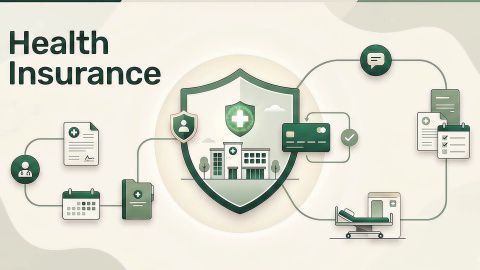
Benefits of Health Insurance Why You Need a Policy
In summary
Navi Mumbai features an extensive network of accredited hospitals empanelled with major insurers, providing seamless cashless healthcare across all planned residential nodes.
- Substantial network hospital density: Policyholders can access over 65 empanelled multi-speciality and super-speciality hospitals across Navi Mumbai, offering round-the-clock cashless emergency admissions Source: Directorate of Health Services Maharashtra.
- Rapid cashless pre-authorisation turnaround: Under modern IRDAI service charter guidelines, initial cashless pre-authorisation for acute medical emergencies is typically processed within 60 minutes of digital documentation receipt Source: Insurance Regulatory and Development Authority of India.
- Zero room rent deduction advantages: Selecting comprehensive policies that eliminate room rent sub-limits protects families from paying 30 to 50 percent of total hospital bills out of pocket.
- Coverage for advanced clinical procedures: Network centres across Vashi, Belapur, and Nerul provide specialised robotic surgery, interventional cardiology, medical oncology, and polytrauma intensive care.
- Plan comparison pathway: Evaluate top-rated family floaters with high network hospital density in Navi Mumbai by choosing to check now on Bajaj Finance.
Pro tip
Bajaj General network hospitals in Navi Mumbai: An overview of healthcare infrastructure?
The planned urban architecture of Navi Mumbai, developed by CIDCO, features designated institutional healthcare zones across each major node. Consequently, residents do not need to commute across creek bridges into central Mumbai for advanced medical treatment. Premier healthcare networks have established advanced tertiary care centres along the Thane-Belapur corridor, Sion-Panvel Highway, and Palm Beach Road.
Major insurers, including Bajaj General, maintain direct empanelment and Third-Party Administrator (TPA) service arrangements with prominent hospital chains and established charitable institutions across the region:
- Apollo Hospitals (CBD Belapur): A JCI and NABH-accredited 500-bed quaternary care centre featuring advanced cardiac catheterisation labs, comprehensive cancer care, organ transplant units, and dedicated neuro-intensive care.
- Fortis Hiranandani Hospital (Vashi): A premier multi-speciality centre serving the central nodes of Vashi and Koparkhairane, recognised for excellence in cardiology, orthopaedic joint reconstruction, and emergency critical care.
- Reliance Hospital (Koparkhairane): An advanced 225-bed tertiary care centre equipped with modern hybrid operating theatres, interventional oncology, and round-the-clock paediatric emergency services.
- MGM Hospital and Medical College (Kamothe and Vashi): Extensive multi-speciality healthcare facilities offering high-volume inpatient care, subsidised bed wards, and specialised trauma units.
- Terna Speciality Hospital and Research Centre (Nerul): Located adjacent to Nerul railway station, offering comprehensive multi-disciplinary care, high-dependency units, and laparoscopic surgical facilities.
Did you know?
Navi Mumbai is home to several specialised national healthcare institutions, including the Advanced Centre for Treatment, Research and Education in Cancer (ACTREC) in Kharghar, an autonomous research wing of Tata Memorial Centre.
Did you know?
Over 72 percent of tertiary hospitalisation claims in Navi Mumbai are processed through direct digital TPA pre-authorisation desks, drastically reducing administrative delays.
Popular plans for you


How are the Bajaj General network hospitals in Navi Mumbai beneficial for cashless treatments?
Utilising an empanelled network hospital transforms the hospitalisation experience during stressful medical crises by replacing administrative friction with automated institutional coordination:
| Operational dimension | Empanelled network hospital | Non-network hospital (reimbursement) | Strategic advantage for patient |
|---|---|---|---|
| Upfront financial deposit | Zero cash deposit required for covered treatment expenses | Patient must pay full cash deposits ranging from Rs. 50,000 to Rs. 2 lakh | Preserves family liquidity and prevents emergency asset liquidation |
| Pre-authorisation process | Initiated electronically by on-site hospital TPA desk directly with insurer | Not available; patient must settle total hospital bill at final discharge | Completely relieves patient family from courier paperwork during hospital stay |
| Claim settlement protocol | Direct B2B electronic funds transfer between insurer and hospital | Patient submits physical bills and waits 30 to 45 days for reimbursement | Eliminates risk of delayed or disputed post-discharge claim reimbursements |
| Medical tariff standardisation | Treatments billed according to pre-negotiated package tariffs | Hospital bills arbitrary rack-rate pricing for surgeries and diagnostics | Prevents inflated medical charges and protects policy sum insured |
| Discharge turnaround | Final settlement completed in 2 to 4 hours post-discharge summary submission | Requires manual bill reconciliation and full credit card or cash payment | Guarantees a dignified, stress-free discharge process for the family |
Clinical excellence across specialised nodal facilities
Navi Mumbai's hospital network encompasses specialised clinical care tailored to industrial and corporate populations:
- Industrial trauma and burns management: Facilities in Koparkhairane, Rabale, and Taloja feature specialised burn ICUs and orthopaedic trauma teams catering to the industrial manufacturing belt.
- Cardiac and stroke emergency units: Dedicated 24/7 cardiac emergency protocols guarantee door-to-balloon time of under 60 minutes for primary coronary angioplasty across Vashi and Belapur centres.
- Maternity and neonatal intensive care (NICU): Advanced level-3 NICUs across Nerul and Vashi provide critical respiratory and incubator support for premature newborns.
Explore individual and family medical protection by reviewing health insurance in Maharashtra and mediclaim policy to ensure your policy covers all primary tertiary centres.
Quick fact:
Under the IRDAI "Cashless Everywhere" framework, policyholders can seek cashless treatment even at non-empanelled hospitals, provided they notify the insurer at least 48 hours before planned admission or within 48 hours of emergency hospitalisation.
Quick fact:
NABH-accredited tertiary centres in Navi Mumbai maintain an average ICU bed ratio of over 20 percent of total hospital capacity to handle complex multi-organ emergencies Source: National Accreditation Board for Hospitals and Healthcare Providers.
Show more
Show less
Key parameters to check when selecting a network hospital in Navi Mumbai: Clinical criteria?
Core clinical infrastructure evaluation checklist
Not all network facilities offer identical infrastructure or clinical capabilities. When planning medical procedures or preparing for household contingencies, evaluate hospitals against these core benchmarks:
- Accreditation standards: Confirm NABH or JCI quality certification ensuring rigorous patient safety and clinical infection control protocols.
- Emergency infrastructure: Verify presence of a round-the-clock cardiac catheterisation laboratory, advanced stroke team, and on-site blood bank.
- Intensive care density: Ensure dedicated level-3 adult, paediatric, and neonatal ICUs equipped with mechanical ventilators and hemodialysis facilities.
- Cashless TPA efficiency: Dedicated 24/7 on-site insurance desk providing real-time pre-authorisation processing and rapid electronic claim adjudication.
1. NABH and JCI accreditation
National Accreditation Board for Hospitals (NABH) and Joint Commission International (JCI) certifications confirm that the healthcare facility adheres to stringent infection control protocols, clinical safety standards, and standardised patient care procedures.
2. Intensive care and ventilator capacity
Ensure the facility maintains dedicated adult, paediatric, and neonatal intensive care units equipped with modern ventilators, dialysis machines, and continuous hemodynamic monitoring to manage post-surgical complications.
3. Dedicated 24/7 hospital insurance desk
A proactive, round-the-clock hospital insurance desk staffed by experienced TPA executives is essential. Facilities with computerized digital interfaces to insurers like Bajaj General settle pre-authorisations and final discharge summaries significantly faster than smaller nursing homes.
Practical scenario: Navigating an emergency cardiac admission in Seawoods
Amit Kulkarni, a 42-year-old IT infrastructure architect living in Seawoods, Navi Mumbai, held a comprehensive health insurance policy with Bajaj General providing a sum insured of Rs. 15 lakh with zero room rent capping. On a weekday evening, his 68-year-old mother experienced severe retrosternal chest pain and shortness of breath. Amit immediately rushed her to Apollo Hospitals in CBD Belapur, located just 12 minutes away along Palm Beach Road. At the hospital emergency desk, Amit presented his mother’s digital health card and Aadhaar credentials. The on-site TPA desk initiated emergency electronic pre-authorisation with Bajaj General, securing an initial cashless approval of Rs. 1.2 lakh within 45 minutes while the emergency cardiology team performed a primary coronary angiography. The diagnostic revealed a 95 percent blockage in the left anterior descending artery, requiring immediate emergency angioplasty with a drug-eluting stent. The total hospitalisation bill came to Rs. 3.1 lakh. Because Apollo was an empanelled network facility and Amit’s policy had a consumables waiver rider, Bajaj General settled Rs. 2.95 lakh directly with the hospital, leaving Amit to pay just Rs. 15,000 for personal phone calls and administrative fees at discharge.
To safeguard your family against emergency medical crises, evaluate comprehensive plans on check premium.
Health Insurance in different cities

Health Insurance in Bangalore

Health Insurance in Jaipur

Health Insurance in Pune

Health Insurance in Mumbai

Health Insurance in Kerala
Compare types of Health Insurance Plans
Tax-savings plans for you
Decision framework: Do's and don'ts for cashless hospitalisation in Navi Mumbai
| Do | Why it matters | Don't | Risk to avoid |
| Carry digital health cards and original IDs | Accelerates instant patient verification at the hospital TPA desk | Arrive for emergency admission without valid government photo IDs | Facing delays in initiating electronic cashless pre-authorisation |
| Select plans with zero room rent sub-limits | Eliminates proportionate billing deductions across all surgical and doctor fees | Choose policies with 1 percent room rent limits to save a small premium | Paying 30 to 50 percent of total hospital bills out of pocket |
| Attach a non-medical consumables rider | Covers surgical gloves, PPE kits, and disposable items during hospital stays | Overlook consumables coverage in urban tertiary hospitalisations | Incurring out-of-pocket bills of Rs. 25,000 to Rs. 60,000 for hospital consumables |
| Intimate insurer within 24 hours of emergency | Complies with IRDAI statutory cashless notification guidelines | Delay informing the insurer until the day of final discharge | Having cashless pre-authorisation rejected and being forced to pay cash |
| Preserve all original diagnostic reports | Facilitates seamless post-hospitalisation claim settlement for OPD tests | Hand over only copies without maintaining digital scans of all test records | Disputing post-discharge pharmacy and diagnostic reimbursement claims |
Action roadmap: Step-by-step guidance for cashless hospitalisation in Navi Mumbai
- Phase 1: Identify nearest accredited network hospitals: Map the top 3 empanelled multi-speciality hospitals within a 15-minute drive of your residence in Vashi, Belapur, Nerul, or Kharghar.
- Phase 2: Store digital policy cards on family smartphones: Keep electronic copies of your health insurance cards, policy numbers, and primary contact details readily accessible for all household members.
- Phase 3: Submit planned admission pre-authorisation 48 hours early: For scheduled surgeries, visit the hospital insurance desk 2 to 3 days in advance to obtain pre-approval before admission day.
- Phase 4: Validate room category eligibility upon admission: Confirm that the allocated room category matches your policy terms to avoid proportional billing deductions.
- Phase 5: Review final bill and settle non-payable items at discharge: Scrutinize the finalized bill at the TPA desk, verify items approved by the insurer, and clear minor non-medical charges before leaving.
What our customer say about us
+ Customers
Play Store Rating
Reviews
Arjun Mehta
13 Jul 2025
I opted for the Health Infinity plan for my parents. The digital onboarding was incredibly fast with no medical tests required since they are under 50. We had a minor daycare procedure last month, and the cashless approval came through in less than 2 hours. Very impressed with the efficiency.
Priya Sharma
28 Feb 2025
The Bajaj Finance Health app is a lifesaver. I use it for my regular OPD consultations and medicine orders. The 10% discount on pharmacy bills and the easy reimbursement for doctor visits make it much more than just a 'hospitalization' policy. It’s daily health support.
Sneha Kapoor
15 Mar 2025
Switched my family floater to Bajaj General this year. The network of hospitals in my city (Pune) is excellent. The only downside was a slight delay in getting my physical card, but the digital copy on the app works everywhere. The 'Wellness Rewards' for hitting step goals is a cool touch!
Sources and references
| Source / reference authority | Document / research topic | Relevant insights and context | Publication month and year |
|---|---|---|---|
| Directorate of Health Services (DHS), Government of Maharashtra | Maharashtra healthcare facilities registry and accreditation standards | State-level hospital density metrics, clinical bed capacities, and tertiary hospital standards in Navi Mumbai | October 2026 |
| Insurance Regulatory and Development Authority of India (IRDAI) | Master circular on health insurance claims and Cashless Everywhere framework | Statutory guidelines governing 100% cashless treatment, 60-minute pre-authorisation, and TPA norms | October 2026 |
| National Accreditation Board for Hospitals and Healthcare Providers (NABH) | Certified healthcare facilities directory for Maharashtra | Quality standards, patient safety benchmarks, and infection control compliance in Navi Mumbai centres | October 2026 |
| General Insurance Council of India (GIC) | National cashless network and hospital empanelment disclosures | Operational statistics on urban cashless claims settlement ratios and network hospital distribution | October 2026 |
Data last updated as of October 2026. All regulatory benchmarks, cashless turnaround standards, and network empanelment guidelines reflect official standards published by IRDAI and Maharashtra DHS.
Glossary of terms
| Technical term | Definition and regulatory context |
|---|---|
| Network hospital | A healthcare facility with a formal agreement with an insurer or TPA to provide cashless medical treatment at pre-agreed tariffs. |
| Cashless hospitalisation | A facility where the insurance company settles approved medical treatment bills directly with the empanelled hospital. |
| Pre-authorisation | The electronic verification process where an insurer approves hospitalisation treatment costs prior to medical procedure execution. |
| Proportionate deductions | A penalty where exceeding room rent sub-limits scales down payouts across all associated surgical and doctor charges. |
| Third-Party Administrator (TPA) | An IRDAI-licensed intermediary organisation that processes health insurance claims and manages hospital network desks. |
| Cashless Everywhere | An IRDAI regulatory directive allowing policyholders to access cashless treatment across non-empanelled hospitals under specified terms. |
Conclusion
Navi Mumbai’s world-class healthcare infrastructure offers exceptional clinical expertise, advanced medical technology, and rapid emergency accessibility across its planned residential nodes. For policyholders with Bajaj General health insurance, leveraging the extensive empanelled hospital network across Vashi, Belapur, Nerul, and Panvel eliminates the financial distress of medical crises through seamless cashless admissions. By choosing policies with unrestricted room rent allowances, attaching essential consumables protection, and utilising the transparent comparison engine on Bajaj Finance, families can secure comprehensive, high-value medical protection that ensures immediate access to the region's finest tertiary healthcare facilities.
Explore and stay informed
Can you buy health insurance on EMI
Why buy health insurance
Health Insurance for family
Health Insurance Claim settlement ratio
Health Insurance waiting period
Importance of health insurance
Health Insurance for Senior Citizens
Health Insurance tax benefits
Health Insurance for parents
Health Insurance premium calculator
Health Insurance for Other Diseases

Antral Gastritis

Hepatomegaly Symptoms Causes & Treatment

Blood Pressure Range

PCOS Causes and Symptoms

Health insurance for Obesity
Frequently Asked Questions
Hospital network and admission inquiries
Billing, room rent, and financial inquiries
Claims, emergency, and policyholder rights inquiries
Which major hospitals in Navi Mumbai provide cashless facilities for Bajaj General health insurance?
Leading tertiary and multi-speciality hospitals in Navi Mumbai providing cashless hospitalisation facilities include Apollo Hospitals (CBD Belapur), Fortis Hiranandani Hospital (Vashi), Reliance Hospital (Koparkhairane), Terna Speciality Hospital and Research Centre (Nerul), Sunshine Hospital (Nerul), MGM Hospital (Vashi and Kamothe), and Yerala Hospital (Kharghar). Policyholders can verify real-time empanelment status through the insurer's digital portal or on Bajaj Finance.
Can I get cashless treatment at a non-network hospital in Navi Mumbai under Cashless Everywhere?
Yes. Under the IRDAI "Cashless Everywhere" directive, policyholders can access cashless treatment at non-empanelled hospitals across Navi Mumbai, provided the hospital meets basic clinical registration standards. The policyholder must notify the insurance company at least 48 hours prior to planned admission, or within 48 hours of emergency admission.
How quickly is emergency cashless pre-authorisation granted at Navi Mumbai hospitals?
For emergency medical hospitalisations, empanelled network hospitals in Navi Mumbai transmit clinical documentation electronically to the insurer's cashless desk. Under IRDAI service benchmarks, initial pre-authorisation approvals are typically issued within 60 to 120 minutes of receipt of clinical records.
What happens if I choose a room category higher than my policy room rent limit?
If you select a room category that exceeds your contractual room rent allowance (e.g., choosing a single executive suite when your policy permits a standard twin-sharing room), the insurer applies proportionate deductions. This means not only is the room rent difference deducted, but associated charges—including surgeon fees, anaesthetist charges, and operating theatre fees—are scaled down proportionally, resulting in high out-of-pocket expenses.
Are consumables like syringes, gloves, and surgical disposables covered under cashless claims?
Standard base health insurance policies exclude non-medical items and disposable consumables (such as PPE kits, disposable gowns, syringes, and gloves). However, if your policy includes a "Consumables Waiver" or "Non-Medical Expenses" rider, the insurance company pays 100 percent of these charges directly to the network hospital.
Can I claim reimbursement for pre-hospitalisation and post-hospitalisation expenses after cashless discharge?
Yes. In addition to cashless inpatient hospitalisation, standard comprehensive policies cover pre-hospitalisation diagnostic tests (typically 30 to 60 days prior to admission) and post-discharge consultations and medications (typically 60 to 180 days post-discharge). These expenses are submitted post-discharge via digital upload on the insurer's portal for direct bank reimbursement.
What documents are mandatory for initiating cashless hospital admission in Navi Mumbai?
To initiate cashless admission, the patient or attendant must present: (1) original health insurance card or digital e-card, (2) patient’s government photo ID (Aadhaar Card or PAN Card), (3) primary treating doctor’s consultation paper recommending hospitalisation, and (4) initial clinical diagnostic reports.
Can a network hospital deny cashless admission during an acute medical emergency?
Under IRDAI regulations, an empanelled network hospital cannot arbitrarily deny cashless emergency admission if the patient holds an active policy and pre-authorisation documentation has been submitted. If a network hospital faces temporary technical linkage issues, the hospital insurance desk can coordinate directly with the insurer's emergency helpline.
How does Bajaj Finance assist policyholders in managing health insurance in Navi Mumbai?
Bajaj Finance provides a unified digital marketplace where consumers can compare health insurance policies from major insurers, review network hospital density in Navi Mumbai, evaluate room rent terms, and access instant digital policy issuance with comprehensive customer support.

Articles and Insights


Disclaimer
*T&C Apply - Bajaj Finance Limited (‘BFL’) is a registered corporate agent of third party insurance products of Bajaj Allianz Life Insurance Company Limited, HDFC Life Insurance Company Limited, Life Insurance Corporation of India (LIC), Bajaj Allianz General Insurance Company Limited, SBI General Insurance Company Limited, ACKO General Insurance Company Limited, HDFC ERGO General Insurance Company, TATA AIG General Insurance Company Limited, ICICI Lombard General Insurance Company Limited, New India Assurance Limited, Chola MS General Insurance Company Limited, Zurich Kotak General Insurance Co. Limited , Star Health & Allied Insurance Co. Limited, Care Health Insurance Company Limited, Niva Bupa Health Insurance Company Limited , Aditya Birla Health Insurance Company Limited and Manipal Cigna Health Insurance Company Limited under the IRDAI composite CA registration number CA0101. Please note that, BFL does not underwrite the risk or act as an insurer. Your purchase of an insurance product is purely on a voluntary basis after your exercise of an independent due diligence on the suitability, viability of any insurance product. Any decision to purchase insurance product is solely at your own risk and responsibility and BFL shall not be liable for any loss or damage that any person may suffer, whether directly or indirectly. Please refer insurer's website for Policy Wordings. For more details on risk factors, terms and conditions and exclusions please read the product sales brochure carefully before concluding a sale. Tax benefits applicable if any, will be as per the prevailing tax laws. Tax laws are subject to change. Tax laws are subject to change. BFL does NOT provide Tax/Investment advisory services. Please consult your advisors before proceeding to purchase an insurance product. Visitors are hereby informed that their information submitted on the website may also be shared with insurers. BFL is also a distributor of other third-party products from Assistance Services providers such as CPP Assistance Services Pvt. Ltd., Bajaj Finance Health Ltd. etc. All product information such as premium, benefits, exclusions, sum insured, value added services, etc. are authentic and solely based on the information received from the respective insurance company or the respective Assistance service provider company.
Note – While we have made all efforts and taken utmost care in gathering precise information about the products, features, benefits, etc. However, BFL cannot be held liable for any direct or indirect damage/loss. We request our customers to conduct their research about these products and refer to the respective product’s sales brochures before concluding their sale.