




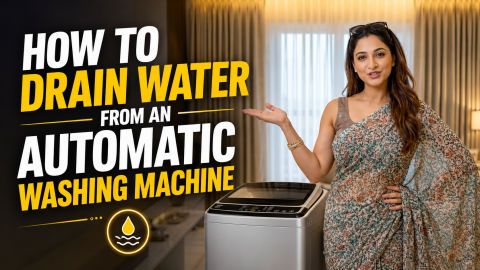
How to Drain Water from an Automatic Washing Machine Easily

How to Drain Water from an Automatic Washing Machine Easily

Learn the simple steps to drain water from your automatic washing machine. Follow our guide for a hassle-free process and maintain the washer's performance.

Get a loan offer up to Rs. 5 lakh

Quick approval | Flexible tenure options | Zero approval fees

In summary


Most automatic washing machines drain themselves at the end of each cycle, but a blocked filter, kinked hose, clogged pump, or power cut can leave water sitting in the drum. Draining it manually is safe and straightforward when done in the right order.

  • Always unplug the washing machine from the power outlet before attempting manual drainage — never work with water and a live appliance
  • Front-load washers: Open the bottom front panel, remove the emergency drain tube cap, and let water flow into a flat container placed beneath
  • Top-load washers: Locate and detach the drain hose at the back of the machine and direct it into a bucket
  • Most common cause of poor drainage: A clogged pump filter — clean it at least once a month to prevent recurrence
  • Second most common cause: A kinked or blocked drain hose — straighten and flush the hose before running a fresh drain cycle
  • When to call a service technician: If the drain pump motor is making unusual noise, has failed, or if a faulty lid switch (top-loaders) is preventing cycle completion


You can buy a washing machine on Easy EMIs at over 1.5 lakh partner stores across 4,000 cities, including Reliance Digital, Croma, and Vijay Sales.
Why does a washing machine sometimes fail to drain automatically?

Automatic washing machines are designed to drain water at the end of each cycle, but power cuts, blocked filters or hoses, pump faults, and interrupted cycles can prevent this. Manually draining the water helps prevent mould, unpleasant odours, and potential damage from standing water. This guide explains how to drain a washing machine, common causes of drainage issues, and ways to prevent them.

If you want to replace your washing machine, visit any of Bajaj Finance's 1.5 lakh partner stores — like Vijay Sales, Croma, Reliance Digital, and more — across 4,000 cities, including Tier 2 cities like Jaipur, Lucknow, Kochi, Bhopal, and more in India. Choose your preferred model, then use the Bajaj Finance Insta EMI Card or Bajaj Finance Easy EMI Loan to finance it. Convert the cost into Easy EMIs that suit your monthly budget and enjoy zero down payment on select models — take it home without any upfront payment.

Why does draining your washing machine matter?

Leaving water sitting in a washing machine drum — even for a few hours — has several practical consequences worth understanding before looking at how to drain it.

  • Prevents mould and mildew growth: Stagnant water creates a warm, damp environment inside the drum, seal, and door gasket, which is ideal for mould and mildew. Once mould establishes, it produces persistent odours that transfer to clothing even after normal wash cycles.
  • Maintains machine efficiency: Accumulated water sitting in the drum affects the washing machine's balance sensors and water-level sensors, potentially causing erratic behaviour in subsequent cycles.
  • Prevents rust and corrosion: Water left in the drum over extended periods can corrode metal components, weakening the drum, drum supports, and internal brackets.
  • Avoids unpleasant odours: Stagnant water produces musty smells that transfer to freshly washed clothes, often making it necessary to rewash them.
  • Ensures proper sensor function: Some washing machines use water-level sensors that can be affected by residual water in the drum, leading to incorrect fill levels or cycle errors in subsequent washes.

For more information on washing machine options and features, check out the best washing machines, along with their features, prices and much more.

What tools do you need before draining a washing machine?

Having the right items on hand before you start avoids mid-task scrambling and potential water damage to your floor.

  • Flat container or drip tray: Essential for collecting water drained from the emergency tube — a standard bucket is too tall for the low-profile emergency drain on most front-load machines; use a flat baking tray, shallow plastic tray, or dedicated washing machine drain pan instead
  • Standard bucket: For collecting water drained from the rear hose of a top-load machine or from the drain hose once disconnected
  • Towels or old cloths: Place these around the base of the machine before opening any drain access to absorb spills; the first opening of any drain component will release water without warning
  • Rubber gloves: Recommended if the water has been sitting for more than a few hours, since drum water can contain detergent residue and lint
  • Soft brush or cloth: For cleaning the drain filter and the filter housing area once the water has been removed

How do you drain water from a front-load automatic washing machine?

Front-load washing machines have a dedicated emergency drain tube specifically designed for manual drainage when the automatic pump fails or a power cut interrupts a cycle. Follow these steps in order:

  1. Unplug the washing machine. This is the single most important step. Never manually drain a washing machine while it is connected to power. Unplug the power cord from the wall socket before touching any part of the machine, including the door or front panel.
  2. Turn off the water supply valve. Close the inlet tap or valve connected to the machine to prevent any additional water entering during the drainage process.
  3. Prepare your floor. Place old towels around the base of the machine, particularly in front of the bottom panel. Water will flow as soon as the drain tube is opened.
  4. Open the bottom front panel. Most front-load washing machines have a small rectangular access panel at the bottom, secured by a clip or screw. Open this to reveal the emergency drain tube and the pump filter.
  5. Position a flat container. Place your flat tray or shallow container directly beneath the emergency drain tube — the tube opening is typically only 5 to 10 cm above the floor, making a standard bucket too tall to fit.
  6. Remove the emergency drain tube cap. Pull out the small emergency drain tube (it usually has a red or orange cap to distinguish it) and remove the cap. Water will begin flowing immediately.
  7. Let the water drain fully. Allow all the water to flow into the container. Empty the container as needed if the load is large. For a standard 7 kg load, expect approximately 7 to 15 litres of water to drain.
  8. Clean the pump filter. Once drained, unscrew the pump filter cover (located next to the emergency tube in most models) and remove any lint, debris, or foreign objects. Rinse under running water before reinstalling.
  9. Close all openings and reconnect. Replace the filter, reseal the tube cap, close the front panel, and reconnect the power before running a fresh drain cycle to confirm the blockage is resolved.

How do you drain water from a top-load automatic washing machine?

Top-load washing machines do not typically have a front-panel emergency drain tube. Manual drainage is done via the drain hose at the rear of the machine. Follow these steps in order:

  1. Unplug the machine and turn off the water supply. Same first step as front-loaders — never work with water and a live appliance.
  2. Prepare your floor. Lay towels around the base and rear of the machine.
  3. Locate the drain hose at the back. The drain hose on a top-load machine is typically a large corrugated hose at the rear, connected to either a drain standpipe or wall drain.
  4. Detach the hose from the drain pipe. Pull the hose free from the drain outlet and hold it upright momentarily — this prevents water from siphoning out immediately before your bucket is in position.
  5. Lower the hose into a bucket. Once the bucket is positioned, lower the hose end below the drum level and water will begin flowing by gravity. For a 7 kg top-loader, expect 7 to 15 litres to drain.
  6. Tilt the machine slightly if needed. Once most of the water has drained, carefully tilt the machine forward or to one side to drain any remaining water that gravity alone cannot reach.
  7. Reconnect and run a drain cycle. Reattach the hose to the drain pipe, check for blockages, and run a spin or drain cycle to confirm the machine is now draining automatically.

What causes a washing machine to stop draining automatically?

Understanding the cause determines the fastest and most effective fix.


CauseType affectedDIY fix
Blocked drain hose (kink or clog)Front-load and top-loadStraighten, flush, and reinstall the hose
Clogged pump filterPrimarily front-loadRemove, clean, and reinstall the filter
Faulty drain pump or motorBothReplace the pump motor — technician recommended
Power cut mid-cycleBothManual drain using the method above; restart cycle once power is restored
Faulty lid switch (top-load only)Top-loadReplace the lid switch — technician recommended
Overloaded drumBothReduce the load and restart the cycle

How do you troubleshoot a washing machine that will not drain?

Work through these checks before calling a service technician.

  1. Check the drain hose first: Pull the machine slightly away from the wall and inspect the drain hose for kinks, bends, or blockages. Straighten the hose and flush it with water if necessary to clear any obstruction.
  2. Clean the pump filter: A clogged pump filter is one of the most common causes of drainage issues in front-load machines. Remove any lint, coins, hairpins, or debris, and clean the filter regularly to prevent future blockages.
  3. Check for overloading: An overloaded drum can interfere with the drain and spin cycle. Remove some clothes and run the drain cycle again.
  4. Check the lid switch (top-load machines only): If the lid switch is faulty or not engaged properly, the machine may stop before draining. A defective switch usually requires professional replacement.
  5. Run the drain cycle again: After clearing the hose and filter, run a dedicated drain or spin cycle. Most machines should drain within a few minutes if the blockage has been removed.
  6. Inspect the drain pump: If the machine still will not drain, the drain pump motor may be faulty. Grinding or humming sounds during the drain phase often indicate a pump problem that requires technician support.

Thinking of buying a new washing machine?

Before you do that, explore the latest offers from Bajaj Finance. You may find a great deal on a model that matches your needs.

What are my financing options to buy a washing machine?

Bajaj Finance offers two ways to convert your washing machine purchase into affordable monthly payments. Both options are available at over 1.5 lakh partner stores across 4,000 cities in India.


OptionCard loan offer / loan amountKey features
Bajaj Finance Insta EMI CardPre-approved card loan offer of up to Rs. 3 lakhZero annual fee; 3 to 60 months tenure; works at 1.5 lakh partner outlets; 1 million eligible products
Bajaj Finance Easy EMI LoanLoan amount of up to Rs. 5 lakhQuick loan approval; 3 to 60 months tenure; basic KYC documents needed; ideal for higher-value purchases

How to choose?

Both options require you to be physically present at a partner store. The Insta EMI Card suits shoppers who want to buy across multiple categories over time. The Easy EMI Loan suits buyers financing a higher-value washing machine purchase in a single transaction.

How do I buy a washing machine on EMI at a Bajaj Finance partner store?

Upgrading to a washing machine is simple and affordable with Bajaj Finance's in-store financing options. The entire process usually takes just 10 to 15 minutes. Follow these steps:

  1. Browse models on Bajaj Mall: Explore the range of washing machine models available on Bajaj Mall. Compare brands, features, and prices before heading to the partner store.
  2. Find a partner store near you: Use the Bajaj Finance store locator to find a nearby partner outlet such as Croma, Vijay Sales, or other authorised retailers.
  3. Check the washing machine in person: Visit the partner store and explore available models. Check capacity, spin speed, and features like steam wash and inverter motor to find the one that suits your needs.
  4. Choose a suitable EMI option: At checkout, ask the store executive about the Bajaj Finance Insta EMI Card or Easy EMI Loan. Confirm available tenure options and whether your chosen model comes with a zero down payment offer.
  5. Complete payment and take your washing machine home: Once approved, your purchase is processed immediately, and you can schedule delivery or installation at your convenience.

You can also check your loan eligibility online in advance by entering your mobile number and OTP, helping you plan your purchase better.

Save more with Smart Savings Calculator

Combine the best offers, EMI plans, and exclusive vouchers with Smart Savings Calculator to save big.

20k+ people used their offers at the store

Why should I use the Smart Savings Calculator?

Bajaj Finance’s Smart Savings Calculator helps you unlock maximum savings every time you shop at partner stores. It brings together all available brand, dealer, and scheme offers—so you can see your total savings instantly and shop smarter with Easy EMIs.


1. Dealer offers - Grab exclusive in-store deals at over 1.5 lakh partner stores across India. Enjoy local discounts and special prices you will not find online.

2. Brand offers - Access limited-time discounts from top brands across electronics, appliances, and more. Discover brand-specific savings selected just for you.

3. Bajaj offers - Unlock exclusive Bajaj Finance deals on popular products—available only to our customers. More rewards, more value.

4. Scheme offers - Take advantage of time-sensitive offers on select EMI schemes. Get extra benefits after paying just 3 EMIs—visible during EMI selection at checkout.


Calculate your extra savings today!

Frequently asked questions

General

EMI details

How to drain water from an automatic washing machine manually?

To manually drain water from your automatic washing machine, unplug the machine, locate the drain hose, and detach it to let the water flow into a container. Alternatively, use the emergency drain tube if available.

Ensure that the washing machine is unplugged, check for blockages in the drain hose and pump filter, and clean them. Restart the machine and run a drain cycle. Consult the manual for specific instructions if needed.

You should manually drain your washing machine if it fails to drain automatically due to blockages, pump issues, or during maintenance. Regular manual draining helps prevent potential damage and ensures smooth operation.

Unplug the machine, locate the drain hose at the back, and remove it to let the water flow into a bucket. For emergencies, use the front panel's emergency drain tube to release the water.

Yes, you can easily purchase a new washing machine with Bajaj Finance's Easy EMI options. Whether you already have the Insta EMI Card or are new to it, here is how you can get started:


If you have the Bajaj Finance Insta EMI Card:

  • Explore washing machines on Bajaj Mall: Choose from top brands offering models with powerful cleaning, energy efficiency, and advanced features.
  • Visit a partner store: Check out the latest washing machines in person at any of 1.5 lakh partner stores across 4,000 cities.
  • Use your Insta EMI Card at checkout: Convert the total cost into Easy EMIs that fit your monthly budget.
  • Zero down payment on select models: Bring home your washing machine without paying anything upfront.

If you do not have an Insta EMI Card:

Check your Insta EMI Card eligibility online using your mobile number and OTP. If eligible, you can apply instantly and start shopping for your preferred washing machine easily and affordably.

Show more Show less

Washing Machine By Brand

IFB

Whirlpool

Godrej

LG

Panasonic

Bosch

Kelvinator

Lloyd

Videocon

Voltas

Amstrad

Elista

T-Series

BPL

Hyundai

Intex

Siemens

Voltas Beko

Croma


Washing Machine By Type

Front Load

Top Load

Fully Automatic

Semi - Automatic


Washing Machine By Capacity

6Kg

6.5KG

7KG

8Kg


IFB Washing Machine By Type

Top Load

Front Load

Fully Automatic

Semi automatic


IFB Washing Machine By Capacity

6kg

6.5kg

7kg

7.5kg

8kg

8.5kg


Whirlpool Washing Machine By Type

Top Load

Front Load

Fully Automatic

Semi automatic


Whirlpool Washing Machine By Capacity

6kg

6.5kg

7kg

7.5kg

8kg

8.5kg

6.2kg

7.2kg


Godrej Washing Machine By Type

Top Load

Front Load

Fully Automatic

Semi automatic


Godrej Washing Machine By Capacity

7kg

8kg


LG Washing Machine By Type

Top Load

Front Load


LG Washing Machine By Capacity

6kg

6.2kg

6.5kg

7kg

7.5kg

8kg

9kg

10kg


Samsung Washing Machine By Type

Top Load

Front Load

Fully Automatic

Semi automatic


Samsung Washing Machine By Capacity

6kg

6.5kg

7kg

7.5kg

8kg

8.5kg

6.2kg

7.2kg

9kg


Panasonic Washing Machine By Type

Top Load

Front Load

Fully Automatic

Semi automatic


Panasonic Washing Machine By Capacity

7kg

8kg

6.2kg


Bosch Washing Machine By Type

Top Load

Front Load

Fully Automatic


Bosch Washing Machine By Capacity

6kg

6.5kg

7kg

7.5kg

8kg

8.5kg

9kg


Kelvinator Washing Machine By Type

Top Load

Front Load

Fully Automatic

Semi automatic


Kelvinator Washing Machine By Capacity

6kg

6.5kg

7kg


Lloyd Washing Machine By Type

Top Load

Front Load

Fully Automatic

Semi Automatic


Lloyd Washing Machine By Capacity

6kg

6.5kg

7kg

7.5kg

8kg

8.5kg

9kg


Haier Washing Machine By Type

Top Load

Front Load

Fully Automatic

Semi Automatic


Haier Washing Machine By Capacity

6kg

6.5kg

7kg

7.5kg

8kg

8.5kg

9kg


Disclaimer

While care is taken to update the information, products, and services included in or available on our website and related platforms/websites, there may be inadvertent inaccuracies or typographical errors or delays in updating the information. The material contained in this site, and on associated web pages, is for reference and general information purpose and the details mentioned in the respective product/service document shall prevail in case of any inconsistency. Subscribers and users should seek professional advice before acting on the basis of the information contained herein. Please take an informed decision with respect to any product or service after going through the relevant product/service document and applicable terms and conditions. In case any inconsistencies observed, please click on reach us.

*Terms and conditions apply