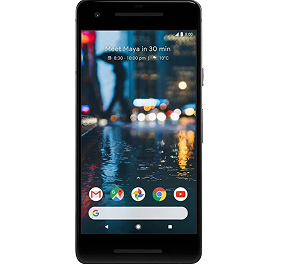
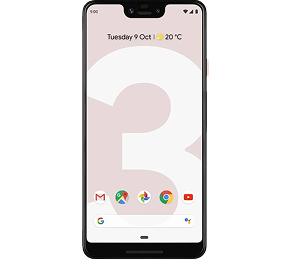
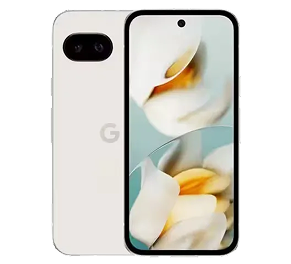
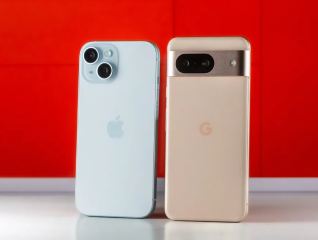
The Google Pixel 7 5G launched in October 2022 and the Pixel 8 5G in October 2023. Both run stock Android, support dual SIM with Nano-SIM and eSIM, and are 5G-ready. The Pixel 7 5G ships with Android 13 on Google's Tensor G2 chip, while the Pixel 8 5G ships with Android 14 on the Tensor G3 — with a notable upgrade to 7 years of guaranteed OS and security updates versus 3 years on the Pixel 7.
| Component | Google Pixel 7 5G | Google Pixel 8 5G | What it means |
|---|
| Launch date | 13 October 2022 | 4 October 2023 | Pixel 8 is one generation newer |
| Processor | Google Tensor G2 (5 nm) | Google Tensor G3 (4 nm) | Pixel 8 is faster and more efficient |
| Operating system | Android 13 | Android 14 | Both support newer Android versions |
| OS update promise | 3 years | 7 years | Pixel 8 stays secure and current far longer |
| SIM slots | Dual SIM (Nano + eSIM) | Dual SIM (Nano + eSIM) | Both support physical and digital SIMs |
| Network | 5G, 4G, 3G, 2G | 5G, 4G, 3G, 2G | Both work on all major Indian networks |
How does performance compare between the two?
The Tensor G3 in the Pixel 8 5G is built on a more efficient 4 nm process and scores noticeably higher on benchmarks, making it better for sustained tasks, AI features, and gaming. The Pixel 8 5G also offers an optional 12 GB RAM variant for heavier multitasking.
| Component | Google Pixel 7 5G | Google Pixel 8 5G | What it means |
|---|
| Processor | Google Tensor G2 (5 nm) | Google Tensor G3 (4 nm) | G3 is faster and more power-efficient |
| GPU | Mali-G710 MP7 | Immortalis-G715s MC10 | Pixel 8 handles graphics-heavy tasks better |
| RAM | 8 GB | 8 GB / 12 GB | Pixel 8 offers more headroom for multitasking |
| AnTuTu score | ~830,000 | ~1,050,000 | Pixel 8 is approximately 26% faster |
| Storage | 128 GB / 256 GB | 128 GB / 256 GB | Same options on both |
| Security | Fingerprint + Face unlock | Fingerprint + Face unlock | Both offer convenient biometric access |
| Sensors | Accelerometer, Gyroscope, Proximity | Accelerometer, Gyroscope, Proximity, Barometer | Pixel 8 adds a barometer for altitude and weather |
| Audio | Stereo speakers | Stereo speakers | Comparable stereo sound on both |
| Water resistance | IP68 | IP68 | Both survive submersion up to 1.5 m for 30 min |
➜ Pro tip: If you use your phone for photography, navigation, or AI-driven tasks, the Tensor G3's on-device ML capabilities in the Pixel 8 deliver a meaningful real-world difference over the G2.
How do the displays compare?
The Pixel 8 5G makes a significant jump here. Its 120 Hz refresh rate (vs 90 Hz on the Pixel 7) makes scrolling and animations noticeably smoother, and its 2,000-nit peak brightness is far more legible in harsh Indian sunlight compared to the Pixel 7's 1,400 nits. The Pixel 8's screen is also slightly more compact, with tighter bezels.
| Component | Google Pixel 7 5G | Google Pixel 8 5G | What it means |
|---|
| Screen size | 6.3 inch | 6.2 inch | Pixel 7 is marginally larger |
| Resolution | 1080 × 2400 pixels | 1080 × 2400 pixels | Identical sharpness on both |
| Aspect ratio | 20:9 | 20:9 | Same proportions |
| Pixel density | 416 PPI | 428 PPI | Pixel 8 is very slightly crisper |
| Display type | AMOLED (OLED) | AMOLED (OLED) | Both offer vivid, true-black displays |
| Refresh rate | 90 Hz | 120 Hz | Pixel 8 scrolls and animates more smoothly |
| Peak brightness | 1,400 nits | 2,000 nits | Pixel 8 is significantly easier to use outdoors |
| Screen protection | Gorilla Glass Victus | Gorilla Glass Victus 2 | Pixel 8 is more scratch- and drop-resistant |
| Touch screen | Capacitive, multi-touch | Capacitive, multi-touch | Both support standard gestures |
➜ Pro tip: If you spend time outdoors or commute frequently, the Pixel 8's 2,000-nit display is a practical upgrade — visibility in direct sunlight is meaningfully better.
How do the cameras compare?
Both phones carry a 50 MP + 12 MP dual-camera setup, but the Pixel 8 5G brings meaningful upgrades. Its primary lens has a wider f/1.7 aperture (vs f/1.9 on the Pixel 7), letting in 21% more light for better low-light shots. The ultrawide on the Pixel 8 gains autofocus, enabling macro photography — a first for the standard Pixel range.
| Component | Google Pixel 7 5G | Google Pixel 8 5G | What it means |
|---|
| Camera setup | Dual (wide + ultrawide) | Dual (wide + ultrawide) | Same layout, but improved optics on Pixel 8 |
| Main camera | 50 MP, f/1.9 | 50 MP, f/1.7 | Pixel 8 captures more light in dim conditions |
| Ultrawide camera | 12 MP, f/2.2, 114° FoV, fixed focus | 12 MP, f/2.2, 126° FoV, autofocus | Pixel 8 covers a wider scene and can focus up close |
| OIS | Yes | Yes | Both reduce blur from hand movement |
| Flash | Dual-LED | Dual-LED | Comparable flash performance |
| Front camera | 10.8 MP, f/2.2 | 10.5 MP, f/2.2 | Very similar selfie quality on both |
| Max image resolution | 8160 × 6120 pixels | 8192 × 6144 pixels | Effectively the same for prints and crops |
| AI features | Magic Eraser, Night Sight, Portrait | Magic Eraser, Best Take, Ultra HDR, Night Sight, Portrait | Pixel 8 adds Best Take and Ultra HDR |
| Shooting modes | Night mode, Portrait mode | Night mode, Portrait mode, Macro Focus | Pixel 8 adds macro capability via UW autofocus |
➜ Pro tip: Google's computational photography means both phones punch above their hardware spec. But if you shoot a lot at night or indoors, the Pixel 8's wider aperture makes a visible difference.
How do connectivity and network specs compare?
Both phones offer identical core network support for Indian carriers — including VoLTE on both SIM slots. The Pixel 8 5G adds Wi-Fi 7 and Bluetooth 5.3, giving it better wireless performance and future-proofing for faster home networks.
| Component | Google Pixel 7 5G | Google Pixel 8 5G | What it means |
|---|
| SIM size | Nano-SIM + eSIM | Nano-SIM + eSIM | Both support digital and physical SIMs |
| Network support | 5G, 4G, 3G, 2G | 5G, 4G, 3G, 2G | Both work on all major Indian bands |
| VoLTE | Yes | Yes | HD voice calls on Jio, Airtel, Vi |
| SIM 1 / SIM 2 | 5G / 5G | 5G / 5G | Both SIM slots support 5G on both phones |
| Wi-Fi | Wi-Fi 6E | Wi-Fi 7 | Pixel 8 supports next-gen Wi-Fi for faster home speeds |
| Bluetooth | 5.2 | 5.3 | Pixel 8 has slightly newer Bluetooth |
| NFC | Yes | Yes | Both support contactless payments |
How do batteries and charging speeds compare?
The Pixel 8 5G has a slightly larger battery and notably faster wired charging at 27 W vs 20 W on the Pixel 7. One counterintuitive point: wireless charging is actually slower on the Pixel 8 (18 W vs 20 W on the Pixel 7), so if you rely heavily on wireless charging, keep that in mind.
| Component | Google Pixel 7 5G | Google Pixel 8 5G | What it means |
|---|
| Capacity | 4,355 mAh | 4,575 mAh | Pixel 8 has a marginally larger cell |
| Type | Li-Ion | Li-Ion | Same chemistry on both |
| Wired charging | 20 W | 27 W | Pixel 8 charges to 50% in ~30 min |
| Wireless charging | 20 W (with Pixel Stand 2nd Gen) | 18 W | Pixel 7 is faster wirelessly; Pixel 8 slower |
| Reverse wireless charging | Yes | Yes | Both can charge accessories like earbuds |
➜ Pro tip: Neither phone ships with a charger in the box. You will need a USB-PD 3.0 compatible adapter to hit the maximum wired charging speeds on both.