Freezers are essential for long-term storage of food and other perishables, but choosing between a chest freezer and a deep freezer can be confusing. While both types of freezers serve the same purpose, their designs and features cater to different needs. If you are in the market for a freezer, it is important to understand the key differences to make an informed decision especially when considering reliable options like a haier deep fridge for extended storage. Both freezers and freezers have their pros and cons, whether you are looking for something to complement your existing freezer or a stand-alone unit for extra storage. Let us delve into what sets these options apart and how to choose the best one for your household.
Key differences between chest and deep freezers
When it comes to the key differences between chest and deep freezers, there are several factors to consider. Here is a quick comparison to help you understand:
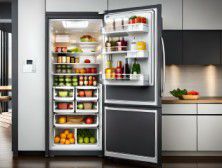
- Design and structure: Chest freezers are wider and shorter, while deep freezers tend to be more vertical. This makes chest freezers ideal for larger spaces, whereas deep freezers are better suited for compact areas. If space is a concern, a top deep freezer might be a better option for its efficient use of vertical space.
- Storage capacity: Although chest freezers generally offer more storage due to their horizontal design, deep freezers make up for it with vertical stacking options.
- Energy efficiency: Chest freezers are known to be more energy-efficient because cold air stays trapped when you open the lid. On the other hand, deep freezers tend to lose more cold air when opened.
- Defrosting: Chest freezers often require manual defrosting, which can be time-consuming. In contrast, many deep freezers come with an auto-defrost feature, making maintenance easier.
- Temperature consistency: Chest freezers tend to maintain a more stable internal temperature, making them perfect for long-term storage of items like meat or fish.
- Portability: If mobility is important, a small chest freezer may be easier to move around compared to a larger deep freezer.
Chest freezer vs deep freezer: comparative features
To help you make a more informed choice, here is a table comparing the features of both types of freezers:
| Feature | Chest freezer | Deep freezer |
| Design | Horizontal | Vertical |
| Storage capacity | Larger, with more width | Compact, with vertical stacking |
| Energy efficiency | More energy-efficient | Slightly less efficient |
| Defrosting | Manual defrost | Auto-defrost options available |
| Price range | Generally lower in cost | Higher price for advanced models |
| Portability | Easier to move | Less portable due to design |
This table makes it clear that chest freezers are typically larger and more energy-efficient, while deep freezers offer the convenience of vertical stacking. If you are considering a 200 litre deep freezer, it is a great option for medium-sized families or small businesses. These freezers provide ample storage while fitting into tighter spaces, and many models come with features like fast freezing, which helps maintain the quality of food over longer periods.
Updated price list of freezers in India (2026)
| Model name | Price |
| Lloyd 233 L Deep Freezer Swing Door Refrigerator White (GLHT250ASD) | Rs. 21,000 |
| Haier 400 L Manual Chest Freezer White (HFC-400DM5) | Rs. 23,390 |
| Godrej 500 L 5 Star Double Door Deep Freezer White (GODREJ DEEP FREEZER DH EPEHNTA 525E 2HCN RW) | Rs. 30,800 |
| Voltas 500 L Double Door Deep Freezer Grey (VOLTAS CF HT 500 DD P CONVERTIBLE BE GRY) | Rs. 48,990 |
| Whirlpool 185 L 3 Star Top Freezer Refrigerator Single Door Refrigerator Wine Titanium (200 IMPW Cool PRM 3S) | Rs. 13,552 |
Disclaimer: Each model's features, availability, and pricing are subject to change and may vary. For the most accurate and up-to-date information, please visit the official website.
Before you decide, explore the latest offers. You may find a great deal on a model that matches your needs.
Energy consumption - Chest freezer vs deep freezer
Energy consumption in chest freezers and deep freezers depends on factors such as storage capacity, compressor technology, insulation quality, and usage frequency. Businesses and households often compare both options to reduce long-term electricity costs.
• Chest freezers are generally more energy-efficient: Their horizontal top-opening design reduces cold air escape during operation, helping maintain cooling efficiency with lower energy loss.
• Upright deep freezers may consume slightly more electricity: Front-opening doors allow cold air to escape more easily during frequent usage, increasing compressor workload.
• Inverter compressor technology improves efficiency: Modern inverter freezers automatically regulate cooling performance to reduce unnecessary power consumption.
• Larger capacity freezers consume more power: Higher storage capacity generally increases electricity usage because of larger cooling requirements.
• Frequent door opening increases energy usage: Businesses with constant product access may experience higher electricity consumption in upright freezer models.
• Star energy ratings help reduce electricity bills: Energy-efficient freezer models with higher ratings consume less power during long-term operation.
• Ambient room temperature affects cooling load: Freezers placed in hotter environments may consume more electricity because the compressor works harder to maintain low temperatures.
• Proper maintenance improves energy efficiency: Regular cleaning, correct temperature settings, and proper ventilation help optimise freezer performance and reduce power consumption.
| Feature | Chest freezer | Upright deep freezer |
|---|
| Energy efficiency | Higher | Moderate |
| Cold air retention | Better | Lower |
| Compressor workload | Lower | Slightly higher |
| Suitable for frequent access | Moderate | Better |
| Power consumption | Lower overall | Slightly higher |
| Best suited for | Bulk storage efficiency | Organised quick-access storage |
Choosing between chest freezer and deep freezer: pros and cons
Now that we have covered the differences and features of both freezer types, let us look at the pros and cons to help you decide which is the better choice for your home.
Pros of chest freezers:
- Larger storage space: Chest freezers provide more usable space, ideal for bulk storage.
- Energy-efficient: As previously mentioned, chest freezers retain cold air more effectively when opened, leading to lower energy consumption.
- Cost-effective: Typically, chest freezers are less expensive than deep freezers, making them a budget-friendly option.
- Better for long-term storage: With their stable internal temperature, chest freezers are excellent for long-term preservation of food items, such as meats and frozen vegetables.
Cons of chest freezers:
- Requires manual defrosting: Unlike deep freezers with automatic defrost features, chest freezers generally need manual defrosting.
- Space requirements: Chest freezers take up more floor space, which might not be ideal for smaller kitchens or homes.
Pros of deep freezers:
- Compact design: Deep freezers take up less floor space due to their vertical structure, making them suitable for small areas.
- Auto-defrost feature: Many modern deep freezers come with auto-defrosting options, saving you time and effort in maintenance.
- Easy access: With shelves and drawers, deep freezers offer easier organisation and access to frozen items.
Cons of deep freezers:
- Higher energy consumption: Deep freezers generally use more energy compared to chest freezers, especially if frequently opened.
- Less storage space: Although they provide vertical stacking, deep freezers have less overall storage space than chest freezers.
Choosing between the two ultimately depends on your specific needs, space availability, and budget. For example, a double door deep freezer could offer the perfect balance of storage capacity and space efficiency. Understanding these pros and cons will make your decision easier and more aligned with your requirements.
Deep freezer vs refrigerator
Deep freezers and refrigerators are designed for different cooling and storage purposes. While refrigerators are suitable for daily food storage and regular household usage, deep freezers are designed for long-term frozen storage of food, beverages, dairy products, meat, and commercial inventory.
• Cooling temperature differs significantly: Deep freezers maintain much lower temperatures than refrigerators, making them suitable for preserving frozen food items for extended periods.
• Refrigerators support daily food storage: Refrigerators are designed to store vegetables, fruits, beverages, cooked food, and dairy products for everyday household use.
• Deep freezers are suitable for bulk frozen storage: Businesses, restaurants, grocery stores, and large families often use deep freezers to store frozen products in larger quantities.
• Storage design varies by appliance type: Refrigerators include separate sections for fresh food and frozen items, while deep freezers focus mainly on frozen storage capacity.
• Power consumption depends on usage and size: Large deep freezers may consume more electricity because of continuous low-temperature operation, although inverter technology can improve efficiency.
• Accessibility and organisation are different: Refrigerators provide multiple shelves and compartments for organised storage, whereas deep freezers offer larger open storage areas for bulk items.
• Suitable usage differs based on needs: Refrigerators are essential for everyday home use, while deep freezers are more suitable for commercial storage and long-term preservation.
• Deep freezers preserve food for longer durations: Lower freezing temperatures help maintain frozen food quality and reduce spoilage over extended periods.
| Feature | Deep freezer | Refrigerator |
|---|
| Primary usage | Long-term frozen storage | Daily food storage |
| Temperature range | Extremely low freezing temperature | Moderate cooling and freezing |
| Storage capacity | Bulk frozen storage | Mixed food storage |
| Suitable for | Commercial and bulk usage | Household daily use |
| Organisation | Open storage layout | Shelves and compartments |
| Food preservation duration | Longer | Shorter |
| Common usage | Frozen food and ice cream | Vegetables, beverages, dairy |
Chest vs deep freezer - Which is better for business use
Chest freezers and deep freezers are commonly used in commercial environments for storing frozen inventory, beverages, dairy products, meat, and packaged food items. The better option depends on storage requirements, available space, and business type.
• Chest freezers offer larger storage capacity: Chest-style freezers are suitable for businesses that require bulk frozen storage such as grocery stores, restaurants, and ice cream shops.
• Deep freezers maintain stable low temperatures: Deep freezers are designed for continuous frozen storage and help preserve perishable products for longer durations.
• Chest freezers are more energy-efficient for bulk storage: Their top-opening design reduces cold air loss compared to upright freezers, helping improve cooling efficiency.
• Organisation differs between models: Upright deep freezers offer easier shelf-based organisation, while chest freezers provide larger open storage space for bulk inventory.
• Suitable for different commercial environments: Chest freezers are commonly preferred for high-volume storage, while upright deep freezers are useful for businesses requiring easier product visibility and access.
• Space requirements should be considered carefully: Chest freezers require more floor space because of their horizontal design, while upright freezers occupy less floor area.
• Maintenance and cleaning may vary: Upright freezers are usually easier to organise and clean, while chest freezers may require more manual arrangement of stored products.
• Temperature retention is stronger in chest freezers: Chest freezers can retain cold temperatures longer during power outages because of their insulated horizontal structure.
| Feature | Chest freezer | Upright deep freezer |
|---|
| Storage style | Horizontal bulk storage | Vertical organised storage |
| Storage capacity | Higher | Moderate |
| Space requirement | More floor space | Less floor space |
| Energy efficiency | Better for bulk storage | Moderate |
| Product organisation | Less organised | Easier shelf organisation |
| Suitable for | Bulk commercial storage | Quick-access storage |
| Cold retention | Better during power cuts | Moderate |
Get electronics and appliances on Easy EMIs with Bajaj Finance
Bringing home your preferred refrigerator is now hassle-free with Bajaj Finance's flexible financing options. Follow these steps to get started:
- Explore products on Bajaj Mall: Browse through a wide selection of refrigerators on Bajaj Mall. Compare features to find a model that meets your needs.
- Visit a partner store: Once you shortlist a model, step into any of Bajaj Finance’s 1.5 lakh partner stores across 4,000 cities in India. See the product in person, talk to experts, and make a confident decision.
- Choose the Easy EMI Loan option: At checkout, select the Bajaj Finance Easy EMI Loan. Avail financing of up to Rs. 5 lakh and split the cost into convenient monthly instalments. Some products also come with a zero down payment option.
- Check your loan eligibility online: Plan better by checking your loan eligibility in minutes. Simply enter your mobile number and OTP to know your pre-approved limit.
- Use the Insta EMI Card for purchases up to Rs. 3 lakh: Already own the Bajaj Finance Insta EMI Card? Use it for instant, paperless checkout and convert your purchases of up to Rs. 3 lakh into Easy EMIs.
Why use the Smart Savings Calculator
Bajaj Finance’s Smart Savings Calculator helps you unlock maximum savings every time you shop at partner stores. It brings together all available brand, dealer, and scheme offers—so you can see your total savings instantly and shop smarter with Easy EMIs.
1. Dealer offers - Grab exclusive in-store deals at over 1.5 lakh partner stores across India. Enjoy local discounts and special prices you will not find online.
2. Brand offers - Access limited-time discounts from top brands across electronics, appliances, and more. Discover brand-specific savings selected just for you.
3. Bajaj offers - Unlock exclusive Bajaj Finance deals on popular products—available only to our customers. More rewards, more value.
4. Scheme offers - Take advantage of time-sensitive offers on select EMI schemes. Get extra benefits after paying just 3 EMIs—visible during EMI selection at checkout.
Calculate your extra savings today!