






















































































































































































































































































































How to Identify Fake Loan Offer Loan Offers

How to Identify Fake Loan Offer Loan Offers

Fraudsters may use unsolicited calls, messages, fake documents or attractive loan offers to obtain money or confidential information. Knowing the warning signs can help you verify an offer before sharing details or making any payment.

Rs. 40,000 - Rs. 75 lakh

You may be eligible for a pre-approved offer

Enter mobile and OTP | Check offer | No branch visit needed


Key takeaways

A pre-approved loan offer may not always be genuine, so verify the sender, loan terms and communication details before sharing information or making any payment.


  • Be cautious of unsolicited calls offering guaranteed loan approval or unusually attractive terms.
  • Verify the loan offer through the lender's official website, app or authorised customer service channel.
  • Requests for OTPs, PINs, passwords or other confidential banking details are major warning signs.
  • Do not transfer money to individuals or unknown accounts to secure or release a loan.
  • Check loan documents carefully for incorrect company details, suspicious contact information or other inconsistencies.

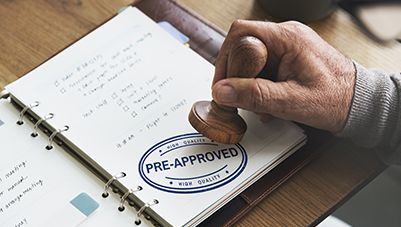
A caller may claim to represent a bank or financial institution and offer a pre-approved loan. Before taking any action, verify the offer through an official channel. Fraudsters can use genuine company names, logos and altered documents to make an offer appear legitimate.


Beware of fake pre-approved loans with attractive offers

Fake loan scams often begin with an unsolicited phone call, SMS, email or social media message. The person may promise quick approval, a low interest rate or other attractive terms. They may then ask for personal information, an upfront payment or access to financial accounts.


A pre-approved offer should not be treated as a guaranteed loan approval. Loan disbursal remains subject to the applicable eligibility criteria, verification and terms.


Be particularly cautious if the caller:

  • Pressures you to make an immediate decision
  • Promises guaranteed approval without proper verification
  • Requests an upfront payment to release or process the loan
  • Asks for an OTP, PIN, password, CVV or other confidential information
  • Sends a link to an unfamiliar website or asks you to install an unknown application
  • Asks you to transfer money to a personal bank account or unknown UPI ID
Show More Show Less

How to identify a fake loan sanction letter

Fraudsters may create fake sanction letters using company names, logos and signatures to make them appear genuine. Do not rely on the appearance of a document alone.


Check the following details before acting on a loan document:


  • Company details: Check the company's name, contact details and registered website. Look for unusual spellings or inconsistencies.
  • Email address: Verify whether the email address belongs to the organisation's official domain. Be cautious of free email accounts or domains that resemble the official domain.
  • Website: Do not use a website link provided by an unknown caller. Visit the lender's official website separately and verify the offer.
  • Loan details: Check the loan amount, interest rate, tenure, applicable charges and other terms against the information available through the official channel.
  • Reference details: Check whether the application or reference number can be verified through the lender's authorised channel.
  • Signature and stamp: A stamp or signature on a document does not by itself prove that the document is genuine.

If any detail appears inconsistent, stop the process and verify the offer directly with the lender.

Show More Show Less

Be careful with payment requests and confidential information

A request to transfer money or share confidential banking details to secure or release a loan is a major warning sign. Fraudsters may describe an upfront payment as a processing fee, legal fee, insurance charge, security deposit or release fee.


Legitimate loan products may have applicable charges, but you should verify the charge, amount and payment method through the lender’s official channels before making any payment. Do not transfer money merely because a caller claims it is required to release a pre-approved loan.


Similarly, never share an OTP, ATM PIN, CVV, internet banking password or other confidential authentication details with an unsolicited caller claiming to represent a lender. If someone claiming to represent Bajaj Finance requests such information, end the conversation and verify the communication through an official Bajaj Finance channel.

Show More Show Less

What to do if you suspect a loan scam

If you suspect that a loan offer may be fraudulent, stop communicating with the suspected fraudster and avoid sharing any additional personal or financial information. Do not transfer any further money based on their instructions.


Take the following steps:

  1. Save relevant messages, phone numbers, emails, payment details and documents as evidence.
  2. Contact the concerned financial institution through its official website, app or customer service channel to verify the offer.
  3. If money has already been transferred, report the incident as soon as possible to your bank or financial institution.
  4. In India, report suspected financial cyber fraud by calling 1930 or using the National Cyber Crime Reporting Portal.
  5. Review your bank and other financial accounts for any unauthorised transactions and take appropriate action if you notice anything unusual.

To reduce the risk of falling for fake loan offers, verify the lender independently, read the loan terms carefully and avoid making payments based only on a caller’s instructions. Never 

share confidential banking credentials, OTPs, PINs or passwords with anyone claiming to arrange or release a loan.


When in doubt, stop the transaction and verify the communication through an official channel before proceeding.


For any such queries, visit https://www.bajajfinserv.in/reach-us

Show More Show Less

Frequently asked questions

Overview

How to find fake loans?

You can identify potential fake loans by checking the lender’s official website, verifying the app or contact details, reviewing loan terms and avoiding unsolicited offers promising guaranteed approval. Requests for upfront payments or confidential information such as OTPs, PINs and passwords are warning signs that require caution.

Personal loans are legitimate financial products offered by banks and financial institutions. However, fraudsters may use fake loan offers to obtain money or confidential information. Verify the lender, application channel, charges and loan terms through official sources before proceeding with any personal loan application.

Fake loan apps are unauthorised applications designed to imitate legitimate lenders or offer misleading loan services. They may request excessive personal information, demand upfront payments or misuse financial details. Before installing a loan app, verify the developer, lender details and app authenticity through official sources.

Show More Show Less

Disclaimer

Bajaj Finance Limited has the sole and absolute discretion, without assigning any reason to accept or reject any application. Terms and conditions apply*.
For customer support, call Personal Loan IVR: 7757 000 000