








































































































































































































































































Rs. 40000 - Rs. 55 lakh
You may be eligible for a pre-approved offer
Enter mobile and OTP | Check offer | No branch visit needed
720 CIBIL Score: Is it good or bad?
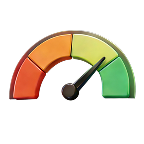
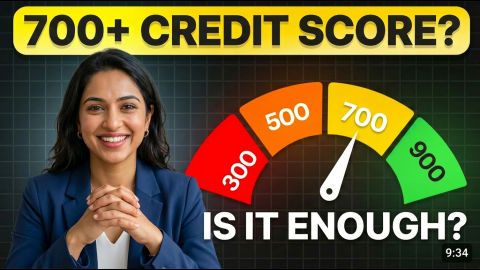
A 720 CIBIL score is regarded as good and reflects sound financial behaviour. CIBIL scores, ranging from 300 to 900, determine your creditworthiness. A score of 720 indicates that you manage credit responsibly, which makes you a preferred borrower for lenders.
With a 720 score, you are eligible for a wide range of financial products, including loans and credit cards. Lenders consider borrowers in this range to be low-risk, often offering competitive interest rates and favourable terms. However, while a 720 score is commendable, it does not fall into the "excellent" category. Borrowers with scores above 750 generally enjoy even better terms, such as higher credit limits and lower interest rates.
✅ Check your eligibility for personal loan with phone number and OTP → Apply online in 5 minutes → Receive funds within a day*.
How to improve your 720 CIBIL score
While a 720 score is good, there is always room for improvement. Here are some practical ways to elevate your score:
- Pay your bills on time: Ensure that you pay all your credit card bills and loan EMIs promptly. Timely payments are one of the most significant factors in maintaining or improving your score.
- Lower your credit utilisation: Keep your credit utilisation ratio below 30%. High credit usage indicates financial stress, which can negatively impact your score.
- Avoid multiple loan applications: Frequent applications for loans or credit cards result in hard inquiries, which can lower your score. Apply only when necessary.
- Diversify your credit mix: Maintain a balance of secured loans (e.g., home loans) and unsecured loans (e.g., personal loans). This demonstrates your ability to manage different types of credit.
- Monitor your credit report: Regularly check your credit report for errors or discrepancies. If you find inaccuracies, raise a dispute with the credit bureau to get them corrected.
- Pay off existing debts: Reducing outstanding debts improves your credit-to-debt ratio, which positively impacts your score over time.
How does a 720 CIBIL score impact interest rates?
Your CIBIL score directly influences the interest rates offered by lenders. A 720 score positions you favourably, though not at the top tier. Here's how it impacts various financial products:
- Home loans: With a 720 score, you can qualify for home loans at competitive interest rates. However, slightly better rates may be available to borrowers with scores above 750.
- Personal loans: Personal loans: A 720 score ensures you can access personal loans, but the rates may be marginally higher than those offered to individuals with excellent scores.
- Credit cards: You can apply for a variety of credit cards with a 720 score. Rewards-based or cashback cards are generally accessible, though premium cards may require a higher score.
- Car loans: Borrowers with a 720 score can secure car loans with favourable terms, though better rates are typically reserved for higher scores.
Conclusion
A 720 CIBIL score is a mark of financial responsibility and qualifies you for loans and credit cards with attractive terms. While this score opens doors to various credit opportunities, improving it further can unlock the best rates and benefits.
By adopting habits such as timely payments, low credit utilisation, and regular credit report checks, you can strengthen your credit profile. A better score not only saves money on interest but also provides greater flexibility in managing your finances.
Key offerings: 3 loan types
Personal loan interest rate and applicable charges
Type of fee |
Applicable charges |
Rate of interest per annum |
10% to 30% p.a. |
Processing fees |
Up to 3.93% of the loan amount (inclusive of applicable taxes). |
Flexi Facility Charge |
Term Loan – Not applicable Flexi Loans –Up To Rs 1,999 To Up To Rs 18,999/- (Inclusive Of Applicable Taxes) |
Bounce charges |
Rs. 700 to Rs. 1,200/- per bounce “Bounce Charges” shall mean charges levied on each instance in the event of: (i) dishonour of any payment instrument irrespective of whether the customer subsequently makes the payment through an alternate mode or channel on the same day; and/or (ii) non-payment of instalment(s) on their respective due dates where any payment instrument is not registered/furnished; and/or (iii) rejection or failure of mandate registration by the customer’s bank. |
Part-prepayment charges |
Full Pre-payment: |
Penal charge |
Delay in payment of instalment(s) shall attract Penal Charge at the rate of up to 36% per annum per instalment from the respective due date until the date of receipt of the full instalment(s) amount. |
Stamp duty (as per respective state) |
Payable as per state laws and deducted upfront from loan amount. |
Annual maintenance charges |
Term Loan: Not applicable Flexi Term (Dropline) Loan: Up to 0.295% (Inclusive of applicable taxes) of the Dropline limit (as per the repayment schedule) on the date of levy of such charges.
Up to 0.472% (Inclusive Of Applicable Taxes) Of The Dropline Limit During Initial Tenure. Up to 0.472% (Inclusive Of Applicable Taxes) Of Dropline Limit During Subsequent Tenure |
Related articles
Disclaimer
Bajaj Finance Limited has the sole and absolute discretion, without assigning any reason to accept or reject any application. Terms and conditions apply*.
For customer support, call Personal Loan IVR: 7757 000 000
Industrial Equipment Finance
Industrial Equipment Balance Transfer
Industrial Equipment Refinance